
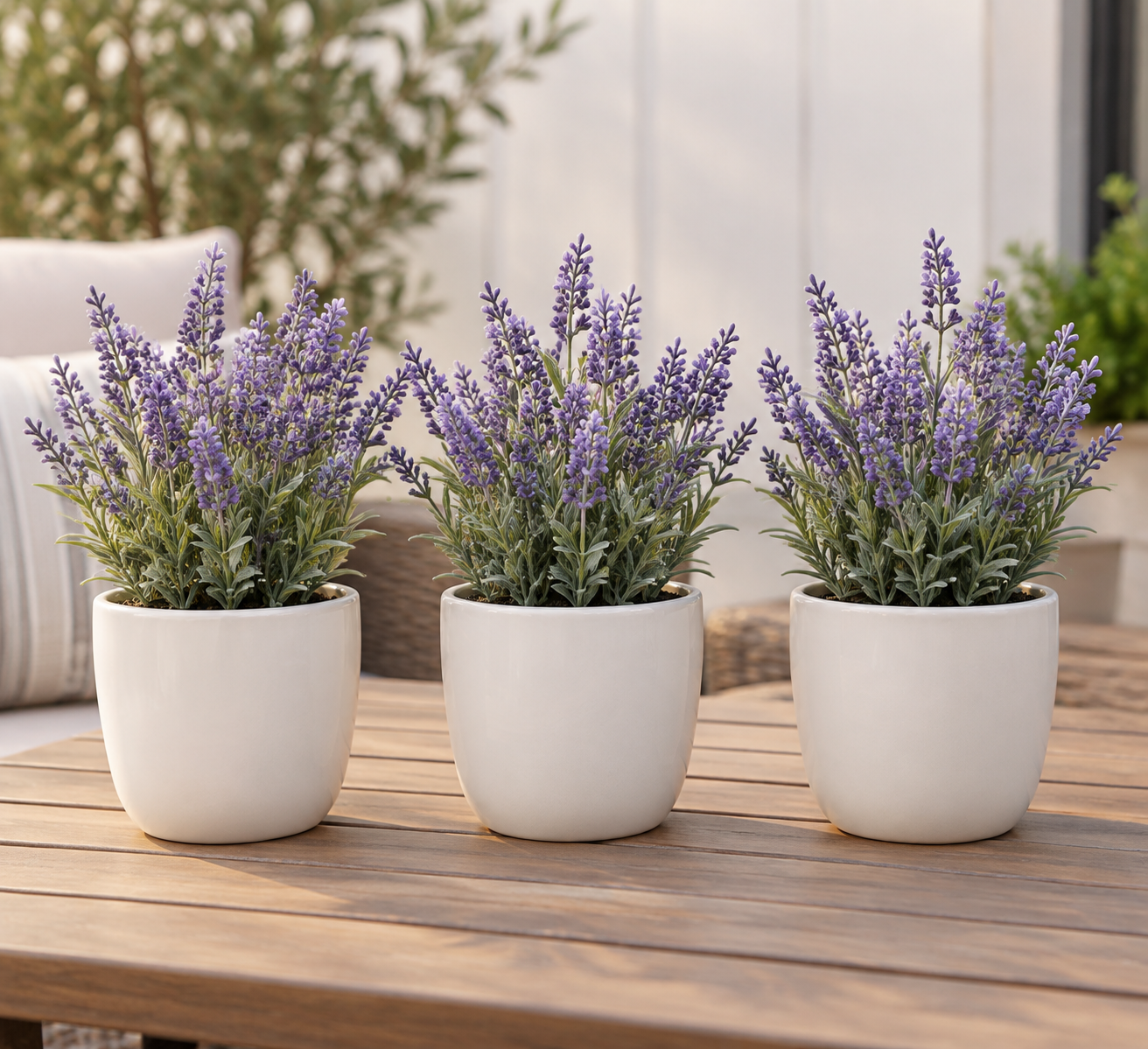
A potted flower is a complete object — blooms, greenery, soil-look base and pot arriving as one finished piece you set down like a plant, without the plant's contract. This collection runs the three pot scales: windowsill blooms, tabletop pieces and statement floor pots. Every card states the pot's material and the total height, pot included, so the piece lands where you planned it.
The 30-Second Pot Pick
- Start here: pick the spot's scale — sills take 8–12 in pieces, islands and consoles 12–20 in, corners and covered entries 20 in+. Heights are total, pot included, on every card.
- Pot materials per piece: ceramic, glazed ceramic, terracotta, cement-look and fiberglass-look — stated on the card, because the pot is half the object.
- Bloom materials per piece: fabric, PE-film or latex-touch petals, wired stems — stated bloom, greenery and stem separately.
- Price band: sill pieces $29–58, tabletop $45–90, statement floor pots $95–180; free US shipping over $200.
Why pots, and where they work hardest
The pot form answers a question vases cannot: what fills the spot with no surface, no vessel and no light — the windowsill that faces a wall, the corner by the door, the shelf above the radiator where no plant survives. Potted pieces read as plants (soil-look base, natural crown) while behaving as objects: no watering, no drainage saucer, no seasonal die-back, and the same silhouette in year three as week one. In rentals and offices they are the whole houseplant category with the maintenance deleted; on covered porches they do the entrance work that live plants only do until the first frost.
How to Choose Potted Flowers
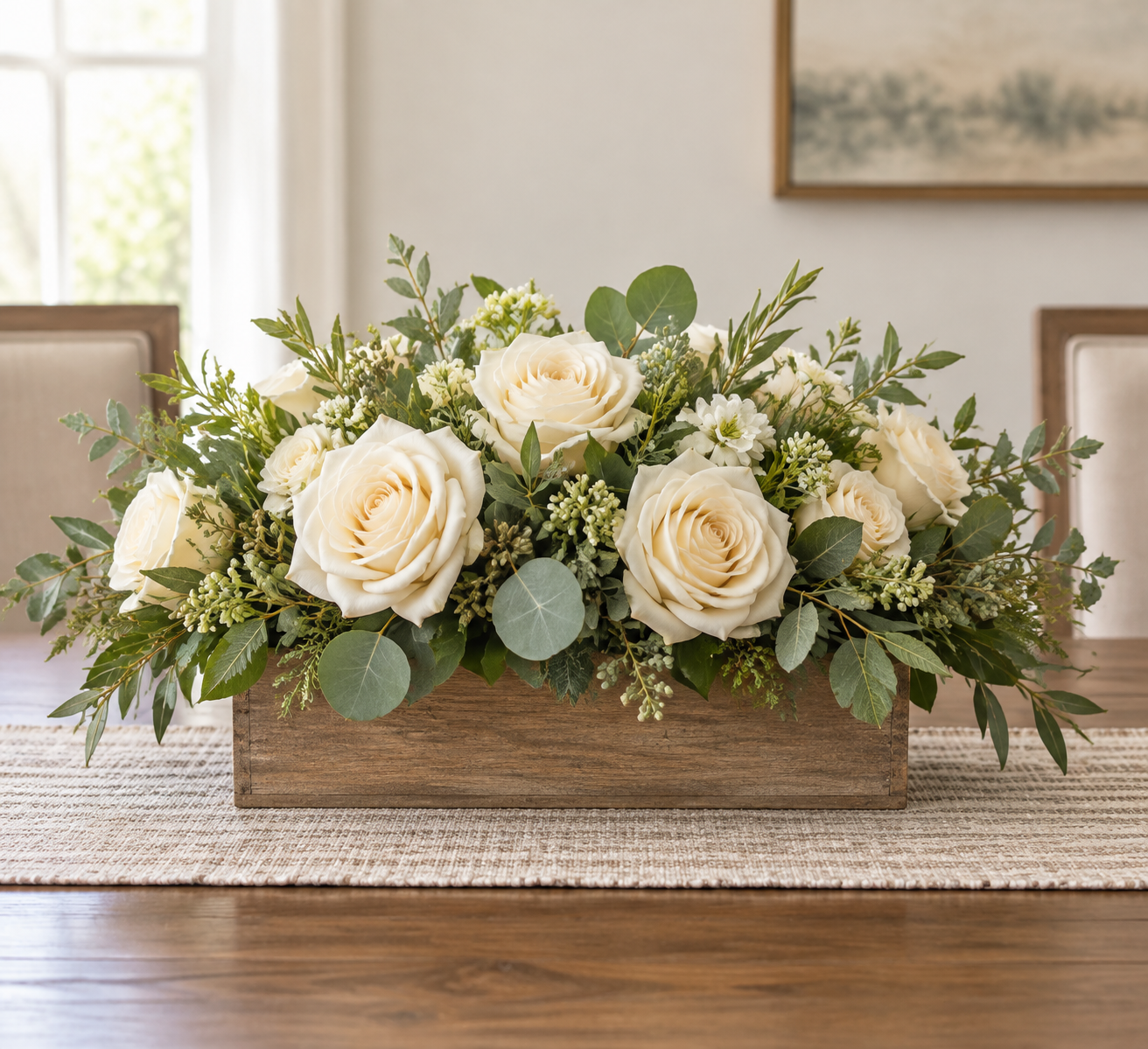
Four decisions — scale first, because a pot piece is placed, not arranged.
- Where does it stand?
Sills and shelves take the 8–12 in group; islands, consoles and coffee tables take 12–20 in; corners, flanking doorways and covered entries take 20 in+. Measure the spot's height clearance — total height, pot included, is on every card.
- Which pot material?
Ceramic and glazed ceramic read finished indoors and wipe clean; terracotta (unglazed) suits covered indoor use and reads Mediterranean; cement- and fiberglass-look finishes carry the statement scale. Each card names its pot's material and finish — no unstated "decorator" vessels.
- What should it read as?
Blooming pieces (tulips, hydrangeas, daisies) read seasonal accent; greenery-forward pieces read houseplant — the trick for plant-less corners. Mixed bloom-and-trailing pieces read garden. The green collection carries the plant-register end.
- Inside, or covered outside?
All groups here are indoor-rated; covered porches and entries work season-to-season. Fully exposed spots need the UV-rated outdoor line — sustained sun and rain are hard on any faux botanical, potted or not.
Frequently Asked Questions
What is the difference between flowers in pots and flowers in vases?
The form and what it's for. A vase arrangement is cut-flower logic — stems in water-look display, the register of a bouquet; it suits tables and mantels. A potted piece is plant logic — blooms and greenery set in a soil-look base inside a planter, the register of a houseplant; it suits sills, corners, entries and any spot without a surface for a vase. Neither imitates the other: choose the register the spot calls for, and the with-vase collection holds the other form.
Can potted artificial flowers go outside?
Under cover — a porch ceiling, an overhang, a covered entry — these pieces hold up season to season. Full exposure is a different job: sustained direct sun fades any faux botanical and driving rain finds every seam, so open decks and beds need the UV-rated outdoor line, which is built for it. Treat a covered-porch pot like a cushion: out for the season, in for the storm.
What are the pots made of?
Stated per piece: ceramic and glazed ceramic (the indoor standard, wipe-clean), unglazed terracotta (Mediterranean register, covered indoor use), and cement-look or fiberglass-look finishes at the statement scale. The card also states whether the pot is weighted — the floor-scale pieces are, so corners and entries get stability a real houseplant pot has. No pot here is described beyond the material it lists.
How do I clean potted artificial flowers?
The pot wipes with a damp cloth; the blooms and greenery take a soft brush or cool hair-dryer burst weekly. The soil-look base collects dust silently — a brush pass over it monthly keeps the whole piece reading fresh. Never rinse the entire pot under water: the base materials are set, not sealed. The full method by material is in the cleaning guide.
Why choose potted faux flowers over real houseplants?
For the spots real plants cannot hold: north-facing sills, dark corners, radiator shelves, offices with the lights off on weekends, rental homes where nobody will water in August. A potted faux piece delivers the plant silhouette with zero inputs — no light requirement, no watering schedule, no pest cycles, no repotting — and holds it for years at a houseplant's one-time price. Real plants still own the joy of growing; faux owns every spot that joy has failed.
Shop by Form & Color
Flower Guides
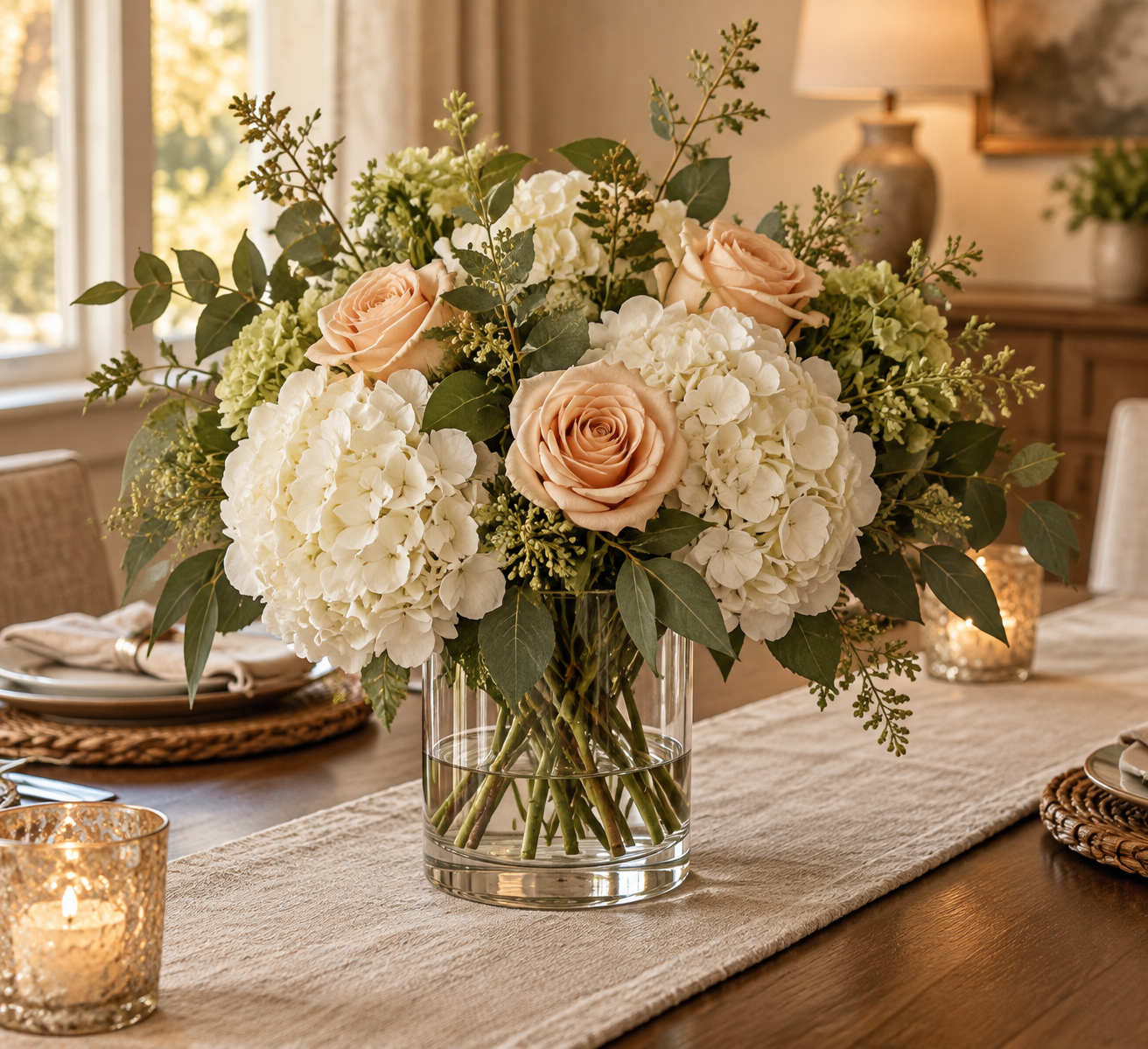
Where each form earns its keep — pots for plant-less corners, vases for tables.
Which material families earn their keep where — potted pieces included.
The soil-look base collects dust silently — the monthly pass included.