
Glass Vases
Glass does what no other material can: it shows the stems. Water lines, tape grids, the green of a stem against clear walls — the mechanics of arranging become part of the look. This collection runs clear cylinders, colored glass and smoked statement pieces; every listing states wall thickness, opening width and whether the body holds water, because glass varies more than any material in the shop.
Quick answer: Glass is the vessel for displays where the interior is part of the design. Two specs decide fit: wall thickness (2–3 mm for daily use, 3 mm+ for tall top-heavy builds, thin shelf pieces at $15–40 USD as of October 2026) and neck width (narrow grips wired stems; wide needs filler). Smoked and seeded finishes hide dust; clear shows everything.
Glass Families, Honestly Compared
"Glass vase" spans four different products with different jobs — machine-made clear glass is an everyday workhorse, while seeded and textured families are display objects in their own right:
Styling the inside: glass turns mechanics into design
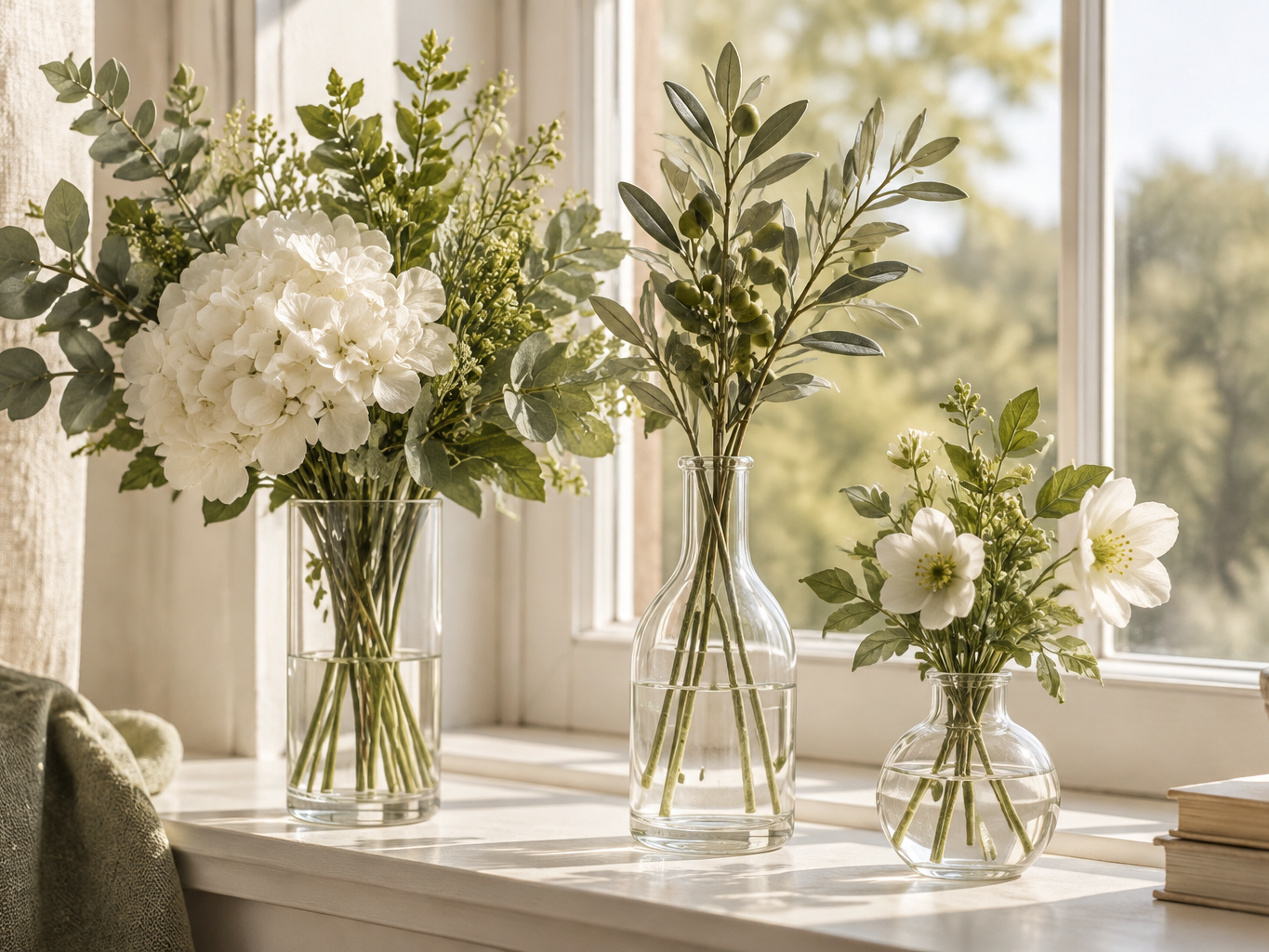
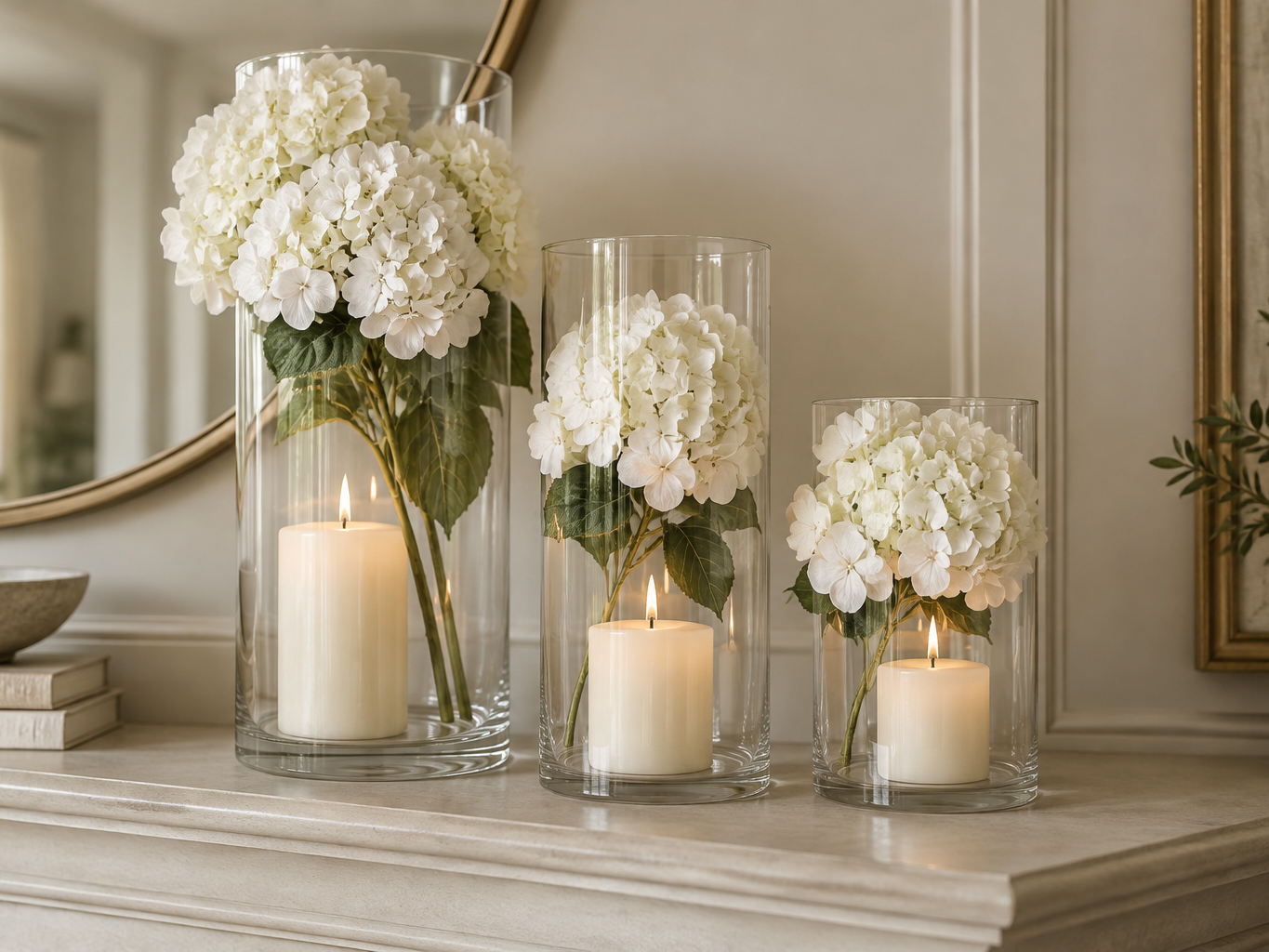
An opaque vase hides what holds an artificial arrangement; a glass vase can show it off, which is the format's whole art. The standard moves: layered sand and pebble columns up to the gripping line (the ballast becomes the display), glass beads that read as water without the dust line, a single submersible-look stem angled through the column for the "floating" effect, and candle pairings where the vase's wall thickness turns flame into glow. Styled interiors are why event designers specify glass; empty glass with visible foam is why the same designers specify ceramics the rest of the time — plain foam in clear glass is the category's tell-tale mistake.
The full engineering logic — necks, weights, opacity trade-offs — runs on the vases for artificial flowers page.
Thickness Is the Spec Nobody Lists (We Do)
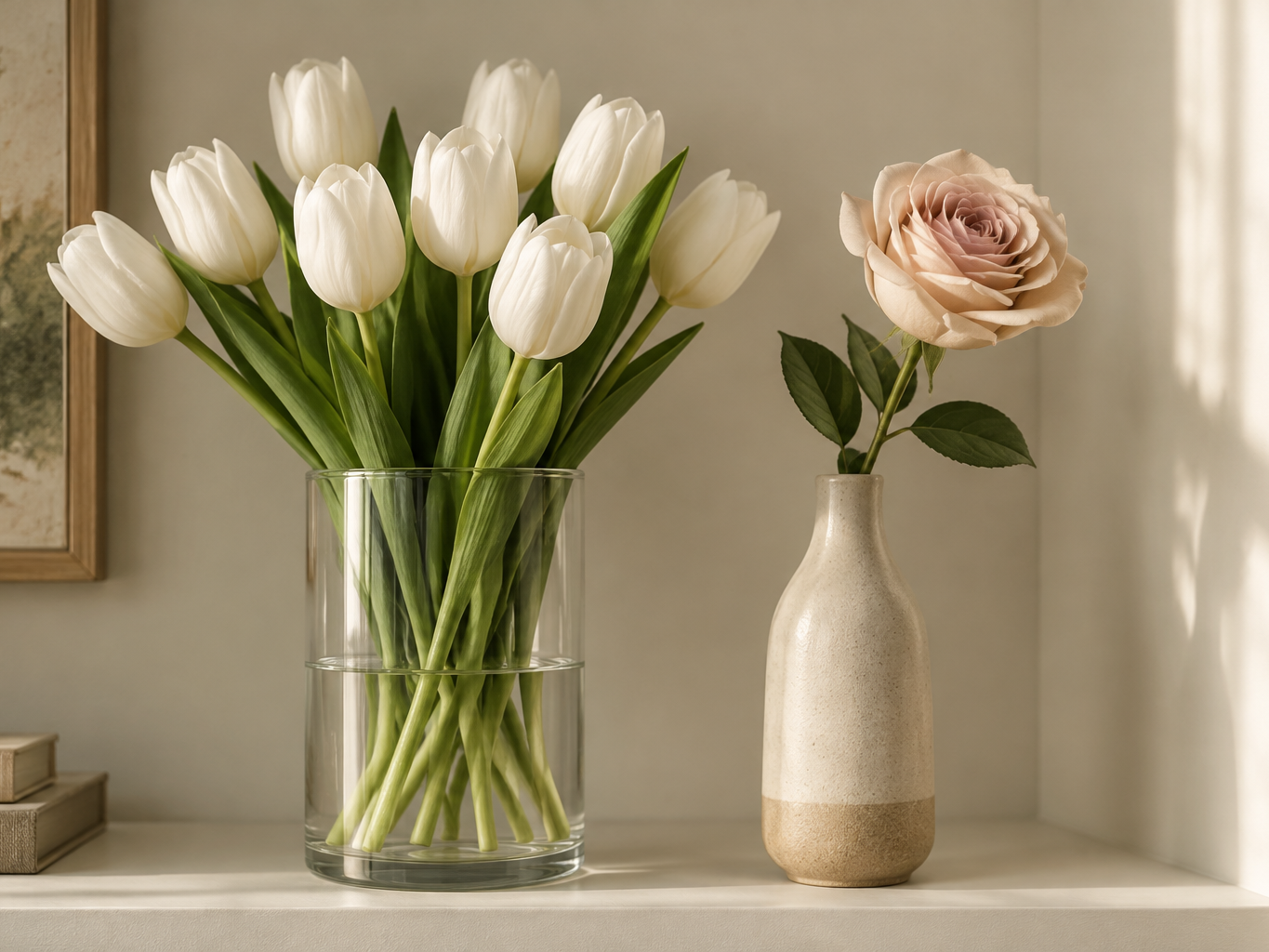
Two glasses of the same size can be different products. Thin-walled glass (under 2 mm) is the craft-store version — light, affordable at $15–40 USD typical as of October 2026, right for shelf groups and single stems, and honest about needing gentle hands. Standard walls (2–3 mm) carry daily use, candle heat and event freight. Thick-walled and pressed glass (3 mm+) read substantial, survive knocks, and weight themselves steady on a console. Wall thickness prints on every listing here, because it predicts everything else: price, weight, and how the piece ages in a real house. The check is weight in the hand and base thickness at a glance — tall top-heavy branch builds want the thick end, short stems and candles sit fine in the thin.
The Shape Families
Cylinders — the standard candle-and-wedding shape, sizes typically 3×6 to 6×12 inches — are deep enough for their own page in this line. Bud glasses and test tubes carry single stems in groups. Boules and fishbowl spheres sit low and wide for floating heads. Bottleneck vases frame tall stems like a collar. Square and rectangular blocks read architectural in modern rooms. Clear glass is the neutral that lets the flower carry the color — the default for faux displays, resin pours, and candle cylinders — while colored glass (cobalt, green, amber, pink) does the opposite: stems disappear, the vessel carries the room's accent, and one colored piece can anchor a shelf of neutrals. Smoked and frosted glass split the difference — presence without color commitment. In glass, the color choice is the room decision, made before the shape decision; each shape family has its filter here, and the cylinder page carries the sizing grid for event work.
Murano Style and Milk Glass, Honestly Labeled
Two vintage-glass names get searched constantly and mis-sold constantly, so here is our line. Murano-style means colorful swirled and confetti-flecked glass made in the Venetian tradition — the look, not the certificate, at homeware prices ($25–70 USD typical here as of October 2026); genuine antique Murano is a collector's market with appraisals and signatures, and nothing on this site claims it. Milk-glass style means opaque white vintage-look glass — new production, the same soft silhouette. Both live in the style filter here, labeled 'style' on the listing, so nobody buys a homage believing it is an heirloom — selling an homage as an heirloom is how this category earned its trust problem.
Care and the Dust Question
Clear glass's honesty is its maintenance burden: it shows dust, water-spot history and every stem end. Hard water leaves spots on clear walls — a 50/50 white-vinegar rinse clears them, a soft bottle brush reaches the neck, and an hour-long soak handles the mineral ring at the waterline. Avoid the dishwasher: thin glass chips against racks, and racks do not care which wall thickness you bought. The practical answers are material choices as much as cleaning — smoked and seeded finishes hide dust by design; ribbed glass breaks up sightlines into the interior; and the styled-interior approach (sand, beads) buries the dust zone entirely. For faux displays with resin, do not soak: the pour is permanent by design, and the vessel's next chapter is a dry one.
Sister formats: cylinder vases (the event standard), bud vases (single-stem), ceramic vases (the opaque alternative), floor vases (tall scale).
How to Choose a Glass Vase
- Decide if the stems show. Showing stems (faux displays, resin pours, water lines) → clear glass. Hiding them (foam builds, taped grids, messy mechanics) → colored or smoked glass, or the ceramic page.
- Match thickness to the life it gets. Shelf groups and gentle rooms take thin walls under 2 mm; daily tables and events want 2–3 mm standard; consoles and kids' reach want 3 mm+ pressed glass. Thickness prints per listing.
- Pick the shape family. Cylinders for candles and events, bud glasses for singles, boules for floating heads, bottles for tall stems, blocks for modern shelves — the shape filters run the whole collection.
- Color is the room decision. Clear lets flowers carry color; cobalt, green and amber carry the room's accent themselves — choose before shape, because colored stock is the narrower pool.
- Plan the freight reality. Glass ships protected (spec prints per listing once confirmed with suppliers); event quantities get venue notes at checkout — glass to a venue is its own logistics, treated that way.
Frequently Asked Questions
Can I use a glass vase for artificial flowers?
Yes, with the interior styled rather than empty: layered sand or pebbles up to the gripping line turn the ballast into the display, glass beads read as water without collecting a dust line, and smoked or seeded finishes hide mechanics by material rather than by filler. Empty clear glass with visible foam or bare stem ends is the one look to avoid — glass rewards a designed interior.
What glass finish hides dust best?
Smoked and tinted glass by a wide margin, then seeded and bubble texture, then ribbed and fluted — all three break the sightline that clear glass offers straight through. The styled interior is the fourth answer: a sand-and-bead column buries the dust zone where it would otherwise collect. Truly clear, truly empty glass is the highest-maintenance object in the vase family.
Are thick glass vases better than thin?
Better at different things. Thick walls — typically 3–5 mm and visibly heavy at the base — survive knocks, sit steady under heavy branches and read substantial on a console; thin walls (under 2 mm) keep shelf groups light and prices low ($15–40 USD typical as of October 2026), at the cost of needing gentle hands. Standard 2–3 mm walls are the daily-use middle. Wall thickness prints on every listing here, because "glass vase" spans all three products and the thickness is what separates them.
Do colored or smoked glass vases hide the stems?
That is exactly their job. Cobalt, green, amber, pink and smoked glass turn the vessel into the color statement and the stems into a silhouette — which is why colored glass pairs with foam builds, taped grids and any display where the mechanics would rather disappear, and why one colored piece can anchor a shelf of neutrals. One caution: dark tints eat stem color — pale blushes and whites fade visually into gray glass while saturated reds, oranges and deep blues hold their read. The working pairing: smoked glass with bold blooms, clear glass with pastels, amber glass with warm palettes.
What is the difference between Murano glass and Murano-style?
Genuine Murano is glass made on the island of Murano in Venice, documented, signed and sold as an art collectible with appraisals — an heirloom market. Murano-style is contemporary glass carrying the same look: the colorful swirls, the confetti flecks, the hand-blown feel, at homeware prices ($25–70 USD typical here as of October 2026). Everything on this site in that family is labeled 'Murano-style' on the listing — the look without the certificate claim. Milk-glass style is the parallel case: opaque white vintage-look glass, new production, labeled the same way.
How do I clean glass vases?
Outside: a vinegar-water pass with a soft cloth — a 50/50 white-vinegar rinse dissolves hard-water spots, and an hour-long soak handles the mineral ring at the waterline. Inside (no water involved in artificial displays, so this is dust, not mineral): a bottle brush or a handful of dry rice swirled with warm soapy water for the deep clean, fully dried before restyling; textured and seeded interiors take a brush only — abrasives cloud them. Avoid the dishwasher: thin glass chips against racks. For faux displays with resin, do not soak — the pour is permanent by design, and the vessel's next use is dry. The maintenance-minimizing choices are upstream: smoked finishes, styled interiors, and ribbed glass that forgives.
How do glass vases ship — and what if one breaks?
As breakable freight: protective packaging specified per piece, foam-lined, with dividers for multi-piece orders; the final double-boxing standard is being confirmed with suppliers and prints on every listing once set rather than being promised here first. If a piece arrives cracked or chipped: a photo and the order number brings a replacement or refund, and the shards stay with you — transit damage is our claim with the carrier, not the shopper's to prove.