
Quick answer: Artificial ranunculus reproduces the tight spiral of paper-thin petals that makes the species a florist favorite, on slender bending stems 16-22 inches with 3-5 inch blooms. The fresh season runs late winter to spring only; the reproduction holds the spiral year-round for bouquets, wedding work and layered arrangements. Cream, blush, coral, burgundy and white; buy mixed head stages - open spirals, semi-open cups, buds - the way florists build depth.
Artificial ranunculus in the form florists prize — a tight spiral of paper-thin petals, dozens of layers to a bloom, on a slender bending stem. Cream, blush, coral, burgundy and white, 3 to 5 inch heads on 16 to 22 inch stems. The fresh ranunculus season runs late winter to spring; these spiral heads stay in form all year. Every listing photo shows the exact stems you receive. Layer count is the honesty check on this species: a florist ranunculus carries dozens of paper-thin petals in the spiral, and a thin build reads fake at first glance - so the heads here run the full count, quarter-turned like the real rose-of-spring. Cream and blush carry wedding work, coral and peach warm spring tables, burgundy goes dramatic in autumn builds. Stems bend to a natural curve and hold - the droop is part of the look.
Artificial Ranunculus, Explained
What an artificial ranunculus is
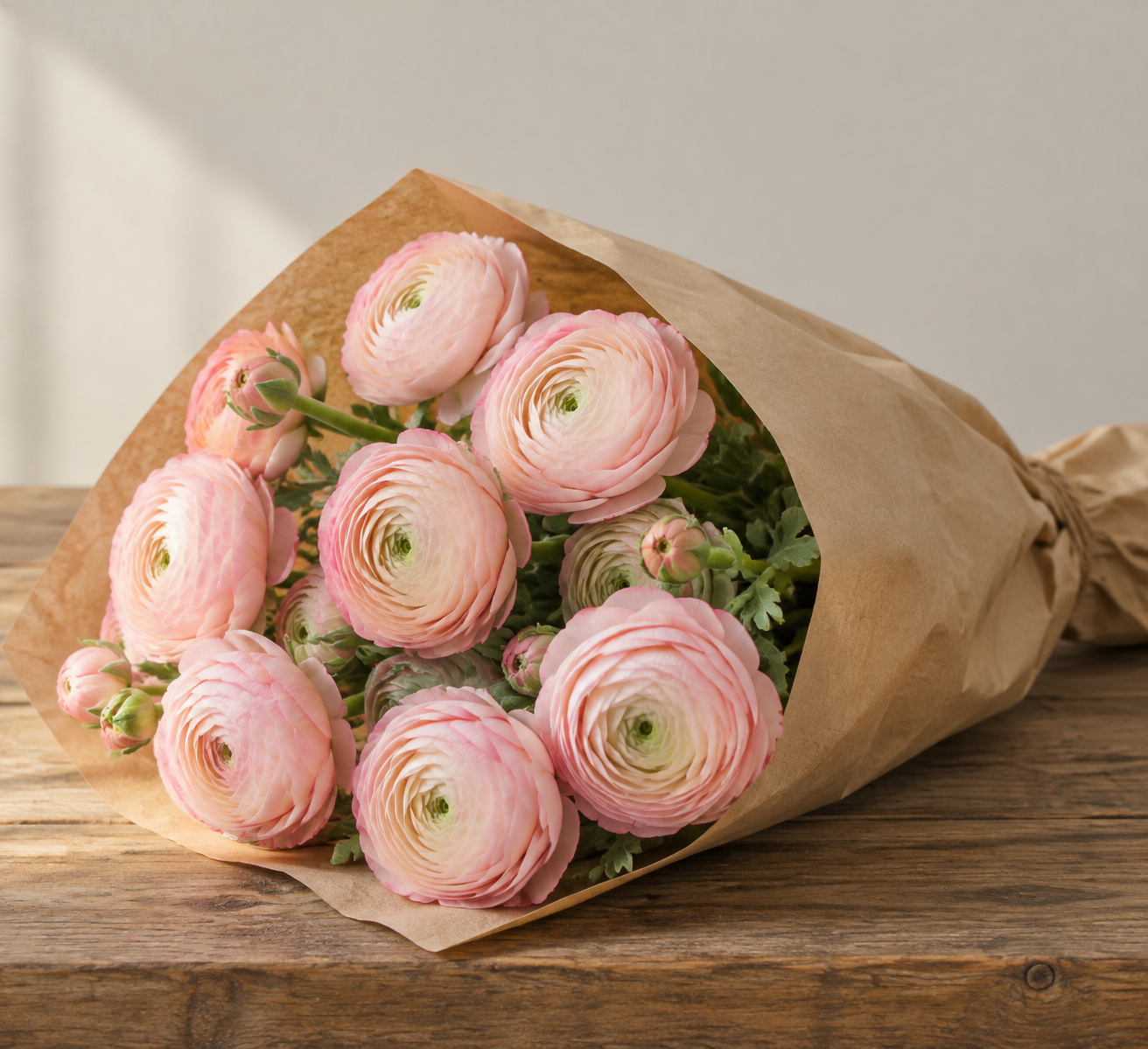
A ranunculus bloom is a spiral: layer upon layer of thin, slightly curved petals winding from a dark green center, rose-like in outline but lighter and more papery in hand. It is the flower that carried the 'garden rose look at a fraction of the cost' movement in wedding work, and in the language of flowers it stands for radiant charm and attraction — a meaning that fits a bloom built entirely of layers. Our flower meanings hub keeps the story.
The build standard is layer count. A quality ranunculus head carries dozens of petals spiraled to the center; low-grade pieces cut the inner layers, and the difference shows the moment a bloom is viewed from above. Every card here states its layer grade and pairs the head photo with a top-down close-up of the spiral.
Sizes and forms
Heads run 3 to 5 inches across on stems of 16 to 22 inches — the scale between a rose and a peony, which is exactly the niche it fills. Forms split between single stems (one fully-open spiral head, sometimes with a bud), semi-open 'cup' forms for depth in bouquets, and bud stems — tight, just-breaking buds that give arrangements their natural timing. Head forms and counts are stated in every title, measured flat with a tape reference.
One species, three head stages - and the near-relatives
Ranunculus is a single species in the trade (asiaticus), so the meaningful choice is head stage, not variety: fully open spirals for focal blooms, semi-open cups for mid-arrangement, and tight buds to carry the build's edge - florists mix all three, and the listings above stock each stage. Near-relatives share the paper-petal look: peonies run fuller and rounder, garden roses softer and larger-petaled; ranunculus keeps the tightest spiral and the visible layer count, which is the check worth making on any reproduction head.
Where they work best
Ranunculus is wedding-work royalty: DIY bridal bouquets pair it with garden roses and eucalyptus, bridesmaid bunches lean on it alone, and it threads into boutonnieres and crowns at small scale. Outside weddings, the same heads carry garden-style home builds — blush ranunculus in a footed bowl is the cottage-counter look. Because the fresh season is short, the silk version is how June bouquets get built in any month.
For bouquet builders, our how-to-make-a-wedding-bouquet guide walks the full build — ranunculus placement comes right after the rose base.
Colors that pair well
The palette runs soft and edible: cream, blush, peach and coral on the warm side; white for clean bridal work; burgundy and deep plum for moody autumn and winter builds. Pair blush with cream and eucalyptus green for the signature wedding look; burgundy with cream roses for contrast; coral with peach for summer. One rule holds: ranunculus colors are layered, not mixed — a two-tone head is labeled as such on the card.
What arrives, and the two minutes after
Spiral heads ship lightly cupped; two minutes per stem restores them — open the outer petals in two turning passes, then relax the inner spiral with a fingertip. The stems take a gentle curve bend. A shaping card ships in every box, and head forms and counts are stated in every title.
How to Choose Artificial Ranunculus
- Check the spiral from above.
Layer count is the quality line: a full head spirals dozens of petals to the center. Every card carries a top-down close-up for exactly this check.
- Mix the head stages.
Bouquets read natural with all three stages — open spirals, semi-open cups and tight buds. Stages are named per listing.
- Choose color by event temperature.
Cream and blush for the classic spring wedding; coral and peach for summer; burgundy and plum for autumn and winter builds.
- Count heads for the build.
A bridal bouquet takes 9–15 ranunculus heads among its roses; a vase arrangement 5–7. Head counts are printed in every title — the count you order is the count that arrives.
Buying Loose Stems in Bulk
Loose ranunculus stems are the DIY-bouquet species of choice: the stems bend to natural curves, the head stages build florist depth, and a dozen in hand is a bridal bouquet before wiring. Wedding color bundles are the semi-finished route - pre-counted color stories for bridesmaid builds. The self-wiring crowd buys stems; the one-morning wedding party takes bundles.
Frequently Asked Questions
Is ranunculus a good alternative to roses for a bouquet?
For the garden-look bouquet, yes — that is precisely the role it took over in wedding work. A ranunculus head gives the layered outline of a garden rose at a lighter weight and typically a lower price per stem, with a papery texture that photographs softly. The honest trade: it lacks a rose's scent and its silhouette is looser, so formal builds still anchor on roses and let ranunculus fill the garden feel between them. Most of the DIY bouquets built from this shop mix the two.
When is fresh ranunculus in season?
The main season runs late winter through spring — January to May in the trade — with prices softest at the peak and steep at the fringes. Brides marrying outside that window either pay import premiums or switch, which is exactly where the silk version earns its place: the same spiral head in November as in April, at the same price, for bouquet builds that can be assembled weeks ahead instead of the week of.
How many ranunculus stems do I need for a bouquet?
For a bridal bouquet, nine to fifteen ranunculus heads mixed among roses and greenery is the working range; a bridesmaid bunch takes five to seven; a home vase takes five to seven with a smaller scale. Mix the head stages — open spirals, semi-open cups and tight buds — for the natural look. Head forms and counts are printed in every title, so the build math holds at checkout.
How do I open the spiral heads after unboxing?
About two minutes per stem. Heads ship lightly cupped: open the outer petals in two slow turning passes, then relax the inner spiral with a fingertip — never pull the center, which is where the layers live. Give the stem a gentle curve. A shaping card with photos ships in every box, and the same steps appear on the product page.
Shop Artificial Flowers
By Species
Bulk & Wholesale
Stems & Craft Basics
Flower Guides
The full DIY build — rose base first, ranunculus placed second, greenery last.
Radiant charm and attraction — the ranunculus story beside every other species.
Dusting papery spiral heads without lifting the layers — care by material.