
Blog
How to Clean Artificial Flowers (Without Ruining Them): 5 Methods by Material

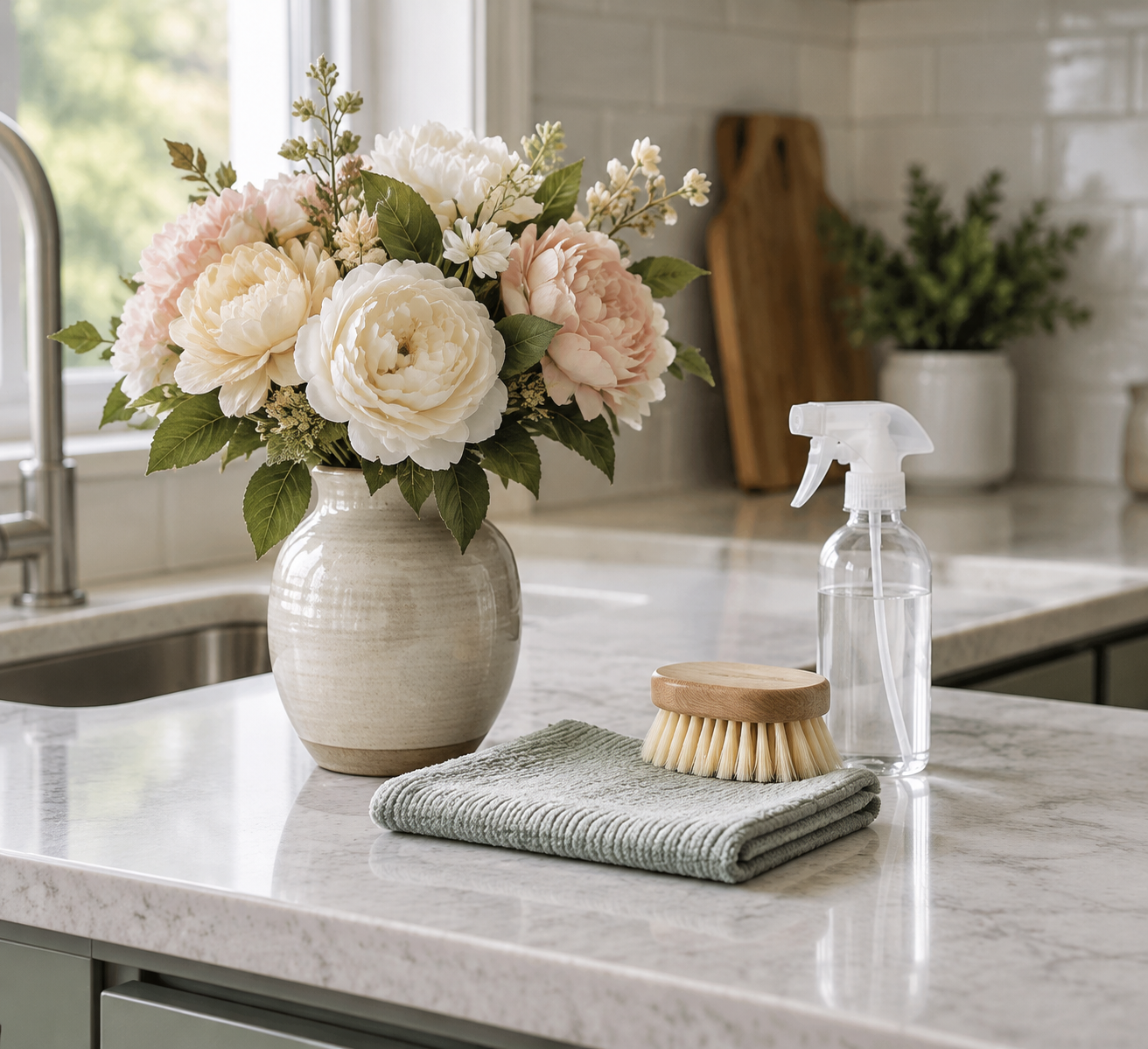
By Evercombe Team · Updated October 12, 2026 · 7-minute read
Quick answer: Dust artificial flowers weekly with a feather duster or a cool hair-dryer blast. For grime, mist silk blooms with a 1:1 white-vinegar-and-water spray and blot — do not soak. Only PE, plastic, and treated polyester can take a real water rinse; foam and paper blooms must never touch water. Clean salt-in-a-bag works as a gentle scrub for sturdy stems.
Most people clean fake flowers exactly once: the day they notice the dust. By then the grime has bonded and every hurried fix — the dishwasher, the garden hose, a wet rag dragged across silk — is how good flowers die young. Five minutes a month is genuinely all it takes. Here is the routine, and the chart that keeps you out of trouble.
The Golden Rule: Match the Method to the Material
The single most expensive mistake in this whole topic is treating “artificial flowers” as one category. They are not. A water rinse that leaves PE hydrangeas looking factory-fresh will destroy an EVA foam rose into a sagging gray sponge. Before anything else, identify what you own:
| Material | How to identify | Water? | Sensitivity |
|---|---|---|---|
| Silk / polyester | Soft woven fabric petals | Light mist only | Dyes can bleed; shapes sag when soaked |
| Real-touch latex/PU | Waxy, skin-like give | Wipe with damp cloth | Coating scuffs; never submerge |
| PE (molded) | Firm, slightly plasticky, crisp edges | Yes — rinse freely | Stems often have wire; dry joints |
| EVA foam | Spongy, matte, feather-light | Never | Water stains and dissolves edges |
| Paper / dried-look | Brittle, papery petals | Never | Collapses on contact |
| Plastic (budget) | Glossy, uniform sheen | Yes | Fades in sun regardless |
Method 1: The Weekly Dust-Off (2 minutes, everything)
Work top-down with a feather duster, then hit the inner petals with a hair dryer on the coolest setting held 20 cm away. The air blast does the work — don’t let the nozzle touch the blooms. This is the whole secret of people whose fake flowers “never look old”: dust never gets a month to cake in.
Method 2: Vinegar Spray for Silk (the monthly reset)
Mix equal parts white vinegar and water in a spray bottle. Mist lightly from 30 cm — you want droplets, not a shower — then blot petals gently with a microfiber cloth and let the piece air-dry fully before it goes back in sunlight. The vinegar cuts the electrostatic film that holds dust, and it deodorizes that closet smell older arrangements pick up.
One caution from hard experience across cleaning blogs and our own staff tests: test a single back-facing petal first. Most quality silk dyes are set, but deep reds and navies from budget batches have bled onto lighter adjacent petals when oversprayed.
Method 3: The Salt Bag (sturdy stems, no liquid)
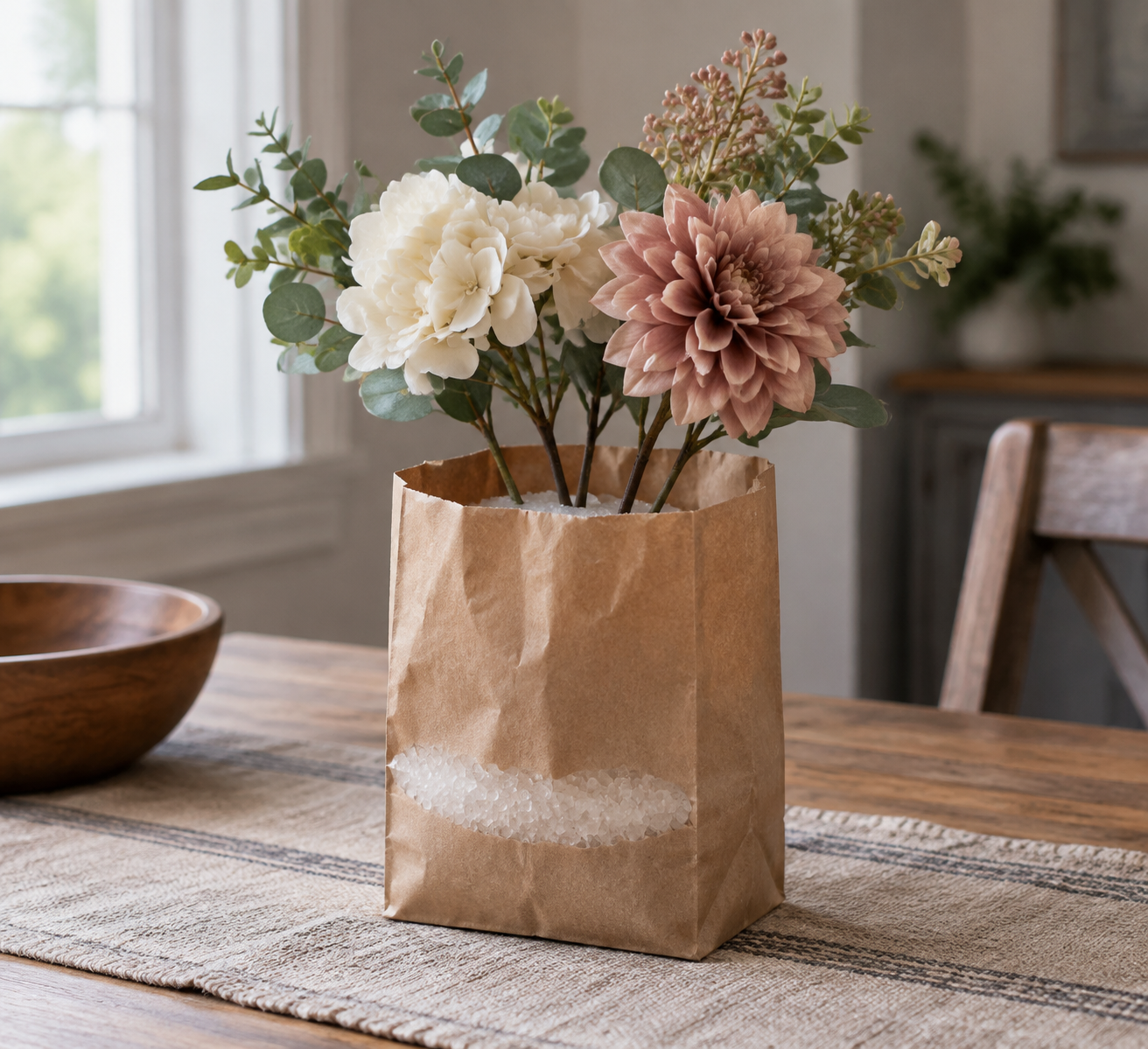
Pour half a cup of coarse salt into a paper bag, drop in 3-4 blooms stem-first, and shake for 30 seconds like a cocktail. The salt granules scrub dust off petal surfaces without any water at all. Pour the salt away afterward — it carries the grime. Old-school florists have used this trick on display flowers for decades; it’s still the best option for foam-adjacent blooms that can take gentle abrasion but not moisture.
Method 4: Water Rinse (PE and plastic only)
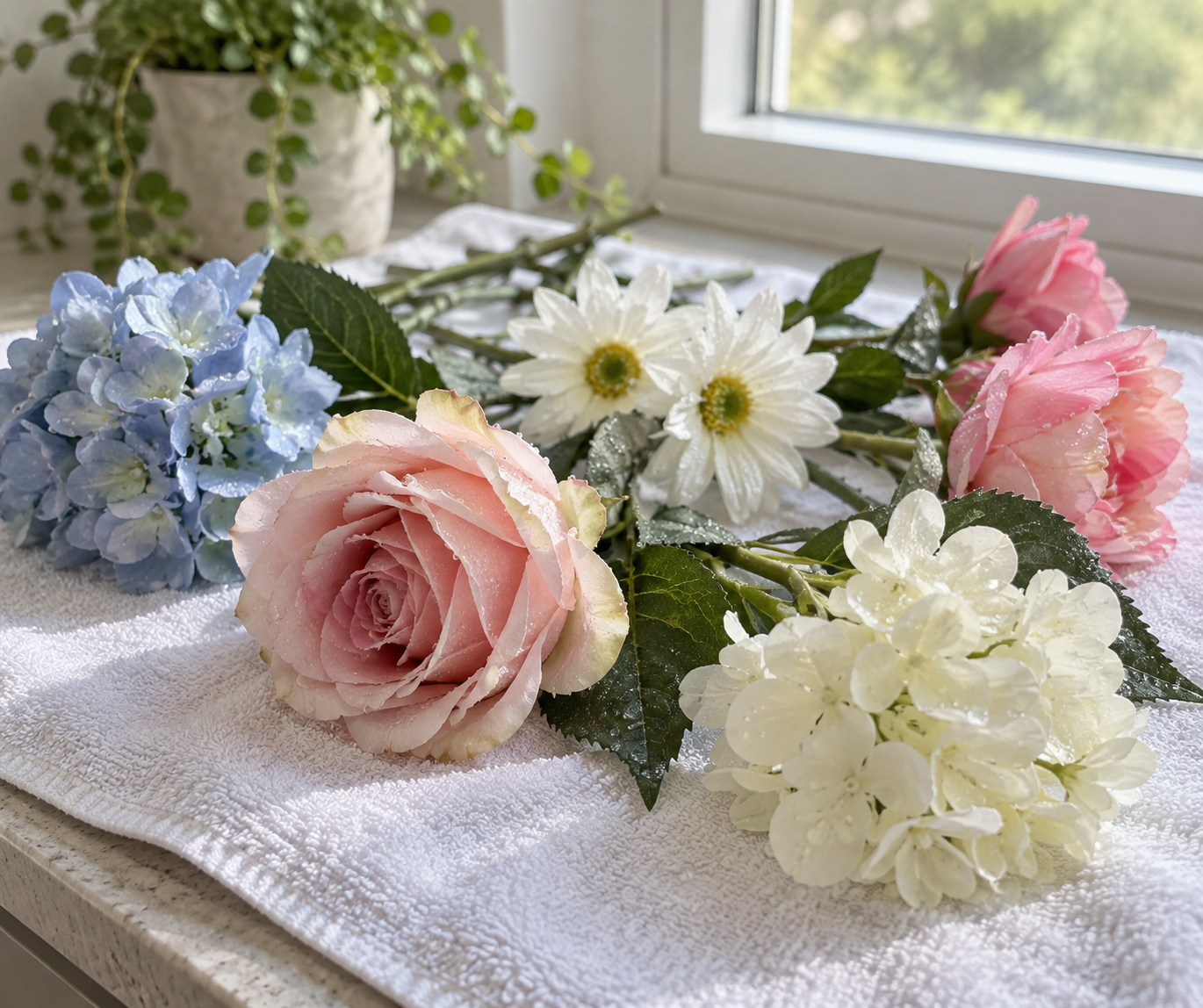
Take the piece outside or to the sink. Lukewarm water, a drop of dish soap, rinse downward from the bloom so water travels the way rain would. Shake out, pat the petal cups where water pools, and dry upside down in a rack for a few hours. Wire inside stems can rust at the cut ends if left soaking — keep baths short and drying long.
Method 5: Damp-Wipe for Real-Touch
Real-touch latex and PU blooms are the divas: their coating is what you paid for. Wipe each petal with a barely-damp microfiber cloth, no soap, no spray, no scrubbing. Pressure and solvents are the enemies here — treat the coating like you’d treat a matte-finish nail. If the piece is a real-touch flowers bridal keepsake, this two-minute wipe a few times a year is all the maintenance it will ever ask for.
The Material × Method Chart (save this one)
| Method | Silk | Real-touch | PE | Foam | Paper | Plastic |
|---|---|---|---|---|---|---|
| Feather duster / cool air | ✓ | ✓ | ✓ | ✓ gentle | ✓ gentle | ✓ |
| Vinegar mist + blot | ✓ | ✗ | ✓ | ✗ | ✗ | ✓ |
| Salt bag | ✓ | ✗ | ✓ | △ gentle only | ✗ | ✓ |
| Water rinse + soap | ✗ | ✗ | ✓ | ✗ | ✗ | ✓ |
| Damp cloth wipe | ✓ | ✓ | ✓ | ✗ | ✗ | ✓ |
| Dishwasher / washing machine | ✗ | ✗ | ✗ | ✗ | ✗ | ✗ |
The Dishwasher Story (Learn From It)
Machines add heat, agitation, and chemistry you cannot control. Every method above exists because it gives you control. Use them.
Prevention: Make Cleaning Rare
- Keep arrangements out of direct sun lines — UV is what turns “patina” into “damage.”
- A light coat of silk-flower protection spray (florist supply shops carry it) slows dust adhesion.
- High-shelf pieces collect grease if they sit near kitchens; reserve fabric blooms for elsewhere.
- Rotate pieces room-to-room yearly — the dust profile differs, and it spreads wear evenly.
How to Store Artificial Flowers (So Next Season Starts Clean)
Storage is where next year’s cleaning job is created or prevented. Wrap each arrangement loosely in tissue or a pillowcase — plastic bags trap humidity and can set creases into polyester petals. Lay long stems flat in a box tall enough to avoid bending, or hang bouquets upside down from a skirt hanger in a closet. Keep the box off the garage floor (temperature swings, damp) and away from the attic in summer heat, which can permanently flatten real-touch petals. Cushion wreaths in their own box with nothing stacked on top.
Unboxing next season: a quick fluff, a 60-second dust-off, and the piece is display-ready. Deep-cleaning is only for pieces that sat out all year.
FAQ
Can you wash artificial flowers with water?
Only PE (molded) and basic plastic flowers can take a full water rinse. Silk and polyester should get a light vinegar mist at most, and foam or paper flowers must never touch water — foam blooms degrade into a sagging sponge.
How do you clean dusty silk flower arrangements?
Start with a feather duster plus a cool hair-dryer blast for inner petals. If dust has cake on, use the 1:1 white-vinegar-and-water mist, blot with a microfiber cloth, and air-dry away from sunlight until fully dry.
Is it safe to put artificial flowers in the washing machine or dishwasher?
No. Heat, agitation, and detergent chemistry are uncontrolled in machines, and documented attempts have permanently dyed and deformed silk flowers. The five methods above take less time than a wash cycle anyway.
How often should artificial flowers be cleaned?
Dust weekly (two minutes with a duster or cool air), deep-clean every 2-3 months for displayed pieces, and clean once before long-term storage. Pieces near kitchens or open windows collect grease and pollen faster.
How do you clean white artificial flowers that have yellowed?
Yellowing on white silk is usually age, UV exposure, or nicotine/grime film — a vinegar mist removes the film and can noticeably brighten the piece, but UV-yellowed polyester is chemically changed and won’t fully whiten. Prevention (shade placement) beats cure.
Does dust ruin artificial flowers permanently?
Dust itself is removable at any point; the damage comes from wiping caked dust with pressure, which grinds grit into fabric weave. That’s the real argument for the quick weekly pass — it prevents the deep-clean that does the harm.
Related Reading
- Best Artificial Flowers — which materials are worth buying before you invest care in them
- Best Artificial Flowers That Look Real — the realism ranking by flower type
- Shop artificial flower arrangements — silk, PE, and real-touch, labeled by material