
Quick answer: Artificial daisies come in the two forms the name covers: the shasta daisy (white petals, yellow center) and the gerbera daisy (wider colors, fuller petal ring), as single stems, sprays and bush pieces 14-24 inches. They stay open where fresh daisies close at night and fade inside a week - the easiest starting flower in the category for jugs, kitchens and kids' rooms. Buy shasta for the classic look, gerbera for color; stem counts are stated per listing.
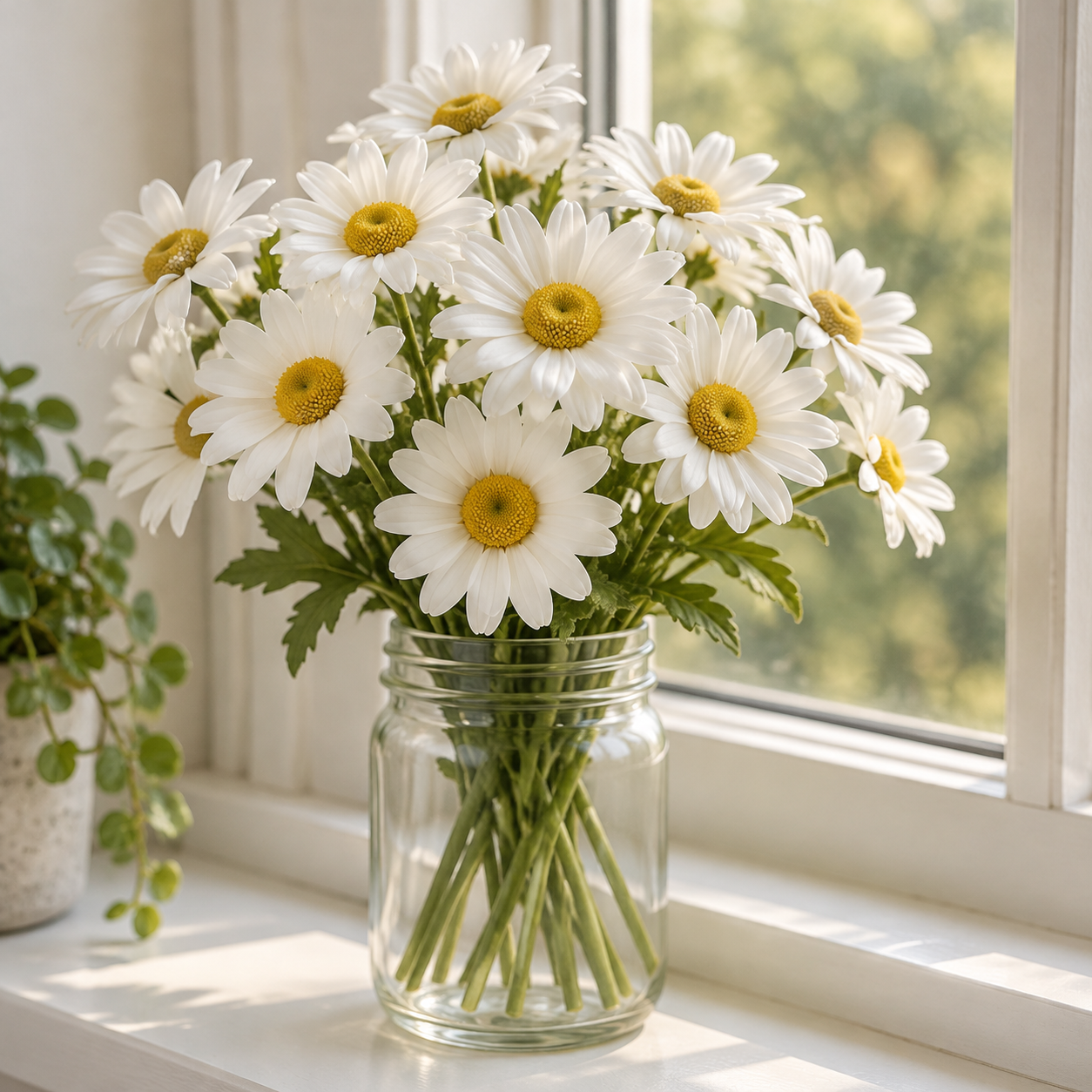
Artificial daisies in both forms the name covers — the classic white-petal, yellow-center shasta daisy, and the fuller gerbera daisy with its wider color range. Single stems, sprays and bush pieces from 14 to 24 inches, the easy starting flower for jugs, kitchens and kids' rooms. Fresh daisies close at night and fade inside a week; these stay open year-round. Every listing photo shows the exact stems you receive. The petal count is the honesty check: a real shasta carries its white rays in a level ring around the gold disc, and the build here holds that discipline rather than fluffing into generic daisy-shape. White with yellow does kitchens and kids' rooms at the price entry point of the whole category; gerbera colors - coral, pink, purple, bi-color - carry spring tables and birthday builds. A handful in a jug is the finished look; nothing else required.
Artificial Daisies, Explained
What an artificial daisy is
The name covers two plants. The shasta daisy is the classic: a ring of white petals around a yellow center, one bloom per slender stem, the flower of meadows and cottage borders. The gerbera daisy is its fuller cousin — layered petals in white, yellow, pink, coral and more, on a chunkier stem — the version florists dye by the season. Both are stocked here with the form stated per listing. In the language of flowers, the daisy stands for innocence, purity and new beginnings — it is the April birth flower and the classic new-baby stem; our flower meanings hub holds the story.
The fresh daisy's habits are the case for silk: cut daisies close their petals at night and fade inside a week, and gerberas wilt at the neck. The artificial bloom holds its open face permanently, which is why it anchors so many of the shop's starter bundles.
Sizes and forms
Shasta blooms run 2 to 3 inches on 14 to 20 inch stems; gerbera blooms run 3 to 4.5 inches on 18 to 24 inch stems. Forms split three ways: single stems (one bloom — gerberas often carry a secondary bud), multi-bloom sprays (three to seven heads for loose builds), and bushes (eight to fifteen small heads) for kitchen jugs and wreath work. Bloom counts are stated in every title, measured flat with a tape reference.
Shasta, gerbera - and the near-relative chamomile
The shasta daisy is the reference: a level ring of white rays around a gold disc, the roadside-and-cottage reading that pairs with everything. The gerbera daisy is the shop version of the same idea - wider petal bands, layered rings, a color range that runs coral through deep red to purple and bicolor, on longer stems; it is the birthday-bouquet and spring-table daisy. Chamomile sits nearby as the fine, feathery-leafed white miniature, stocked when listed as its own stem and loved for kitchen sills. On reproduction pieces the difference shows in petal ring discipline - shasta flat and level, gerbera layered - and both builds appear across the stems, sprays and bushes above.
Where they work best
Daisies are the everyday flower: kitchen-counter jugs, bathroom shelves, kids' rooms and porch buckets in the farmhouse palette. They are the starter stem for a first arrangement — three sprays and a jug is a finished look — and the filler that lightens dense builds alongside hydrangea or peonies. Spring and Easter displays lean on them heaviest, but unlike most spring flowers the daisy palette never goes out of season.
Colors that pair well
White shastas pair with everything — that is their job — from lavender and pale pink to bold sunflower orange. Yellow centers mean yellow blooms elsewhere should be deliberate, not accidental. Gerberas carry the color work: pink with white for nurseries, coral and yellow for summer tables. The daisy rule of thumb is the meadow rule: three or more colors reads cheerful, one color reads clean, and both are right.
What arrives, and the minute after
Blooms ship flat-petaled; a minute per stem opens the face — lift the petals from the center in one turn, and bend the gerbera stems to their natural slight s-curve. Nothing else needed. A shaping card ships in every box, and bloom counts are stated in every title.
How to Choose Artificial Daisies
- Pick shasta or gerbera by the look.
Cottage and farmhouse rooms → white shastas, one bloom per stem; color work and fuller builds → gerberas with their layered heads and wider palette.
- Match stem count to the vessel.
A kitchen jug takes 5–7 stems; a bud vase takes 1–3; wreath and garland work starts from bushes. Counts are printed per listing.
- Let white do the pairing.
White shastas fit beside any color scheme; when using yellow or pink gerberas, plan them as the accent rather than the base.
- Start small and add.
Daisies are the entry point of the price band — a first bundle of three sprays plus a jug tests the look before committing to a full shelf run.
Buying Loose Stems in Bulk
Loose daisy stems and sprays are the entry build of the whole hobby: a handful into a jug or mason jar is the finished cottage look, and the price per stem makes experimentation free. Bush pieces are the semi-finished form - one bush fills a windowsill or small table in a single placement. Bulk stems serve party builders and classroom projects; the home buy is five stems and a jug you already own.
Frequently Asked Questions
Do fresh daisies close at night?
Yes — daisies are nyctinastic: the petals fold over the yellow center each night and reopen with morning light, and a cut stem keeps that rhythm for a few days before fading altogether, usually inside a week. The artificial bloom holds its open face around the clock, which matters less on a kitchen counter and more in a photo, a shop display or a bedroom shelf that gets seen at all hours.
What is the difference between a daisy and a gerbera daisy?
Form and scale. The classic shasta daisy is a single ring of white petals around a yellow center — small, one bloom per slender stem, the meadow look. The gerbera daisy is a different species in the same family: layered, fuller heads from 3 to 4.5 inches, a much wider color range, and chunkier stems — the version florists dye seasonal colors. Both are stocked here and the form is named in every title, because they are not interchangeable in a build.
What do daisies symbolize?
Innocence, purity and new beginnings — which is why the daisy is the April birth flower, the classic new-baby stem and the flower of the 'he loves me, he loves me not' game. White carries the innocence reading directly; gerberas in color add cheer and friendship on top. The full story — daisy beside every other species stocked here — is in our flower meanings guide.
How do I open the blooms after unboxing?
About a minute per stem. Blooms ship flat-petaled for protection: lift the petals from the center in one turning pass, and give gerbera stems their natural slight s-curve with a bend of the wire core. The petals hold where you leave them. A shaping card with photos ships in every box, and the same steps appear on the product page.
Shop Artificial Flowers
By Species
Bulk & Wholesale
Stems & Craft Basics
Flower Guides
The daisy's own month — innocence and new beginnings, from the calendar's April page.
The daffodil month, where daisies ride along as the early-spring companion stem.
Dusting small multi-head sprays without bending stems — material by material.