
Lavender Artificial Flowers
Lavender is the one word on the color axis that means two things: the plant — slim purple stems, the whole Provence picture — and the soft grey-purple shade itself. This collection holds both: true-to-form lavender stems and bunches, lavender mixed with blues and creams for the color alone, and dried-look pieces for the texture. Bloom, greenery and stem materials are stated on every card.
Quick answer: Decide which lavender you mean before buying: the plant (field stems in bundles of 12 to 24, the Provence look), the color (lavender-and-blue mixes), or dried-look texture pieces. Stems run 18 to 24 inches from 13 USD; finished arrangements 40 to 180. Bundles of three stems in different vessels is the classic kitchen register.
The 30-Second Lavender Pick
- Start here: pick which lavender you mean — the plant (field stems, the Provence look), the color (lavender-and-blue mixes), or the texture (dried-look pieces).
- Materials per piece: fabric, PE-film or latex-touch petals, wired stems — stated bloom, greenery and stem separately on every card.
- Heights: stems 18–24 in for your own vases; potted pieces 8–14 in; finished arrangements 10–20 in — exact H×W per listing.
- Price band: single stems from $13, potted pieces $29–58, finished arrangements $40–180; free US shipping over $200.
Why lavender, and where it works hardest
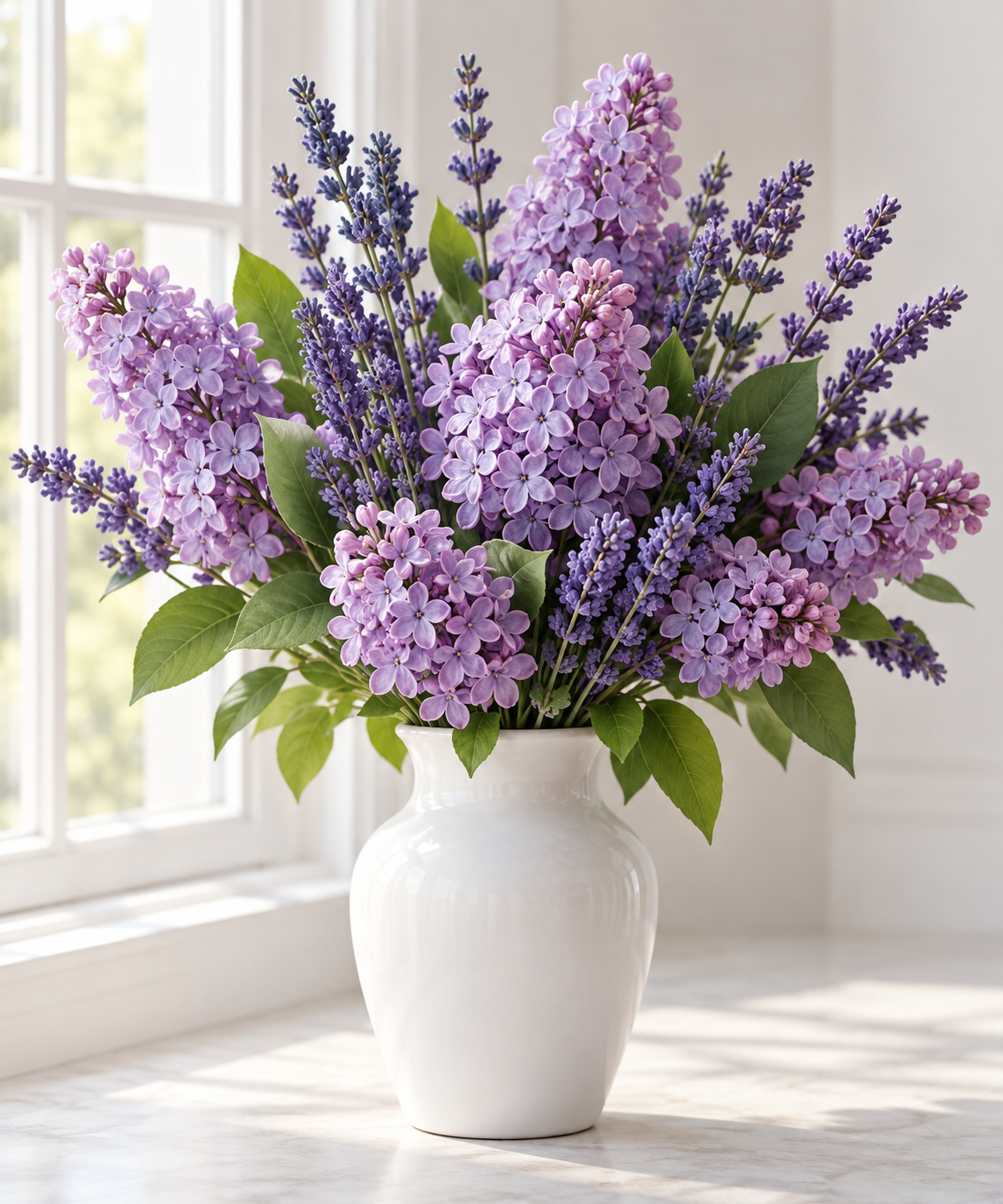
Lavender's double identity is its whole appeal. As a plant, it carries the Provence picture — kitchen counters, bath shelves, the market-bunch look that fresh lavender never delivers past a week; as a color, it is the soft grey-purple that bedrooms choose when they want calm without the coldness of blue. It is also the flower world's most familiar scent association — and the honest note for faux buyers: these stems carry no scent, which some owners fix with a drop of essential oil on the ribbon, and the look carries the room regardless.
How to Choose Lavender Faux Flowers
Four decisions — settling which lavender you mean is the first one.
Which lavender do you mean?
- How much lavender?
The plant register rewards multiples — two or three stem bunches in different vessels is the classic Provence styling. The color register works as one soft statement per room; the dried-look end suits small texture moments (shelves, trays) rather than centerpieces.
- What room is it for?
Kitchens and baths own the field-stem look; bedrooms take the color mixes with blue and grey; entry tables and gifts work from any group. The deeper purple end of the shade lives on the purple collection.
- How close will people stand?
Lavender stems are slim and get handled — bath-shelf pieces especially. The latex-touch line holds up best to touching; standard fabric reads fine at shelf distance on every card either way.
- Daylight or lamplight?
Lavender is the axis's most light-sensitive shade — daylight keeps it cool and grey-leaning, warm lamps can pull it toward pink. Bath and bedroom pieces live under evening light; judge those from the warm-lit photo on the card.
Frequently Asked Questions
Do lavender flowers mean the color or the plant?
Both, and this page is built for both. As a plant, lavender means the slim-stemmed purple herb — bunches, bushes, the Provence kitchen picture — and the field-stems group here is exactly that. As a color, lavender is the soft grey-purple shade, and the mix group uses it as one color among blues and creams. Searchers type the same word for both intentions; the two deeper questions — what it goes with and where it works — have different answers for each, so settle which one you mean first.
What colors go well with lavender artificial flowers?
Lavender with grey is the soft-modern standard; with cream it reads farmhouse-gentle; with sage green it is the cottage pairing; with dusty blue it makes the triangle that soft weddings run on. Because lavender leans grey rather than saturated purple, it tolerates both cool and warm company — one of the few shades on the axis that genuinely works in both regimes.
What are lavender artificial flowers made of?
Three petal families appear across this collection — polyester-blend fabric, PE film and latex-touch — and every product card states which, for blooms, greenery and stems separately. Stems are wired, so a bend holds its shape — useful on lavender, whose slim stems do most of the styling work. The bud structure deserves the close-up check: lavender's tiny staged buds are where budget versions flatten into tubes.
How do I clean lavender artificial flowers?
A cool hair-dryer burst or soft brush weekly, and a barely damp cloth every couple of months. No water on latex-touch petals — wipe-only for those. Slim stems and fine buds collect dust in the joints; a soft brush does the work a cloth cannot. The full method by material is in our cleaning guide.
Where should lavender decor go in the house?
Its three native rooms: the kitchen (stem bunches by the window, the Provence register), the bath (lavender plus grey or white, the spa picture without humidity worries — faux ignores steam that kills dried lavender), and the bedroom (the color mixes, read at the end of the day). One honest note: faux lavender carries no scent — the association does the calming work visually, and owners who want the scent add a drop of essential oil to the ribbon, never to the stems.