
Flower Vases
Vases for every flower and every surface — bud glasses, glazed ceramics, clear cylinders and floor statements in one place. Each listing states the opening width, the total height and whether it holds water, so the pairing you are planning is a measurement, not a guess.
Quick answer: Size a vase to its stems before its looks: cut stems to 1.5–2× vase height — an 8-inch vase carries 12–16-inch stems — and give faux builds a mouth about three finger-widths to grip the bunch. Dining tables stay under 12 inches; floor pieces start at 20. Typical pieces run $15–90 USD as of October 2026, not by the case.
The Proportion Rules: Height, Mouth, Stems
Two ratios carry most of vase craft. The stem rule for cut flowers — fresh or loose faux — is 1.5 to 2 times vase height: an 8-inch vase wants 12–16-inch stems; a 12-inch vase wants 18–24. Cut below that and blooms drop to the rim (the common "drowned" look); above it and the arrangement becomes top-heavy. The mouth rule for faux: a mouth about three finger-widths across grips a standard bunch at the angle you set it; wider mouths need a grid of clear tape across the top or a foam frog inside, which is exactly why vases built for artificial flowers ship narrower-mouthed than fresh-flower vessels — no water weight needs accommodating, so the grip does the design work.
Table rules of thumb: dining-table vases stay under 12 inches tall to keep sightlines open (height from candles, not blooms); console and mantel vases run 10–16; floor vases start at 20 inches and carry 40–60-inch stems — pampas, branches, gladiolus builds. Every listing states measured height and mouth diameter, because mouth diameter is the spec that decides whether your existing stems fit, and it is the one most listings elsewhere leave out.
Vase Types and What Belongs in Them
Materials: Ceramic, Glass, Stone — What Each Does With Faux
Choosing a vase comes down to material, shape and size — in that order, because material sets the mood, shape sets the use, and size sets the room. The four materials this collection is built on, across the dimensions that actually matter with faux stems:
Styling: The Grouping Rules That Do the Work
Three rules produce 90 percent of styled-looking vignettes. Odd numbers: group vases in threes or fives — a single statement vase stands alone, pairs read as bookends, and odd groups read as composed. One material family per vignette: three ceramics in different heights beat one ceramic, one glass, one metal; mix materials between vignettes, not within them. Height steps of 2–4 inches: a 6, a 9, and a 12 stagger reads intentional; three vases within an inch of each other read as clutter. Keep the grouping to one per surface — the shelf with one styled trio reads curated, the shelf with six vases reads stored — and rotate contents seasonally: the same ceramic trio runs tulips in spring, wheat in fall, and greenery at the holidays. For event and wedding work, the same rules scale — 10–20 matching cylinders down a long table read as one designed installation.
Fresh Versus Faux: One Vase, Two Behaviors
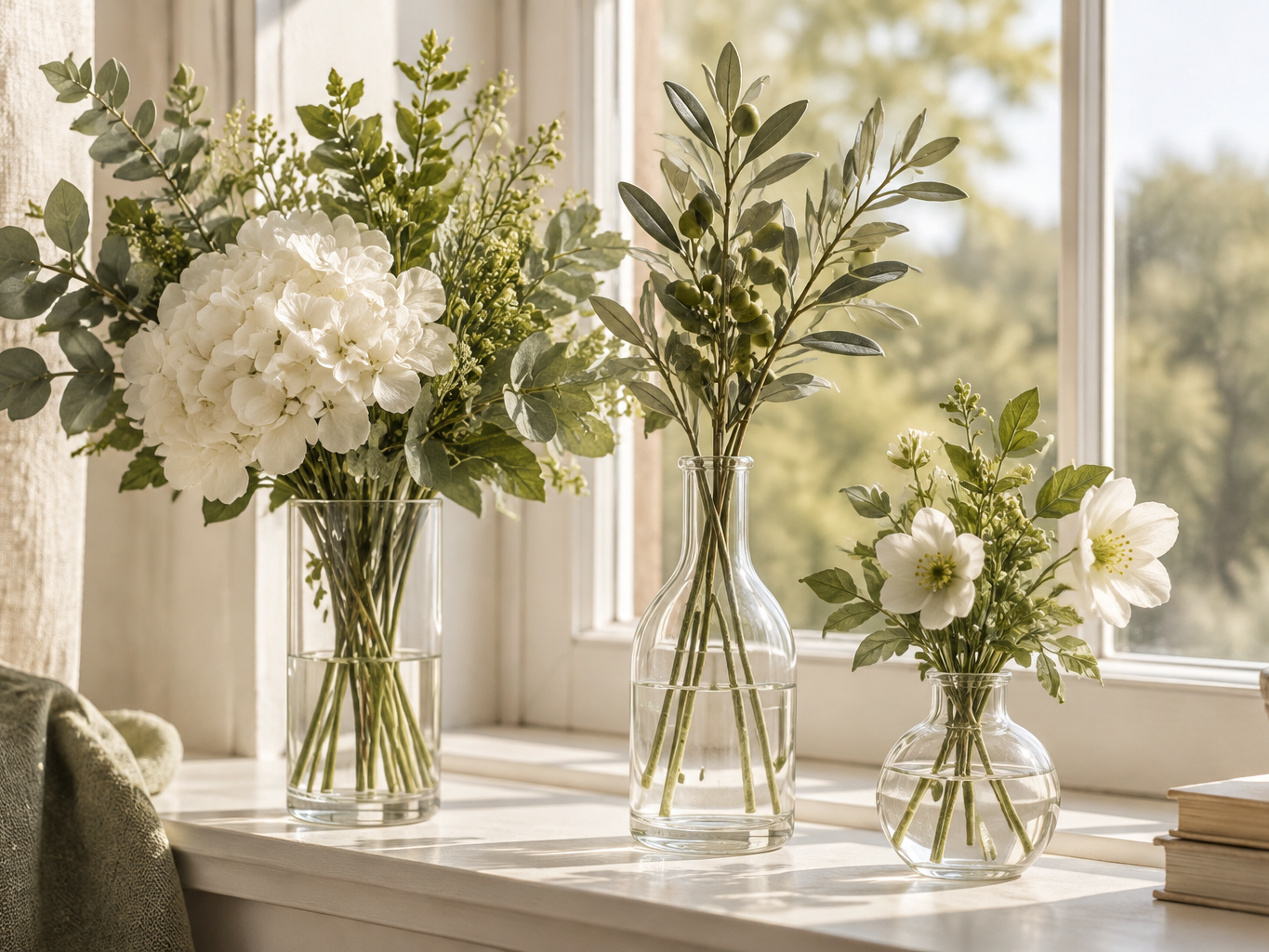
A vase is not neutral between fresh and faux — it is a mechanism. Fresh needs width for water volume and a mouth loose enough for re-cutting; faux needs grip (narrow mouth, tape grid, foam) and opaque walls or a liquid-illusion fill to hide that grip. That is why faux-specific vases look narrower-mouthed than fresh vessels of the same height. If you run both worlds, the versatile fleet is: one or two clear cylinders (fresh; or faux with illusion resin), a ceramic standard for everyday faux, and a floor vase for tall builds. The dedicated alternatives — bud vases for single stems, centerpiece vases for tables — exist because their proportions are tuned to one job, and a vase doing its one job is what makes the whole room read styled rather than stored.
Small Batches, Not Case Quantities
Wholesale suppliers in this category sell vases by the case of 24 — fine for florists, wrong for a dining room refresh. This shop is built the other way: single pieces, curated sets of three, and flower-plus-vase bundles priced as one listing. Typical pieces run $15–90 USD as of October 2026 (competitor ranges across the board: $4.99–279.99); event quantities of twelve and up get their own bulk notes on the bud and centerpiece pages, with case pricing in the bulk tier making the 10–20 piece order the economical unit.
What Arrives, and What It Pairs With
Glass and ceramic are freight that deserves respect: protective packaging for breakables is specified per piece, with the final shipping spec (double-boxing, foam inserts) being confirmed with suppliers — the confirmed standard will be printed on every listing rather than promised here first. Each vessel is photographed empty and styled with stems, so you see both states before ordering. And because we sell the flowers too, every vase page links to stems that fit its opening — the arrangement collection is one click from here.
How to Choose a Flower Vase
- Pick the job before the object. Bud, table, centerpiece, or floor — the job sets the size band.
- Apply the stem rule. Fresh or loose faux at 1.5–2× vase height; check your stems' cut length against the listing's height.
- Match material to contents. Ceramic for foam-and-gravel faux, glass for illusion builds and singles, stone for sculptural empties, metal for dry branches.
- Check the stated mouth diameter. Three finger-widths grips a standard bunch; wider wants a tape grid, frog or foam.
- Decide if it must hold water. Watertight flag on every listing: glazed ceramic and glass usually yes, unglazed and porous bodies decorative-only — the flag, not the material name, is the answer.
- Plan the group. Odd numbers, one material family, 2–4 inch height steps — buy one statement or a set of three, priced per listing, not per case.
Frequently Asked Questions
What size vase do I need for my flowers?
Use the one-and-a-half to two times rule: finished stems should stand 1.5–2× the height of the vase, so an 8-inch vessel carries a 12–16 inch display and a 12-inch vase carries 18–24. For width, the bouquet at its fullest should stay within about one and a half times the opening diameter. Dining tables cap vases at about 12 inches so guests see each other (candlesticks carry the height instead); consoles and mantels carry 10–16; floor vases start at 20 inches and take 40–60-inch stems. Every listing here states total height and opening width as photographed, so the check takes ten seconds with a tape measure — before ordering, not after.
What is the best vase for artificial flowers?
A vase with a mouth about three finger-widths across and opaque walls. The narrow mouth grips a standard bunch at the angle you set it — no water weight needs accommodating — and ceramic or stoneware hides the foam block, gravel, or tape grid that holds faux stems at their designed lean. Clear glass works for two looks: liquid-illusion builds (faux-water resin that locks stems and reads as water) and single dramatic stems where mechanics are not in view. Plain foam in clear glass is the category's classic mistake; every vase listed for artificial flowers here states mouth diameter so the grip question is answered before checkout.
Ceramic or glass vases — which is better?
Neither, universally — they solve different problems. Glass is light, transparent and shows the stems, which suits single stems, layered candle displays and modern rooms; it breaks when dropped. Ceramic is heavier and steadier — better on dining tables and in busy households, warm in look, glazed or matte; it chips under hard knocks rather than shattering, and unglazed bodies may not hold water. Weight, look, durability, use and typical price for all four materials sit in the comparison table above.
Can artificial flowers go in a vase with water?
They can, with two cautions. Faux stems are wired and fabric-wrapped: a few hours in water is harmless, but long soaks can wick moisture into the stem core and dull the wrap. Many shoppers fill a watertight vase with clear faux water resin or layered glass beads instead — the look of water, none of the wicking. Whether each vessel is watertight is flagged on its listing, and our vase-for-faux-flowers guide lists the fill tricks stem by stem.
How do I style multiple vases together?
Three rules: odd numbers (threes and fives read composed; pairs read as bookends; a single statement piece stands alone), one material family per vignette (three ceramics of different heights beat a mixed trio — vary materials between vignettes, not within), and height steps of 2–4 inches between pieces so the group staggers intentionally. Keep the grouping to one per surface; the shelf with one styled trio reads curated, the shelf with six vases reads stored. Rotate contents seasonally — the same ceramic trio runs tulips in spring, wheat in fall, and greenery at the holidays.
Can I use a floor vase with artificial flowers?
Floor vases are the strongest artificial-flower format in the house: at 20 inches and up they anchor corners, entry tables, and the dead space beside reading chairs, and tall faux builds — pampas at 40–60 inches, branch and blossom sprays — stand in them for years with zero maintenance. Two practical notes: weight the base (a layer of gravel in the bottom keeps a top-heavy tall build from tipping), and grip the stems with a narrow-mouth insert or a foam block wedged at the shoulder, because a wide floor-vase mouth holds nothing at an angle by itself.
How many vases do I need for a wedding or event?
Count by the table plan: one centerpiece vessel per guest table plus two to four for head and vendor tables — a 100-guest wedding with ten guest tables lands at 12–14 — plus bud-vase groupings (usually in threes) for signage and bar areas, and cylinder runs for long-king's-table formats measured to the table length. Case pricing in the bulk tier makes the 10–20 piece order the economical unit, and the odd-number and height-step styling rules scale straight up: matching cylinders down a long table read as one designed installation rather than twelve purchases.
What is the difference between a vase built for faux versus fresh flowers?
Mechanics. A fresh vase optimizes water: wider body for volume, mouth loose enough to re-cut and re-arrange stems daily. A faux vase optimizes grip: narrower mouth (about three finger-widths) that holds a bunch at its set angle, and opaque walls or a liquid-illusion fill that hide the foam, gravel, or tape grid doing the holding. That is why faux-specific vases look narrower-mouthed than fresh vessels of the same height — no water weight to accommodate.
How are glass and ceramic vases packed for shipping?
Breakables get protective packaging specified per piece — the kind of foam-lined, double-boxed treatment vases need to survive freight. The exact final spec is being confirmed with our suppliers as part of the shipping terms, and the confirmed standard will be printed on every listing rather than promised in prose first. What we state now is the inspection side: pieces are checked for scratches and finish chips before they ship, because a scuffed glaze should never leave the warehouse.
What happens if my vase arrives broken?
Tell us with a photo and the order number, and we replace it — damage in transit is our claim to handle with the carrier, not yours to prove. No need to ship shards back; the replacement or refund route is chosen at checkout speed, and the same photo-first route covers finish defects spotted after unboxing. This policy page lives in plain language at the footer, and it is written the way we would want to read it after finding a box of glass.
Do you sell vases in bulk for weddings and events?
Yes, in event quantities rather than florist cases: singles, sets of three, and twelve-to-twenty-four piece groups sized for guest tables — the bud vases page carries the per-table counts and the centerpiece page the height mixes. Wholesale-style case quantities of identical vases are a different business (suppliers in this space sell by the case of 24); our lane is curated small batches, priced per listing, with the pairing guidance included.