
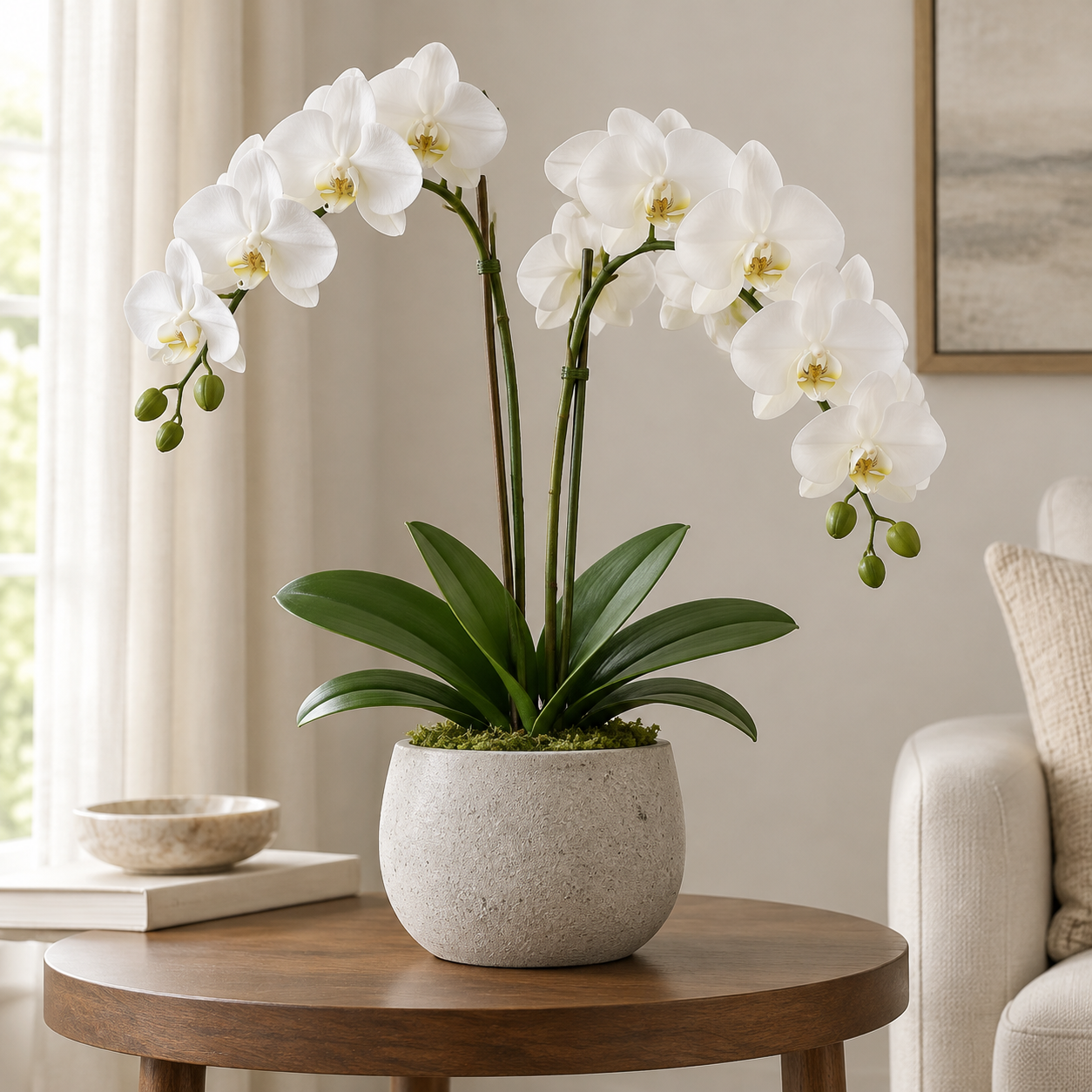
Quick answer: Artificial orchids are reproduction phalaenopsis spikes sold as single stems 20-36 inches, in silk-blend or real-touch foam (material stated per listing), and as potted pieces. They hold the arch and open bloom of a florist orchid with no watering schedule, no bright-window requirement and none of the year-plus wait between natural reblooms. White, pink and purple; one spike per spot is the rule - orchids read as specimens, not as mass.
Artificial orchids in the elegant single-spike form — phalaenopsis stems from 20 to 36 inches, carrying two to five blooms up a gentle arch, in white, pink and purple. Materials are stated per listing: silk-blend petals, or real-touch foam with the soft matte surface of the living flower. Either way, no watering, no bright-window requirement, no year-long wait for a rebloom. Every listing photo shows the exact stems you receive. The spike is the species: a gentle arch of two to five blooms up a wire-cored stem, each bloom able to turn and hold toward its light. Silk-blend petals carry the matte weight of florist whites and blushes; real-touch foam carries the soft surface of the living flower and takes the close-view placements - bathroom counters, bedside tables, entry bowls. White does the gallery and bath, pink warms bedrooms, purple goes where the room runs cool and modern.
Artificial Orchids, Explained
What an artificial orchid is
An artificial orchid here means the phalaenopsis — the moth orchid — reproduced stem by stem: the gentle arching spike, the flat five-petal blooms stacked up it, the thick low leaves, sometimes rooted in a pot with moss dressing. It is the flower of refinement across cultures — in the language of flowers, orchid stands for beauty, luxury and strength — and our orchid meaning guide traces how a plant that grows on trees came to signal all three.
The case for artificial is patience: a living phalaenopsis holds its spikes for months and then goes green and silent, and reblooming takes a year or more of exact watering, indirect light and temperature discipline. The stem here simply stays in bloom — which suits the one place a real orchid struggles most: rooms without bright windows.
Materials: silk-blend and real-touch, stated per listing
Two material families, printed on every card. Silk-blend orchids carry fabric petals with a soft sheen and wired stems for shaping. Real-touch orchids use a soft foam that reproduces the matte, slightly waxy surface of a living phalaenopsis petal — the material our real touch collection is built around. The listing states which you are buying, because they feel different in hand and clean differently; grouping them under one word is how a sample-box disappointment happens elsewhere in this market.
Care splits along that line: silk-blend blooms dust clean and can take a damp wipe; real-touch foam is dust-only — no water rinse, no soaking — and each product page repeats that rule.
Phalaenopsis, cymbidium, dendrobium - three orchids, three habits
Three genera cover the artificial-orchid trade, and their habits differ enough to choose by. Phalaenopsis - the moth orchid, the supermarket pot and the default silk spike - arches two to five wide-mouthed blooms up a single stem and lives on windowsills and bathroom counters; nearly every stem on this page follows it. Cymbidium (boat orchid) runs waxy, smaller blooms on a taller multi-flower spike, the corsage and winter-event orchid, denser than phalaenopsis at the same height. Dendrobium sprays carry dozens of small blooms along upright canes - the Thai-market spray that lei and event work string by the stem.
On a reproduction the differences hold: phalaenopsis reads as one elegant arch, cymbidium as a fuller column, dendrobium as a line of small faces. Check the genus line per listing before ordering for a specific build - the three do not substitute at the vase.
Where they work best
The orchid's home advantage is the low-light spot: bathrooms, interior shelves, north-facing offices — places a flowering plant cannot hold but a stem arrangement can. One 30-inch white spike in a slim ceramic pot is the classic minimalist statement beside a tub or on an entry shelf. Potted forms anchor desks and bedside tables; loose stems build into modern arrangements and bridal work where the line of the spike does the designing.
Colors that pair well
White phalaenopsis is the minimalist default — it pairs with everything and reads most like the lobby-plant original. Pink and blush soften bathroom ceramics; deep purple carries moody, jewel-toned rooms. The discipline is restraint: one spike, one color, one vessel — orchids read expensive precisely because they are not massed.
What arrives, and the two minutes after
Spikes ship straight in a protective sleeve; expect one to two minutes — curve the wire-cored spike into its natural arch, rotate each bloom to face out along the line, tilt the top bud. Real-touch blooms need nothing but the rotation. A shaping card ships in every box, and bloom counts per spike are stated in every title.
How to Choose Artificial Orchids
- Start from the light you don't have.
Bathrooms, interior shelves and north windows are exactly where these earn their spot — no bright-window requirement, no watering.
- Pick the material knowingly.
Silk-blend for sheen, shaping and damp-wipe cleaning; real-touch foam for the matte surface of the living flower — dust-only care, stated on every card.
- Size the spike to the spot.
Desks and shelves take 20–26 in spikes; floor and tub-side statements take 30–36 in. Heights are total, pot included where stated.
- Buy one spike at a time.
The orchid statement is a single line: one spike, one color, one slim vessel. Bloom counts per spike are printed per listing — order the count you see.
Buying Loose Stems in Bulk
Loose orchid spikes are the stylist's kit: one to a slim bottle, three to a low bowl for entries, spikes cut and rewired into table builds and bridal work. Potted phalaenopsis pieces are the finished form - the look of the supermarket pot without its care schedule. Home decorators buy the potted piece; event builders and restylers buy spikes and keep them in the drawer between builds.
Frequently Asked Questions
How close do artificial orchids come to the living flower?
The honest answer is by distance and material. At across-the-room range, a well-built phalaenopsis spike reads exactly like the lobby plant; at arm's length, the difference is surface texture — which is why the material is printed on every card. Real-touch foam reproduces the matte, slightly waxy petal surface of the living flower and is the closer of the two up close; silk-blend carries a soft sheen instead. Rather than promise the eye anything, every listing pairs its full-stem photo with a close-up at half a meter so you can judge the surface before ordering.
How do I care for a real-touch orchid?
Dust only. Real-touch foam petals absorb water, so no rinsing, no soaking, no damp cloth beyond a quick touch on leaves — a soft brush or a cool hair-dryer burst on low clears the blooms. Silk-blend blooms are the forgiving ones: dust the same way, and a barely damp cloth wipe is fine. The full material-by-material method, including the mistakes that shorten stems, is in our cleaning guide, and each product page repeats the rule for the material it ships.
Can I put artificial orchids in the bathroom?
Yes — the bathroom is where artificial orchids outperform every flowering plant: no light requirement, no humidity sensitivity, no watering schedule forgotten on a shelf. A 20–26 inch white spike in a slim ceramic beside the tub is the classic placement. Humidity does not affect the stems; the one caution applies to real-touch foam near direct splash — water spots dry slowly on foam, so keep those blooms out of the shower's direct line.
How do I shape the spike after unboxing?
One to two minutes. Spikes ship straight in a protective sleeve: curve the wire-cored stem into its natural arch — a slow, even bend, not a crease — then rotate each bloom to face outward along the line and tilt the top bud forward. Everything holds where you set it. A shaping card with photos ships in every box, and the same steps appear on the product page.
Shop Artificial Flowers
By Species
Material & Bulk
Stems & Craft Basics
Flower Guides
Why a tree-growing flower became the shorthand for refinement — the story behind these spikes.
The three material families compared in hand and up close — the guide behind the per-card material line.
Including the no-water rule for real-touch foam petals — care by material.