
Ceramic vases in matte, glazed and textured finishes — the vessel family that hides arrangement mechanics, matches every room style, and carries the weight tall builds need. From desk minis to floor-scale jars, each listed with true dimensions, mouth size, weight and a watertight flag.
Quick answer: Ceramic is the default vessel for artificial arrangements for one structural reason: an opaque body hides foam, pebbles and stem ends, so the mechanics disappear. A glazed stoneware body weighs two to five times a same-size glass vessel, so tall builds stand steady free of charge. Typical pieces run $15-90 (as of October 2026, USD) — from 4-6 inch bud ceramics to 24-inch-plus floor jars — and every listing states weight, opening width and whether the body holds water.
Finish Sets the Room's Read
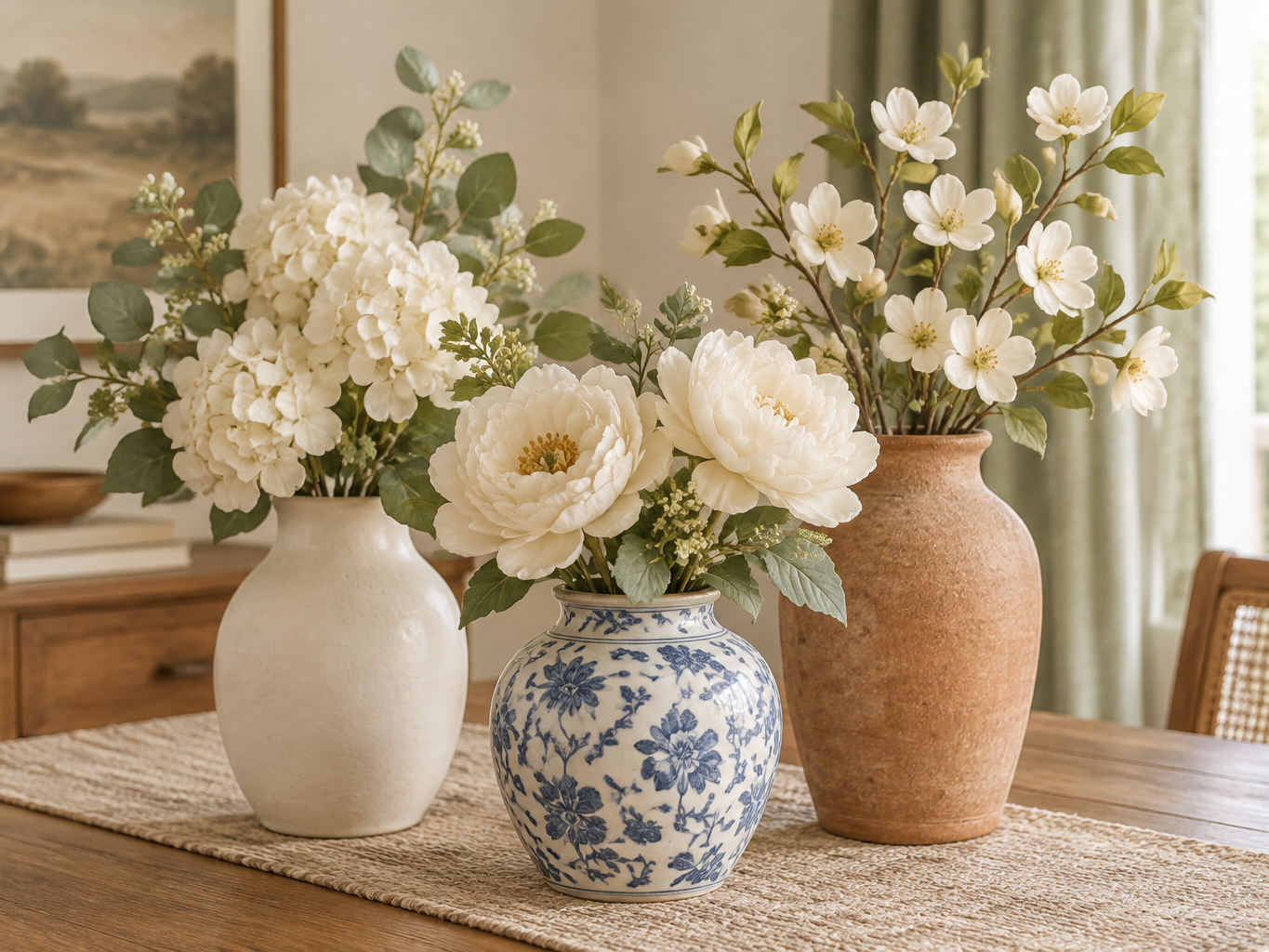
Ceramic is the chameleon of vase materials — the same silhouette reads completely differently by finish, which is why the family covers more interior styles than glass and metal combined. Glossy glaze reads classic and wipes clean, the finish for kitchens and busy tables; matte reads contemporary and soft, and hides the water spots that gloss wears like fingerprints; textured bodies carry a room from across the street, which makes them the choice for consoles and entry pieces read at distance. The blue-and-white family deserves its own note: those patterns lean traditional and chinoiserie, and the blue-and-white filter gathers them so the look can be shopped in one pass rather than hunted piece by piece. The four finish families and where they belong:
| Finish | Surface character | Rooms it owns | Stems that suit it |
|---|---|---|---|
| Matte neutral | Chalk-soft white, sand, greige, black | Modern, minimalist, farmhouse — gallery-quiet rooms | Everything — the safest default in the family |
| Glossy glaze | Light-catching, saturated color depth; wipes clean at arm's length | Traditional, transitional, formal dining | Single-variety builds — roses, hydrangea |
| Textured & speckled | Ribbed, fluted, speckled clay bodies | Organic modern, Japandi, boho | Looser mixed builds, dried-look textures |
| Unglazed terracotta tones | Raw clay warmth, visible body | Mediterranean, rustic, warm minimalism | Olive, wheat and pampas families |
Why artificial arrangements default to ceramic
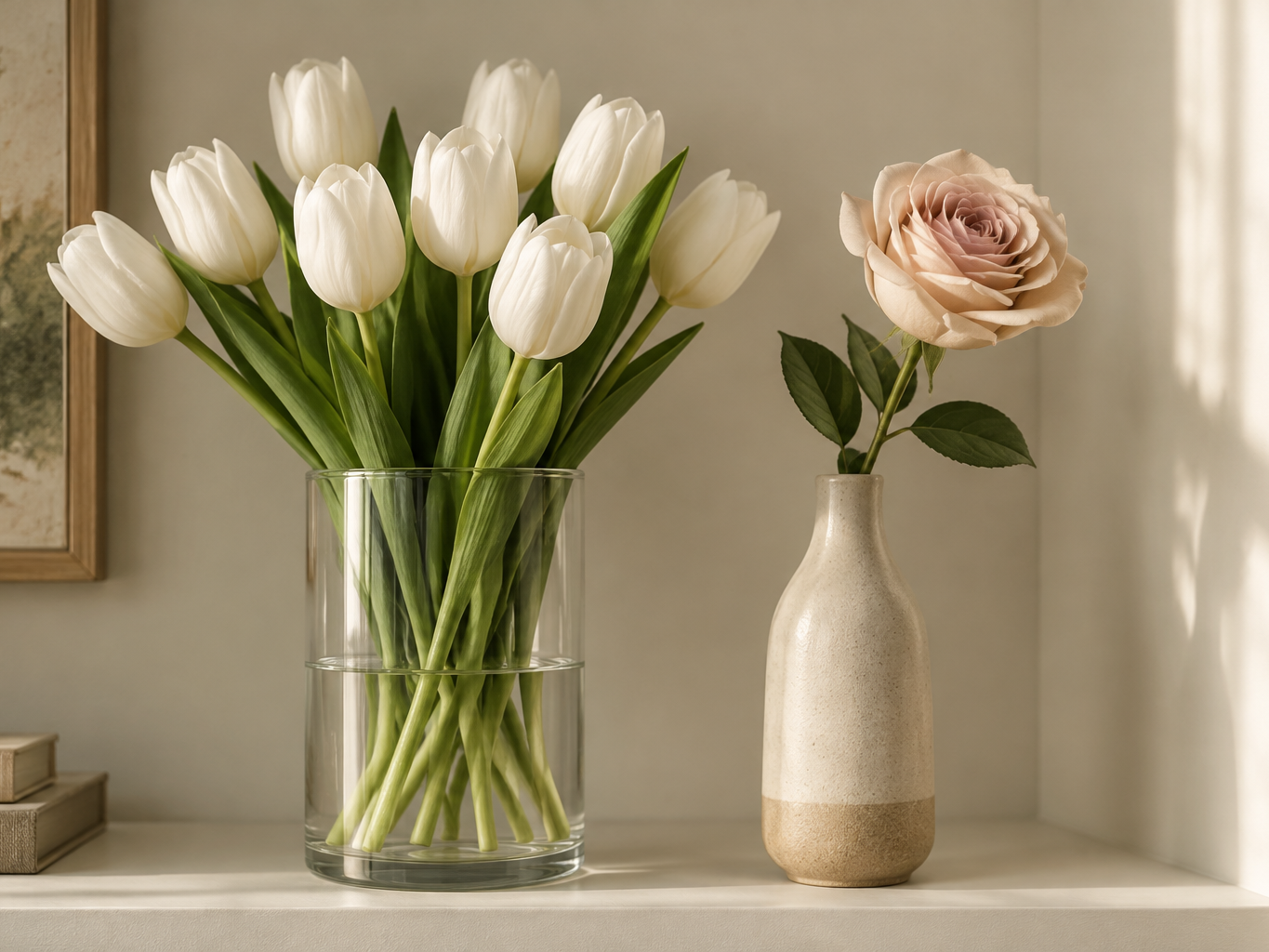
Two structural reasons sit under the aesthetic ones. Opacity: permanent arrangements run on foam, pebbles or sand inside the vessel, and an opaque body makes all of it invisible — foam blocks and tape grids disappear inside ceramic, so wide-mouth builds look sculpted, not engineered. In glass, the same build shows every cross of tape, which is why glass favors narrow-neck posies. Weight: ceramic walls are thick, so the vessel ballasts itself — two to five times the heft of a same-size glass vessel — which means tall faux branches, top-heavy peony builds and cats with opinions all meet their match, and pieces that would tip on a hall console hold steady there in ceramic. Display life follows the same physics: ceramic chips at the rim under hard knocks but rarely fails outright, while glass fails clean but suddenly. Every listing states the piece's weight next to its height, because for floor and dining-table use that number is as decision-grade as any color.
The full engineering logic — gripping necks, mouth-to-stem-count ratios, mechanics — is laid out on the vases for artificial flowers page.
Ceramic vs Glass, the Decision Layer
| Test | Ceramic | Glass |
|---|---|---|
| Arranging | Foam and tape grids disappear; wide-mouth builds look sculpted | Shows every cross of tape; favors narrow-neck posies of 1-5 visible stems |
| Stability | 2-5x the weight; holds tall branches and survives cats and kids | Light; best on high shelves and lean budgets |
| Failure mode | Chips at the rim under knocks, rarely fails outright | Fails clean but suddenly |
| Water | Glazed interiors watertight in most cases; porous bodies decorative-only — the per-listing flag decides | Always holds water |
| Price (as of October 2026, USD) | $15-90 typical at our sizes | $15-90 typical — the difference is look and physics, not cost |
Scale Ladder and the Watertight Flag
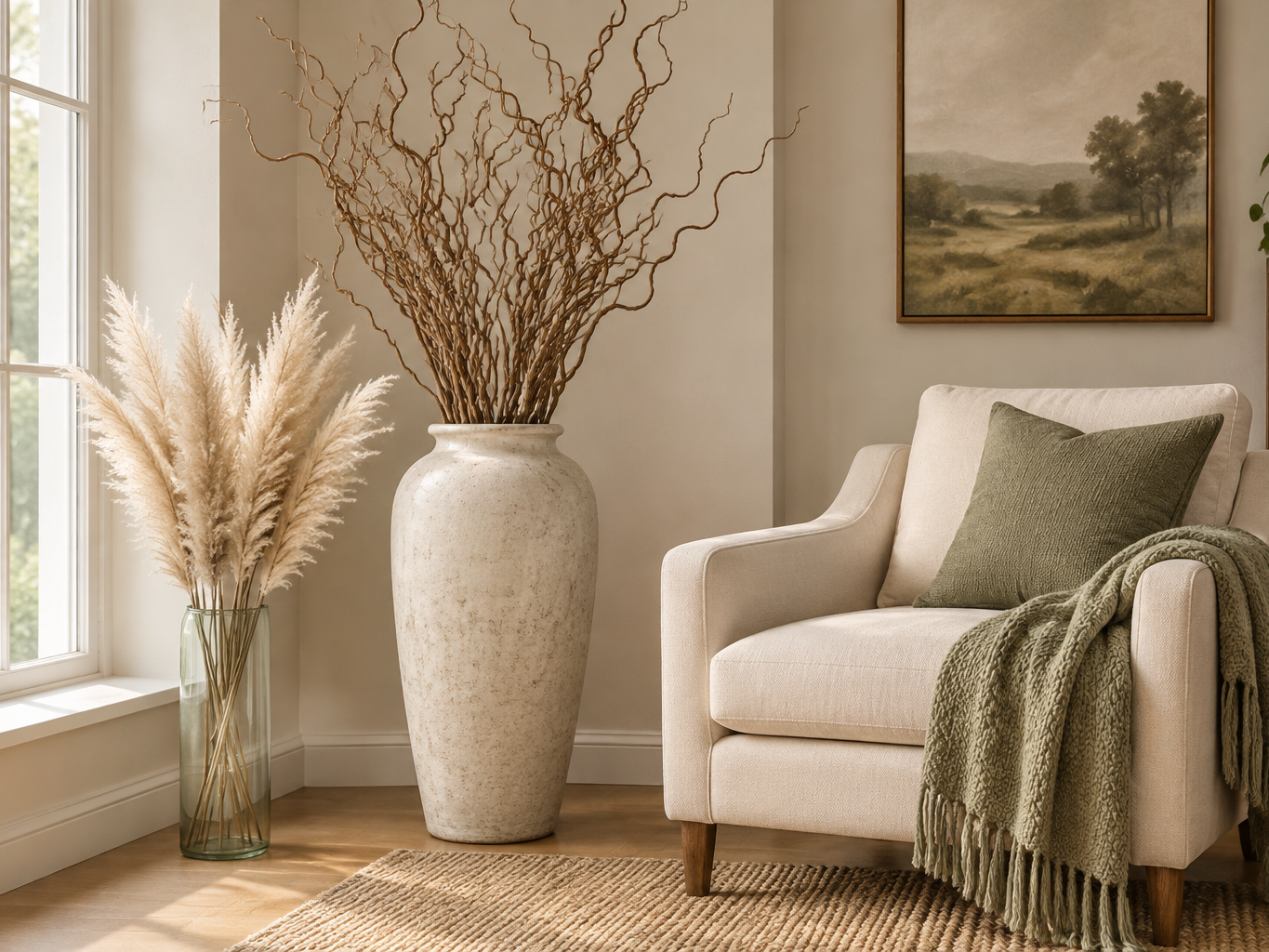
The family runs a consistent scale ladder: 4-6 inch minis for single stems on shelves, desks and nightstands; 8-12 inch table pieces carrying three to ten faux stems, the workhorse band for consoles and dining tables under sightlines; 14-20 inch tall bodies for entry tables and hearths; 24 inch and up floor jars for long branches, pampas and sofa flanks, where their weight earns its keep. True dimensions and mouth diameters are on every listing — mouth size, not overall height, determines what the vase can carry, and it is the measurement to check first. Through all sizes, the watertight flag answers the fill question: fully glazed interiors take water and faux-water resin; unglazed exteriors with sealed interiors take both; fully porous bodies are dry-display pieces for faux and dried stems. The flag, printed per piece, is the contract.
Half the searches for ceramic vases are searches for the finished look — "ceramic vase with flowers" is a 3,600-a-month phrase on its own. Every listing here is photographed twice: the vessel empty, and the same vessel styled with the faux stems it is sized to hold, finished height stated alongside. The pairing math lives in the fit table on the vases-for-artificial-flowers page; the styled shots are the proof.
Ceramic care is short: dust with a dry cloth, no abrasive cleaners on glaze, and felt pads under jars sitting on stone or wood. For arrangements that scale past tabletop, the tall families continue at floor vases, and single-stem styling runs at bud vases.
How to Choose a Ceramic Vase
- Weigh the spot, then the vase. Consoles and shelves take 3-8 lb pieces; dining tables 5-10 lb steady the tall builds; corners want floor ceramics where weight is the point. Weight is listed per piece.
- Pick the finish for the distance. Glossy wipes clean at arm's length; matte softens a modern room; textured ribbing and speckle read from across the room — match finish to how far the piece sits from the eye.
- Match the opening to the build. Narrow necks for 1-7 faux stems (1.5-2 inches holds 3-5; 3-4 inches holds 10-15), wide mouths for foam builds — ceramic hides the mechanics, so go as wide as the arrangement wants. Opening width per listing.
- Check the watertight flag. Fully glazed takes water and resin; porous bodies are dry-display for faux and dried stems — the flag on the listing, not the material name, decides.
- Shop the color axes. White and cream for gallery-quiet rooms, blue-and-white for traditional pattern, black for modern weight — the color filter cuts the collection in one pass.
Frequently Asked Questions
Why choose a ceramic vase over glass for artificial flowers?
Two structural reasons: opacity and weight. Permanent arrangements are held by foam, pebbles or sand inside the vessel, and an opaque ceramic body hides all of it — clear glass exposes the mechanics unless you style them deliberately. Thick ceramic walls self-ballast at two to five times a glass vessel's weight, so tall top-heavy builds stand steady without added mechanics. Buy ceramic for stability, hidden mechanics and warmth; glass for lightness, visible stems and modern transparency. Typical prices overlap at $15-90 (as of October 2026, USD) — the choice is look and physics, not cost.
Can you put water in a ceramic vase?
Depends on the body, and the flag on each listing is the answer. Fully glazed interiors — glossy inside and out — hold water indefinitely; that is most of this collection. Unglazed exteriors with sealed interiors also hold water (the raw look is on the outside only). Fully porous, unsealed bodies wick water through the clay: they are decorative pieces for faux and dried stems, and the listing says so directly. When in doubt, the watertight flag prints on every piece — we would rather you check a flag than learn from a ring on the table.
What is a ceramic vase made of?
Kiln-fired clay — earthenware, stoneware or porcelain — finished with glaze, matte color or a raw textured surface. Stoneware (fired hottest, densest) is the workhorse of this collection: it carries weight, holds glaze well and resists chips better than earthenware. The body of each piece, clay family and finish are listed on its product page, because "ceramic" covers a family and the differences inside it matter at the rim and in the hand.
What ceramic finish works best in my room?
Matte neutrals (white, sand, greige, black) own modern, minimalist and farmhouse rooms and pair with everything. Glossy glaze suits traditional and formal spaces with single-variety builds. Textured and speckled bodies fit organic-modern and boho interiors with loose mixed stems. Terracotta tones carry Mediterranean and rustic rooms, especially with olive, wheat and pampas families. When unsure, matte neutral is the family's safest default.
How do I know a ceramic vase will hold my arrangement steady?
Check mouth size against stem count first (1.5-2 inches for 3-5 stems, 3-4 for 10-15, 5-plus for statement builds), then weight: a filled ceramic body of 8 inches or taller generally holds a same-scale arrangement without help, and taller builds want either a heavier jar profile or a pebble layer at the base inside. Every listing here publishes the mouth diameter — it is the measurement that decides, more than overall height.
How do I clean and care for ceramic vases?
Dry cloth for dust; no abrasive cleaners on glazed surfaces, which micro-scratch and dull the sheen; felt pads under jars on stone or wood to protect both surfaces. For a deeper clean: warm water, a drop of dish soap, a soft bottle brush for the neck. Matte finishes prefer dry dusting between cleans (their surfaces hold soap film). Two avoidables: abrasive scrubbers, which dull both finishes, and the dishwasher, where rattling against racks is how rims chip. For faux-water resin builds that have set, do not soak — resin is the permanent display, and the vessel's next life is a dry one. Handmade-look bodies with intentional irregularity are not defects — that variation is the finish — but each listing photographs its exact piece so nothing arrives as a surprise.
Do ceramic vases break in shipping?
Ceramic survives freight better than glass — it chips under knocks rather than shattering — but it still ships as breakable: protective packaging specified per piece, foam-lined, with the final double-boxing standard being confirmed with suppliers and printing on every listing once set. If a piece arrives chipped or cracked: a photo and the order number brings a replacement or refund, no shards to ship back. Finish checks (glaze scratches, paint chips) happen before pieces leave the warehouse — a scuffed glaze should not survive inspection.
Do ceramic vases need water for artificial flowers?
No — and adding water is actively counterproductive: it clouds glaze over years, leaves mineral lines inside unglazed bodies, and does nothing for plastic or wire stems. Permanent arrangements fix with dry mechanics only (narrow necks, pebbles, foam), which is precisely why the opaque ceramic body works so well for them. The interior stays dry, hidden and permanent.
Shop the Vase Families
Vase Line
Arrangements & Pairing
Fill Material
Flower Guides
Weight, light, chips, water and price — the head-to-head this page summarizes, told at full length.
Styling runs from gallery-white minimal to blue-and-white traditional — ideas keyed to the sizes stocked above.
Glaze, sealed interiors and porous bodies — the full answer behind the watertight flag.