

Wired Ribbon
Wired-edge craft ribbon on 10-yard rolls, from 1.5 to 4 inches wide, in burlap, velvet, sheer, satin, grosgrain, plaid and mesh families — sold on spools for builders and by-the-yard for accents. The wired edge is what holds a bow's loops open and a wreath's wrap flat. Pick a width, a yardage and a colorway on one listing; every combination is a variation, not a separate page.
Quick answer: The edge wire makes a bow permanent — it holds the curve you shape, ships flat, re-fluffs and re-hangs year after year. Standard wreath bow: 2.5-inch width at 3 yards (5 with full tails); 1.5-inch runs pick collars and garland wraps; 4-inch makes statement bows on 24-inch-plus wreaths. Buy wired for any bow that must survive weather and storage.
Wired Ribbon, Explained
What the wire is for
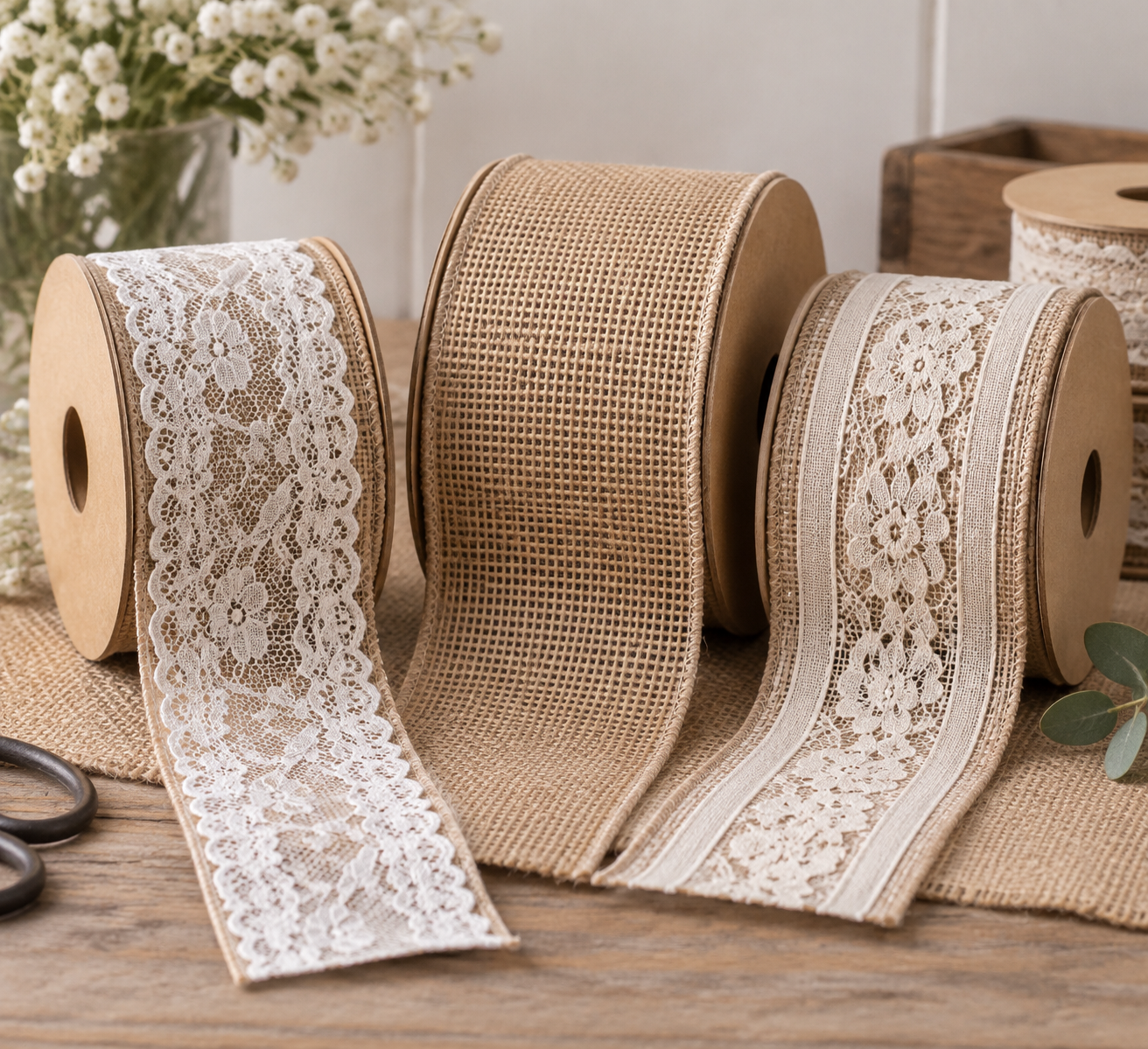
A wired ribbon carries a thin wire along both cut edges. That wire is the entire point: it lets a bow's loops be shaped by hand and hold — open, rounded, crisp — instead of collapsing into a limp knot, and it lets ribbon wrapped around a wreath form sit flat through weeks on a door. Unwired ribbon drapes, which suits garment work and some gift wrap; anything that must hold a shape in midair wants the wired edge. An unwired bow goes limp in the first rain and never recovers its form — for any bow living on a door, wired is not an upgrade; it is the product.
Shaping is reversible: loops can be re-bent season after season, which is why wreath makers buy wired ribbon by the roll and re-dress the same bow for years — one greenery base plus a ribbon collection is a decade of doors. After shipping, rolls may need a brief unroll-and-smooth pass — stated here plainly, the same as for compressed flower stems.
Choosing width and yardage
Width follows the job. 2.5 inches is the workhorse — most door-wreath bows, most package toppers. 1.5 inches is for tails, thin trims, pick collars, cake bands and small bows where the standard width would swamp the piece. 4 inches makes the statement bow on a large wreath, swag or mailbox build, and is the width most deco-mesh wreaths pair with. Ribbon is the only wreath material bought by the yard, and the counts are learnable once — a bow takes three yards at standard width; a wrap takes the frame's circumference times its rails plus a hand's width of overlap.
So a 10-yard roll carries one full bow with tails plus wrap left over — or roughly three plain bows; five yards total is the safe buy per standard bow with full tails. Buying for a season of builds is the moment the multi-roll and case options on each listing start mattering; those tiers show their discounts on the listing, per the same open pricing as the rest of this store. Every width, yardage and colorway combination is a variation on its listing — if a combination exists, it is selectable on the product page, never a separate URL to hunt for.
Material families and their reads
Grosgrain (ribbed, matte) reads classic-craft and holds shape with less wire; satin (smooth, light-catching) reads dressy and is the gift-wrap and floral-convention standard; burlap and linen weaves read farmhouse and rustic — burlap is the most common wreath wrap; velvet carries weight and sheen through fall and Christmas palettes; sheer organza weaves read wedding; plaid patterns carry the fall-winter calendar on their own; and glitter and metallic edge finishes run the holiday register. Each listing names its weave, and the colorway names are the names the ribbon arrives as — order a single roll to check a colorway against your fabric in daylight before committing to a season's stock.
The one material rule that matters outdoors: woven burlap frays at every cut — the wire stops the edges but not the ends — so finish visible tail ends with a swipe of clear nail polish or a brief pass near (not in) a flame. Ribbon is the re-dress layer of the whole wreath system; the full builder's kit runs under wreath making supplies.
Honest outdoor limits
One limit stated honestly: constant direct sun fades any fabric ribbon — wired or not — over one to two seasons of exposure, and a fully weather-exposed build will age faster than a sheltered one. On a covered porch, wired burlap and velvet routinely come back for several seasons; on an open-exposure door in full sun, plan on treating the ribbon as the build's replaceable layer. No sun-proof claims are made here, because that is not how fabric behaves.
Christmas ribbon: the season's workhorse builds
Christmas is the season wired ribbon was built for. Velvet and plaid carry the holiday palette with a weight that photographs richest on a door, and the classic formula on a fresh evergreen build is a 2.5 in. velvet bow in red, burgundy or tartan over a wide burlap or plaid wrap. Layering a sheer gold or ivory over the solid velvet bow is the close-range detail that separates a styled build from a plain one — the same sheen-matching rule this page applies to flowers.
One 10-yard roll covers a full Christmas bow with tails plus the frame wrap on a 22–24 in. wreath; at 30 in. and above, plan two rolls or drop to a single statement bow. And when January comes, the bow is the layer that changes: keep the evergreen base, swap the red velvet for plaid or ice blue wired ribbon, and the same build carries the door through Valentine's Day — the dressing order the Christmas and winter wreath collections in this store are built around.
Seasonal colorways beyond Christmas
Valentine's Day wants 2.5 in. velvet or sheer in pink, blush and red — a soft bow on an 18–20 in. wreath or a small swag by the mail slot. Halloween runs black-and-white buffalo plaid, orange burlap and deep purple satin over grapevine. Fall is where burlap and rust-toned velvet live, stacked with berry picks on the frame. Easter and spring read in pastels — lavender, butter yellow, sage — usually sheer or satin layered over greenery. Every seasonal colorway is a variation on the listings above; no season gets its own page, because none of them needs one.
Frequently Asked Questions
What does wired ribbon do that regular ribbon doesn't?
The wire in each edge holds shape. A wired bow keeps its loops through wind, shipping and a year in a storage box — unwrap, fluff, re-hang; an unwired bow goes limp in the first rain and never recovers its form. For any bow living on a door, wired is not an upgrade; it is the product. Unwired ribbon still runs indoor gift wrap, garment work and fabric-craft linings where floppiness is fine. One practical note for wreath makers: wired ribbon also survives outdoor placement better, not because of weatherproofing but because a gust re-shapes a wired bow instead of shredding it — bring builds in during storms either way.
What size wired ribbon is best for a wreath bow, and how much does it take?
2.5 inches wide is the standard answer — big enough to read from the curb on an 18–24 in. door wreath, small enough to keep its loops tidy. Use 1.5 in. for small wreaths (18 in. and under), inner accents, pick collars and streamers; step up to 4 in. for statement bows on large wreaths (30–36 in.), swags, mailbox builds and builds that pair with deco mesh. Length per bow: about 3 yards for the bow itself at 2.5 in., plus 1–2 yards per tail — five yards total is the safe buy per bow with full tails, and a 10-yard roll covers a complete wreath bow with tails and a wrap of the frame.
How much ribbon do I need to wrap a wreath form?
Wrapping consumes more than bows do. For a full wrap around an 18 in. plain form, plan roughly 15–20 yards depending on overlap; an 18 in. work wreath takes 10–15 yards; a 22–24 in. form takes about 25–30 yards with standard overlap — which is why wrapping is usually done in wide burlap at 4 in., and why multi-roll quantities exist on each listing. The alternative most wreath makers use: wrap the form in wide burlap (or leave grapevine visible), then add 2.5 in. ribbon as accents and the bow — same look at a third of the yardage. Case and multi-roll discounts are shown per listing, the same open pricing as everywhere else on the store.
Can wired ribbon be reused year to year?
Yes — the wire makes the bow a permanent asset: it ships flat, stores flat, and fluffs back to shape by hand every season. A bow tied well and stored dry keeps its form through many years of re-hanging, which is the quiet economics of the whole re-dress system: one greenery base plus a ribbon collection is a decade of doors.
Can wired ribbon be used outdoors?
Under cover, yes, routinely: wired burlap and velvet on a covered porch or sheltered door come back for multiple seasons, and the wire lets a wind-blown bow be bent back into shape instead of replaced. Full exposure is the honest limit — constant direct sun fades any fabric ribbon over one to two seasons, and heavy weather is hard on the whole build. Treat the ribbon as the wreath's replaceable layer: re-wrap or re-bow the same form with a fresh roll each season or two, which is also how wreath makers rotate palettes (fall rust, Christmas plaid, spring pastels) without rebuilding the base. No sun-proof or weatherproof claims are made — that is not how fabric behaves.
Does burlap wired ribbon fray?
At every cut — burlap is a loose weave, and the wire stops the edges but not the ends. Where tail ends show, seal the cut with a swipe of clear nail polish or a brief pass near (not in) a flame to melt the fibers under control. Cuts hidden inside a bow or wrap can fray freely; nobody will ever see them.
Do all widths and colors come on the same page?
Yes — that is a deliberate store rule. Each ribbon listing carries its width, yardage and colorway combinations as variations on one product page, so a 2.5 in. burlap in natural and the same roll in red are options on the same listing, never separate pages to hunt between. If a combination exists in the catalog, it is selectable in the variation picker; nothing is split off into its own URL. For planning a season, the practical flow is: order single rolls of two or three colorways, check them in daylight against the wreath's flowers, then take the multi-roll or case option on the exact colorway you approved.
Which material should I pick — grosgrain, burlap, velvet, sheer or satin?
Follow the build's style, then the season. Grosgrain (ribbed, matte) reads classic-craft and holds shape with less wire. Burlap is the rustic and farmhouse staple and the most common full-wrap material. Velvet carries weight and sheen — the default for fall and Christmas palettes, and the material that photographs richest on door builds. Sheer organza weaves read wedding and light-spring; they layer well over a solid ribbon for depth. Satin is the clean classic for gift wrap, cake bands and floral-convention work. On any build with flowers, a working rule from wreath makers: match the ribbon's sheen level to the flower material — matte burlap with fabric petals, velvet with richer fall stems — so the finish layers read intentional at close range.
How do I choose ribbon for a Christmas wreath?
Start with the bow, not the roll. On a standard 22–24 in. Christmas wreath, a 2.5 in. velvet in red, burgundy or tartan makes the classic bow; step up to 4 in. velvet or burlap only on 30 in. and larger builds, or when you want one statement bow to read from the curb. Plaid does double duty as bow and wrap; sheer gold or ivory layers over a solid for depth. Budget about 3 yards for the bow, 1–2 yards per tail, plus wrap if the frame needs it — one 10-yard roll covers a standard build exactly.
What color ribbon should I use for each season?
Follow the season's palette, not a single rule. Valentine's Day: pink, blush and red velvet or sheer on small builds. Halloween: black-and-white buffalo plaid, orange burlap, deep purple. Fall: rust, burgundy and plaid burlap stacked with berry picks. Easter and spring: lavender, butter yellow and sage pastels in sheer or satin. Winter after Christmas: plaid and ice blue, which carry the door into February. All of these are colorway variations on the listings on this page — pick the season's colorway in the variation picker rather than hunting a separate page for it.
What is the best ribbon for making wreaths?
A 2.5 in. wired ribbon in a weave that matches the build: burlap for rustic and farmhouse bases, velvet for fall and Christmas palettes, sheer for wedding and spring layering, satin for clean classic accents, grosgrain when you want a matte craft read with less wire. The wired edge is the non-negotiable part — it keeps the bow's loops open and the wrap flat, and it lets the same bow be re-shaped and re-dressed season after season. Width is the second decision: 1.5 in. for tails, pick collars and small builds, 2.5 in. as the standard, 4 in. for statement bows on large wreaths and swags.