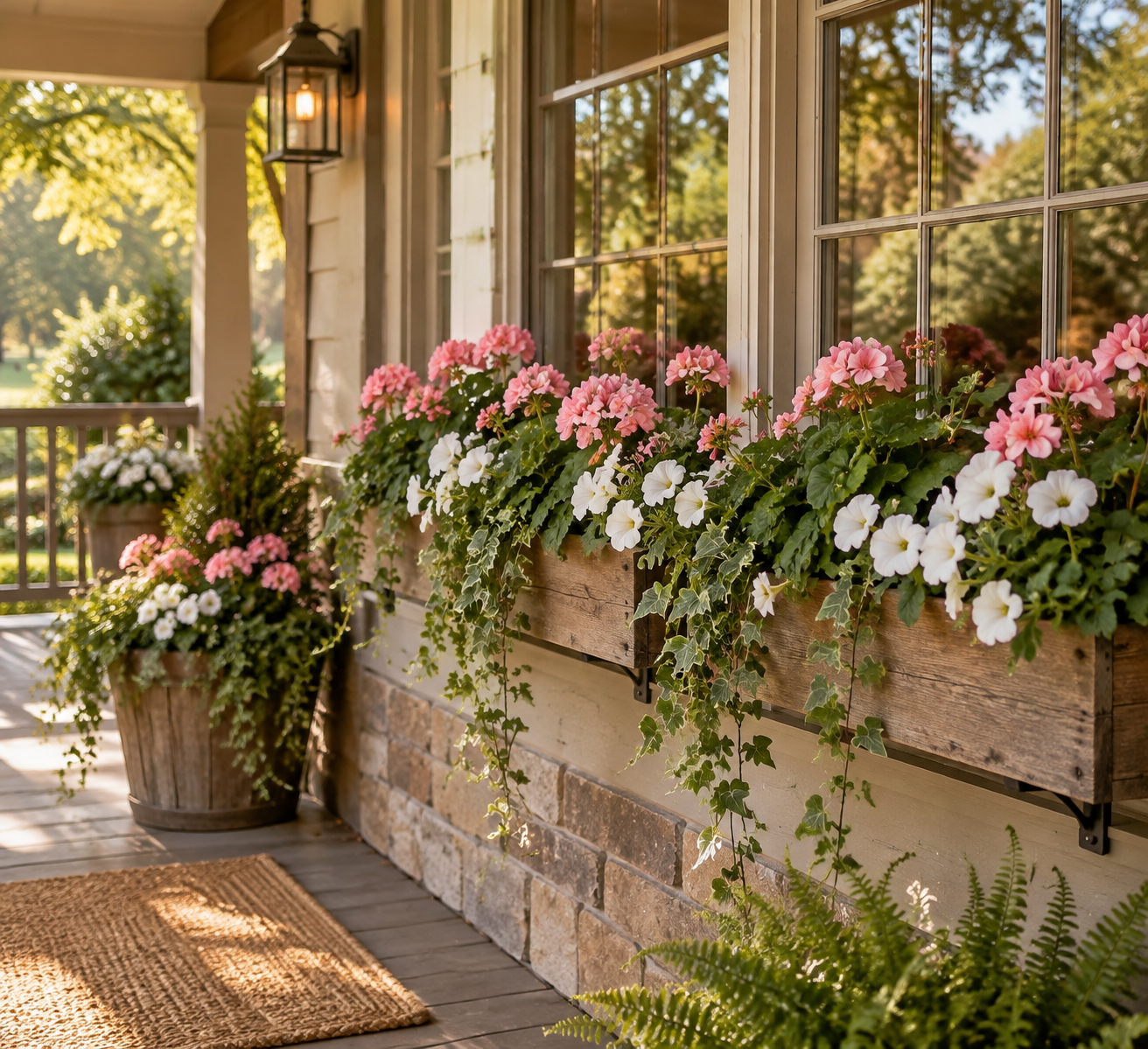
Every artificial flower in the shop, gathered on one page — finished arrangements, door wreaths, wedding pieces, craft stems and outdoor lines. Silk, faux and artificial all name the same family here, not different quality tiers. Filter by color, size or flower type, and start from the room you are dressing.
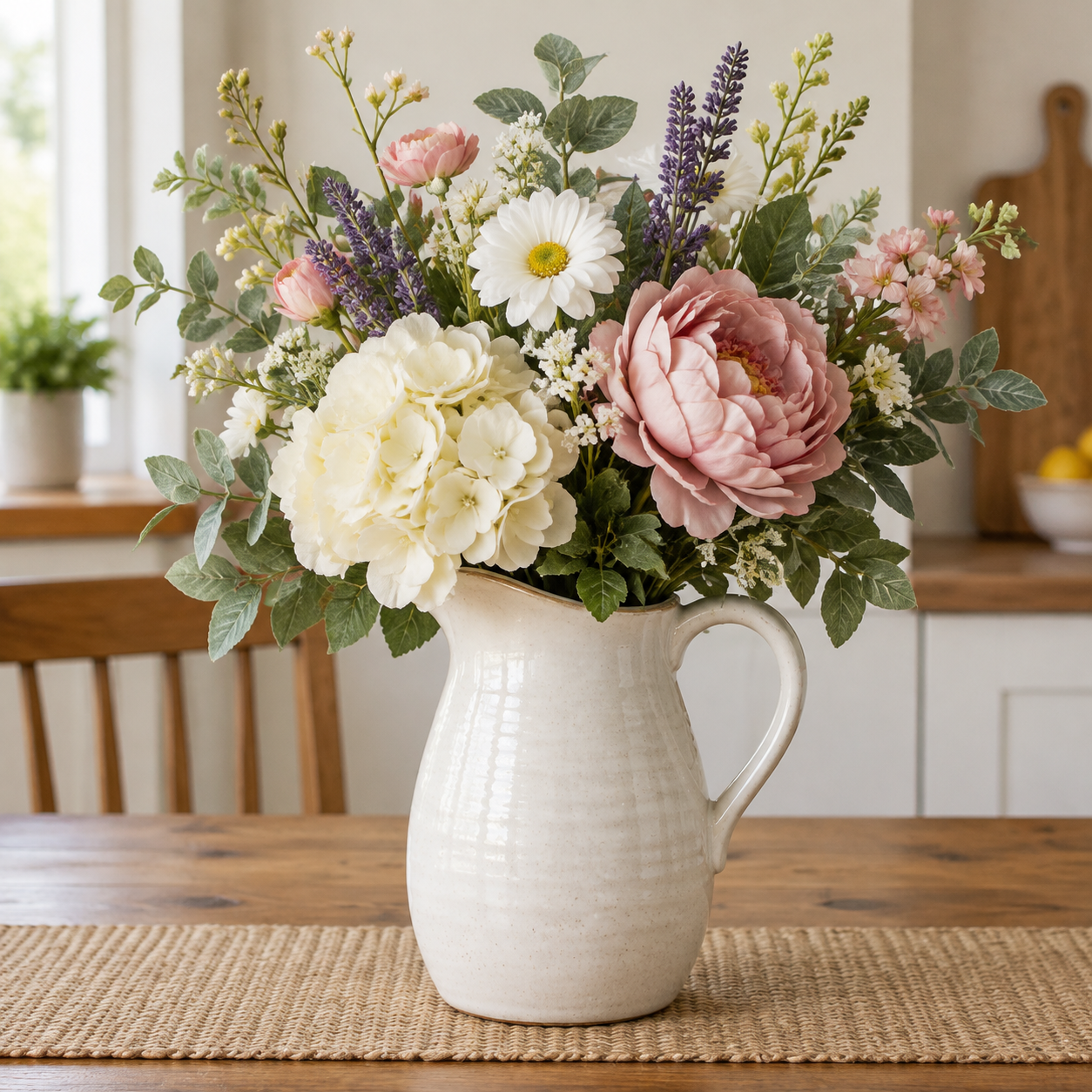
About Artificial Flowers
Artificial flowers are fabricated botanicals — blooms, greenery and stems made from fabric, PE film or latex-touch polymers over wired stems, composed into pieces that hold their shape year-round. Shoppers call them silk, faux or artificial interchangeably: 'silk' is the historic name from the fabric era, 'faux' is the interior-design register, and 'artificial' is the plain search term. On this site they all mean the same family, and every product page names the actual materials — bloom, greenery and stem listed separately — rather than leaning on any of the three labels.
Five lines, one shop
The shop is organized by line so 300+ pieces stay navigable. Home arrangements are finished compositions you set down as-is; wreaths cover doors and walls across every season; wedding pieces run from bouquets to arch greenery; craft supplies sell stems, petals and ribbon by the piece for DIY builders; the outdoor line gathers UV-rated and hanging pieces built for porches and patios. The line filter above jumps between them, and the color axis underneath runs through all five.
What they are made of
Three petal families cover the catalogue: polyester-blend fabric (the everyday workhorse), PE film (molded petals with crisp edges, common in hydrangeas and orchids), and latex-touch coated pieces built for close range — that last family has its own collection. Greenery and filler across all lines are specified at the same material grade as the main blooms, because the leaves are exactly where low-grade flowers give themselves away at close range. Every SKU page lists bloom, greenery and stem materials separately, with close-up photography of each.
Care: minutes a month
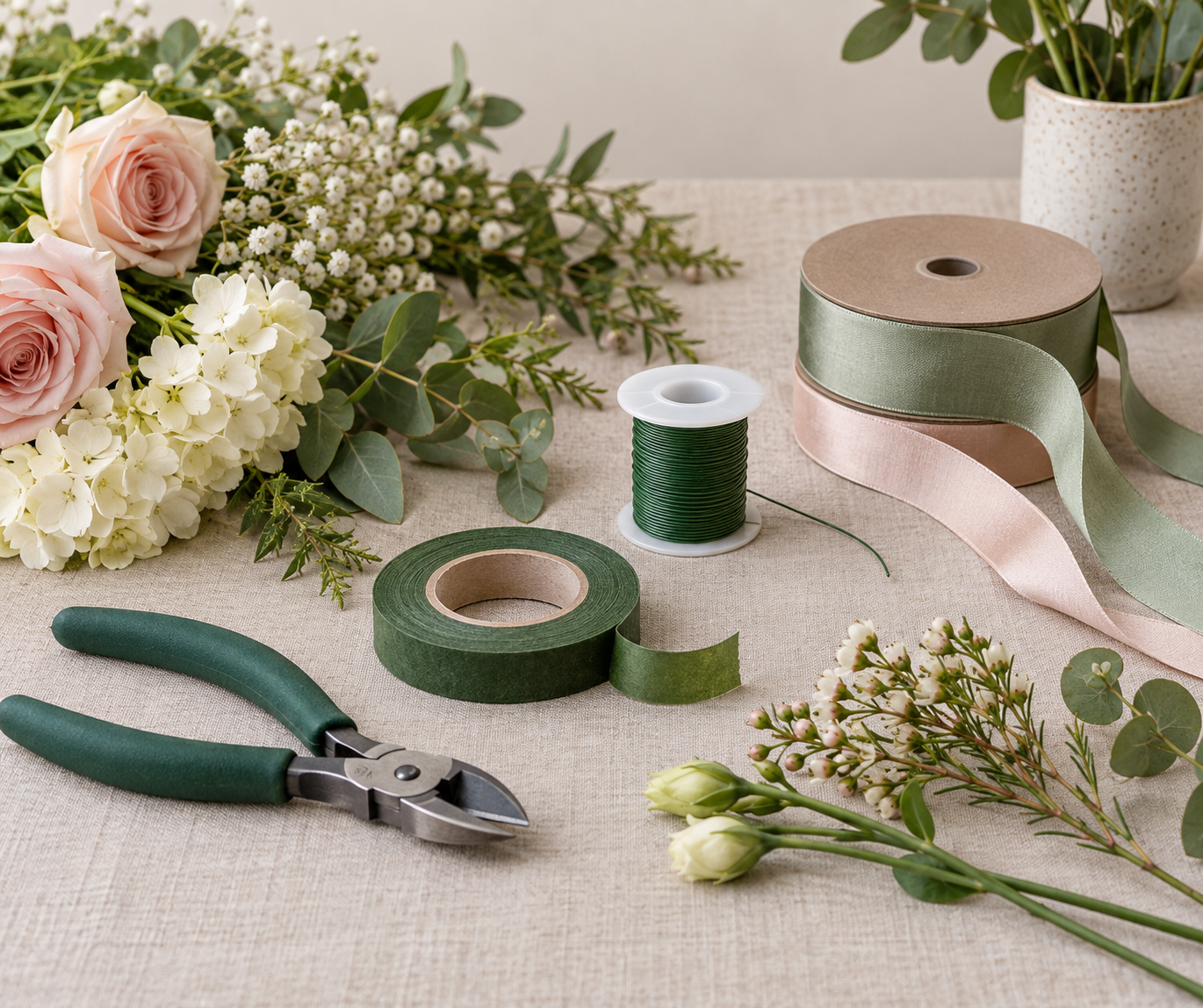
Dust with a cool hair-dryer burst or soft brush weekly; wipe petals gently with a barely damp cloth every couple of months. No water, no trimming, no weekly florist run — one rule differs by material: latex-touch petals are wipe-only, never rinsed. The cleaning guide covers each material and the mistakes that shorten a piece's life.
The math versus fresh
Fresh flowers last one to two weeks at florist pricing; a faux piece holds its design for years and moves with you — mantle to credenza to next apartment. Per month of display, the comparison stops being close, which is why most customers start with one table piece and quietly end up with a house full. The head-to-head comparison runs the full cost-per-month math.
How to Choose Artificial Flowers
Frequently Asked Questions
What is the difference between artificial, silk and faux flowers?
In practice, nothing — they are three names for the same product family. "Silk" is the historical name from the fabric-flower era (most silk petals today are polyester blends), "faux" is the term interior designers prefer, and "artificial" is the plain search word. None of the three names promises a material grade on its own: every product page on this site lists the actual petal, greenery and stem materials, so the label matters less than the spec card.
What are artificial flowers made of?
Three petal families: polyester-blend fabric, PE film (molded, crisp-edged petals), and latex-touch coated pieces for close-range display. Stems are wired so they hold a bend, and greenery is cut at the same material grade as the blooms. Each SKU lists all three components separately with close-up photos — a single catch-all word like "silk" never stands in for the actual spec.
How do I choose artificial flowers that hold up at close range?
Distance decides the material. Across a room, standard fabric petals read beautifully and cost less; at arm's length — entry tables, nightstands, held bouquets — the latex-touch coated line is built for fingers and close photos, and every product carries three-distance photography (half a meter, one meter, across the room) so you can judge before ordering rather than after unboxing.
How do I clean artificial flowers?
Dust weekly with a cool hair-dryer burst or a soft brush; deeper clean every couple of months with a 50/50 water-and-white-vinegar mist on a cloth, wiped gently. Two rules: never soak finished pieces with wired stems or foam bases, and keep liquid away from latex-touch petals — those are wipe-only. The cleaning guide covers each material and the mistakes that shorten a piece's life.
Silk or fresh flowers: which lasts longer?
For decor that stays out, faux wins on both span and math: fresh arrangements last one to two weeks, while a faux piece holds its design for years, dusts clean and reshapes after storage. Fresh still owns scent and one-off events. The head-to-head comparison breaks down cost per month of display, upkeep and look.
Where should I start in a catalogue this size?
Start with the room, not the flower. Dining tables and consoles point to the arrangements line (with-vase sets if you want the vessel included); doors and walls point to wreaths by season; events point to the wedding line; builders and crafters start at craft supplies. The color filter on this page runs across all five lines at once.