
A palm is a room's shortcut to somewhere warmer — and an artificial palm is the version that works anywhere: the dim office corner, the covered patio, the entry that never sees sun. This collection covers both halves of the family. Indoor palms — parlor, areca, bamboo — bring the soft-arched canopy to desks and reading corners. Outdoor-capable palms — phoenix date, landscape arecas — take the covered porch and poolside spots in UV-treated foliage. Each listing states height pot included, frond spread at the widest arch, and where it's rated to live, so the somewhere-warmer lands where you actually need it.
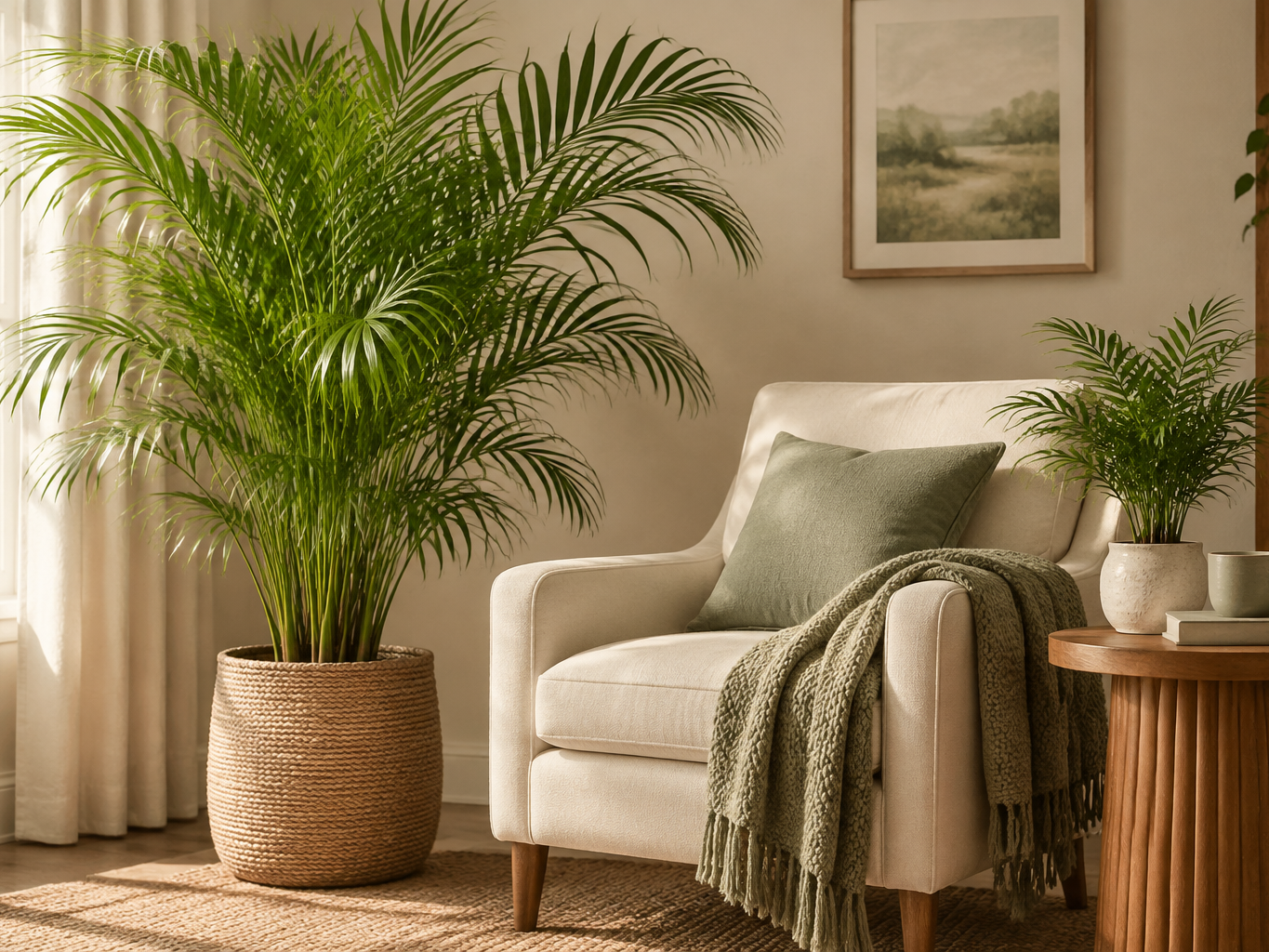
Indoor and Outdoor Faux Palms, Split Honestly
The indoor half: soft canopies, low drama
Indoor palms earn their keep as texture — the arching fronds that soften a corner without demanding the light a real palm would sulk without. Parlor palms stay compact and desk-scale; areca palms run the 4-6 ft. mid-range that fills a reading corner; bamboo palms push toward ceiling height with slimmer profiles for tight spots. Silk-blend fronds hold the droop-and-arch that makes the family read right, and each listing states its height pot included and frond spread at the widest arch. Indoors they tolerate what live palms won't: the north window, the interior corner, the week nobody remembers they exist.
The outdoor half: UV-treated, weighted, honest
Outdoor faux palms are a foliage-and-physics problem, and the answers are stated rather than promised. UV-treated fronds hold color far longer under sun than standard silk — fading still happens eventually, the way it does to every outdoor fabric, but the timeline moves from seasons to years. Phoenix date palms and landscape arecas carry the poolside and covered-patio look at 5-7 ft. plus. Placement does the rest: weighted planters against wind (a frond canopy is a sail), level surfaces, and sheltered spots beating exposed ones. Every outdoor listing states its treatment and its rated exposure — the honest version of outdoor-proof.
Species, quickly
Parlor palm: the compact, shade-tolerant classic, desk to nightstand scale. Areca: the feathery mid-size most rooms actually want — the default choice. Bamboo palm: tall, slim, corner-hugging. Phoenix date: the sculptural outdoor statement, trunk-heavy and dramatic. Majesty and kentia forms round out the range with formal, symmetrical canopies. The shelf below the grid groups them by these names because that's how the SERP, the nurseries and the designers all group them — palm shoppers arrive knowing their species, and the page shouldn't make them relearn it.
Care, both halves
Indoors: monthly soft-brush dusting, a cool blow-dryer pass through dense fronds, and a barely damp cloth on silk-blend leaves — air-dry out of direct sun, no hot water. Outdoors: rinse with a garden hose on gentle, shade-dry, and re-set bent fronds by hand (they hold a gentle bend the way olive branches do — small adjustments from the base outward). Fronds ship compressed and relax over the first days; shaping by hand at unboxing finishes the arch. That's the whole ownership story, both halves — the tropics, minus the humidity and the watering can.
How to Choose an Artificial Palm
- Decide indoors or out first.
The halves don't cross: standard silk fronds are an indoor-and-covered material, UV-treated fronds are the outdoor-and-sunroom material. Pick the placement, then the page half — every listing states its rated exposure.
- Size to the corner, not the photo.
Desk and nightstand: parlor forms under 2.5 ft. Reading corners and sofa-ends: areca-class 4-6 ft. Ceiling-height drama: bamboo palms 6-7 ft. Poolside statements: phoenix 5-7 ft. plus. Height is stated pot included — check it against ceiling clearance minus a foot.
- Pick the canopy character.
Feathery areca canopies read casual; symmetrical majesty and kentia forms read formal; drooping phoenix fronds read resort. Match the character to the room the way you'd match a lamp — the canopy is the shade, the trunk is the stem.
- Read the frond spread.
Spread at the widest arch is the walkway number palms most often blow — a 6-foot palm with a 4-foot arch owns more room than its height suggests. Check spread against traffic paths before the height against the ceiling.
- Plan the base with the palm.
Tall palms want weighted planters (wind and bumped corners both test the base); outdoor palms want drainage and a level pad. Nursery-pot forms drop into any decorative planter — order both in one cart and check the pot-diameter line.
Frequently Asked Questions
Can artificial palm trees stay outside year-round?
UV-treated palms in sheltered spots, largely yes — with the honest physics stated. Sun: UV-treated fronds hold color on a years-long timeline where standard silk fades in seasons; every outdoor listing states its treatment. Wind: a frond canopy is a sail — weighted planter, level surface, sheltered placement. Winter: frozen frond material gets brittle, so covered or seasonal-storage placement extends the look in hard-freeze zones. Poolside and covered patio are the sweet spots; fully exposed rooftop placements are the honest maybe.
What's the best fake palm for indoors?
It follows the spot. Desk or nightstand: parlor palms — compact, shade-shaped, under 2.5 ft. The corner most rooms are actually buying for: areca palms at 4-6 ft., the feathery default that reads casual and fills without crowding. Tight vertical spaces: bamboo palms — 6-7 ft. of canopy in a slim profile. Formal rooms: majesty or kentia forms with symmetrical arches. All indoor forms tolerate the low light real palms sulk in — that tolerance is half the point of faux.
How do I fluff and shape a new palm?
Fronds ship compressed and relax over the first days — help them along at unboxing. Work from the base of each frond outward, bending gently a few degrees at a time in the direction of the natural arch; stop at resistance. Shape the lower arch first, then the crown, stepping back to check the silhouette from across the room. Compressed fronds that look creased usually relax out within a week at room temperature. The goal is the palm's own character — arch, not perfection.
How do I clean an outdoor artificial palm?
A garden hose on gentle does the routine work — rinse top to bottom, shade-dry, done. For settled grime: a barely damp cloth along each frond, working base to tip. Indoors the routine is the soft-brush and cool blow-dryer pass every palm in this family gets. Two don'ts hold for both halves: no hot water on silk-blend fronds (they curl) and no direct-sun drying after washing (color shifts). Monthly attention keeps fronds reading green rather than grey-dusted.
Phoenix, areca, parlor — what's the difference?
Three species, three jobs. Parlor palms are the compact classic — desk to nightstand scale, shade-tolerant character, the entry point of the family. Areca palms are the mid-size feathery default — 4-6 ft., casual arch, the one most rooms are actually shopping for. Phoenix date palms are the outdoor statement — trunk-heavy, sculptural, resort-scale at 5-7 ft. plus, built for poolside and covered patio in UV-treated foliage. The species shelf below the grid groups them under these names; listings link back to the shelf they belong to.
Shop Palms & Tropical Neighbors
Artificial Plants
The Tropical Family
Flower Guides
The UV-outdoor decision frame — treatment timelines, exposure ratings and placement physics this page's outdoor half runs on.
Method-by-material cleaning — the silk rules behind this page's FAQ for both halves of the family.
Light, humidity and travel weeks — the decision frame palms sit at the center of (real palms are the fussiest of all).