
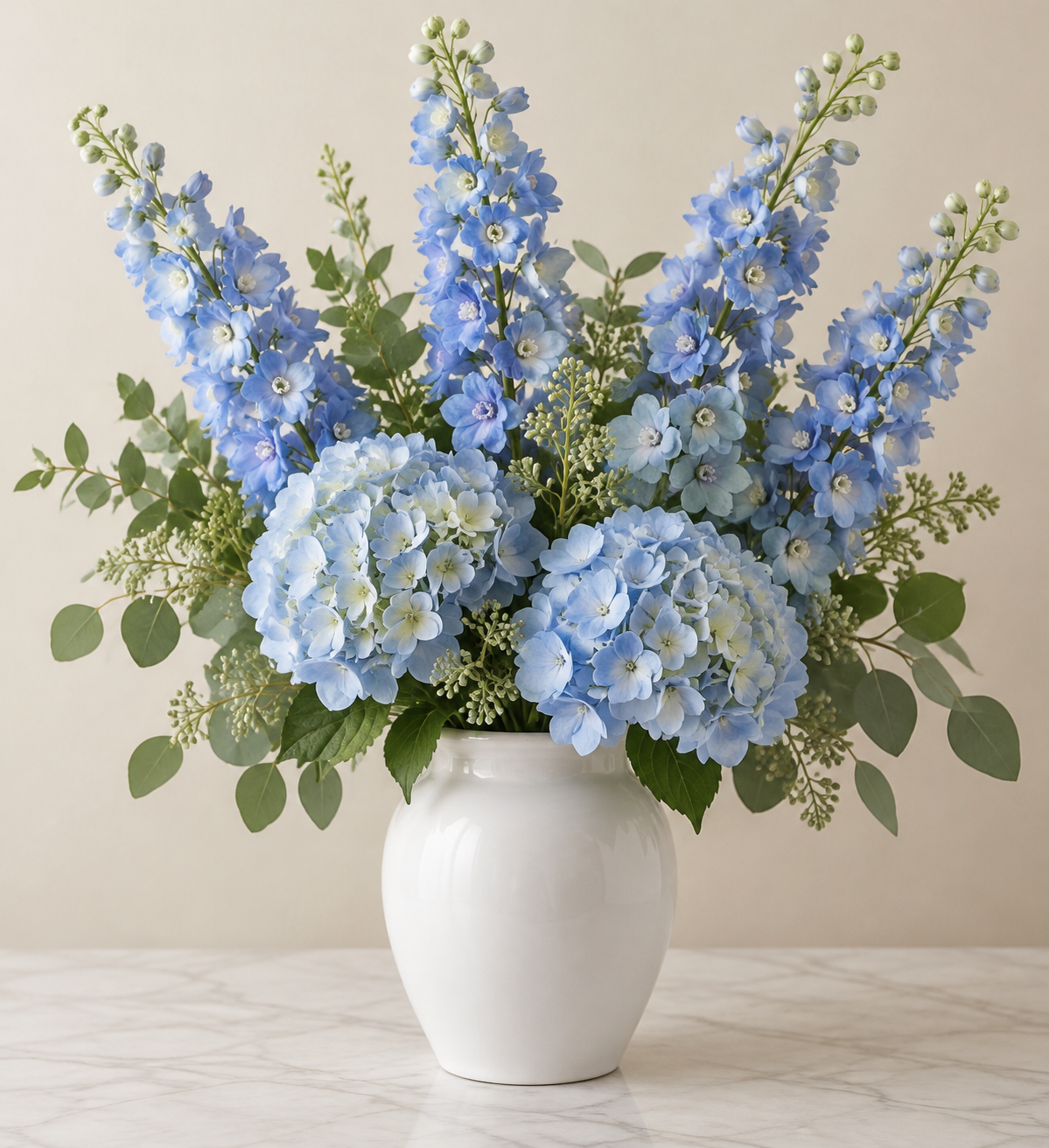
Blue is the one color fresh flowers rarely deliver — genuinely blue blooms are scarce and priced accordingly at any florist — while in faux it is simply a dye decision. That makes this collection the practical route to modern, coastal and low-energy rooms: dusty and muted blues for calm, navy statements with real mass, blue-and-white classics that never date. Every card states its petal, greenery and stem materials, and the exact depth of blue you are holding.
The 30-Second Blue Pick
- Start here: pick the depth — dusty and muted blues read calmest, navy carries a room, and blue-and-white mixes are the safe classic.
- Materials per piece: fabric, PE-film or latex-touch petals, wired stems — stated bloom, greenery and stem separately on every card.
- Heights: stems 18–24 in for your own vases; potted pieces 8–14 in; finished arrangements 10–20 in — exact H×W per listing.
- Price band: single stems from $13, potted pieces $29–58, finished arrangements $40–180; free US shipping over $200.
Why blue, and where it works hardest
Blue reads as calm, cool and contemporary — the lowest-energy flower color, which is why it owns bedrooms, baths and modern interiors rather than dining tables. Its practical case is structural: genuinely blue flowers are the rarest thing in a florist's cooler (hydrangeas dyed, delphiniums priced accordingly), while faux blue is simply a dye decision — the full depth range costs the same. Dusty blue has become a standard wedding accent for exactly this reason, and blue-and-white is the one flower pairing that has never left kitchens and coastal rooms.
How to Choose Blue Faux Flowers
Four decisions — depth and coolness do most of the work.
- How much blue?
One navy statement piece anchors a cream or grey room; dusty blue works spread across a bedroom (nightstand plus bath) as a wash of calm. Blue-and-white mixes are the entry point for rooms that want blue without committing to it.
- What room is it for?
Bedrooms and baths pull from dusty and muted blues; living rooms take navy statements; kitchens and coastal rooms own the blue-and-white classics. Dusty blue wedding work continues on the dusty-blue wedding collection.
- How close will people stand?
Blue's even tones are forgiving at distance — across-the-room pieces read well in standard fabric. Bedside and bath pieces at arm's length reward the latex-touch line, whose no-water care suits rooms with humidity.
- Daylight or lamplight?
Cool daylight keeps blues crisp and true to depth; warm lamps can pull dusty blue toward lavender. If the piece lives under warm evening light, judge from the warm-lit photo on the card — blue shifts more under lighting than any color except white.
Frequently Asked Questions
What does blue do in a room?
Blue lowers a room's energy — decorators use it where calm is the point: bedrooms, baths and reading corners. It also reads modern and coastal depending on what surrounds it (white and jute push coastal; grey and chrome push modern). One structural note works in faux's favor: genuinely blue flowers are the rarest fresh-flower color — most florist blues are dyed hydrangeas or delphiniums priced accordingly — so faux blue delivers a depth range fresh flowers cannot match at any price.
What colors go well with blue artificial flowers?
Blue with white is the permanent classic — kitchens and coastal rooms have run it for a century. Blue with natural materials (jute, rattan, pale wood) warms it into coastal territory; navy with brass or cream reads formal and current. Avoid piling blue onto cool grey without a warm break — one warm-toned element keeps the room from going cold.
What are blue artificial flowers made of?
Three petal families appear across this collection — polyester-blend fabric, PE film and latex-touch — and every product card states which, for blooms, greenery and stems separately. Stems are wired, so a bend holds its shape. Blue's even dye coverage is worth the close-up check: the card photography shows petal fronts and backs, where uneven dye shows first.
How do I care for blue artificial flowers?
Minutes a month: a soft brush or cool hair-dryer burst for dust, a gentle wipe for marks. Soaking is the one thing to avoid — wired stems and latex-touch petals prefer dry care. Faux blues have a practical care edge over dyed fresh hydrangeas, which collapse in days; these hold their depth for years away from direct sun. Step-by-step by material: cleaning guide.
What are dusty blue flowers used for?
Dusty blue is the muted, grey-leaning depth that became a standard wedding accent — it pairs with blush, sage and cream palettes without any color shouting, and it photographs evenly. Home use runs the same logic: bedrooms, nurseries and baths where saturated blue would read cold. This page's muted group carries the depth; finished wedding pieces in the same depth sit on the dusty-blue wedding collection.
Shop by Color & Scene
Flower Guides
Blue's rare-flower backstory — and why faux delivers the depth fresh flowers can't.
Which material families earn their keep where — cool palettes included.
The monthly method that keeps dye depth even.