
Dried Flowers
Dried flowers are the natural material this page is named for — pampas, wheat, lavender, cotton and preserved blooms, air- and silica-dried rather than molded from silk. Every bunch here is graded the way natural product demands: stem integrity, color retention, moisture and scent checks before it lists. Natural material means natural variation — two stems never match exactly — so each listing states size range and shade range as honestly as it states price.
Quick answer: Dried flowers are air-dried botanicals — pampas, wheat, bunny tails, preserved eucalyptus — that last one to three years but shed, soften, and hate humidity; typical bunches run $10-30 dried, $15-45 preserved, $8-35 for the artificial versions of the same stems (all USD, as of October 2026). Artificial versions shed nothing and keep their color, which is why this collection carries both — the choice comes down to texture versus longevity.
Natural Dried Flowers, Graded and Stated Honestly
Dried, preserved, artificial — three different products
The category names get used interchangeably and they are three different materials. Dried flowers are air- or hang-dried real botanicals — pampas grass, wheat, bunny tails, dried sunflowers, statice — with the water removed; they keep their natural texture and imperfections and last one to three years, softening and shedding as they age. Preserved flowers (the upper tier: preserved hydrangeas, preserved roses) are real blooms treated with glycerin and dye to replace sap — suppler than dried, closer to fresh in feel, a similar multi-year life, and priced accordingly. Artificial versions are fabric and PE builds of the same stems — zero shed, zero water sensitivity, colors that hold for years, at the trade of the exact natural texture that made dried popular. Every listing in this collection states which of the three ships, because the care rules differ completely.
The honest case for each: choose dried for the natural texture and the slightly-wabi look that photographs with personality; choose preserved for the softest feel and true-to-plant suppleness; choose artificial when the stems live where real dried fails — bathrooms, sunny sills, households with pets or vacuum aversions, or commercial spaces where shedding is a liability.
The working comparison
Natural variation, stated as a feature
No two dried stems are identical — plume density, stalk curve and shade depth differ bunch to bunch, and a wheat harvest runs warmer one season than the last. This is the nature of the material, not a defect of the listing. So each listing here carries a size range (stem length and plume height), a shade note (natural, bleached or tone-dyed), and — where a batch runs distinct — a batch note. What we state, we grade against: a listing that says 22-26 inch stems means no stem under 22. The honest-tiering rule the rest of this store runs on applies double to natural product.
The bouquet formula: five to seven stems, three tiers
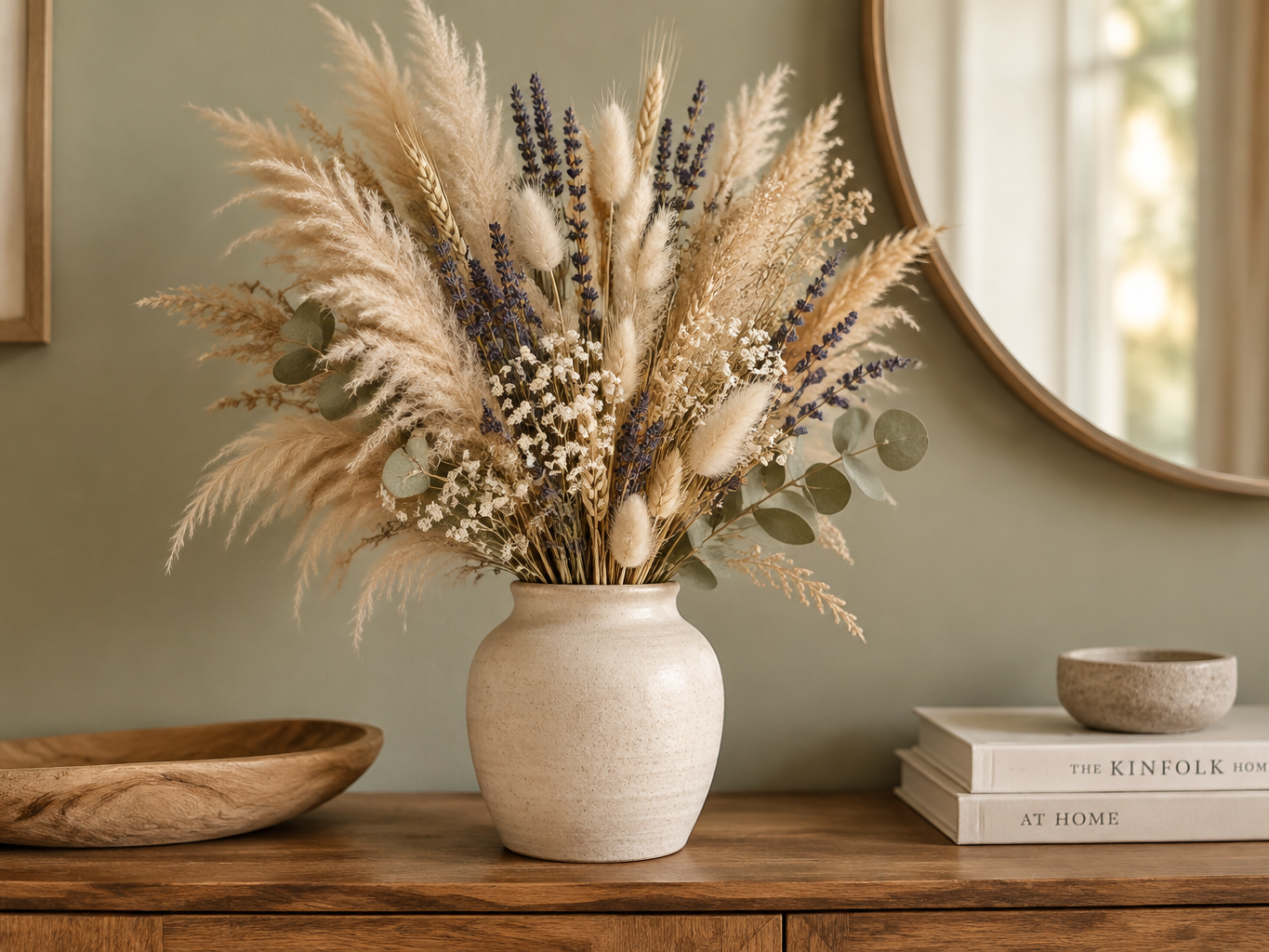
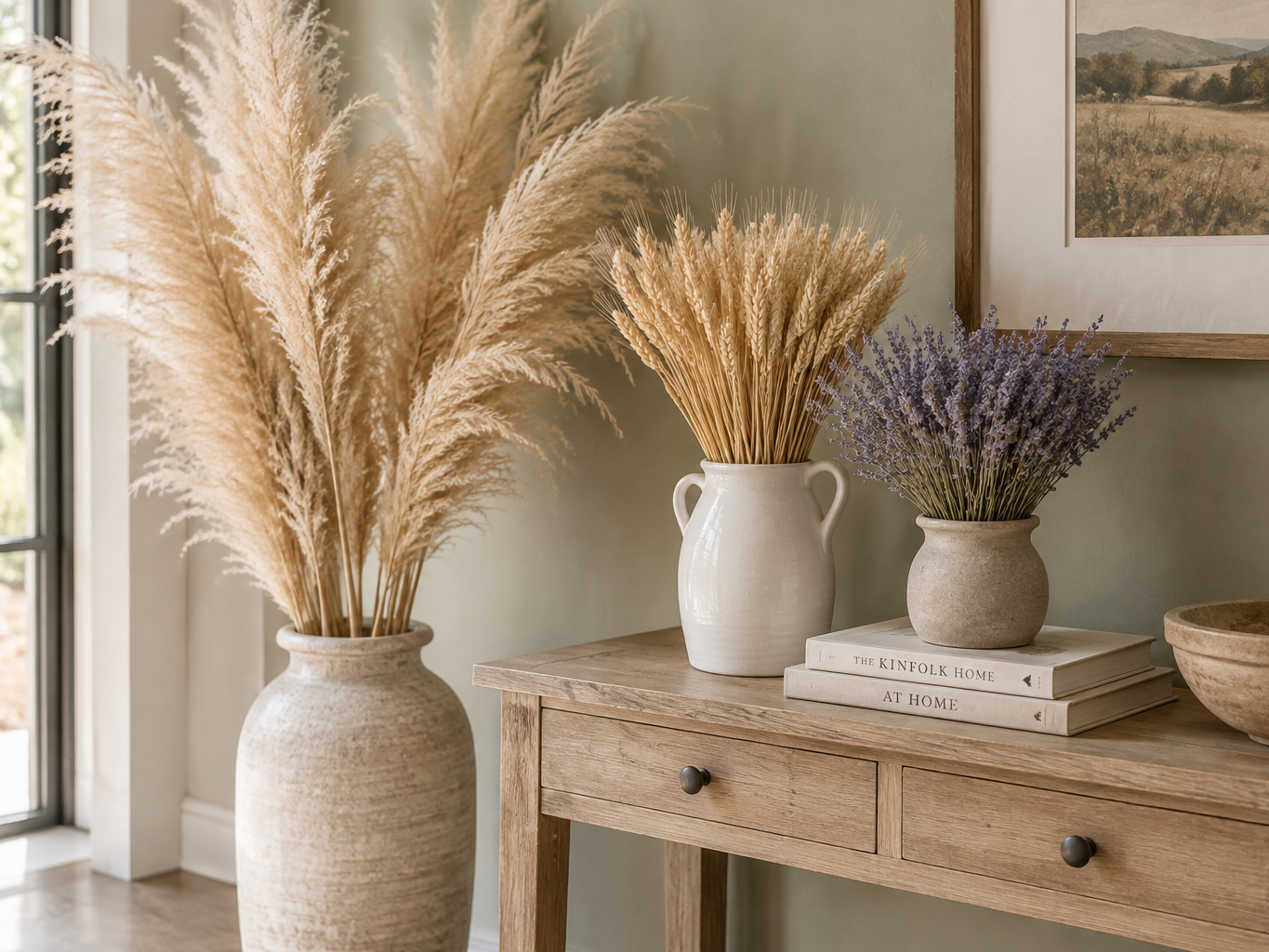
A dried or faux-dried arrangement reads designed rather than bundled when it follows the three-tier structure: one or two statement stems at full height (pampas at 40-60 inches in floor vases, 20-30 on tables), two mid-tier textures (bunny tails, dried palm spears, ruscus, preserved eucalyptus), and two or three short fillers (wheat, statice, phalaris) that hide the stems' entry into the vase. Real dried bunches ship compressed and open with a shake and a day of settling; the listing states per-bunch stem counts — a "pampas bunch" runs 3-10 stems depending on grade, and that count is the number that ships, not the photo's impression. Artificial versions arrive at their shape and stay.
What we check before a bunch lists
Natural material fails differently than silk, so the intake checks differ. Stem integrity — brittle stalks and snapped plumes are culled at grading, not shipped as lucky dips. Color retention — fading and uneven dye are flagged, and tone-dyed batches state their dye the same way our artificial listings state theirs. Moisture — damp stock molds in transit, so bunches are checked dry before packing. Scent — natural material carries field scent that fades in weeks; anything beyond that is a fault, not a feature. The shipping spec — how stems are sleeved, strapped and boxed to survive the post — is being finalized with our suppliers and will print per listing rather than be promised here first.
Where dried fails, and what to do about it
Three honest failure modes, each with a fix. Shedding: real pampas sheds on unboxing and every time it is moved — the standard mitigation is a light hairspray pass (it stiffens plumes and slows the shed at a small texture cost), and placing stems where they will not be brushed. Humidity: dried botanicals mold in bathrooms and damp kitchens within weeks — those rooms take the artificial versions, full stop. Sun: natural dyes fade fast in direct light; moving a dried arrangement from a bright sill to a shaded console is worth months of color. None of these are defects; they are the material physics of dried plants, and the reason the artificial versions of the same stems exist.
Caring for what's natural
Kept out of direct sun and humid rooms, dried stems hold their look for years — sun bleaches, damp softens. No water, ever, for air-dried material; preserved blooms tolerate a light misting at most. Shedding settles after unboxing — a few fibers in week one is normal material behavior, and placement away from walkways and vents keeps it at that level. The full lifespan and care guide is linked below.
How to Choose Dried Flowers
- Pick the material by the room.
Dry, calm rooms take real dried — statement height from pampas and dried branches, soft texture from preserved blooms and cotton, structure from wheat, oats and bunny tails, fragrance-adjacent lavender. Bathrooms, sunny sills, pet households and commercial spaces take the artificial versions. Mixed bunches let you trial a palette before committing to singles.
- Size the vessel.
Floor vases carry 40-60 inch stems; table vases carry 18-30; check the bunch's stated stem length range against your vessel — a 24-inch stem needs a 10-14 inch vase by the same 1.5-2× rule fresh florists use.
- Build by the formula.
1-2 statement stems, 2 mid textures, 2-3 fillers — five to seven stems reads designed. Full arrangements want 5-9 stems plus a greenery or grain collar; the vase pairing guide below matches stem counts to openings the same way it does for faux.
- Check stem counts per bunch.
Listings state the count; photos style multiples. A "bunch" can mean 3 stems or 10 depending on grade, and the count in the listing is the number that ships. Choose natural finish (harvest shade, varies batch to batch, stated per listing) or bleached and tone-dyed (consistent, reads more modern) — the same dried material underneath either way.
- Plan the settle or the shake.
Real dried needs a shake and a day of settling — some fibers in week one are normal material behavior, gradual sun-fade in bright rooms, years of hold in shaded ones. Artificial needs one minute of fluffing and none of the rest; if zero maintenance is the goal, the artificial collection linked below is the honest answer.
Frequently Asked Questions
Are these real dried flowers?
Yes — this collection is natural material, grown and dried, not manufactured. Air-dried grasses and grains hold their harvest shape; preserved blooms are fresh flowers treated with glycerin and dye to keep a soft feel for a year or more. Natural means variation: stem length, curve and shade differ bunch to bunch, and each listing states its ranges rather than promising identical stems. Our artificial (silk and PE) flowers are a separate collection, linked below, for shoppers who want exact repeatability instead.
How long do dried flowers last?
Real dried flowers last one to three years as display pieces: the first months at their best, then a slow softening of stems and fading of natural dyes, with pampas plumes fraying earliest. Preserved (glycerin-treated) stems hold their suppleness across a similar window. The artificial versions of the same stems outlast both indefinitely out of direct sun. If longevity is the whole point of your purchase — an entry staging that never gets touched, a commercial space — the artificial route is the honest recommendation rather than the compromise.
Why is my pampas grass shedding, and can I stop it?
Shedding is what real pampas does — plumes release fibers on arrival and every time they are handled; it is the material, not a defect. The standard mitigation is a light mist of hairspray over each plume, which stiffens the fibers and slows shedding at a small cost in fluff (fluff again gently after the spray dries). Beyond that: keep stems where they are not brushed, transport in the box, and accept that a real pampas stem is a two-to-three-year piece that announces its age by fraying. Zero-shed pampas exists — it is the artificial version, and the trade is the natural fiber texture. What is not normal is whole plumes detaching or stems snapping at a touch — those are grading failures, and intake grading culls them before listing.
Can I put dried flowers in a bathroom?
No — bathrooms are the one room where real dried flowers reliably fail. Ambient humidity softens stems and molds plumes within weeks, and preserved stems can weep dye in the same conditions. The bathroom (and any damp kitchen corner) takes the artificial versions of the same stems: fabric pampas, PE eucalyptus, faux bunny tails, which are unaffected by steam and just need an occasional dust. This is the clearest dried-versus-artificial dividing line in the whole category.
Do dried flowers fade in sunlight?
Real dried botanicals fade visibly within a few months of direct sun — the natural dyes are not lightfast, and the fading is even and permanent. Preserved stems behave similarly. Placement is the preservation strategy: shaded consoles and wall-adjacent spots over bright sills, and rotate the arrangement a quarter turn every few weeks so any ambient light fades it evenly instead of one side. For sunny spots that must carry the look, the artificial versions hold color far longer — slower to fade, not never, like every faux botanical.
How many stems do I need for a dried flower arrangement?
Five to seven stems read designed: one or two statement stems (pampas, dried palm spear) at full height, two mid-tier textures (bunny tails, preserved eucalyptus, ruscus), and two or three short fillers (wheat, statice, phalaris) to cover the vase mouth. Floor vases carry stems at 40-60 inches; table arrangements carry 18-30. Check stated stem counts per bunch against that structure — a "bunch" can mean 3 stems or 10 depending on grade, and the count in the listing is the number that ships.
Dried or artificial flowers — how do I choose?
It comes down to texture versus control. Dried flowers bring natural texture — plume movement, grain detail, field-origin character — and natural behavior: gradual fading, some settling fibers, no two stems alike. Artificial flowers bring repeatability — exact color, exact size, none of the settling — and outdoor or sunny-room placements dried stems can't take. Many homes use both: dried for the statement vase, faux for the sunroom. The vase-fit and style guidance on our artificial collection page works for both materials — stem counts and vessel math don't change.
Are dried flowers or artificial dried-style stems better for weddings?
For carried and worn pieces, artificial wins structurally — wired builds hold shape through a ten-hour day and shed nothing on dresses, where real dried sheds on every hug. For staged decor, real dried carries the texture that photographs with personality, and its one-season lifespan is irrelevant for a single day. The practical split many weddings use: real dried for ceremony backdrops and table styling that gets handled once, artificial for bouquets, boutonnieres, and anything white or light-colored that shedding would visibly mark.
How do dried and preserved flowers differ?
Both are real flowers — the process differs. Dried means dehydrated: air- or silica-dried until the water is gone, leaving stiff, papery stems that hold for years. Preserved means replaced: fresh blooms treated with glycerin (and usually dye) so the petals stay soft and flexible, closer to fresh in feel, for a year or more. Dried suits statement stems and rustic palettes; preserved suits arrangements meant to read near-fresh, and runs the upper price tier ($15-45 against dried's $10-30 per typical bunch, as of October 2026). Both collections sit on this page — the material flag on each listing says which is which.
How do dried stems ship without breaking?
Brittle material earns protective packing — stems sleeved and strapped so heads don't rattle, boxes sized so bunches don't fold. The exact spec (sleeve material, strap count, box grade) is being confirmed with our suppliers and will print on every listing rather than be promised here first. What we state now is the grading side: brittle, already-snapped stems are culled at intake, not shipped. If a bunch arrives broken: a photo and the order number gets a replacement or refund — transit damage is our claim, not yours to prove.