
Blush Wedding Flowers
The soft romantic read — blush peonies and roses warmed with ivory and champagne, from the bridal bouquet to the head-table run. Warm without going full pink, soft without washing out of photos, and at home in a spring garden as much as a candlelit ballroom. Every piece in the collection matched on one dye batch per order.
Quick answer: Blush flatters every skin tone, venue and season — which is why it never leaves the top of wedding color rankings. Build it as blush, dusty rose and ivory, with eucalyptus or olive greenery as the cool frame. Its one risk is pink drift: the family spans ivory-pink through dusty rose, so the whole party's florals need one dye batch.
The 30-Second Blush Pick
- Pick the companion first: sage (garden pastel), champagne gold (elegant evening), dusty blue (pastel contrast) — it sets the collection's split.
- Roster: peony and ranunculus carry the blush read with depth; rose fills volume; hydrangea softens; sweet pea trails.
- Verify the read: blush/pink/rose are different reads — each listing names its own; one stem against the fabric in daylight before the full order.
- Price band (as of October 2026, USD): bridal $42-78, bridesmaid $18-32, wearables $8-17, swags $45-88, garlands $26-38; free US shipping over $200.
Blush Is a Spectrum, Not a Color
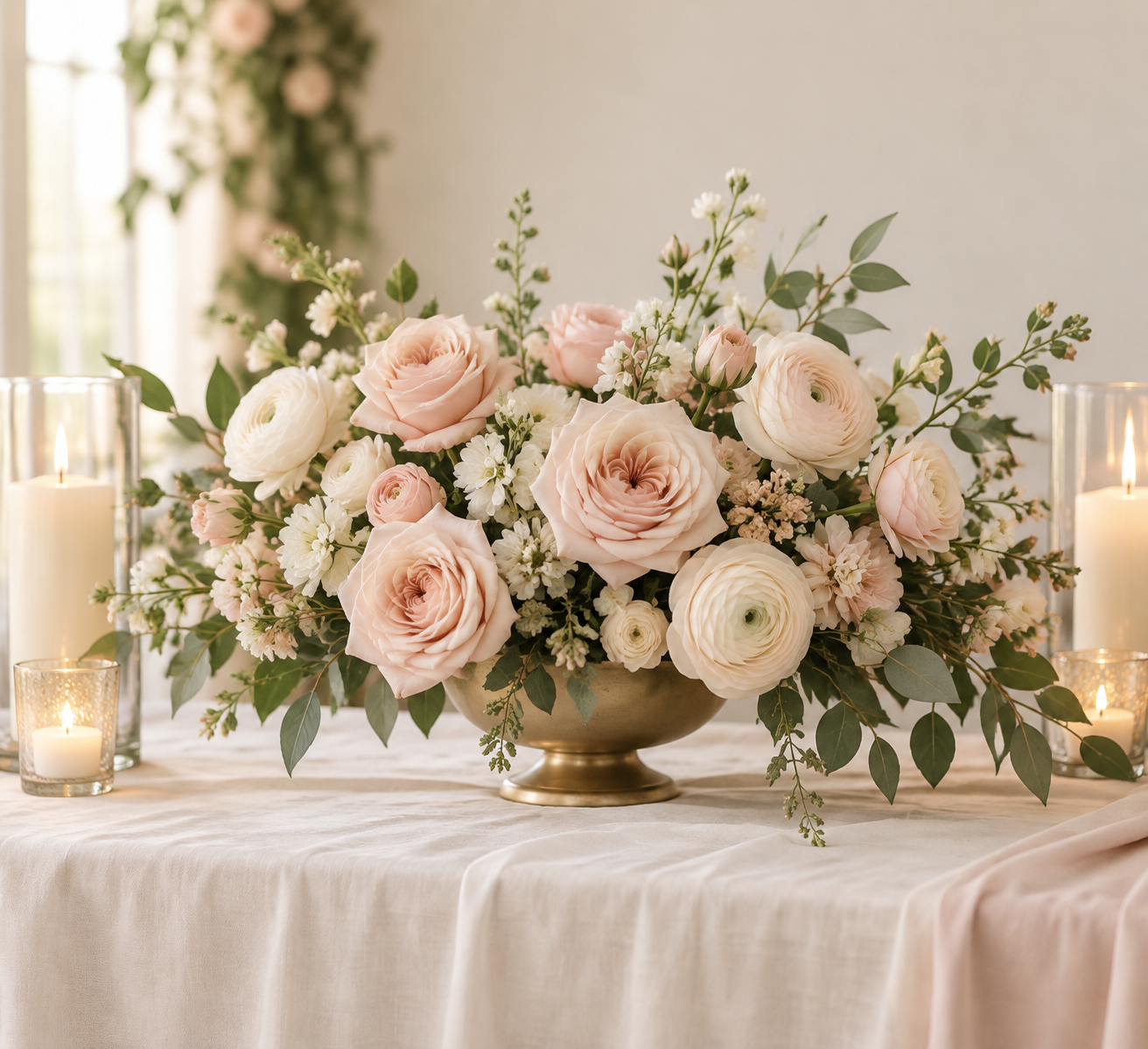
The word covers three distinct stops, and every blush mismatch traces to mixing them. Ivory-pink: the palest end, petals reading white indoors and pink in sunlight — the most bridal. True blush: the classic soft pink, the color the word actually names. Dusty rose: the mauve-leaning end, deeper and moodier, the vintage register. All three photograph beautifully; any two of them side by side in the same party read like an ordering error. Pick the stop that matches the wardrobe — blush dresses carry true blush, champagne gowns need ivory-pink florals — hold every floral piece to it, and the palette does everything else.
Running Blush Through the Whole Wedding
How to Build a Blush Wedding Palette
- Is blush right for the season and venue?
Blush peaks spring and summer — garden ceremonies, greenhouse venues, brunch receptions — and holds into candlelit ballrooms where the champagne-gold companion does the evening work. It's the soft palette that doesn't wash out, with one caution: blush photographs a half-stop lighter than it reads in person, so the palette you plan at the fabric store reads softer in the photos. Pink is also the hue cameras shift most — golden-hour light warms blush toward peach, open shade cools it toward gray-mauve — so shoot the swatch in the light the wedding happens in, brief the photographer that the palette is camera-sensitive, and hold the room's lighting plan to one temperature. Couples who want the pink signal to read clearly pair blush with ivory (which darkens the blush by contrast) rather than layering pink-on-pink.
- How does the pairing split work in practice?
By role, top down: the chosen companion carries 25-35% against the blush's 55-60%, with gray-green greenery (eucalyptus, ruscus, olive — deliberately not emerald, which tips the palette sweet) carrying the remainder. Bridal runs blush-heaviest up close — classically ivory-dominant with blush running through, so the pink frames the white gown; the bridesmaid row carries the companion harder, blush-dominant, so the color story lives loudly on the party while the bride reads light and centered; ceremony pieces stage the full split at maximum width. The champagne pairing is the exception to the flower-split rule: gold runs as accent material (wraps, berries, table scatter), not as a third flower color.
- Which flowers carry blush best?
Peony is the signature carrier — layered petals hold the soft pink with depth so it reads blush, not bubble-gum. Ranunculus gives the same depth in tighter blooms; garden roses and spray roses fill volume and movement at the classic read; hydrangea softens masses; sweet pea trails the edges. The roster runs the same colorway across every role on this page, so flower choice shapes texture, not palette drift — and the depth carriers (peony, ranunculus) are what keep a blush wedding reading adult. One seasonal note worth knowing: in fresh floristry this palette is hostage to peony season, a few late-spring weeks at peak prices — in artificial stems the identical build ships at flat pricing every month of the year, which is the sharpest seasonal argument for faux anywhere in flowers.
- Blush, pink, or rose — which read is this?
Three reads, named per listing: pink is the bright saturated signal, rose runs deeper and dustier, blush sits between ivory and pink — the warm, quiet read. Within the blush family itself sit the three spectrum stops above (ivory-pink, true blush, dusty rose), and 'blush' drifts peach-ward and 'rose' drifts mauve-ward at the edges — which is exactly where color-name disappointment comes from in this category. That is why every listing here names its read and photographs the piece solo, and why the sample stem against your actual fabric in daylight is the final check before a full order. Same-order shipping keeps whichever read you choose on one batch.
- When should the collection arrive?
Wedding orders deliver at least two weeks before the date, buffer built into checkout. Order the collection 2-3 months out — May-June Saturdays are the spring crunch — and use the two-week window for the daylight read-check against attire (soft palettes shift most under warm indoor light, so daylight is the check that predicts the photos), plus the dry-stage of ceremony pieces.
Frequently Asked Questions
What colors go with blush wedding flowers?
Four working companions, staged on this page: sage (the garden pastel — keeps blush from tipping sweet), champagne and warm gold (the elegant evening build, run as accent material rather than a third flower color), dusty blue (the pastel contrast for spring mornings), and ivory (the softest read, which darkens blush by contrast). Splits run 55-60 blush against 25-35 companion, with eucalyptus, ruscus or olive — gray-greens — carrying the remainder. Beyond florals, the metal rule: gold warms the pink, silver cools it — pick one and hold it through candleware and linens.
Is blush the same as pink or rose?
Different reads, named on every listing: pink is the bright saturated signal, rose runs deeper and dustier, blush sits between ivory and pink — warm and quiet. Within blush itself, the spectrum runs ivory-pink (petals read white indoors, pink in sun — the most bridal) through true blush to dusty rose (the mauve-leaning vintage register); all three photograph beautifully, but mixing any two across the party reads as an ordering error. Match the stop to the wardrobe — blush dresses carry true blush, champagne gowns want ivory-pink — and a sample stem checked against the fabric in daylight settles it before the full order.
Will blush flowers wash out in photos?
Soft palettes photograph a half-stop lighter than they read in person — that's physics, and it's plannable: pair blush with ivory (contrast darkens the blush read) rather than layering pink-on-pink, weight the greenery (gray-green, not emerald) up to anchor the mass, and choose the depth carriers — peony, ranunculus — whose layered petals hold tone where flat petals wash. Pink is also the hue cameras shift most — golden hour warms it toward peach, open shade cools it toward gray-mauve — so shoot the swatch in the wedding's light and hold the room to one lighting temperature. The collection pages stage all three moves by role.
Is blush still a popular wedding color?
Perennially — it tops palette rankings every year because it flatters every skin tone, works in every venue from ballroom to barn, and pairs with everything: gold, silver, navy, sage, burgundy. Its popularity is also its only liability: blush weddings photograph beautifully and often. Couples wanting the romance of pink with a more current read shift one stop down the spectrum to dusty rose, or cool the palette with silver-green eucalyptus.
Should the bridal bouquet be all blush?
The classic blush bridal bouquet is ivory-dominant with blush running through — the pink frames the white gown and the palette reads unmistakably romantic, centered, timeless. An all-blush bouquet is a fully legitimate statement, especially against a simpler gown. The rule of thumb both builds share: the bridesmaids carry the blush-dominant versions, so the color story lives loudly on the party while the bride reads light.
How far in advance should we order the collection?
Two to three months out, with delivery at least two weeks before the wedding (standing policy, buffer built into checkout). May-June Saturdays are the spring-season crunch everywhere in wedding flowers. The two-week window carries the soft-palette-specific check: daylight read-verification against attire, since blush shifts most under warm indoor light — and the dry-stage of ceremony pieces.
Does the whole collection match if we order piece by piece?
Same-order, same-batch — the mechanism, not the adjective. One checkout for bridal, row, wearables and ceremony pieces keeps the blush read identical across every photo; orders split across weeks can land on different dye batches within the family, and two batches of "the same" blush disagree under every light. If the order must split, keep each role intact on its own order and let ivory neutrals bridge — batch variance lives in the saturated colors, not the ivories. A matched bridesmaid row photographs better than a partially-matched everything.