
Artificial Window Box Flowers
Pre-set flower mixes built to standard window-box lengths — 24, 30 and 36 inches — in UV-stabilized outdoor materials, ready to bolt to the sill with brackets included on boxed sets. The petunia, geranium and mixed-cascade palettes make a facade bloom from March to frost with no watering ladder. Sun exposure notes on every listing, because window boxes sit in the strongest light a house offers. Nothing to deadhead, nothing to water from the second floor.
Quick answer: Window boxes are the highest-maintenance planting in home florals — watering overhead on a ladder, every day in summer — which is exactly why the artificial version has become a mainstream choice rather than a shortcut. Measure the box interior first (inserts run by the inch; 24, 30 and 36 inch are the standard lengths), buy UV-stable builds for south- and west-facing glass, and secure inserts against wind with zip ties through the drainage holes. Facade color from March to frost, zero ladder trips.
Artificial Window Box Flowers, Explained
Measure once, order the length
Window boxes come in standard lengths — 24, 30 and 36 inches dominate — and the mixes on this page are pre-set to those lengths, so the buying job is one tape measurement: inside sill width minus an inch, then the matching mix. Every listing states the set length and the planted height above the rim (typically 8–14 inches, kept low enough to preserve the window's sightline). Boxed sets that include brackets and the box itself photograph exactly what ships, so the 'mix' question — flowers only, or the whole unit — is answered at checkout, not on a ladder.
The second-floor watering problem
A live window box is the highest-maintenance container in gardening: sun hits the top, wind dries both long sides, and it hangs at the one height you cannot reach without a step ladder and a nerve. Summer watering runs daily, and one missed week in August is a box of sticks by Labor Day. That is the honest reason this category exists. The artificial version starts in full flower, never browns out, and the trade is the one stated across the outdoor line: texture at hand's distance against a display that holds all season with zero ladder trips.
Sun, exposure and materials
Window boxes take the strongest light a house offers — south and west sills especially, and the glass itself reflects extra light onto the box — so materials are the whole game here: the mixes are built on the same stabilized PE and polypropylene grades as the UV resistant collection, with the material spec and sun note printed per listing. Shaded and north sills hold color for years; full south sun spends the fade rating fastest, and those placements should shop the top-rated builds. Wind is a mounting matter — boxes want two brackets, not one, on any floor above ground level, and a check of the bolts each spring.
Season changes and storage
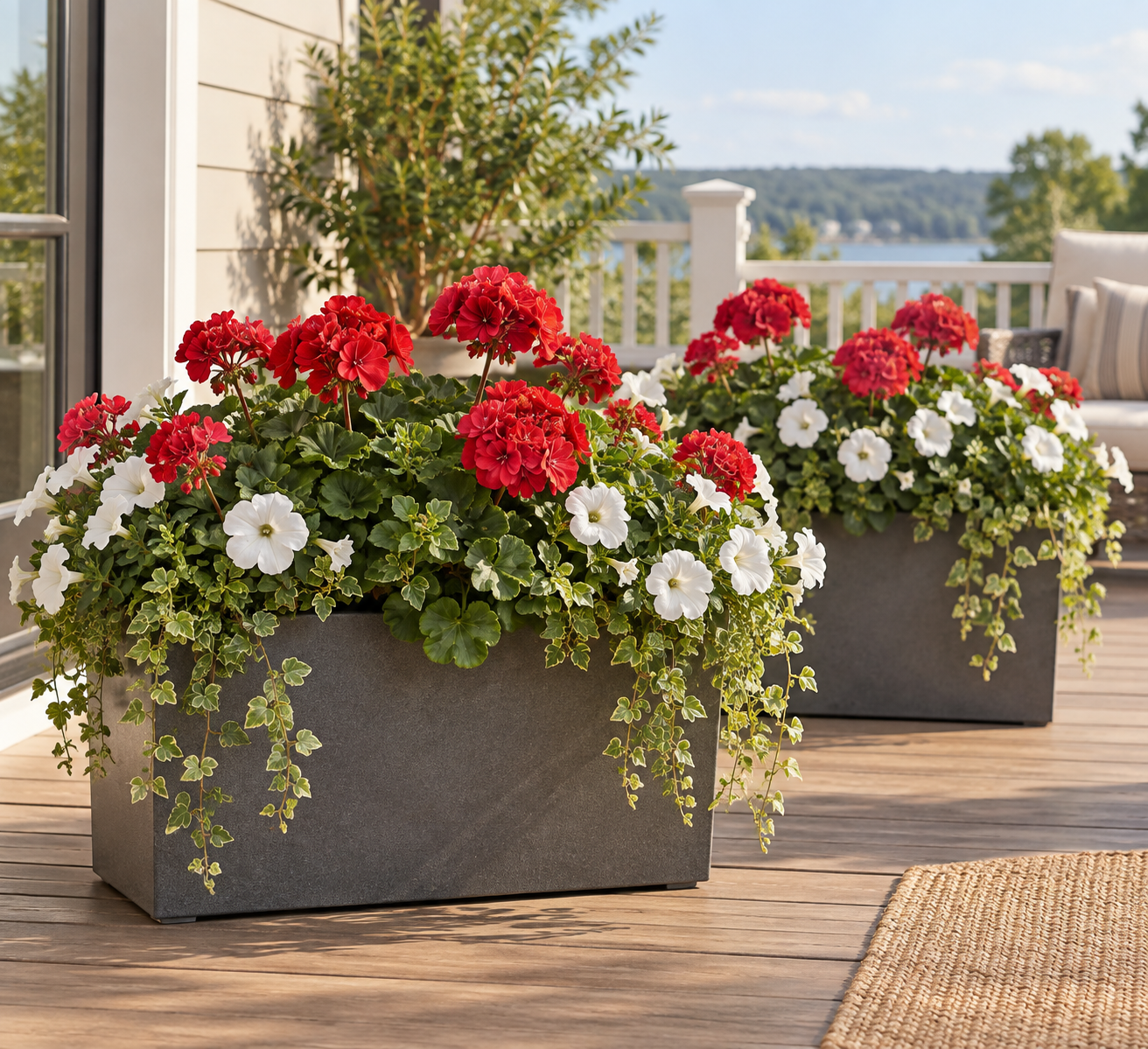
The seasonal swap is where artificial boxes quietly win: unbolt the spring mix, bolt the summer one, ten minutes with a screwdriver, no soil to dispose of and nothing to re-plant. Off-season, boxed mixes store stacked on a shelf — no shed of pots, no overwintering routine. A five-minute fluff of the spikes and trails when a mix comes back out is the entire maintenance calendar, and the same mix runs for seasons on the exposure math above.
The "Great Idea or Big Mistake" Debate, Settled Honestly
Search "faux flowers in window boxes" and you'll find the argument: purists call it cheating, realists call it the only version that survives August. Both camps are describing real failure modes. The honest settlement — faux window boxes are the right call when: the box is hard to reach (second story, ladder-access only), the exposure is brutal (full south sun bakes soil boxes dry by noon), the season's demand exceeds the gardener's (travel, work, health), or the goal is a consistent facade for photos and listing shots. They're the wrong call when: the box sits at hand height on a shaded porch you walk past daily, you want to grow things, or scent is part of the point. The mixed strategy most homes land on: real boxes at ground level, faux on the second floor and the sun-blasted sills.
Three Formats: Box, Insert, or Bundle
Measuring and mounting without a mid-air surprise
Two measurements decide the buy: interior length of the existing box (inserts sized to it, with an inch of play) and the bracket span behind it — weight matters less than wind, because a box insert is a sail the wind tests daily. The mounting kit that works: zip ties or garden wire through the box's drainage holes anchoring the insert to the box, and the box to rated brackets screwed into structure, not siding. Skip the zip-tie step and the first serious gust re-arranges your facade; the tied-down insert rides out weather that sends loose ones into the yard. The sun spec behind the builds runs deep on the UV-resistant flowers page; the rest of the line at the outdoor collection.
How to Choose Window Box Flowers
- Measure the sill first.
Inside sill width minus an inch, then the matching 24/30/36 in. set — one tape measurement settles the whole order; length and planted height are per listing.
- Flowers only or full unit?
Mixes for an existing box, or boxed sets with brackets and box included — what ships is photographed per listing, answered at checkout not on a ladder.
- Read the sill's sun card.
South and west sills spend fade ratings fastest — top-rated stabilized builds there; shaded and north sills hold color for years.
- Mount with two brackets and tie the insert.
Any floor above ground level wants two brackets and a spring bolt check — wind load on a box works as torque, not just weight — plus zip ties through the drainage holes so the insert never leaves the box on its own.
- Swap seasons by screwdriver.
Ten minutes to unbolt spring and bolt summer — stacked shelf storage, five-minute fluff, and the same mix runs for seasons.
Frequently Asked Questions
Are faux flowers in window boxes a good idea?
Where boxes are hard to reach, sun-blasted or beyond a watering schedule you can keep — second story, full south exposure, travel-heavy summers — faux is the version that actually delivers the look. Where the box sits at hand height in shade and you enjoy growing, real wins. The settled mainstream strategy mixes them: real at ground level, faux upstairs and in brutal exposures.
What size window box flowers do I need?
Measure the interior length of the box — wall to wall, inside the rim — subtract an inch, then match to the standard lengths: 24, 30 and 36 inches dominate residential windows, and the mixes on this page are pre-set to exactly those. Depth matters less (inserts sit on the floor of the box), but confirm the planted height clears the box rim plus an inch or two for the trailing layer to spill — typically 8–14 inches above the rim, kept low so the display flowers without blocking the window's sightline. If your sill runs between standard lengths, size down rather than up: a slightly short mix centers cleanly, an overhung one bows.
Do these include the window box itself?
Both configurations are stocked, and every listing states plainly which: flower-only inserts and mixes drop into an existing box (yours, or a standard-length box sourced separately), and boxed sets include the box, brackets and the pre-set planting — photographed together as the exact unit that ships. The bracket question matters at checkout: boxed sets include mounting brackets, flower-only mixes assume your box already hangs. Nothing in the photos is a prop; what the set shows is what arrives.
How do I attach a window box — and keep it from blowing away?
The standard route is brackets: two L-brackets or strap brackets bolted into the sill framing or wall (masonry needs sleeve anchors), spaced a bracket-width in from each end — two brackets minimum on any floor above ground, because wind load on a box works as torque, not just weight. Vinyl and PVC trim want screws into framing, not the trim face alone. Then anchor the chain: zip ties or garden wire through the insert's base into the box's drainage holes, so the wind never separates insert from box — the un-tied insert is the failure point every time. In storm regions, unclipping boxes before named weather takes ten minutes and saves the display. And the honest spring ritual: a quarter-turn check on each bolt after winter.
Will window box flowers fade in a sunny window?
Window sills concentrate sun — glass reflects extra light onto the box — so this placement demands the UV-stable builds rather than indoor-grade stems. The outdoor spec holds strong color for multiple seasons (2–4 in full south sun depending on climate, longer in shade), and lighter palettes show their fade last — which is why the classic window-box palettes of white, pink and coral also age the best. What no honest listing will promise is color that never drifts; the rating tells you how many seasons you bought, and re-tasking a softening mix to a shaded sill buys extra ones.
Can I mix faux and real flowers in one window box?
It's the professional landscaper's trick for hard boxes: real trailing ivy or vinca anchored in soil at the front edge (the living part that moves in the breeze), faux blooms set behind on taped stems for the color mass the box can't sustain. Water the real layer directly at its root zone; the faux layer never needs the soil and lifts out for cleaning or seasonal swaps while the real trail keeps growing.
Can I leave artificial window boxes out in winter?
The materials take winter fine — stabilized greenery and blooms freeze, thaw and come back without rot — and evergreen-styled mixes are the standard holiday and winter look on sills. Two honest cautions: snow load flattens spikes temporarily (hand-shape them back in a minute), and deep-freeze regions' freeze-thaw cycles work mounting bolts loose over years, which is the spring quarter-turn check's whole job. Flower-style summer mixes are better boxed for winter — not because cold kills them, but because spring swaps are ten minutes when nothing is frozen to the bracket.