
Centerpiece Vases
Quick answer: a centerpiece vase obeys one rule before any style decision — total height (vase plus arrangement) either stays under 14 inches or clears 24, because the band between blocks every sightline at the table. Low bowl-and-stem profiles run the dinner standard; tall-stem vessels lift blooms overhead; compotes solve both at once; and event buyers multiply cylinders, which nest for transport and repeat down banquet runs. For tables people actually dine at, the stricter working number is under 12 inches finished.
Vessels sized to the middle of the table — where the rule is not size but sightlines: guests see each other over the arrangement, or through it. Low bowls, mid-height cylinders, clustered buds, and hurricanes that hold a candle at dinner and flowers by day. Every listing states finished height against the sightline test, so the centerpiece does the one job a centerpiece has: dress the table without owning it.
Centerpiece Vases, Explained
The sightline rule
A centerpiece lives or dies by whether the table still works as a table. Event designers call the 14-to-24-inch band the dead zone: centerpiece height at seated eye level, where flowers block conversation and every photo across the table. The working numbers: for dining tables people actually dine at, keep finished arrangements under 12 inches — conversation clears them; for coffee and console tables where nobody sits across, 14–20 inches reads generous; for venue tables and long buffets, height can climb if the base stays narrow. Vessel choice is how the rule gets enforced — a low bowl physically caps the build, and a tall-stem vessel physically lifts it — and every listing here states finished height as styled, which turns the rule into a filter.
Four centerpiece builds
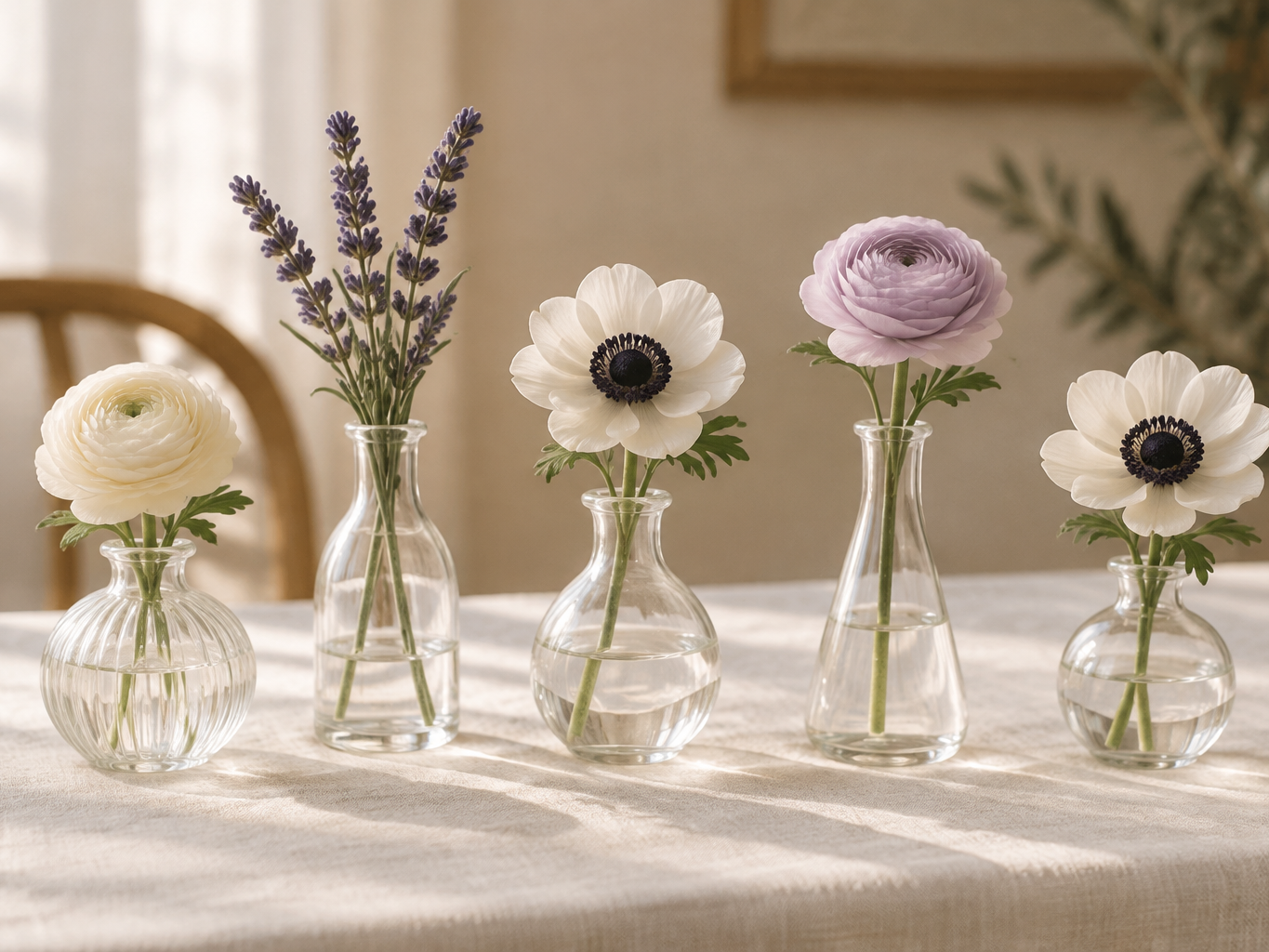
The low bowl: wide mouth, foam build, one mass of hydrangea or garden roses under 10 inches — the pass-the-salt-proof classic. The bud cluster: five to seven small vases in a loose grid with candles between — the wedding workhorse. The hurricane pair: two tall glass guards flanking a low bowl, adding height at the edges where sightlines don't block. And the compote — a bowl raised on a footed stem — which runs the designer end. Four builds, every vessel in the collection tagged to the one it serves:
Why compotes run the wedding industry
The bowl-on-stem profile solves the centerpiece paradox in one shape: the dish sits at 8-to-12 inches — arrangement-friendly height for cascading builds — while the stem below keeps the table surface open and the total under the sightline. Loaded with artificial stems on a foam dome, a compote is also the most re-usable object in event floristry: the same vessel dresses a wedding, a holiday table and a showroom across years, with the stems re-shaped by hand each time. That re-use economics is precisely why event planners were the first industry to standardize on permanent florals. The complete height-and-count system for table florals is laid out on the centerpieces page; the cylinder standard continues at cylinder vases.
Hurricanes: candle at dinner, flowers by day
The hurricane vase is this collection's two-shift piece — a tall glass guard that holds a pillar candle for the dinner hour and a bouquet or branch arrangement the rest of the week. That dual duty explains why the form spans home and wedding searches alike. The sizing logic: the glass should clear the candle flame by at least four inches (a 3-inch pillar wants a 10-inch-plus guard), and the opening wide enough to work in with a gloved hand. Two cautions that print on every hurricane listing here: never leave a burning candle under greenery or faux stems in the same guard, and never lift a lit hurricane by the chimney. The candle hours and the flower hours are separate shifts — that is the whole trick.
Wedding tables, mixed heights
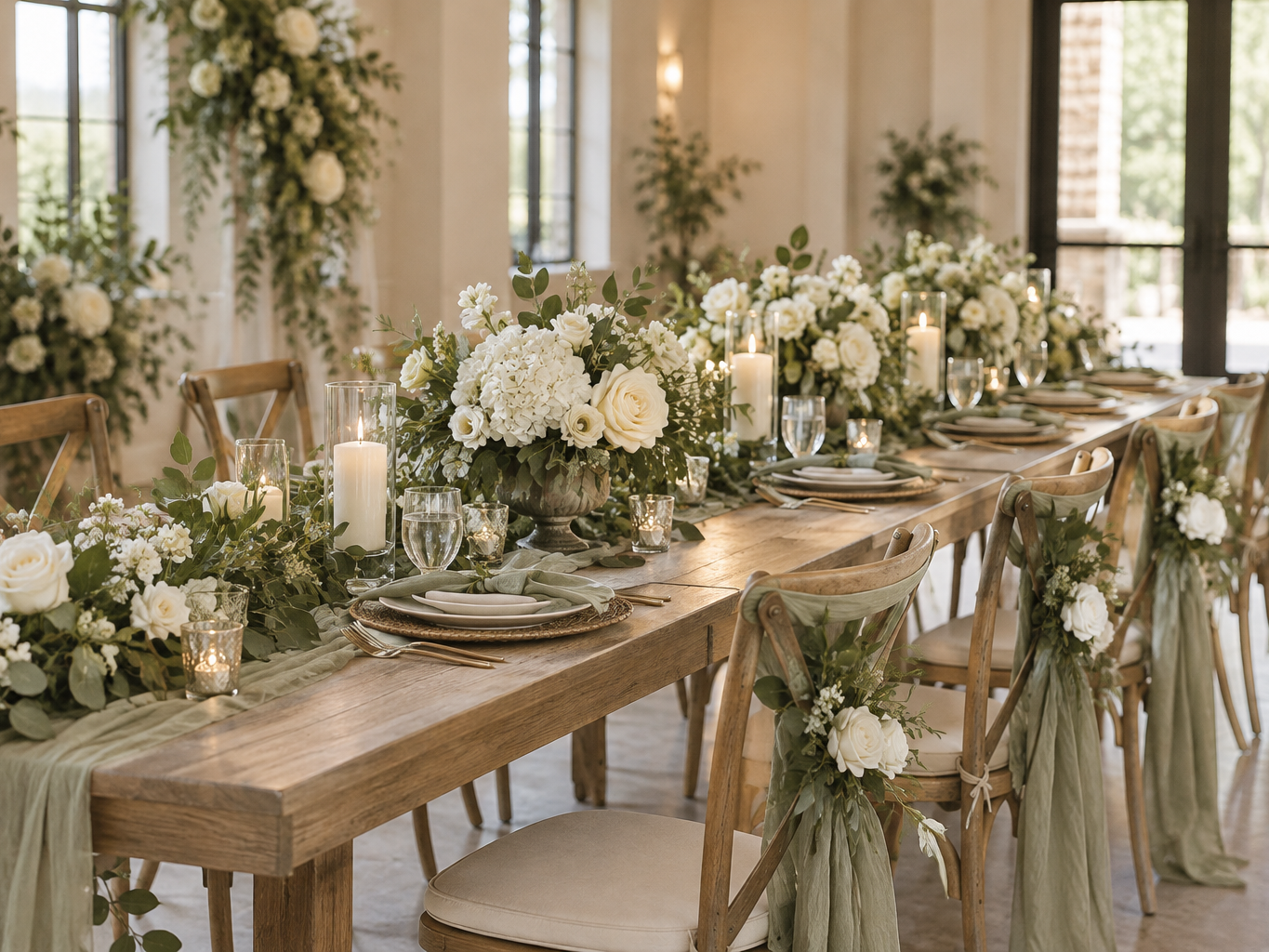
The venue formula our shoppers plan around: mix rather than match. One low bowl (8–10 in.) plus a bud cluster of five to seven, plus candles in cylinders, per 60-inch round — three heights, one tablescape, and the geometry repeats down every table so the room reads composed. For long rectangles: a repeating rhythm of low bowl, cylinder, hurricane every 24–30 inches. The bud and cylinder pages carry the count math per table shape; this page carries the mix logic that ties them together.
Buying for Events Versus Home
The same vase buys differently by use. Home buyers optimize for one: the compote or bowl that matches the room and holds a permanent arrangement — buy for beauty, weight it once, forget it. Event buyers optimize for twenty: nestable shapes (cylinders, stackable compotes), uniform finishes that photograph as a set, and weighted-enough bases that survive table turns — plus the arithmetic that a ten-table reception runs ten to thirty vessels, priced accordingly in case quantities. Both buyers get the same structural spec: opaque bodies to hide mechanics, weighted bases for top-heavy builds, and the height rule enforced by the vessel so the arrangement can't break it. Stems to load them run at loose flower stems; wedding-scale table systems at wedding flower arrangements; the full vessel engineering at vases for artificial flowers.
How to Choose a Centerpiece Vase
- Start from who sits across.
Dining tables people eat at → finished height under 12 in.; coffee and console tables → 14–20 in.; venue and buffet tables → tall at the edges, low over the seats. Height stated per listing as styled.
- Pick your build before your vessel.
Low bowl for one foam mass, compote for cascading garden builds, bud cluster for scatter-plus-candles, hurricane pair for edge height — the build decides the vessel, not the reverse.
- Size hurricanes for the candle shift.
Glass clears the flame by 4 in. minimum (3-in. pillar → 10-in.+ guard); opening wide enough to work in gloved. Candle hours and flower hours run as separate shifts — never both in one guard.
- Plan the repeat for venue work.
One low bowl + 5–7 bud cluster + candle cylinders per round; repeating bowl-cylinder-hurricane rhythm every 24–30 in. down rectangles — geometry that reads composed from any seat. One per round table, or a repeating run per banquet table, so the count is table-count arithmetic before it is a design decision.
- Buy the mix, not the matched set.
Three heights in one finish beat twelve identical pieces — our clusters and boxes are composed that way, and they re-scatter onto home shelves after the event.
Frequently Asked Questions
What is the best vase shape for a table centerpiece?
The compote — a bowl raised on a footed stem — is the designer answer because it solves height and openness at once: the dish sits at arrangement-friendly height while the stem keeps the table surface clear and the total build under the sightline. Low bowls run the everyday dinner standard, tall-stem vessels lift blooms above head height for grand rooms, and cylinders multiply down event tables. The shape enforces the under-14-or-over-24 rule so the arrangement can't break it.
How tall should a centerpiece vase be for a dining table?
Work backward from the finished height: under 14 inches total or above 24, never between — and for tables people actually dine at, the stricter working number is under 12 inches, tall enough to read as a centerpiece, low enough that conversation clears it. A 4–8 inch bowl with a dome arrangement lands under; an 8–12 inch compote with cascading stems lands just under; a 16–24 inch tall-stem vessel lifts blooms clear above. If you love height, use it at the edges: two taller vessels at the table's ends with a low bowl in the middle keeps sightlines open through the middle. Coffee tables, consoles and sideboards carry 14–20 inches happily. The vase height you buy is the commitment to which side of the rule the table lands on.
How many centerpiece vases do I need per wedding table?
Per 60-inch round: one anchor piece (low bowl or compote) plus a cluster of five to seven bud vases, plus candle cylinders between — three heights, one table, one finish per room. Per eight-foot rectangle: a repeating rhythm of low bowl, cylinder and hurricane every 24–30 inches, which works out to about four to six vessels plus candles. A ten-table reception runs ten to thirty vessels — so buy in matched sets: uniform finishes photograph as a designed room where mixed vessels photograph as borrowed. The bud page carries the per-table bud counts; repetition down the tables is what makes a venue read composed.
Can you put candles and flowers in the same hurricane vase?
Not at the same time, and that is the design, not a limitation. The hurricane works two shifts: candle hours (pillar candle inside the guard, nothing flammable near the flame — the glass clears the flame by at least four inches) and flower hours (the same guard holding a bouquet or branch arrangement, flame out). Mixing them — greenery or faux stems beside a lit candle in one guard — is how centerpieces become fire reports, and every hurricane listing here prints the two-shift rule. What you can do together: candles in plain cylinders beside a hurricane of flowers — adjacent, never stacked.
Can I use a centerpiece vase for candles instead of flowers?
Cylinders and low bowls, beautifully — pillar candles in cylinders are the event standard, and floating-look candles in water-free glass beads run the safe artificial version. Compotes and tall-stem vessels are arrangement shapes and read incomplete with a candle alone. The classic move alternates: candle cylinders and stem cylinders down the same runner, which is a composition, not a compromise.
What is the difference between a centerpiece vase and a regular vase?
Proportions and the sightline test. A centerpiece vessel is built wide-or-low relative to its height — bowls, compotes, squat cylinders, clustered buds — so a table still functions around it; a regular vase pursues height and statement freely because it answers to a wall or a corner, not to guests sitting across. Any tall vase can serve centerpiece duty at the table's ends; the middle of the table belongs to the low builds. The finished-height figure on each listing is the deciding number: under 12 inches for the middle, anything for the edges.
Do centerpiece vases need special care with artificial stems?
No water ever — which protects glazes and glass from mineral lines permanently. The care list: dust the arrangement with a cool hair-dryer blast, wipe vessels with a dry cloth, and lift (never slide) when the table gets set or cleared. For stored event sets, nest cylinders and stack compotes with cloth between; foam domes stay in the bowls and re-shape by hand on the next load.
Do centerpiece vases for events ship safely?
Event glass ships as its own logistics lane: protective packaging per piece, dividers for clusters and boxes, and venue-timing notes at checkout — glass to a venue is a different problem from glass to a front door, and it is scheduled that way. The final double-boxing standard is being confirmed with suppliers and prints on every listing once set. If pieces arrive chipped or short of the count: a photo and the order number brings replacements — event sets are inspected as sets, count and condition, before they leave.