

Spring Wreaths
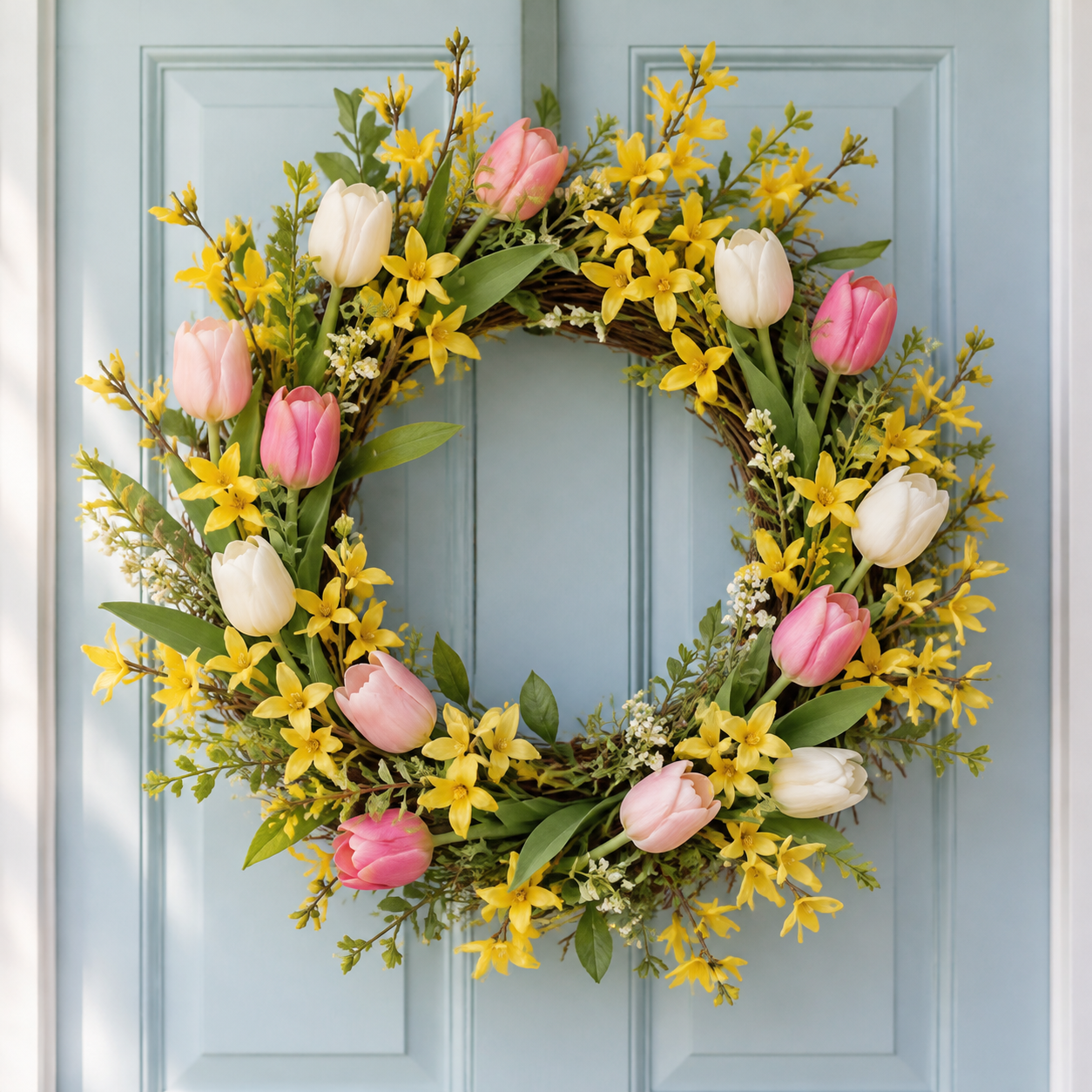
Spring wreaths take the door from the first February thaw through the June heat — tulip, forsythia, daffodil, daisy, hydrangea and cherry blossom builds in the pastel palettes the bulb season brings. Sizes run 16 to 24 inches on light grapevine and straw bases, and every listing photo shows the exact single wreath you receive, shot flat in daylight.
Quick answer: Hang a spring wreath when the first daffodils break ground — late February to mid-March in most zones — and keep it through May. Early-spring builds lean on bulb flowers (tulip, daffodil, hyacinth) in soft pastels; late-spring builds shift to vivid peony, wildflower and herb-green palettes. A 20–22 inch wreath fits the standard 36-inch door — spring's lighter palettes read larger than winter builds of the same diameter.
Spring Comes in Two Waves — Buy for the Right One
Retail pages dump every pastel wreath into one spring pile, but the season on the door actually turns over once. The first wave is bulb season: late February through April, when the palette is soft — cream tulips, butter yellow, pale pink, fresh green — and the flowers are the early bloomers. The second wave is late spring: May into June, when the light sharpens and the vivid builds (saturated peony, poppy, wildflower mixes) take over. Buying a soft-tulip wreath in May means three weeks of looking dated; buying a vivid build in March means it clashes with the pale bulb garden under the window.
The palette that separates the waves: wave one runs on white, cream, blush, butter yellow and pistachio green — colors that hold their own against gray skies and bare branches. Wave two brings the saturation: coral peony, violet wildflower, deep herb green. The neutral bridge between them is the fresh eucalyptus and fern builds, which read correct in either month and are the picks restocked hardest in the overlap weeks of late April. Easter and Passover fall inside wave one; if the door dresses for the holiday specifically, the Easter wreaths collection carries the egg, bunny and cross motifs in the same palette family.
Choosing a Spring Build: Motif, Base, Exposure
The spring flower list is specific — tulips, daisies, hydrangea, cherry blossom, lavender and daffodil leads, with fresh greenery underneath rather than the pine and cedar of winter builds — and the base changes how each motif behaves:
What March rain does to a spring wreath
Spring is the wettest hanging season, and rain is the reason base material matters more in March than in December. Grapevine and straw bases carry airy arrangements that suit the season — and grapevine and wire-frame builds shed water and dry in an hour; dense evergreen bases hold moisture at the inner layer for a day or more, which is fine for the foliage but hard on glued berry clusters. On a fully exposed door, the greenery builds and grapevine-based bulb mixes are the practical picks — and the same logic scales up on the outdoor wreaths page, where the frames and foliage are specified for open exposure. Under a covered porch or overhang, every build in this collection carries the full season — buy for palette, not weather.
Sizing, Ribbon and the Summer Handoff
Spring builds run slightly smaller than winter stock: 16 to 24 inches, because the season's lighter palettes read larger than their footprint. A 20–22 inch wreath on a standard 36-inch door is the most common pairing; 16–18 inch pieces suit storm-door pairs, interior walls, mirrors, windows flanking the entry and gallery groupings. Measured diameters are on every product page.
The finish that suits the season: pastel wired ribbon — lavender, butter yellow and sage in sheer or satin, 2.5 inches for the standard bow on a 20–22 inch wreath. The wired edge holds soft loops open without stiffness, and a spring bow re-dresses in minutes when early-season pastels give way to summer brights; width, yardage and colorway combinations are variations on the wired ribbon listings.
When June heat arrives, the door hands off to summer wreaths — sunflower, lemon and tropical builds made for full sun. Boxed dry and upright with the ribbon intact, a spring wreath stores flat through seven months and re-hangs the following February after about five minutes of fluffing.
The DIY Route, Costed Honestly
Spring is the season the wreath-making videos spike, and the honest math is worth doing before choosing a lane. A DIY spring build takes a form, three to five stem bundles, ribbon and about ninety minutes — material costs typically land at or above a finished wreath's price unless you already own the supplies and the stem stash. The case for DIY is control of the exact palette, not savings. For builders, the wreath forms, loose flower stems and wired ribbon pages stock the full kit, and finished builds ship ready to hang after fluffing.
How to Choose a Spring Wreath
- Lead with the flower.
Tulip reads tailored, daisy reads cheerful, hydrangea reads full, cherry blossom reads airy — the lead bloom sets the whole personality before color.
- Buy for your wave.
Soft bulb builds late February through April; vivid builds May into June; eucalyptus and fern bridges both.
- Pick against the door.
Pastels pop on dark doors and read washed-out on pale ones — cream and butter yellow carry white doors better than blush. Colors are stated per listing; order one piece first if the match is critical.
- Size to the opening.
20–22 in. on a standard 36-in. door — lighter palettes read larger, so there is no need to size up; 16–18 in. rings shine on interior walls and windows, where spring stock does half its work.
- Mind the exposure.
Covered porch: all season. Open door: grapevine and wire-frame builds shed rain fast; light builds come in during spring thunderstorms.
- Plan the June handoff.
One shaped box, stored dry and cool, returns the same wreath next February — spring pastels fade in storage heat faster than the flowers themselves, so keep the box out of the attic.
Frequently Asked Questions
When should I hang a spring wreath?
When the first bulbs break ground — late February in warm zones, mid-March in cold ones — while the garden is still waking up, so the door and the yard change together. Most homes run it through May and hand the door to summer designs in June. If a winter wreath is still hanging past the first daffodils, it has crossed from seasonal to stale. The swap order for Easter keepers: winter piece down in late February, spring wreath up in March, Easter piece over the holiday fortnight, spring back until June.
What is the difference between a spring wreath and an Easter wreath?
Motif versus season length. An Easter wreath carries the holiday's specific symbols — speckled eggs, bunny accents, crosses, pastel plaids — and reads right for about three weeks. A spring wreath drops the holiday symbols and keeps the season's flowers and greens, holding the door from February thaw through May. Easter falls inside the spring window, so a holiday wreath usually swaps out for a plain spring build the week after.
What size spring wreath do I need?
A 20–22 inch wreath pairs with the standard 36-inch front door; spring's lighter palettes read larger than winter builds of the same diameter, so there is no need to size up. Use 16–18 inch pieces on narrow doors, storm-door pairs, interior walls, mirrors and windows. Every product page lists the measured diameter, and listing photos show the exact wreath that ships with a tape reference for scale.
How do I match a pastel wreath to my door color?
Work contrast, not matching. Dark doors (navy, black, forest green) carry every pastel; pale doors need saturated pastels — butter yellow, coral, lilac — rather than blush and cream, which wash out. Every listing names its colors the way the piece arrives and shows the single wreath that ships. No screen-to-door color promise is made: dye lots shift and screens differ, so if the match is mission-critical, order one piece against your door before committing to a set.
Can a spring wreath stay outside in the rain?
Short spring showers, yes — grapevine and wire-frame builds shed water and dry within a couple of hours. The risk items on an exposed door are glued berry clusters and unglazed foam berries, which spot and swell with repeated soakings. Under any overhang the question disappears. For doors with no cover, the greenery builds and grapevine-based mixes are the reliable picks, and thunderstorm regions should treat the wreath like a seasonal flag — bring it in when storms roll through, re-hang after.
How do I store a spring wreath until next year?
One shaped box per wreath, stored dry, upright and cool — spring pastels are the most sun- and heat-sensitive finishes in the wreath line, so the attic over a hot summer is the wrong shelf. A closet or climate-stable room keeps the colors as they were. Expect about five minutes of fluffing when it comes back out in February; the close-up finish photos on each listing are the reference for what "as it was" looks like.
Is it cheaper to make a spring wreath than to buy one finished?
Usually not on the first build. A form plus three to five stem bundles plus ribbon typically costs as much as or more than a finished wreath, before the ninety minutes of assembly. DIY pays off when you already own supplies, want an exact palette match to your door color, or plan to re-dress the same base across seasons. Forms, stems and ribbon are all stocked separately for builders who want that route.