
Artificial Flower Centerpieces
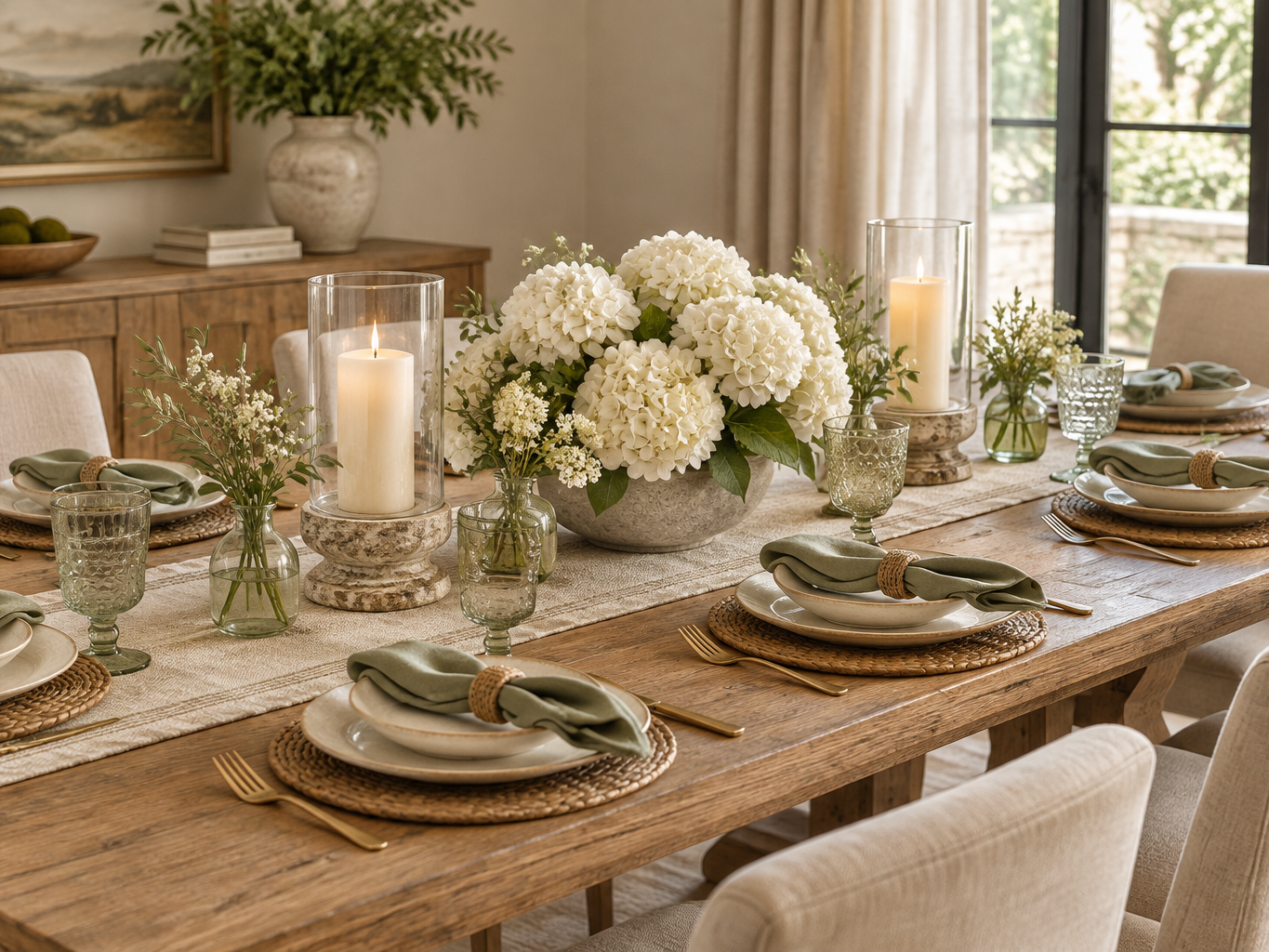
Quick answer: match the centerpiece to the table first. Rounds carry one low full arrangement — 12–14 inches or lower keeps sightlines open — long rectangles run a repeating series of three to five low pieces per 8 feet of table, and a 60-inch round seats eight to ten around a single 12-to-14-inch piece. Anything taller than 16 inches needs a tall-stem build on a riser, not a taller mound: lift the blooms above conversation height instead of sitting in it. As of October 2026, dining-height pieces run $40–90 and buffet statements $85–180 (USD).
The 30-Second Centerpiece Pick
- Height rule first: dining tables you eat at take pieces under 12 in so guests see each other; buffets, consoles and entry tables take 12–24 in; only freestanding floor spots go taller.
- Count for length: a 60 in table reads well with one 12–16 in piece; 72–96 in tables want two to three, or one runner-style length.
- Materials per piece: fabric, PE-film or latex-touch petals, wired stems — stated bloom, greenery and stem separately on every card. Centerpieces get close inspection; choose accordingly.
- Price band as of October 2026 (USD): dining-height pieces $40–90, buffet statements $85–180, wedding table sets $58–150 per table; free US shipping over $200.
Size to the Table, Not to the Photo
Centerpiece failures are almost always proportion failures — a piece built for a ballroom round drowned on a home dining table, or a tabletop bud vase lost on a 96-inch banquet rectangle. Centerpieces are judged at arm's length by whoever reaches for the salt, which is why size comes before flowers, always. The working system, used by every event designer:
The 14-to-24-inch dead zone
Event designers have a name for centerpiece heights between roughly 14 and 24 inches: the dead zone, where the arrangement sits exactly at seated eye level and blocks every conversation and every photo across the table. Low builds stay under it; tall builds clear it. Nothing lives in it. This single rule does more for a table's function than any palette decision — guests talk across a low piece, dine under a tall one, and lean around neither. Single-stem and small-vessel styling for dining tables runs on the bud vases page; the vessel half of any centerpiece decision is at centerpiece vases.
How to Choose a Centerpiece
Four decisions — height before flowers, always.
- How tall can it actually be?
Measure the sightline. For a table you dine at, keep the whole piece under 12 inches — guests should see each other over it, candles included. Sideboards, buffets and entry tables have no sightline to protect, so 12–24 inch pieces fill them properly. The single most common centerpiece mistake is a 20-inch statement on a 14-inch dining table.
- How many pieces does the table need?
One piece carries a 60-inch round or square table. Rectangles past 72 inches read better with two to three pieces spaced evenly, or a single runner-style length. For events, the long-table sets below are priced per table so the count is arithmetic, not guesswork.
- Everyday, holiday, or event?
Everyday pieces earn their cost across years of Tuesdays. Holiday work — Christmas tables, Thanksgiving runners — can be the same pieces restyled: swap ribbon, add candlesticks. Event buyers should see the wedding centerpiece guide for per-table budgeting before ordering multiples.
- How close will guests sit?
Centerpieces are the most closely inspected faux flowers in the house — inches from plates and elbows. At that distance petal material shows: the latex-touch line is built for it, and every card here lists bloom, greenery and stem materials separately so the call is made before ordering.
Why Event Work Runs Artificial
Fresh centerpieces are built the day before and fade through the event; artificial centerpieces are built once and work every event after — the economics that made event planners the earliest mass adopters of quality artificial florals. For a wedding or a venue program, the same pieces serve the ceremony tables, the reception and the brunch, then box flat until the next season. For the home, the practical difference is quieter but real: a permanent centerpiece that needs no water changes, no deadheading and no replacement cycle, dusted twice a year.
Wedding-scale runs of table pieces — and matching ceremony florals — are organized on the wedding flowers page; DIY table builds start at loose stems.
Frequently Asked Questions
How tall should a centerpiece be on a dining table?
Either under 14 inches or above 24 — never between, and for tables you actually dine at, under 12 inches total including any vase. The 14-to-24-inch band is seated eye height, where an arrangement blocks conversation and photos across the table. Low builds (the dining and banquet standard) stay under it; tall-stem builds lift the blooms above it on a riser or tall vase. Every listing here states total height as displayed, measured with a tape in the photo, so the rule is easy to apply before ordering.
How many centerpieces do I need for a long table?
Three to five low pieces per 8 feet of rectangle, or a greenery runner with bloom clusters along the same span. The repeating series reads designed and leaves serving space between pieces; one large arrangement on a long table reads like an island. Rounds take one piece each — sized to about a third of the table diameter. For head tables and rentals, the long-table sets in this collection are priced per table — count tables, multiply, done.
How much do artificial wedding centerpieces cost?
In this collection, $58–150 per table depending on scale as of October 2026 — a 10-table reception lands between roughly $600 and $1,500 in flowers that exist after the day, not in a dumpster. Against comparable fresh work, a single event usually runs about a third fewer dollars; across two or more events the artificial route wins outright, because the same pieces box flat between uses and planners amortize sets across entire seasons. There is also no day-before build and no post-event compost run, which for DIY hosts is half the real cost.
Do artificial centerpieces look convincing at a dinner table?
Conversation distance is three to five feet, and that is the distance the builds here are specified to read full at — with close-up photos on each listing to judge petal quality before ordering. Candlelight, the actual lighting of most dinners, is the friendliest light artificial florals get: it softens every edge the way it does for fresh flowers.
What are these centerpieces made of?
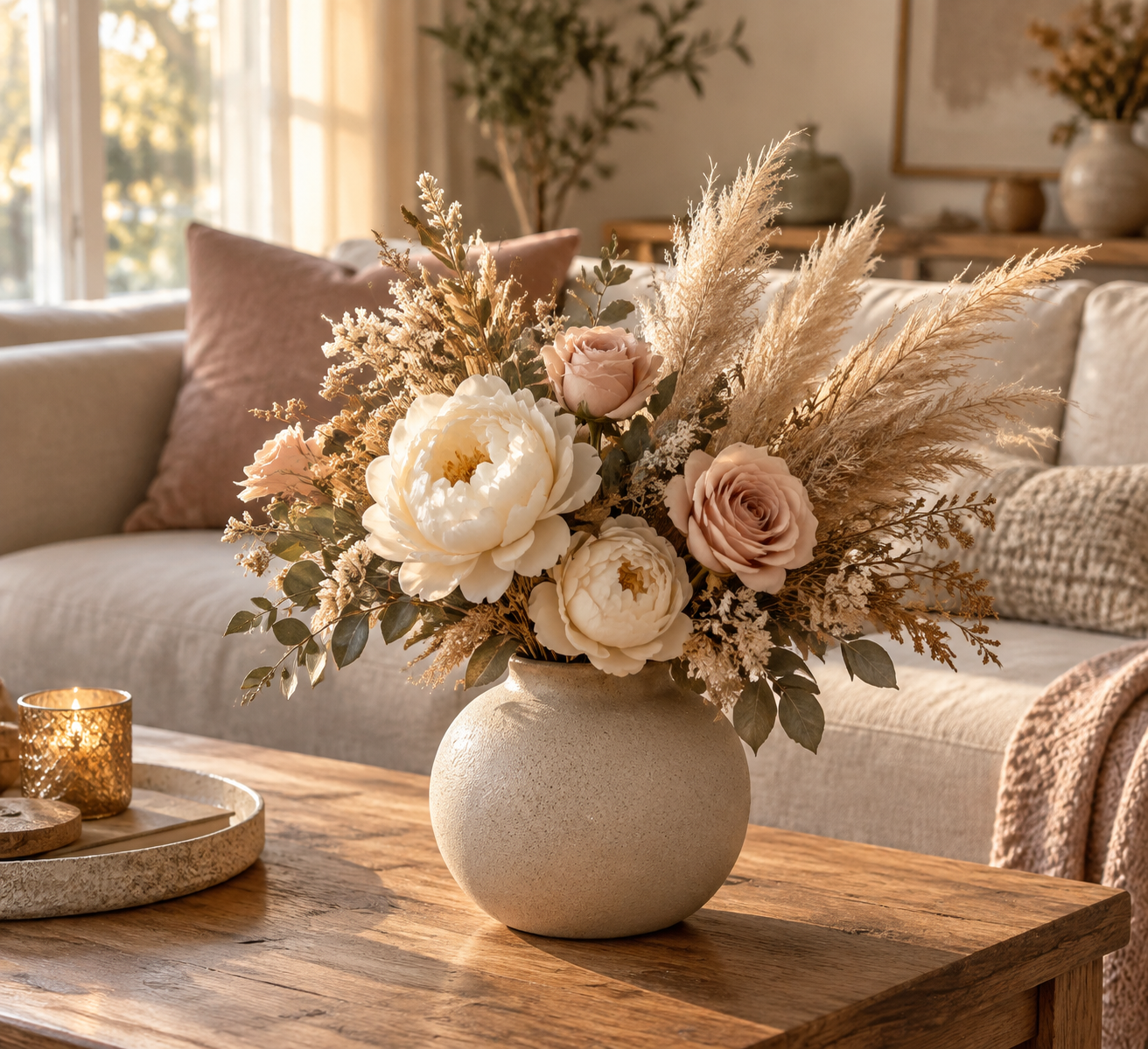
The same three petal families as the rest of the shop — polyester-blend fabric, PE film, and latex-touch pieces for the closest scrutiny — on wired stems, with greenery specified at the same material grade as the blooms. Each card lists bloom, greenery and stem materials separately with close-up photography, because centerpieces get inspected at a distance no other faux flowers face: dinner-plate range.
How do I keep a permanent centerpiece looking good?
Dining tables are the dustiest flower real estate in a house — food steam, candle soot, weekly wipe-downs nearby. A soft brush or cool hair-dryer burst weekly, and a 50/50 water-and-vinegar mist on a cloth for the deeper pass every couple of months. Never soak a finished piece with wired stems or a foam base, and keep liquid off latex-touch petals. Keep the piece out of continuous direct sun — all artificial botanicals fade eventually, slower rather than never — and lift rather than slide it during dinner service.
Can one centerpiece work for holidays and everyday?
Yes — that is the quiet advantage of faux centerpieces over fresh. The structure (base piece, heights, vessel) stays; the season changes around it: berries and ribbon in December, pastel stems at Easter, plain greenery in July. Buying one well-made neutral base and rotating accents costs less over three years than buying fresh for each holiday table twice over. The holiday centerpiece ideas guide shows the same base piece restyled four ways.