
Choose an arrangement by where it sits, not by how it photographs: a 10–14 inch piece anchors a coffee table, 18–24 inch builds carry console tables and mantels, and 30-inch-plus floor arrangements stand on their own. As of October 2026, small table builds run $25–60 and large floor designs $120–300 (USD) — and material grade decides whether the piece reads convincing at three feet, the distance guests actually view it from.
About Artificial Flower Arrangements
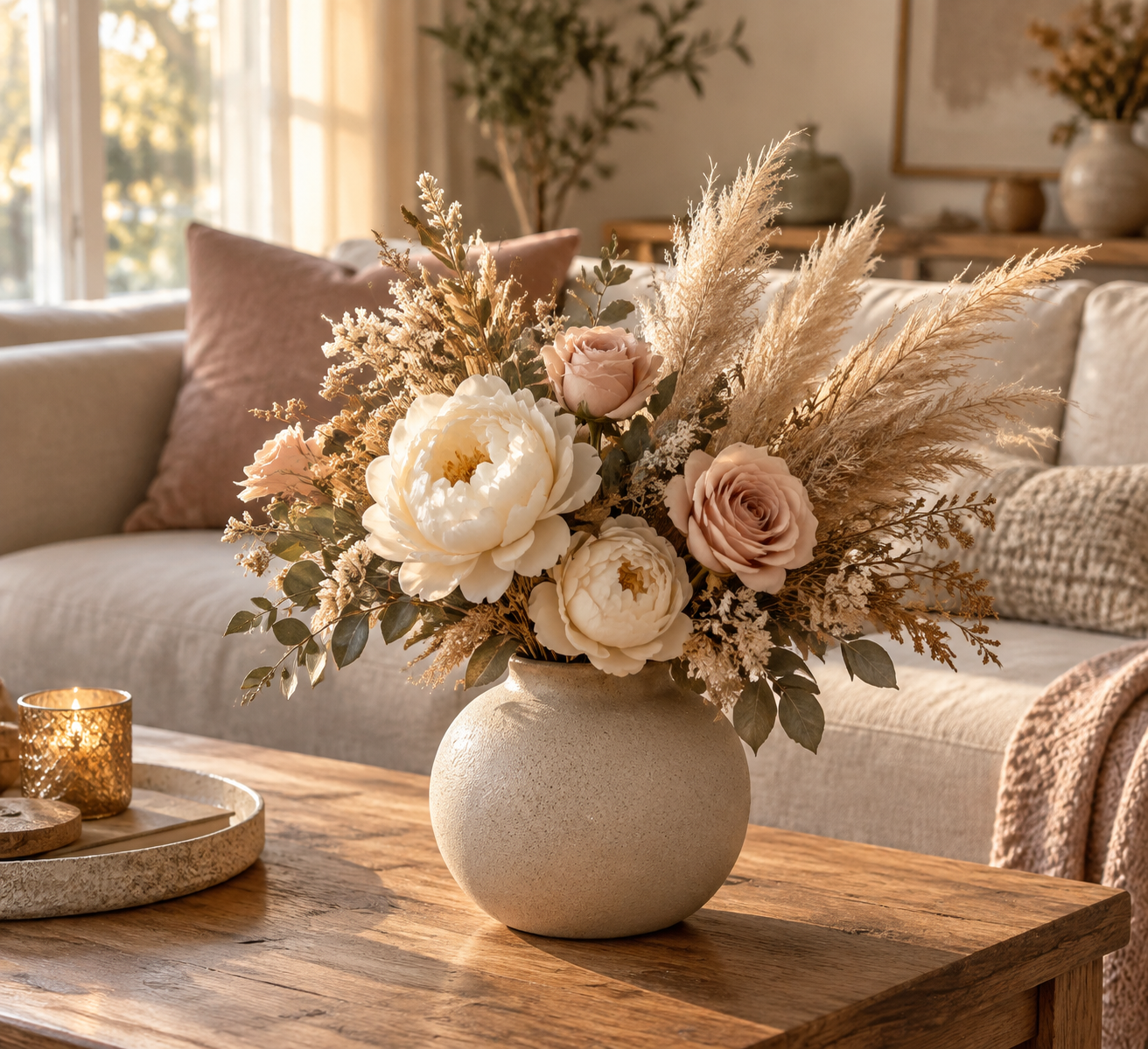
An arrangement does the arranging for you. Each piece here is a finished composition — main blooms, greenery and filler already balanced for height, spread and color — so it arrives as one unit you set down and enjoy. That is the difference from loose stems, and it is why arrangements anchor most rooms: entry consoles, dining tables, kitchen counters, bedside shelves and the reading-corner floor all get dressed in a single move.
What separates a good arrangement from a cheap one
Three things, in order of how soon guests notice: filler grade, stem construction, and color matching. Filler grade first — on cheap arrangements the ferns, baby's breath, and inner leaves are visibly poorer material than the focal blooms, and that mismatch is exactly where the illusion fails at handshake distance. Every arrangement in this collection is specified with greenery and filler at the same material grade as the main blooms. Stem construction second — wired stems hold their arranged shape and can be re-bent season to season; all-plastic stems droop under heavy flower heads within months. Color matching third: orders of the same colorway leave together from the same production batch, so a two-arrangement styling reads as one palette — same order, same batch.
On the realism boundary, stated plainly: an arrangement reads convincing at three feet with part-level limits — focal blooms at close range, filler and greenery holding to the same grade rather than to bloom detail. Any listing that promises more than that is promising something no manufacturer delivers at this price tier.
Size by placement: the working chart
Size is the most common mistake in this category — an arrangement scaled for a dining table buried on a coffee table, or a 14-inch piece lost on a fireplace mantel. Small designs under 12 inches suit vanities, shelves and anything on a dinner table where sightlines matter; medium and floor builds fill consoles, mantels and empty corners. Match the build to the surface:
| Arrangement size | Best placement | Why it works there |
|---|---|---|
| Under 12 in tall | Dining-table centerpieces, coffee tables | Keeps sightlines open across the table; candles carry the height instead |
| 10–14 in | Coffee tables, entry bench, bathroom counter | Anchors the surface without blocking the room |
| 18–24 in | Console tables, mantels, sideboards | Reads at standing height; fills vertical wall space beside mirrors and art |
| 30 in and up | Floor vases, entry corners, staged landings | Stands alone as architecture; pair with a tall branch or gladiolus build |
Width follows the same logic: the arrangement should span roughly half the surface's shorter side — a 30-inch-wide coffee table carries a 12-to-16-inch-wide piece with books and a tray around it, not a 24-inch mound.
What arrangements are actually made of
Typical market spec for arrangements in this tier: polyester fabric petals over wire-and-plastic stems, PE (polyethylene) pieces where the design needs molded detail — succulents, berries, seed pods — and foam or paper-wrapped bases inside the vessel. Real-touch pieces use latex or PU coatings that read closer to petal skin at arm's length and sit at the top of the price band. The material of each SKU is listed on its product page, bloom, greenery and stem separately — because the greenery matters as much as the blooms up close.
None of these materials likes direct sun through glass or a radiator draft; both fade colors and dry-bind stems over a couple of seasons, so the display spot is a care decision — rotate the piece a quarter turn every few months so any light exposure evens out.
Unboxing: what "arrives ready" honestly means
Arrangements ship boxed with heads protected, and the honest expectation is one to three minutes of fluffing — bending wired stems outward, turning heads to face outward, opening the outer blooms — before the piece photographs right. That fluff time is stated on listings here rather than dressed up as arrival magic, and it is the entire setup burden: no water, no trimming, no rearranging unless you want to. Piece counts are stated per listing too — a "bouquet and vase set" says exactly what ships, and the photo shows exactly that count, no borrowed props.
How to Choose an Arrangement
- Pick the surface before the flower. Table height and width decide the build's size (see chart above).
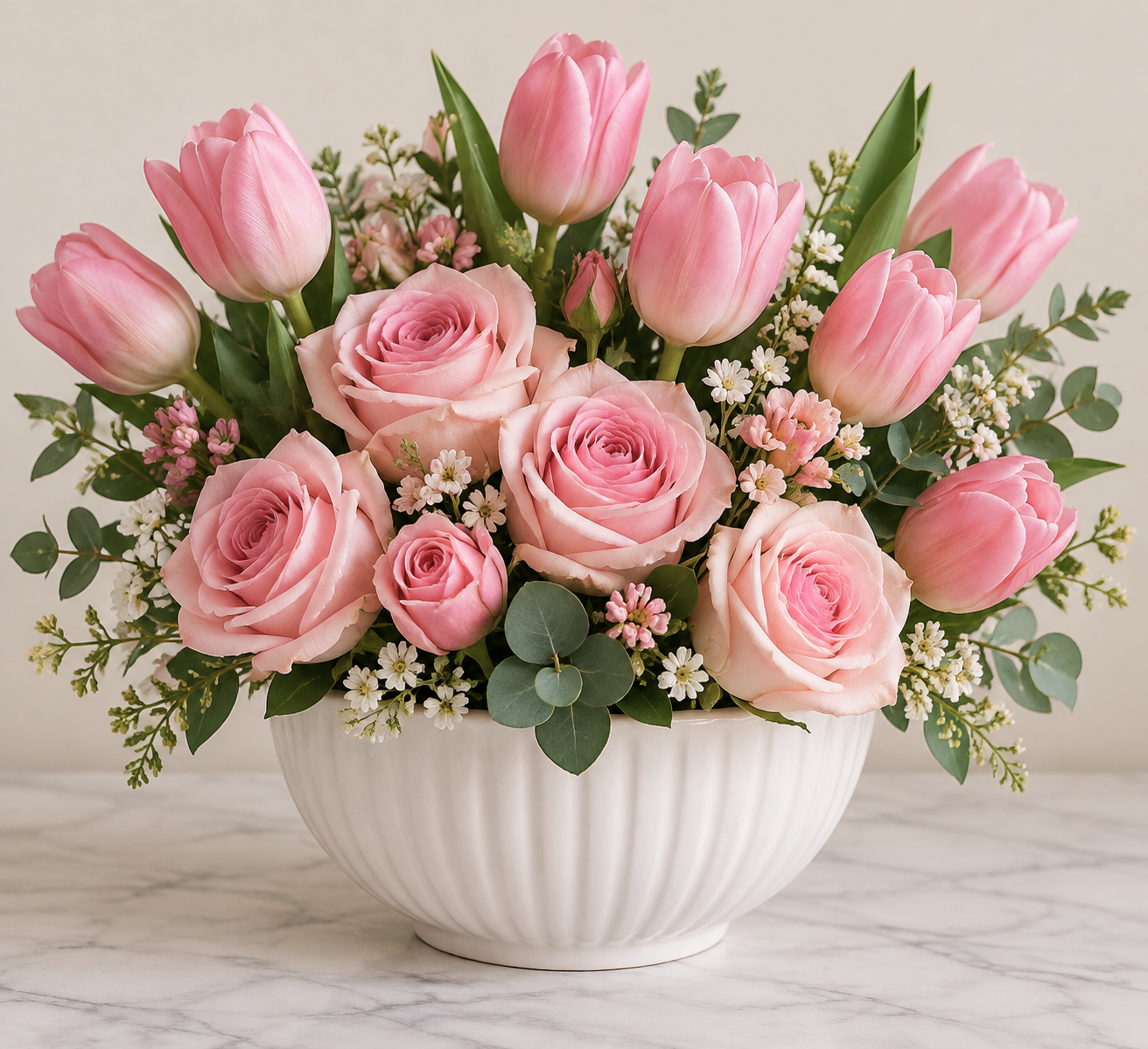
- Choose focal blooms to the room's palette. Hydrangea and rose read classic; ranunculus and anemone read modern; olive and eucalyptus read calm.
- Check filler grade in the photos. Same-grade greenery is the collection standard and the fastest tell against cheap builds.
- Prefer wired stems. They hold shape, re-bend for seasonal restyling, and outlast all-plastic.
- Plan the light. Away from full sun through glass and off radiator drafts; quarter-turn the piece every few months.
What they cost, and the math versus fresh
Market bands as of October 2026 (USD): small 10–14 inch table builds run $25–60; 18–24 inch console and mantel arrangements run $60–150; large 30-inch-plus floor builds run $120–300; real-touch coated pieces sit at the top of each band. Two spending rules hold across the category: the vessel is half the look, so budget for a real ceramic or glass one if the piece ships bare-stemmed, and one well-graded arrangement per room outperforms three cheap ones — filler grade shows from the first dinner party.
Against fresh, the math stops being close. A fresh arrangement lasts one to two weeks at florist pricing; a faux arrangement holds its design for years and moves with you — from mantle to credenza to next apartment. Per month of display, faux wins on both span and cost, which is why most customers start with one table piece and quietly end up with a house full.
Frequently Asked Questions
What is an artificial flower arrangement?
It is a finished, pre-designed grouping of faux stems — blooms, greenery and filler composed together — that ships as one piece you simply set down. No arranging skill is needed: the height, spread and balance are already built in. Designs come loose (drop into your own vase), in a vase, or in a pot, and every listing states which.
How do I make an artificial flower arrangement look convincing?
Three styling moves close most of the gap: display at the right distance (arrangements read best viewed from across the room, on the surface they were sized for), plant them in a real vessel — ceramic, stone, or glass beats the shipped nursery pot every time — and add one live or natural element nearby, a candle, a bowl of fruit, fresh eucalyptus, which resets the eye's benchmark for the whole vignette. Beyond styling, material grade does the rest: same-grade filler and wired stems are the two spec points that separate convincing builds from bin stock.
What size arrangement do I need for my table?
For dining tables, stay under 12 inches tall so guests see each other — height comes from candlesticks, not blooms. Coffee tables carry 10–14 inch builds that span about half the table's shorter side. Console tables and mantels want 18–24 inches to read at standing height. Entry corners and floor staging take 30 inches and up. The pattern behind the numbers: match the build to the surface and the viewing distance, and let the room's sightlines — not the product photo — set the ceiling.
Do artificial flower arrangements come with a vase?
Some do, some don't — every title says so directly. "In a vase" or "in a pot" designs ship complete and styled exactly as photographed, with the vessel material stated on the card. Loose arrangements are priced lower and drop into any vessel you already own; just check the opening width listed on the product page. Our full with-vase collection gathers the complete-set designs in one place.
How long do artificial flower arrangements last?
Kept out of direct sun and off heat sources, a quality arrangement holds its display look for years — wired stems don't tire, and dust is the only real maintenance (a feather duster or a cool hair-dryer pass monthly). The honest degradation timeline: colors soften first in sunny rooms, typically visible after a couple of seasons of strong window light; materials themselves last far longer than the color stays fresh. Rotate the piece a quarter turn every few months and the fade comes on evenly instead of one-sided.
What are the best fake flowers for a centerpiece?
Low and dense beats tall and airy at the dinner table: hydrangea, ranunculus, rose, and peony builds under 12 inches let conversation happen over them, and their full faces read well from every seat. For variety, mix one focal bloom with a textural secondary — dried-look wheat or bunny tails — and let candlesticks carry the height. The spec that matters most at guest distance: filler cut at the same grade as the blooms, which is the collection standard and the fastest way a centerpiece gets caught looking artificial at a set table.
How much should I spend on fake flower arrangements?
As of October 2026 (USD): small 10–14 inch table builds run $25–60; 18–24 inch console and mantel arrangements run $60–150; large 30-inch-plus floor builds run $120–300; real-touch coated pieces sit at the top of each band. Budget for a real vessel if the piece ships bare-stemmed, and favor one well-graded arrangement per room over three cheap ones.
How do I clean artificial flower arrangements?
Dust weekly with a cool hair-dryer burst or a soft brush, and do a deeper clean every couple of months: a 50/50 water-and-white-vinegar mist on a cloth, wiped gently over petals and leaves, then air-dry. Never soak finished arrangements that contain wired stems or foam bases. Our cleaning guide covers every material and the mistakes that shorten an arrangement's life.
Shop by Color, Scene & Flower
Related