
Quick answer: Artificial marigolds are dense pompon blooms on stems, bushes and garland strands, in orange, yellow, rust and gold. Fresh marigolds flood the market for roughly two late-October weeks and fade fast; the reproductions hold the same saturated warmth for ofrenda builds, autumn mantels and porch pots, and store flat for next year. Garlands run 4-6 feet per strand for altars and stair edges; buy stems by the dozen for pot fills, with head counts stated per listing.
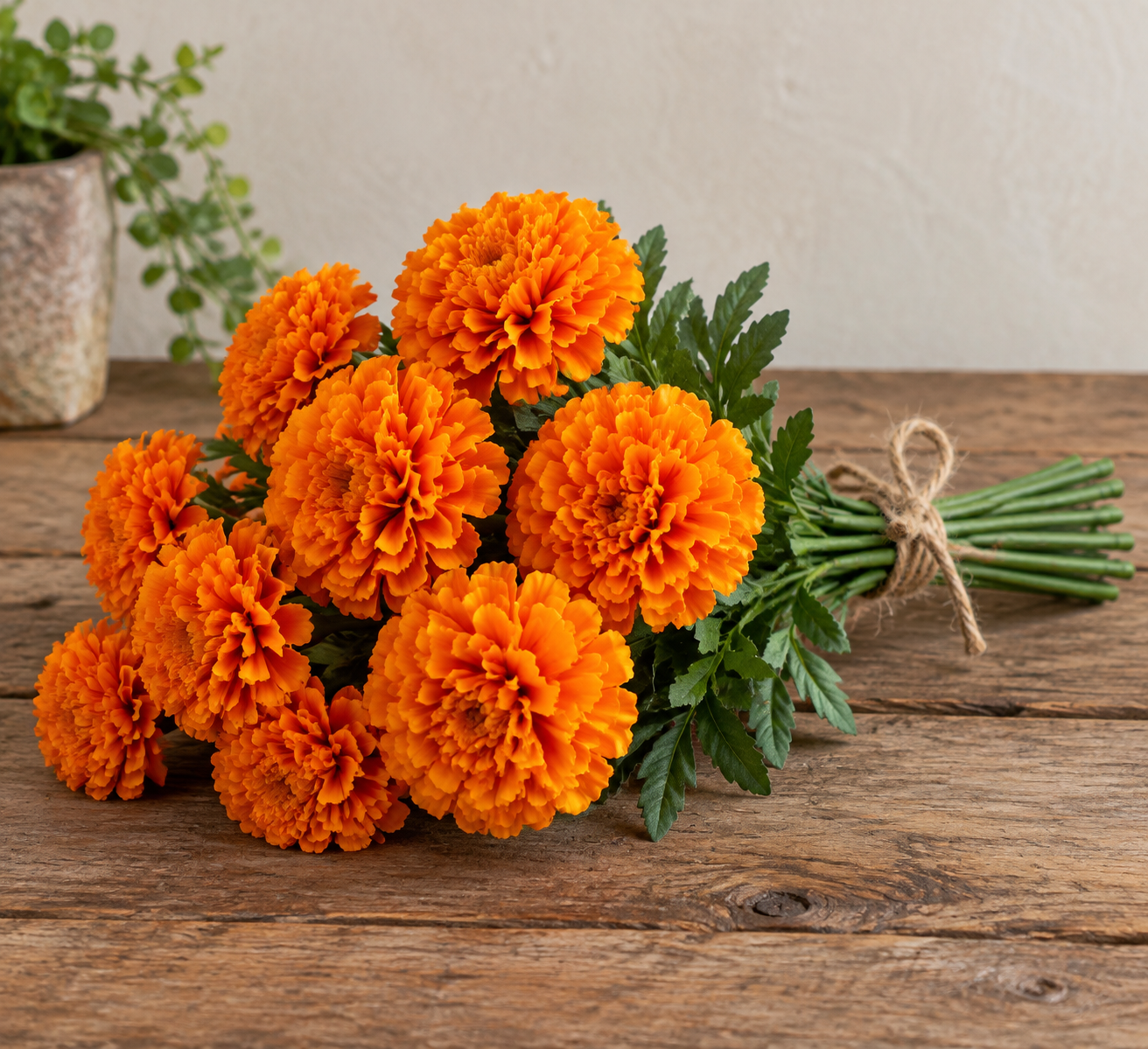
Artificial marigolds in dense, many-layered pompon form — orange, yellow, rust and deep gold, as single stems, garland strands and bushes. Built for the autumn window: ofrenda builds for Día de los Muertos, fall mantels and porch pots. Fresh marigolds flood the market for two weeks each late October; these carry the same saturated warmth every year after. Every listing photo shows the exact pieces you receive. The pompon is the build test: layer on layer of tight rounded florets, the outer ring open and the center still furled, in the saturated warmth the species owns outright. Orange leads the ofrenda tradition and the autumn porch; deep gold and rust carry harvest mantels; yellow lightens school-room and fiesta palettes. Stems build porch pots by the dozen, garland strands run staircase and altar edges, bushes fill window boxes in one piece.
Artificial Marigolds, Explained
What an artificial marigold is
A marigold piece reproduces the densest bloom in the autumn garden: a pompon of dozens of tightly packed ruffled petals, on a crisp green stem with notched leaves. Two builds matter — the French marigold form (smaller, flatter heads) and the African marigold form (the big rounded pompon) — and both are stocked here with the form stated per listing. In the language of flowers, the marigold stands for warmth, protection and devotion; in Mexico its cempasúchil form guides the dead home each November with a path of color and scent, which is the deepest flower-meaning the Americas carry. Our meanings hub holds the story.
One honest boundary: the living marigold's famous scent — the pest-repelling, ceremony-filling perfume — is not something a silk version reproduces. What it carries is the color and the form, permanently, and that is the job it is asked to do.
Sizes and forms
Pompon heads run 2.5 to 4 inches on stems of 16 to 24 inches; garland strands run 4 to 6 feet of strung heads. Forms split three ways: single stems for arrangements and pots, bushes carrying six to ten heads for instant planters, and garlands for ofrenda edges, door frames and arch runs. Head counts per piece and garland lengths are stated in every title, measured flat with a tape reference.
French and African marigolds - short-tight and tall-bold
Two marigold habits split the category. French marigolds (despite the name, Mexican in origin) run compact - tighter, smaller pompons on shorter stems, often two-toned flame patterns; they are the window-box and border reading. African marigolds (tagetes erecta) stand tall with the big bold pompons - the giant heads garland-makers string for Dia de los Muertos ofrendas; when a garland strand carries weight, that is the erecta build. On reproduction pieces the choice is pompon size per stem and strand length per garland, both stated in the listing.
Where they work best
The November window is the species' main event: ofrenda builds layering garlands over papel picado, door-frame runs, cemetery vases that hold their color through the whole observance. Outside that window, marigolds run the general autumn calendar — fall mantels, porch pots with pumpkins, harvest-market stalls — and the October birth-month claim runs all year. Where fresh marigolds drop heads within days of the cut, these hold the pompon through the season and box flat for next year.
Colors that pair well
The palette is the autumn itself: orange and gold at the center, rust and deep copper at the edge, yellow as the bright note. Pair marigolds with cream chrysanthemum forms and deep-red celosia tones for ofrenda tradition, or with pumpkins and husks for porch pots. The one rule is density — marigold color is saturated, so let green stems and neutral vessels do the quiet work.
What arrives, and the two minutes after
Pompons ship lightly compressed; two minutes of fluffing per piece — work around each head once, ruffling the packed petals outward layer by layer — restores the round. Garlands ship coiled and need only a gentle shake-out. A shaping card ships in every box, and head counts are stated in every title.
How to Choose Artificial Marigolds
- Match the form to the tradition.
Ofrenda edges and door frames → garland strands; vases and pots → stems or bushes (6–10 heads); mantel accents → single stems in odd counts.
- Pick the pompon size deliberately.
2.5–3 in French-style heads for fine garland work; 3.5–4 in African-style pompons for pots and statement vases. Head size and count are on every card.
- Build the autumn triad.
Orange or gold as the core, rust or copper as depth, cream as relief — with greens and neutral vessels doing the quiet work.
- Buy for the return.
A November build that boxes flat is a build you run every year: budget garlands by the foot and bushes by the planter, using the counts printed in every title.
Buying Loose Stems in Bulk
Loose marigold stems and bushes are the ofrenda and porch-pot kit - stems by the dozen into pots and urns, bushes as single-piece fills. Garland strands are the finished form of the tradition: 4-6 feet pre-strung for altar edges, stair rails and doorway swags. Altar-builders and event decorators buy stems and strands together; the porch-and-mantel buy takes bushes and one garland.
Frequently Asked Questions
Are artificial marigolds appropriate for Día de los Muertos?
Yes — and increasingly common. The cempasúchil marigold's role is to lay a path of color from the street to the ofrenda, and fresh stems flood the market only in the late-October weeks; artificial garlands and stems let families build that path on their own calendar, hold the color through the full observance, and keep the pieces for next year alongside the photographs and candles. What silk does not carry is the scent — families who burn cempasúchil or lay fresh for fragrance still do; the permanent pieces carry the form and the color, which is the role they are asked to play.
How long do fresh marigolds last once cut?
Roughly a week in water, less in warm rooms — and cut marigolds drop petals and heads as they fade, which is why festival builds made from fresh stems are done the day before at the earliest. The artificial pompon holds its round through the whole season, boxes flat in November, and comes out the same next year — the reuse math that makes a one-time garland purchase cheaper than the annual fresh habit.
How many marigold heads come on a bush or garland?
Stated in every title, counted flat on the card: bushes run six to ten heads per piece, single stems carry one pompon, and garlands state both their strung length (4–6 feet) and their head count. The count you read at checkout is the count that arrives — no garlands photographed double-wrapped to look denser than the listing sells. For event budgeting, a six-foot garland typically carries forty-plus heads — the count, not the length, is what fills a frame.
How do I fluff compressed pompons?
About two minutes per piece. Work around each head once, ruffling the packed petals outward layer by layer from the center — the ruffle is what makes it read as a marigold rather than a ball. Garlands need only a gentle shake-out and a check that no head is folded under. A shaping card with photos ships in every box, and the same steps appear on the product page.
Shop Artificial Flowers
By Species
Bulk & Wholesale
Stems & Craft Basics
Flower Guides
The marigold's month — warmth, protection and the calendula kin, from the calendar's own pages.
Autumn builds where marigold heads thread into wreath bases — the same season, another form.
The cempasúchil path and the warmth-and-protection reading — marigold beside every species.