
UV Resistant Artificial Flowers
UV-resistant artificial flowers — the outdoor line built on pigment-dense polymers and UV-stabilized foliage for placement that takes real sun: window boxes, planters, porch pots, beds and south-facing doors. Specified honestly, because "UV-proof" is a claim the material science doesn't support: every listing states its fade rating and best-exposure class, since UV resistance slows fading, it does not repeal it.
Quick answer: UV resistance means fade resistance, not fade immunity. The specs that matter: pigment-dense polyethylene with color through the material, UV stabilizers in the polymer, matte finishes. Honest color life: 2–4 seasons in full sun, 4-plus in partial shade, shorter in desert sun. Replacement beats sprays — a spray-on film wears off in months.
What UV Resistance Actually Is
Ultraviolet light breaks polymer chains and photobleaches pigment — the same process that turns garden hoses brittle and lawn chairs chalky — and it attacks an ordinary artificial flower on two fronts at once: the pigment (color fades first) and the polymer itself (petals stiffen, then crack). Every artificial flower fades eventually, and any seller claiming otherwise is selling physics that doesn't exist. "UV-resistant" describes engineered slowness, built into the outdoor line two ways: pigment that runs through the material itself (injection-molded polyethylene with color in the pellet, so there's no surface layer to wear off), and UV-stabilizer additives in the polymer — hindered-amine light stabilizers and UV absorbers — that intercept the radiation before it reaches the bonds it would break. This is a materials spec, not a coating: a spray-on "UV protectant" sits on the surface and wears off in months, while a stabilized compound runs through the entire petal. Every flower on this page is the compound kind, and the material spec (stabilized PE, stabilized polypropylene, or blend) is printed on its listing.
Fade physics: slower, not never
Fade is driven by exposure hours — intensity times time — which is why placement dominates outcomes. A north-facing bed in a mild climate might spend a quarter of the UV budget of a west-facing wall in Arizona; the same flower can be a three-season piece in one yard and a six-season piece in another, and both are performing to spec. When a stabilized flower does retire, it goes gradually — pink drifts toward soft, then pale, over years rather than weeks — while an unstabilized flower in a south-facing planter can gray out in a single strong summer. That is the honest sentence most sellers will not write.
Materials ranked for sun
Not all artificial-flower materials are outdoor materials, and the ranking matters more than any brand label. Stabilized PE and polypropylene: the outdoor workhorses — colorfast, rain-tolerant, structural enough for flowers that live in beds and window boxes. Ordinary unstabilized PE: the majority of cheap import flowers — one strong summer and done; fine indoors, a waste of money in the sun. Latex and real-touch coatings: the worst UV story of all — latex chalks and yellows quickly outdoors; keep real-touch indoors. Silk and fabric: the classic indoor material — UV bleaches fabric fastest of everything on this list, and rain spots it. This page carries the first group only, with the spec printed per listing, so the ranking is checkable at the product level rather than taken on faith.
Spotting the fake "UV-proof" listing
The outdoor-floral market runs on two tells: absolute claims ("never fades," "100% UV-proof") that physics doesn't support, and dyed-surface builds sold at outdoor prices — color painted on white plastic, which photobleaches in a season and can't be slowed by any stabilizer. The honest listing names the material (polyethylene blends), states the construction (pigment through the material), and frames the life in seasons, not forever. Every listing on this page meets that bar, and each carries a fade rating with a defined meaning: full-sun seasons — how many seasons of direct, all-day sun the flower is specified to hold its color within a visible drift. A "3+ sun seasons" rating means three-plus full summers of direct exposure before the drift becomes obvious; shaded placements multiply the rating, and desert sun spends it faster. Ratings tie to the material grade, not to optimism — we would rather sell a two-season rating honestly than a five-season claim that fails in August of year one.
The rest of the outdoor system: hanging baskets, window box flowers, and weather-specified outdoor wreaths.
Do UV Sprays Work?
Honestly: marginally, and often worse than nothing. Aerosol "UV protectant" sprays market themselves on indoor-outdoor furniture logic, but on flowers they add a surface film that (a) blocks a fraction of UV for a fraction of a season, (b) attracts dust that no rain fully rinses, and (c) can spot and yellow the very petals they claim to protect. The reliable fade controls are upstream: buy pigment-through-material builds, favor lighter palettes in brutal exposures, rotate or replace on the season curve, and spend the spray budget on a spare bundle instead. That is the difference between an engineered product and a ritual.
For the placement-side of outdoor display — wind, weight, mounting — see the outdoor collection hub, the garden answer to this page's materials answer.
How to Choose UV Resistant Flowers
- Class the exposure first. Full sun (6+ hours, south/west faces) demands the top fade rating; part shade doubles a rating's life; full shade makes this page optional.
- Read the material line. Stabilized PE or polypropylene only for direct sun — unstabilized imports gray in one summer; latex and silk stay indoors regardless of brand claims.
- Match rating to expectations. Fade ratings are full-sun seasons on every listing — buy "3+ seasons" for permanent plantings, less for seasonal rotations where price beats longevity.
- Plan the rain and wind axes separately. PE sheds rain and dries clean; anchoring is a mounting job — soil, gravel or planter foam for beds, not a materials question.
- Re-task, don't discard. Faded-but-intact pieces step down: full-sun bed → shaded porch → indoors, squeezing the last seasons from every stem.
Where these flowers go: window boxes (pre-set mixes sized to standard sill lengths), hanging baskets (flower balls and trailing mixes for porch hooks and eaves), outdoor wreaths (the wreath line's open-exposure class), and beds and borders, where bush and spray stems root directly in soil or mulch. The outdoor flowers hub carries every option in one view when the question is "what should I plant" rather than "what is this made of" — this page is the materials answer, that page is the garden answer.
Frequently Asked Questions
Do UV-resistant artificial flowers really work?
They really slow fading — pigment molded through the material plus hindered-amine light stabilizers and UV absorbers in the polymer hold strong color for seasons where standard indoor builds chalk in one. "Really work" is not "never fade": UV light degrades every polymer eventually, and the honest expectation is 2–4 seasons of strong color in full sun, more in shade. Any listing claiming permanent color is selling physics that doesn't exist.
How long do outdoor artificial flowers last in the sun?
By exposure: covered placement lasts many seasons (any build does), partial shade runs 4-plus seasons of strong color — double a rating, in fact — full south- or west-facing sun runs 2–4 seasons depending on climate, and desert or high-altitude UV shortens every timeline. Fade is exposure hours times intensity: a north-facing bed in a mild climate spends a quarter of the UV budget of an Arizona west-facing wall, so the same flower is a three-season piece in one yard and a six-season piece in another. Deep saturated colors fade before light ones on the same build.
Are these flowers weatherproof?
Axis by axis, honestly. Sun: yes — that is what this page is; UV-stabilized materials with stated fade ratings. Rain: the PE and polypropylene builds here shed water and dry without spotting, though planters should still drain, because standing water ages a planter faster than UV ages the flower. Wind: not a materials property — anchor stems in soil, gravel or planter foam, because mounting is the answer there. Storms and hail: crush events no material spec survives; bring what you can indoors ahead of named weather. What we do not sell is the blanket weatherproof promise — no material on earth earns it.
What is the best material for outdoor artificial flowers?
Stabilized PE and polypropylene — the outdoor workhorses: colorfast, rain-tolerant, structural enough for beds and window boxes. The rest of the ranking, honestly: ordinary unstabilized PE is the majority of cheap imports and lasts one strong summer in the sun; latex and real-touch coatings are the worst outdoor story (they chalk and yellow quickly — keep them indoors); silk and fabric bleach fastest of all and spot in rain — indoor craft materials. This page carries stabilized materials only, with the spec printed per listing.
Are UV protectant sprays worth it on artificial flowers?
Marginally at best, and sometimes worse than nothing. The film blocks a little UV for a little while, then attracts dust that rain won't fully rinse and can spot or yellow the petals it coats. The reliable fade controls are all upstream — pigment-through-material builds, lighter palettes in hard sun, rotation and replacement on the season curve. Spend the spray budget on a spare bundle.
Can I put indoor artificial flowers outside?
Expect one season at most, and only in shade. Indoor-grade flowers — silk, foam, latex-coated — use materials with no UV stabilization: sun bleaches fabric fastest of everything, rain spots it, and latex coatings chalk within weeks of direct exposure. A covered porch in a mild climate is the outer edge. The economical route is the reverse of what most people try: buy the stabilized outdoor piece once, at a modest price difference, and it outlasts several rounds of indoor grades pressed into service — the fade rating tells you how many seasons you bought.
What is the difference between outdoor and indoor artificial flowers?
Material and construction: outdoor lines run pigment-dense polyethylene with UV stabilizers (color through the material, built for light degradation), while indoor silk-type builds prioritize petal texture and close-range feel over weather behavior. Outdoor builds also favor matte finishes — gloss surfaces highlight their own wear. Neither is "better"; they're different products for different physics, and the failure mode is buying indoor builds for outdoor placement.
Which colors hold up best outdoors?
Lights outlast darks: whites, creams, ivories and pale greens show their fade last, while deep reds, purples and saturated blues shift first on the same build — the darker the pigment load, the more there is to photobleach. In full-sun placements, the working strategy is light palettes with one or two deep accents (replaceable seasonally), rather than a fully saturated display that fades unevenly and reads patchy by season two.
Do UV resistant flowers work in window boxes and planters?
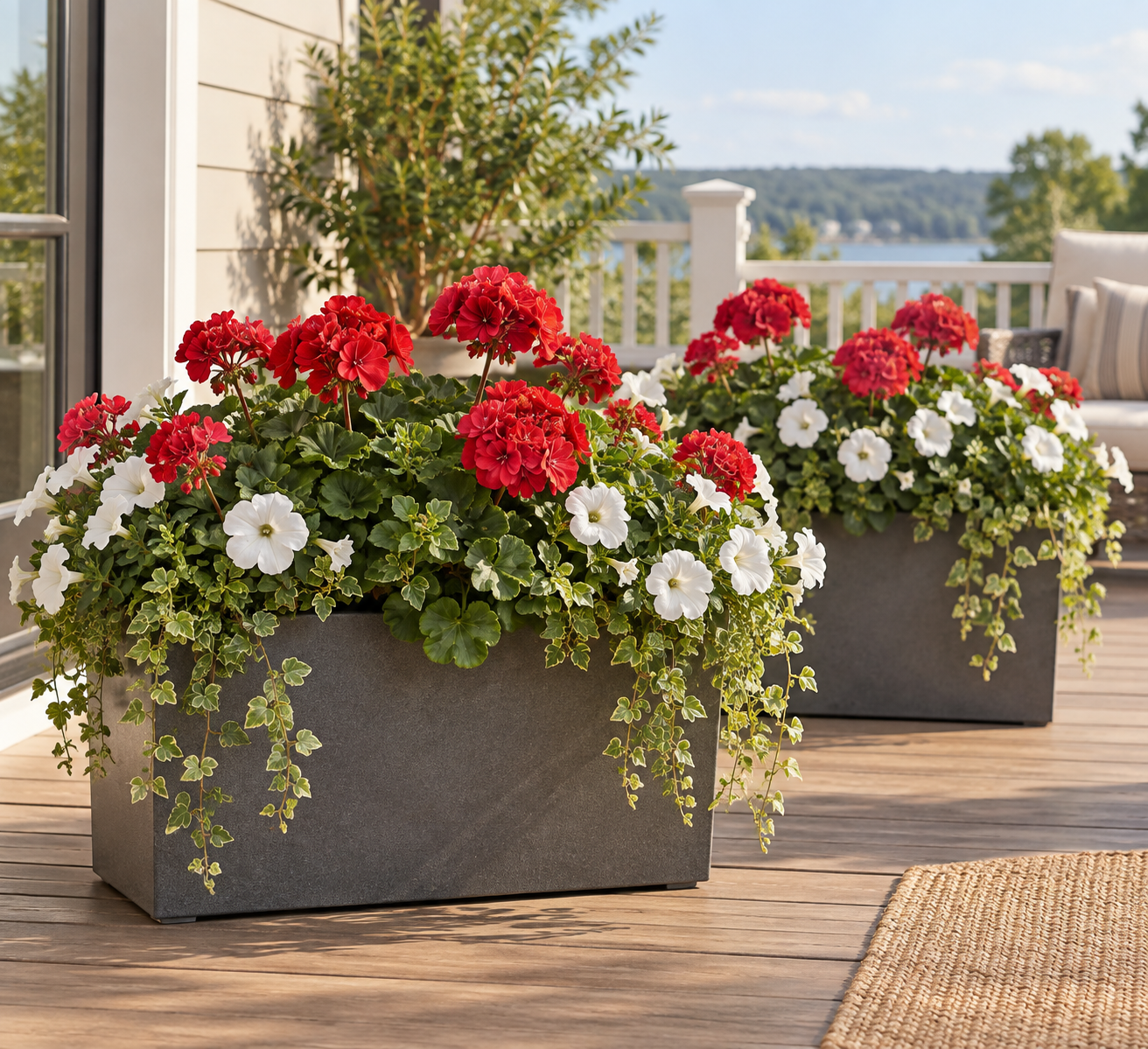
They are the right material for exactly those jobs — window boxes and planters sit in full sun by design, which is why the pre-set window box mixes and hanging baskets in the outdoor line are built on stabilized materials. Two practical notes from the mounting side: anchor stems in soil, gravel or planter foam so wind does not walk them out of the box, and make sure the box drains, because standing water ages any planter faster than UV ages the flower.
Are UV resistant flowers worth it?
Run the replacement math against the fade rating. An unstabilized flower in a south-facing planter can gray out in a single strong summer — you rebuy annually; a stabilized one in the same spot is specified to hold its color for full seasons, so the price premium amortizes across the replacements you stop making. Placement bends it further: in part shade a rated flower can run double its rating, which is where the premium pays back fastest on exposed spots and slowest where sun barely reaches — for a fully shaded porch, indoor-grade flowers serve fine and the premium is unnecessary. UV resistance buys seasons, not immortality, and it is worth exactly the replacements it prevents.