

Greenery Wreaths
Greenery wreaths built from leaves, not blooms — eucalyptus, boxwood, cedar, magnolia, and fern rings that stay green on the front door every month of the year. No water, no fall cleanup, no dead-July look. Sizes run 14 to 30 inches, with the measured diameter on every listing.
Quick answer: A greenery wreath is the one purchase that works all twelve months — plain for spring and summer, dressed with a bow or picks for holidays. Choose species by read (eucalyptus soft and dusty, boxwood tight and formal, olive slim and modern, fern wild and airy), size at two-thirds of the door width (22–24 in. on a 36-in. door).
The Only Wreath That Never Expires
Seasonal wreaths are calendar products — a Valentine's piece is dead weight by March. A greenery wreath is the opposite: a permanent base whose look changes with what you add to it. A fresh wreath greens the door for a few weeks; an artificial greenery ring holds the same spot for years — no water, no browning, no July cleanup. Plain, it carries spring through fall. A plaid bow and pinecone picks turn it winter; a burlap bow and cotton bolls turn it fall; a red velvet bow carries it straight through December — berries and ribbon wired in for December, eggs and ivy at Easter, left plain through the summer months. One dense, well-framed greenery base plus a small collection of ribbon does the work of five seasonal wreaths — and it is the math behind every "curated front door" account on social media, whether they say so or not.
Species sets the read
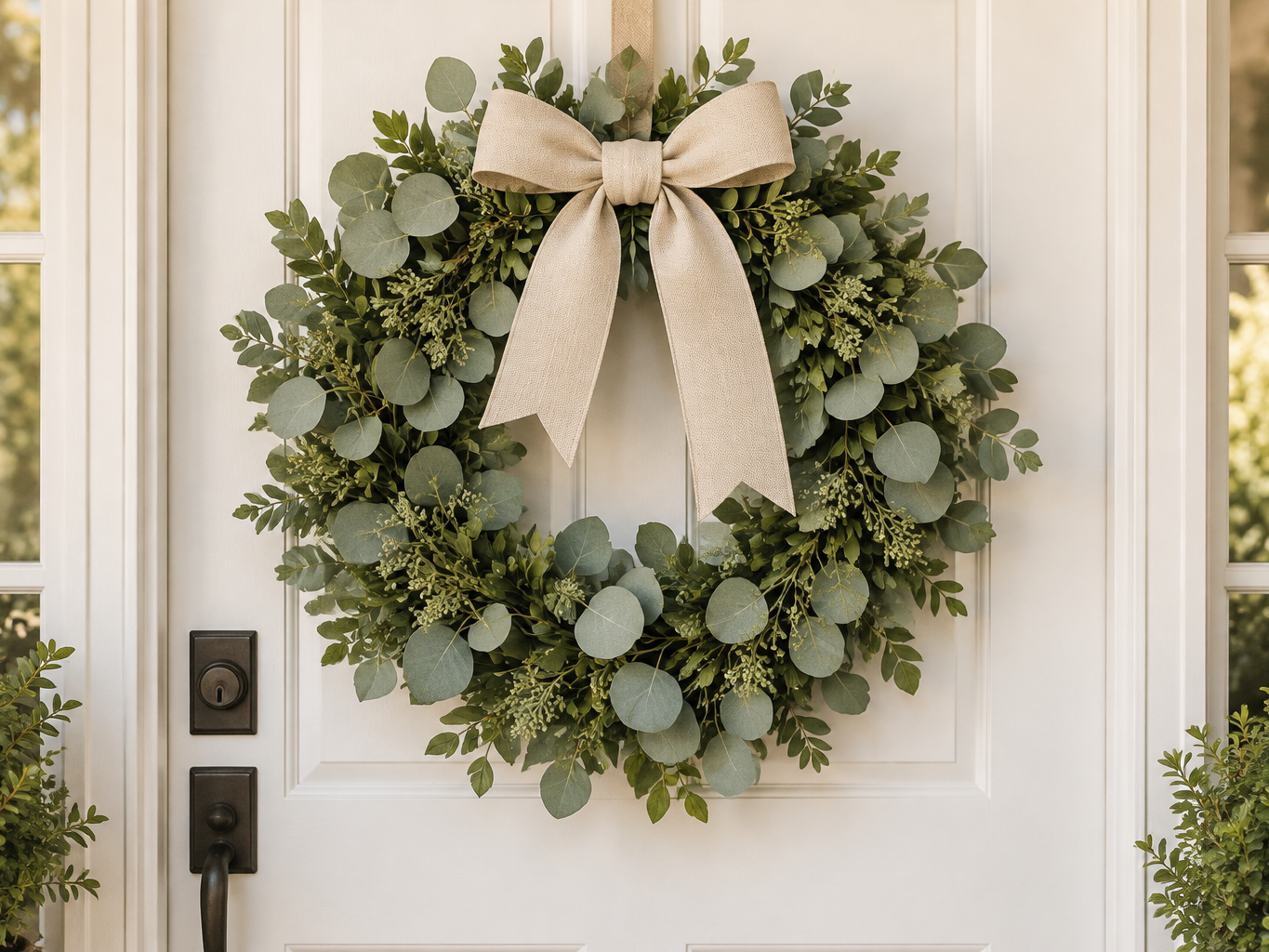
Greenery is not one look, and the leaf is the whole design. Eucalyptus reads soft and dusty — sage and silver tones, rounded leaves, the quietest ring on the page, the farmhouse and modern favorite, and the one that pairs with every palette. Boxwood reads tight and tailored — dense, small-leafed, clipped, the formal French-garden register that suits painted doors and traditional exteriors. Olive reads slim and silvery — Mediterranean and minimal. Cedar reads natural, with cascading flat branchlets and the softest silhouette. Magnolia reads Southern and substantial — large leathery leaves, glossy on top, felted brown beneath, the statement variety. Fern reads layered and airy — closer to bohemian, best indoors and on sheltered doors. Mixed-species builds (the majority of the line) read collected, like something grown rather than ordered. On durability, all the varieties hold their color and shape indoors and under cover; on price, the band runs from the fern and cedar rings up to magnolia, with eucalyptus and boxwood mid-field — every listing states the size and variety, so the comparison happens on specs rather than adjectives. Choose the species the way you'd choose the wreath's color: it is the single biggest visual decision.
Greenery also means green in the color sense, and this page holds the leaf-material meaning — the full green-by-color inventory lives in the green artificial flowers collection. The dressing materials — ribbon by width and colorway, picks, forms for full custom builds — run through wired ribbon and wreath making supplies.
Choosing and Placing
On build quality: every piece here is built to one material standard — the backing and inner foliage at the same grade as the display face, because a leaf-only wreath gets read at close range more than any bloom ring does. Front doors under cover carry these rings all year; exposed doors follow the same honest rule as the rest of the wreath line — bring it in during the worst weather, and expect sun to be the long-term enemy of any artificial botanical.
The seasonal re-dress calendar
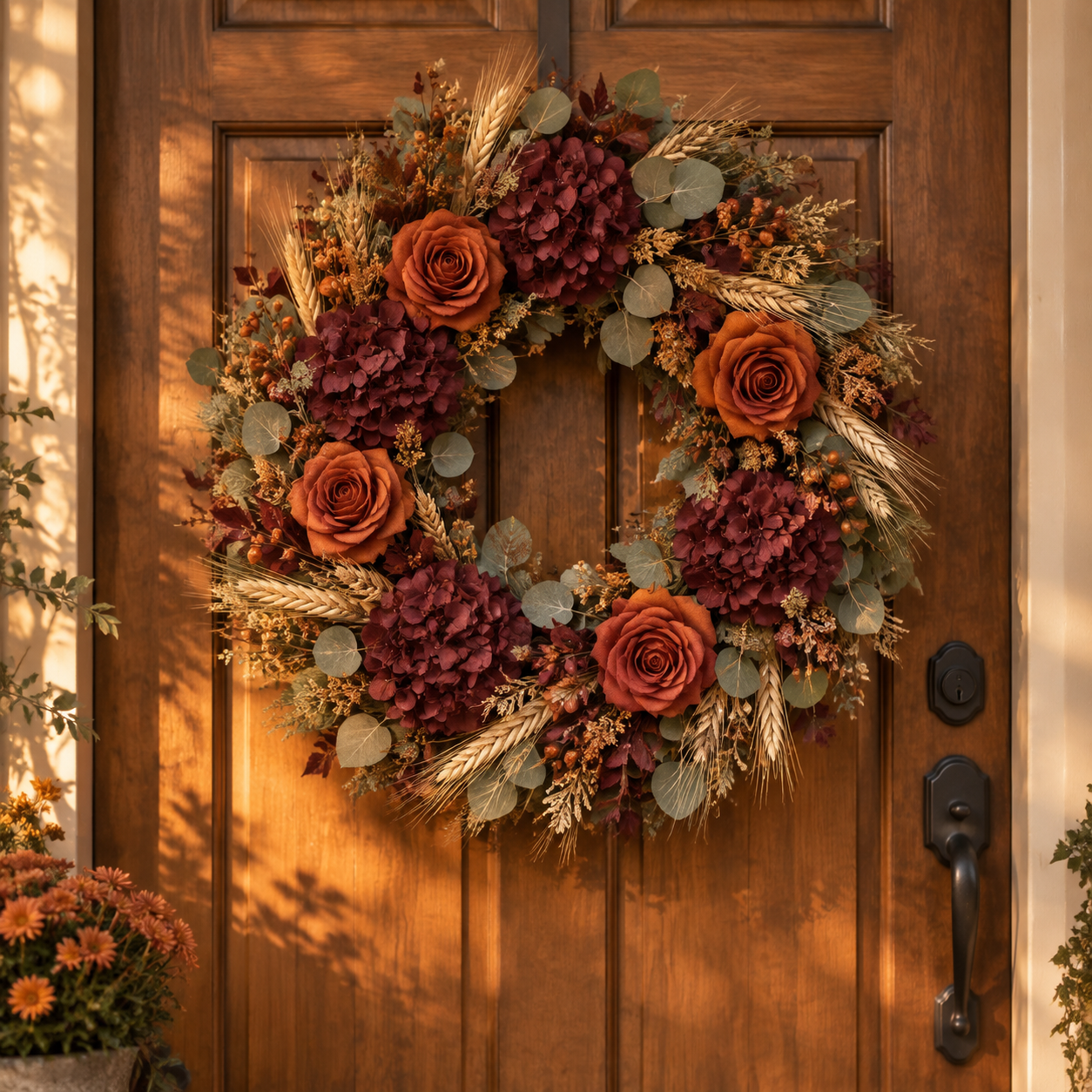
A working year on one base: March through May plain or with a pastel bow; June through August a natural burlap or linen ribbon; September and October a rust bow with a few wheat or cotton picks; November a plaid bow with a small pumpkin pick; December a velvet ribbon with pinecones and berries — the base never leaves the door. Each re-dress is minutes, because wired ribbon holds the bow shape and re-ties year over year. Boxed between dressings, the ribbons and picks outlive multiple bases. Plain greenery pieces sit at the accessible end of the wreath line's $40–150 band (USD, as of October 2026), and run the year: one dense base plus four seasonal ribbon-and-pick dressings typically costs less than three full seasonal wreaths.
Holiday-specific pieces — when only a fully-dressed Christmas or fall build will do — live at Christmas wreaths and fall wreaths.
Care and Storage
Care is dust. A cool rinse or a damp pass shakes a year of porch off the leaves; no water in the ordinary sense is ever needed, no trimming, no browning to chase. Fluff the foliage outward when the piece comes out of its box. Storage is the same shaped-box routine as the seasonal line — dry, cool, away from attic heat — and because nothing in the ring expires, a greenery wreath stored in January is the same wreath that re-hangs in March and next December. That is the quiet value case: the door piece you buy once and stop thinking about.
Frequently Asked Questions
What is a greenery wreath?
A wreath built from foliage rather than flowers — the leaf is the entire design. Eucalyptus, boxwood, cedar, magnolia, olive and fern are the common varieties, each with its own texture: sage-silver eucalyptus reads modern, clipped boxwood reads classic French-garden, cascading cedar reads natural, large-leaf magnolia reads Southern and substantial, layered fern reads airy. The look is quiet and structural where bloom wreaths are colorful, which is exactly why greenery rings cross seasons — the same ring anchors a door for years and dresses by whatever you wire into it.
Can a greenery wreath stay up all year?
Yes — it is the one wreath category built for it. Plain greenery carries spring through fall; a seasonal bow and a few picks dress it for winter and holidays; undressed, it returns to neutral. The limiting factor is exposure, not calendar: under cover, a dense build holds for years of continuous hanging. On exposed doors, sun slowly fades any artificial greenery — slower, not never — and storms warrant a bring-in.
What greenery species should I choose?
Match species to architecture: eucalyptus (soft, dusty) on farmhouse and modern doors; boxwood (tight, tailored) on formal and traditional homes; olive (slim, silvery) on Mediterranean and minimal exteriors; magnolia (large, leathery, glossy over felted brown) on Southern and grand entries; cedar and fern mixes (airy, cascading) on cottage doors and indoor walls. Mixed-species builds read most collected — like something grown rather than ordered — and are the safest choice when unsure. Eucalyptus suits the door you want to disappear into the scheme; boxwood suits the door you want to read as structure; both sit mid-field on price, between the fern and cedar rings at the accessible end and magnolia at the top.
Eucalyptus or boxwood — which should I pick?
Tone and texture decide. Eucalyptus reads modern: sage and silver tones, rounded leaves, soft movement — the quietest ring on the door and the one that pairs with every palette, which is why it anchors so many modern and farmhouse entries. Boxwood reads classic: dense, small-leafed, clipped and architectural — the French-garden form that suits painted doors, traditional exteriors, and formal interiors. Both are listed here with measured diameters and close-up leaf shots.
How do I decorate a greenery wreath for the seasons?
Wire, not glue. Ribbon first: 2.5-inch wired ribbon in a seasonal colorway ties to the base and holds its bow shape year over year. Then a few wired picks — pinecones and berries for December, dried orange slices or seed pods in fall, wheat and cotton for October, small eggs and ivy sprigs at Easter — pushed into the base at the bow. Total re-dress time is minutes, wired decorations detach in minutes, so one wreath becomes four looks across a year — and because the base is unchanging, each season's additions are the only purchase. Matching greenery stems and picks are stocked on the greenery stems line.
What size greenery wreath do I need?
Two-thirds of the visible door: 22–24 inches on the standard 36-inch door, 18–20 inches on narrow doors, interior walls and windows, 30 inches on grand entries. Dense builds read from the curb at the same diameter where airy builds want a sheltered, closer placement. Measured diameters are on every product page, with photos shot flat and true to the shipping piece.
Can a greenery wreath stay outside in winter?
Yes, with the same honest split used across the wreath line. Under cover — a door with an overhang or a covered porch — these rings run straight through winter, and their dense evergreen silhouettes are exactly what a short-day door needs. Fully exposed doors are a different job: snow load and freezing rain are hard on any artificial botanical, so the practical pattern is to bring the wreath in during storms and re-hang after. Nothing here is sold as weather-proof; treated like a seasonal flag, an exposed greenery wreath still returns for years. On fully exposed doors, denser builds (boxwood, magnolia) outlast airy ones.
How do I keep a greenery wreath looking good?
For an artificial greenery wreath, care is mostly dust: a cool rinse or a damp pass clears a year of porch, and nothing else is required — no water, no trimming, no browning to chase. Physical handling is the real variable: fluff the foliage outward when it comes out of the box, store it in its shaped box dry and cool away from attic heat, and it returns to the same silhouette. For doors in full sun, expect slow fading over years as the honest limit — no artificial botanical is sold here as fade-proof — and rotate or retire the ring when the tone shifts.
Is one greenery wreath really cheaper than seasonal wreaths?
Run the year: one dense greenery base plus four seasonal ribbon-and-pick dressings typically costs less than three full seasonal wreaths, and the dressings outlast the base. The trade is honest — a dressed greenery wreath is a quieter holiday statement than a fully-built holiday piece, which is why many households run the greenery base as the default and add one or two true seasonal builds for the peaks they care about.