
Artificial Christmas trees from 2 to 4.5 feet — tabletop and small trees, pre-lit and unlit, that set up in minutes and box away for next December. Below the shop, a full height guide walks the 6–12 ft decision for the day you go big. Free US shipping over $200.
Artificial Christmas Trees, Explained
What this page stocks — and what it guides
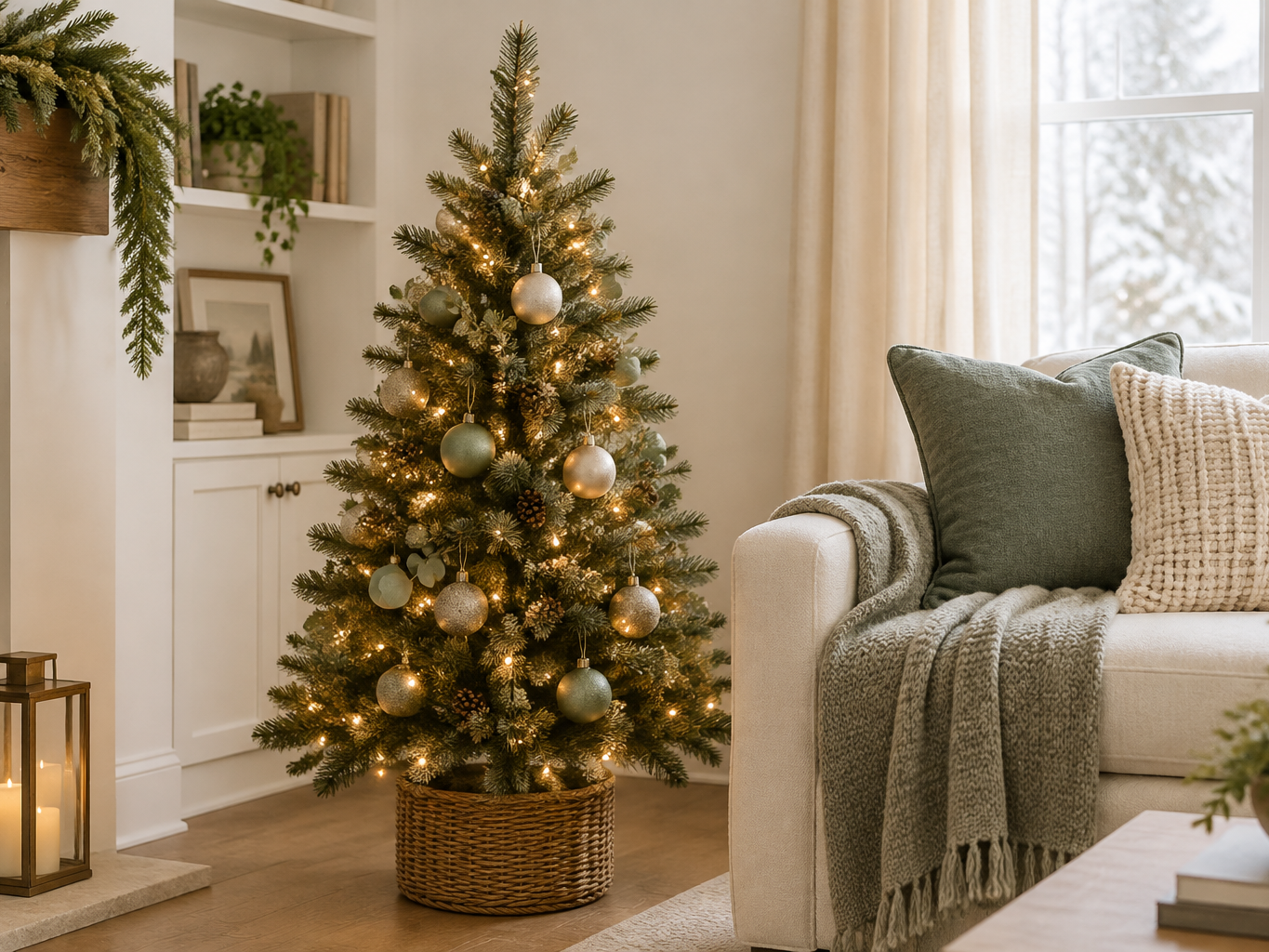
The shop on this page carries small artificial Christmas trees: 2 to 4.5 feet, tabletop to entryway, in classic green, flocked and frosted, decorated, and color styles, pre-lit or unlit. That range covers the second tree, the desk tree, the apartment tree, and the entryway tree — the trees people actually repeat-buy. Full-size 6–12 ft floor trees are a different purchase with different specs, and this page handles them the honest way: as a buying guide below, not as stock we are pretending to hold. When a height guide tells you what PE tip counts and hinged branches mean, it works wherever you buy your big tree — and ours, when the line grows, will be built to the same stated specs.
The height spectrum: 2 ft to 12 ft
Small trees break into three working bands. Two feet (15–24 in.) is the desk and mantel band — a single statement on a work surface, a pair flanking a TV, the tree for a dorm or a studio. Three feet (24–36 in.) is the tabletop band — dining tables, entry consoles, covered porches — and the most popular small size on the market. Four to 4.5 feet is the floor-and-entryway band: a real tree presence that still fits an apartment corner, a small living room, or a covered porch, without the 6-footer's footprint or price.
Above that, the floor-tree spectrum runs 6, 7.5, 9, and 12 feet, sized to rooms: a standard 8 ft ceiling carries a 6.5–7.5 ft tree with a topper, standard rooms take 6–7.5 ft, and two-story foyers go 9 ft and up. The measuring rule that saves returns: tree height plus stand plus topper should end 6 inches under the ceiling. Width tracks height roughly — a full-profile 6.5 footer runs about 4.5 ft across — and slim and pencil profiles cut that roughly in half for tight corners and stair landings.
Pre-lit or unlit: the light question
Small trees run two light tracks. Pre-lit means warm-white LEDs built in at stated counts — roughly 35 lights on a 2-footer, 50 on a 2.5, 100 on a 4 — with battery power (often USB-rechargeable) as the small-tree standard, because tabletop spots rarely have outlets. Unlit means you decide: own lights, no lights, or a different color next year, and nothing built-in to fail mid-season. The trade is convenience against freedom, same as the pre-lit wreath question. On the full-size side, light counts scale with height — a 6.5 ft pre-lit tree carries roughly 350–600, a 7.5 about 650–800 — and plug-in power with section-to-section connections is the norm; those numbers are what to compare when a big-tree listing says "pre-lit" without saying how well.
What the materials mean
Artificial tree foliage comes in three builds, and the words show up on every listing in the market. PVC needles — the classic — are cut-and-peeled strips wired onto branches: affordable, full-looking, and the standard in small sizes where the scale already reads charming. Bottle-brush trees wind bristles on wire: the deliberate retro look, sparse by design. PE (polyethylene) branches are molded from real-branch scans: the tips have actual dimension, and on full-size trees, higher PE tip counts are what separate the higher-priced listings from the classics — the comparison that matters at 6 ft and up, and less critical at tabletop scale where PVC's softness is already convincing. Branch counts and bendable branch counts are the listed specs worth checking either way: more branches means a fuller tree after the same fluffing.
Styles: green, flocked, decorated, color
A small tree is a Christmas decoration first and a tree second, which is why the style axis matters more than the shape axis at this size. Four reads cover the range: classic green, the default that carries any ornament set; flocked and frosted, factory-applied snow finishes for the winter-cabin look (heat-set, not loose spray, on properly built pieces); decorated, with berries, pinecones, or baubles pre-attached for the zero-styling buy; and color — white, pink, tinsel — for kids' rooms, themed corners, and the second-tree statement. The same four reads run the full-size market with flocked and slim as the two big specialty lines.
Tree plus wreath: the December bundle
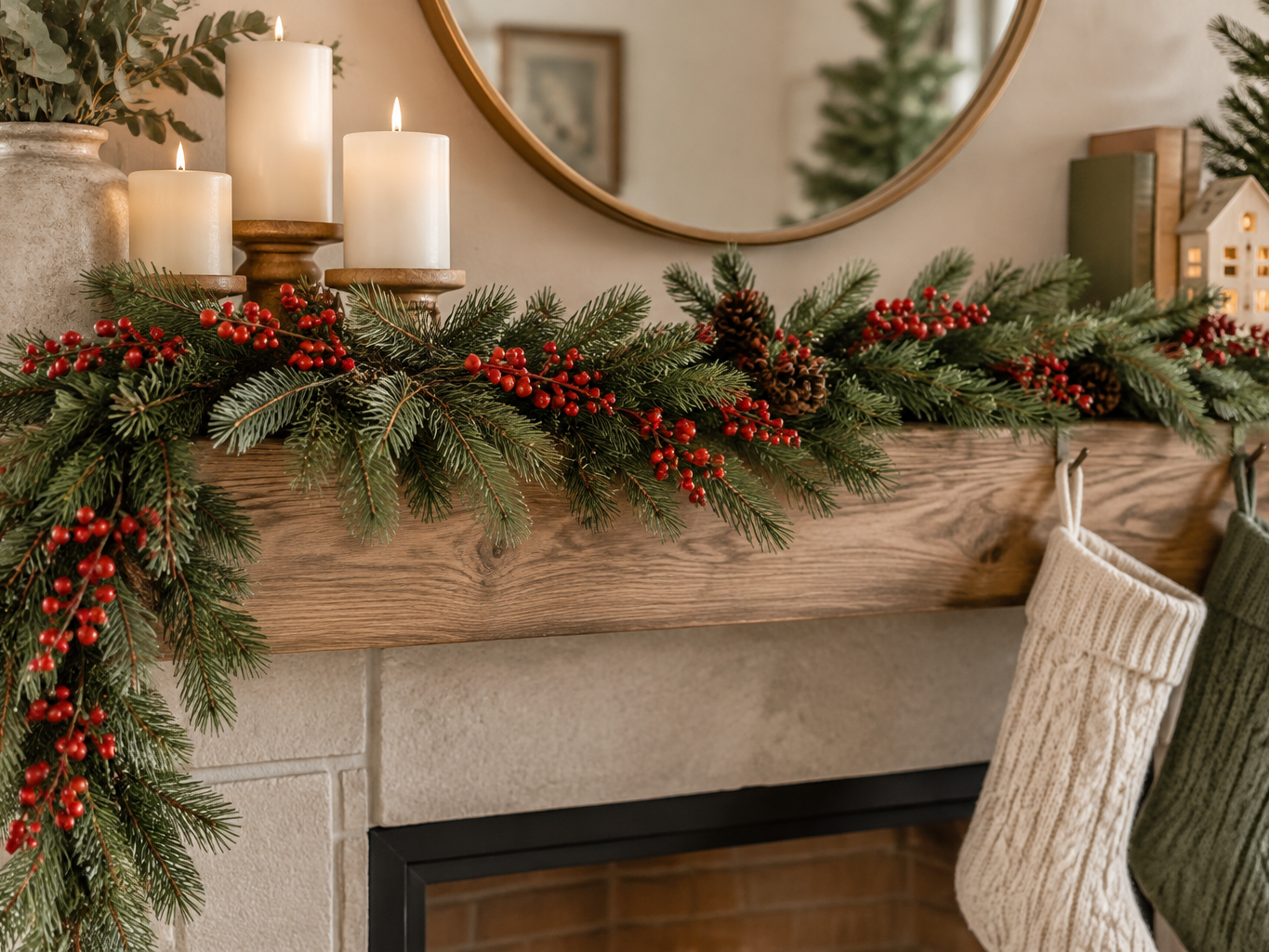
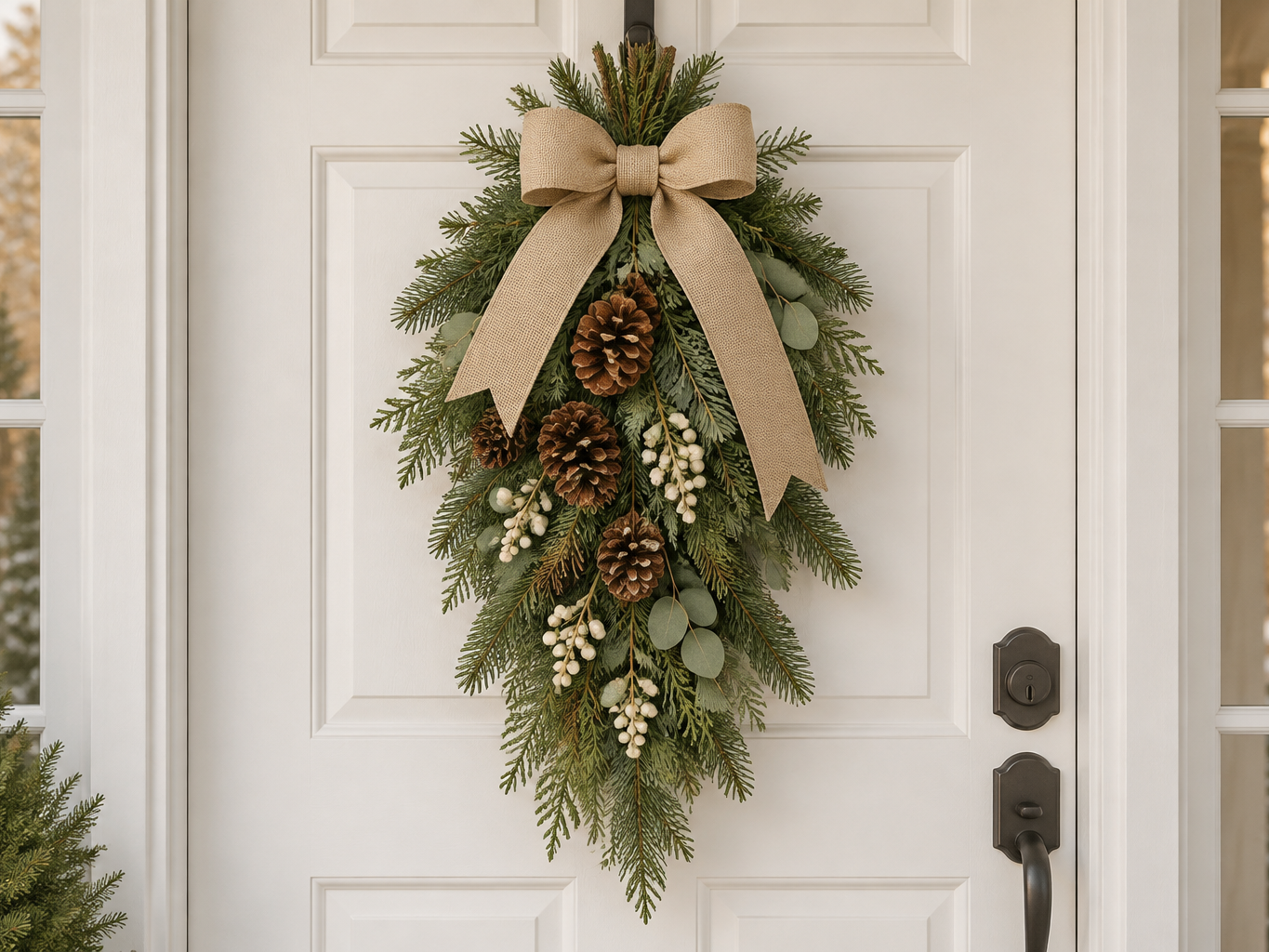
The specialist retailers run a deal worth copying honestly: buy the tree, get a percentage off the wreath and garland. We stock the wreath side as our main line, so the bundle runs both directions here — add a matching wreath to a small tree order, or add the small tree to a wreath order, at a season discount set in the cart. Same-theme families across tree, wreath, and garland are what dress an entire room from one decision: tree on the console, wreath on the door, garland down the mantel. The promotion runs in the banner above while the season lasts.
Setup, shaping, and year two
A small tree assembles in minutes: pull from the box, fold out the branches (or drop the sections together, on multi-piece floor styles), and fluff — bending each branch out and up until the silhouette fills, which is the same ten-minute ritual the big-tree owners know, scaled down. Light counts and branch counts are stated per listing, and the listing photo shows the actual tree at its actual height beside a reference. After the season: no watering happened, no needles dropped, and the tree boxes back into storage dry and cool until next December. A tree bought once and lit five Decembers running costs less per year than a fresh-cut tree every season — that reuse arithmetic is the whole case for artificial.
How to Choose an Artificial Christmas Tree
- Pick the height band first.
2 ft for desks and mantels, 3 ft for tabletops and consoles, 4–4.5 ft for floor corners and entries — and 6–12 ft by ceiling: tree plus stand plus topper ends 6 inches under it.
- Choose pre-lit or unlit.
Pre-lit with battery power suits tabletop spots far from outlets (stated counts: ~35/50/100 lights by size); unlit takes your own strands and changes the scheme yearly.
- Read the foliage build.
PVC for full-and-affordable, bottle-brush for retro-sparse, PE for dimensional tips — at tabletop scale PVC already reads right; at 6 ft and up, PE tip counts drive the price and the look.
- Pick the style read.
Classic green carries any ornaments; flocked reads winter-cabin; decorated styles arrive finished; color trees make the second-tree statement.
- Plan the room, then the bundle.
Tree height to the spot, then complete the look — matching wreath and garland families bundle at a season discount in the cart.
Frequently Asked Questions
What size artificial Christmas tree should I buy?
Size to the spot, not the ceiling — unless it is a floor tree. Desk and mantel spots take 2-footers; tabletops, consoles, and covered porches take 3 feet (the most popular small size on the market); apartment corners and entryways carry 4–4.5 feet without the full footprint. For floor trees, the ceiling rule governs: tree plus stand plus topper should end about 6 inches under the ceiling — a standard 8 ft ceiling carries a 6.5–7.5 ft tree. Width matters in tight rooms: full profiles run about two-thirds of the height across, slim and pencil profiles roughly half that.
How tall is a tabletop Christmas tree?
The working band is 2 to 3 feet (24–36 inches), with 2-foot styles on desks and mantels and 3-foot styles as the dining-table and console standard — the size the market repeats most. Under 2 feet sits the mini band (15–24 in.), often sold in sets of two or three for mantel runs and package-style displays; just above, 4–4.5 feet leaves tabletop duty and becomes a floor-and-entryway small tree. Height is stated on every listing here with the tree photographed beside a scale reference, so the band you buy is the band that arrives.
Pre-lit or unlit — which small tree is better?
Convenience against freedom. Pre-lit small trees carry warm-white LEDs at stated counts — roughly 35 lights at 2 ft, 50 at 2.5, 100 at 4 — powered by batteries or USB, which is what makes tabletop placement possible far from outlets. Unlit trees cost less, take whatever lights you own, and never strand you with a built-in section that fails mid-season. The practical split: gift-ready and set-and-forget placements (offices, kids' rooms, entries) favor pre-lit; decorating-as-ritual households and color-changers favor unlit. Neither is the better buy — they trade, and both carry the same branches.
What are artificial Christmas trees made of?
Three foliage builds, all listed in the market's vocabulary. PVC needles — cut strips wired onto branches — are the affordable classic that reads full, and the standard for small trees where the scale already charms. PE branches are molded from real-branch scans, giving tips actual dimension; on full-size trees, higher PE tip counts are what separate the higher-priced listings from the classics. Bottle-brush trees wind bristles onto wire for the deliberate retro-sparse look. Branch count and bendable-branch count are the checkable specs: more branches, fuller tree after the same fluffing.
How do I fluff and shape a small tree?
The same ritual the big-tree owners know, scaled down to minutes. Pull the tree from its box, fold or drop the branches into position, then work from the bottom up: bend each branch out and away from the trunk, separating the branch tips as you go, until the silhouette reads full and even. Expect the honest arrival state — trees ship compressed, and a listing that pretends otherwise is selling a showroom photo. Ten minutes at 4 feet, fewer at 2. Branches on wired builds hold their set position, so year two's fluffing is a touch-up, not a redo.
Can I put a small artificial tree outside?
Under cover, yes — a covered porch, an entry with an overhang, or a screened space carries a small tree through the season, and 3–4 ft styles are popular exactly there. Fully exposed placement is the honest split used across every line on this site: rain, snow load, and weeks of direct sun are hard on artificial foliage and harder on battery packs and light wiring, so exposed trees come in during storms and at the season's end. Nothing here is sold as weather-proof — and plug-in pre-lit trees belong indoors regardless.
How do I store my tree after Christmas?
Box it the way it arrived: sections folded (or the one-piece small tree tipped and bagged), lights left on the tree rather than unwound, stored dry and cool away from attic heat. No watering happened and no needles dropped, so year two starts with the same tree plus a shorter fluff — branches hold the position they were bent into. Batteries come out before storage; that is the whole maintenance schedule. Reused across five Decembers, a small artificial tree costs a fraction of the fresh-cut habit it replaces, which is the honest arithmetic for buying artificial.
Shop the Christmas Collection
Christmas Trees
Christmas Wreaths & Garlands
Christmas Greenery & Florals
Tools & Storage
Flower Guides
The two-pass branch method with a time chart from 2 ft tabletops to 9 ft floor trees — the shaping ritual this page's FAQ previews in full.
The honest multi-year math — fresh tree $80–150 every season against a one-time artificial buy, with a price table and three household budgets.
Ideas by spot — desks, windowsills, entryways, kids' rooms — each with size, lights, and budget tier.
Tabletop trees as centerpieces — the 2–3 ft band's other job.