
Blog
Artificial vs Real Christmas Tree Cost: The Honest Multi-Year Math (With Price Table)

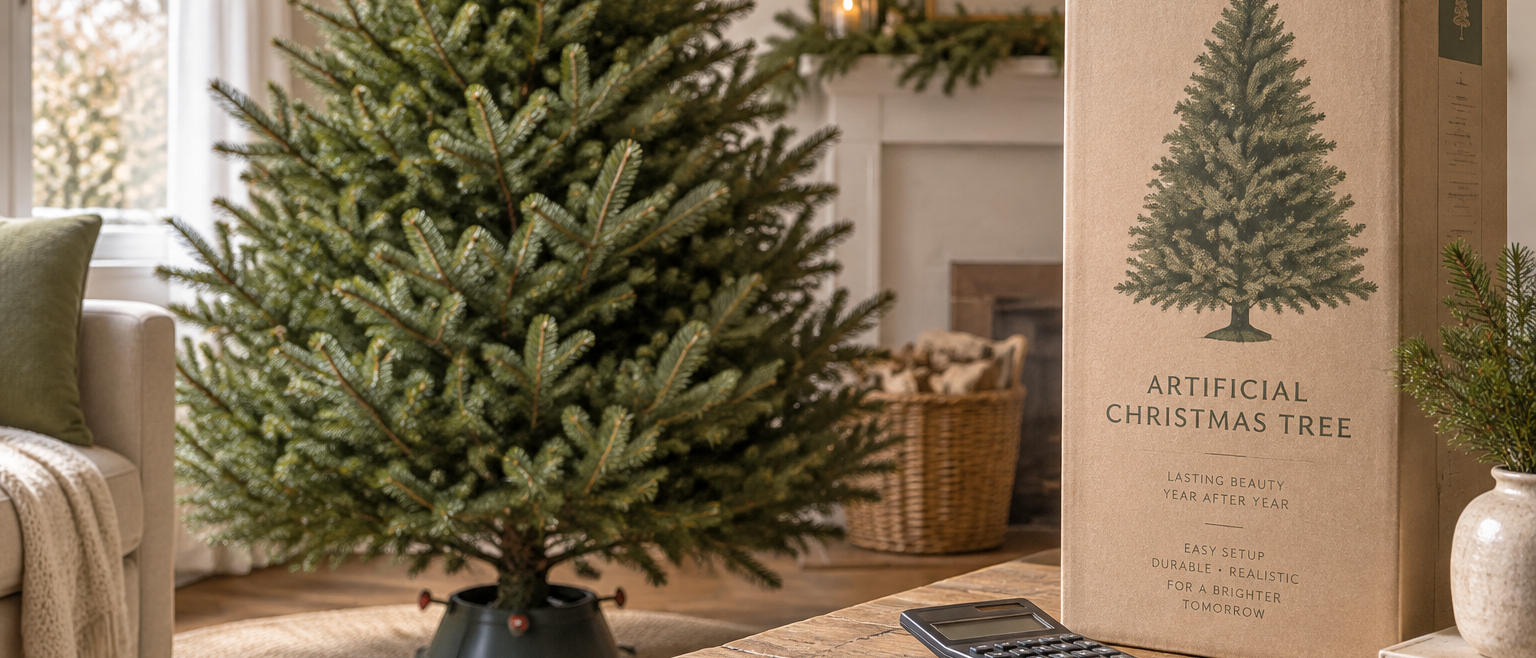
By Evercombe Team · Updated October 12, 2026 · 8-minute read
Quick answer: A fresh 6–7 ft tree costs $80–150 every single season (US lot and farm prices, typical, as of October 2026); an artificial tree is bought once — $19–149 for tabletop and small trees, $150–450 for mid-market full-size trees, and $500–1,500 at specialty brands’ list prices (competitor prices as of October 2026). One Christmas: fresh wins on cash outlay. Second Christmas onward: the artificial tree is paid for and the fresh one starts over. A five-season stretch runs $400–750 in fresh trees against a one-time artificial buy.
Every “which is cheaper?” article on this topic compares one tree against one tree. That is the wrong frame, and it is why the honest answer surprises people: a real tree is a subscription and an artificial tree is an appliance. Neither number means anything until you say how many Decembers you are buying for. So here is the math done the way an actual household spends — per season, per hidden cost, and across five- and ten-year stretches.
What the Numbers Actually Count (Before You Compare Anything)
Real-tree price quotes blur three different purchases: the choose-and-cut farm tree, the corner-lot pre-cut, and the delivered tree — each with its own price band and none interchangeable (US lot and farm prices, typical, as of October 2026). Artificial quotes blur tiers even harder: a $29 tabletop mini, a $250 mid-market 7-footer, and a $1,200 specialty-brand showpiece are all “an artificial tree.” The comparison only works size band by size band, which is how the table below is built. One more framing fact, stated plainly: below 4 feet, the fresh market barely exists. Small tabletop and 4 ft trees are an artificial market — that is the territory where the question isn’t “which kind” but “which one,” and it is where our own range lives.
The Cost Table: Real vs Artificial, Size by Size
| What you’re buying | Real, per season (typical) | Artificial, once (list) | When artificial pays for itself |
|---|---|---|---|
| Tabletop mini (15–24 in. / 2 ft) | Fresh equivalent rarely sold at retail | $19–59 (as of October 2026) | n/a — the second-tree spot artificial owns |
| 3 ft tabletop tree | Nursery live tabletops, thin market | $49–99 (as of October 2026) | n/a at this size |
| 4–4.5 ft entry tree | Not sold fresh at scale | $89–149 (as of October 2026) | n/a |
| 6–7.5 ft main tree | $80–150 (typical, as of October 2026) | $150–450 mid-market; $500–1,500 specialty (as of October 2026) | Season 2–3 (mid-market); season 5+ (specialty at list) |
| 9 ft and up | $150–250+ (typical, as of October 2026) | $300–1,500+ by tier (as of October 2026) | Season 3–6 |
The pattern in the shape of the table: the small rows have no fresh competitor and the big rows are where the real math lives. If your tree is a 2 ft desk tree, cost was never the question. If your tree is the household’s 7-footer, read the three budgets below — that is where the money actually moves.
What Drives the Price of Each Route
On the artificial side, price tracks four listed specs, and they are worth reading before paying:
- Height — the primary multiplier at every tier.
- Foliage build — PVC (the affordable classic, standard in small sizes where the scale already reads charming) versus PE molded branches, where higher PE tip counts separate higher-priced listings from the classics — the comparison that matters at 6 ft and up.
- Lights — pre-lit costs more up front (roughly 350–600 lights on a 6-footer, 650–800 on a 7.5 at market-standard densities) and carries built-in convenience; unlit costs less, takes the strands you already own, and has no built-in section that can fail mid-season.
- Structure and finish — hinged branches, branch count, and flocked or frosted finishes all move the list price.
On the fresh side, price tracks species (Fraser and noble firs sit at the top of the lot’s board), height, whether you cut it yourself or buy pre-cut, and your metro — with delivery and the stand billed separately, which brings us to the part no ad mentions.
The Hidden Costs Nobody Puts in the Ad
Fresh tree, per season, beyond the sticker:
- A stand, if yours broke or this is your first year — $20–40 (typical, as of October 2026)
- Delivery or tie-down help, in cities where lots don’t include it
- Disposal — curbside pickup fees in many municipalities, or the January trip
- Watering and needle duty — a few minutes a day, plus the sweep under it, all season
Artificial tree, beyond the sticker:
- Storage space — one bin holds a 2–3 ft tree whole; the 4.5 fits a closet shelf; floor trees want their box or a tree bag
- The fluff — five minutes at tabletop scale, ten at 4–4.5 ft, 30–60 minutes for a full-size tree’s first setup (typical market times), then touch-ups in later years. The method is here: how to fluff an artificial Christmas tree
- On pre-lit styles only: a light section can eventually fail — which is the standing argument for unlit plus your own reusable strands
Neither column is a scandal; both are just real. The difference is that the fresh column repeats every year and the artificial column mostly doesn’t.
Three Household Budgets (Copy the One That Sounds Like Your December)
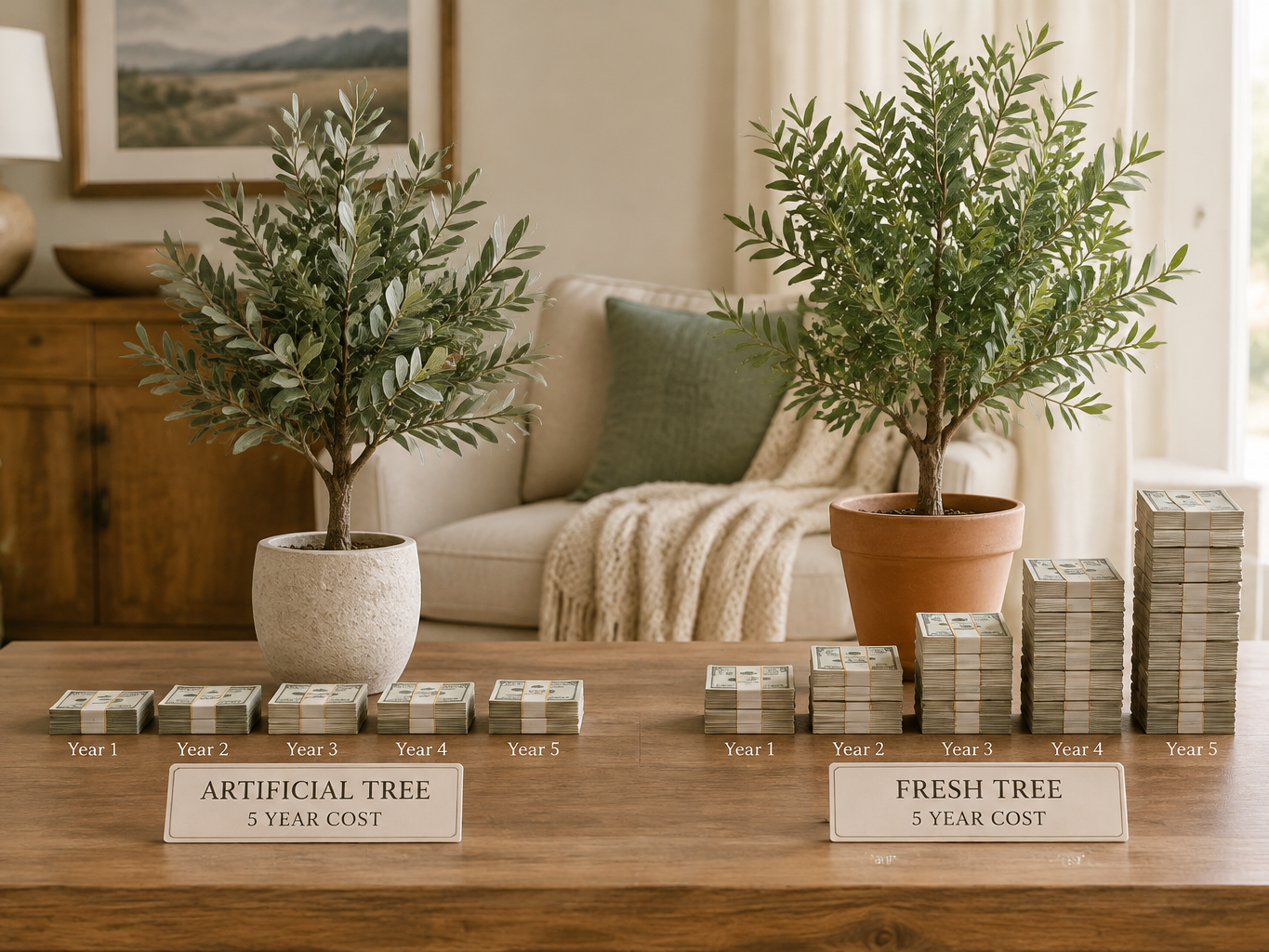
The apartment household — one small main tree. The 4–4.5 ft entry tree at $89–149 once (as of October 2026), against the fresh 6-footer it stands in for at $80–150 every year plus stand and disposal. The artificial passes the fresh tree’s total in season two, stores on a closet shelf, and costs about ten minutes of fluffing per December thereafter. Placement ideas for this size: small Christmas tree ideas.
The family household — the 6–7.5 ft living-room tree. Fresh at $80–150 per season: $400–750 across five seasons, plus five years of stands-checked, trees-watered, needles-swept, and disposal runs. Mid-market artificial at $150–450 once: break-even lands in the second or third season, and seasons four and five cost only the fluffing time. Specialty-brand trees at $500–1,500 list run the same math on a longer clock — and their standing seasonal sales cut the entry number substantially (competitor prices as of October 2026).
The second-tree household — the main tree plus small ones. The fastest-growing pattern: one big tree wherever it always went, plus a 2–3 ft tree at $19–99 each for the kids’ room, the entry console, the office desk — places a fresh tree never went, because nobody was buying a second fresh tree to water. Every small one boxes into a single bin in January and redeploys next year; while the season runs, tree-plus-wreath bundles discount in the cart, which pairs the entry tree with a Christmas wreath for the door above it.
Where Artificial Wins Beyond the Price Tag
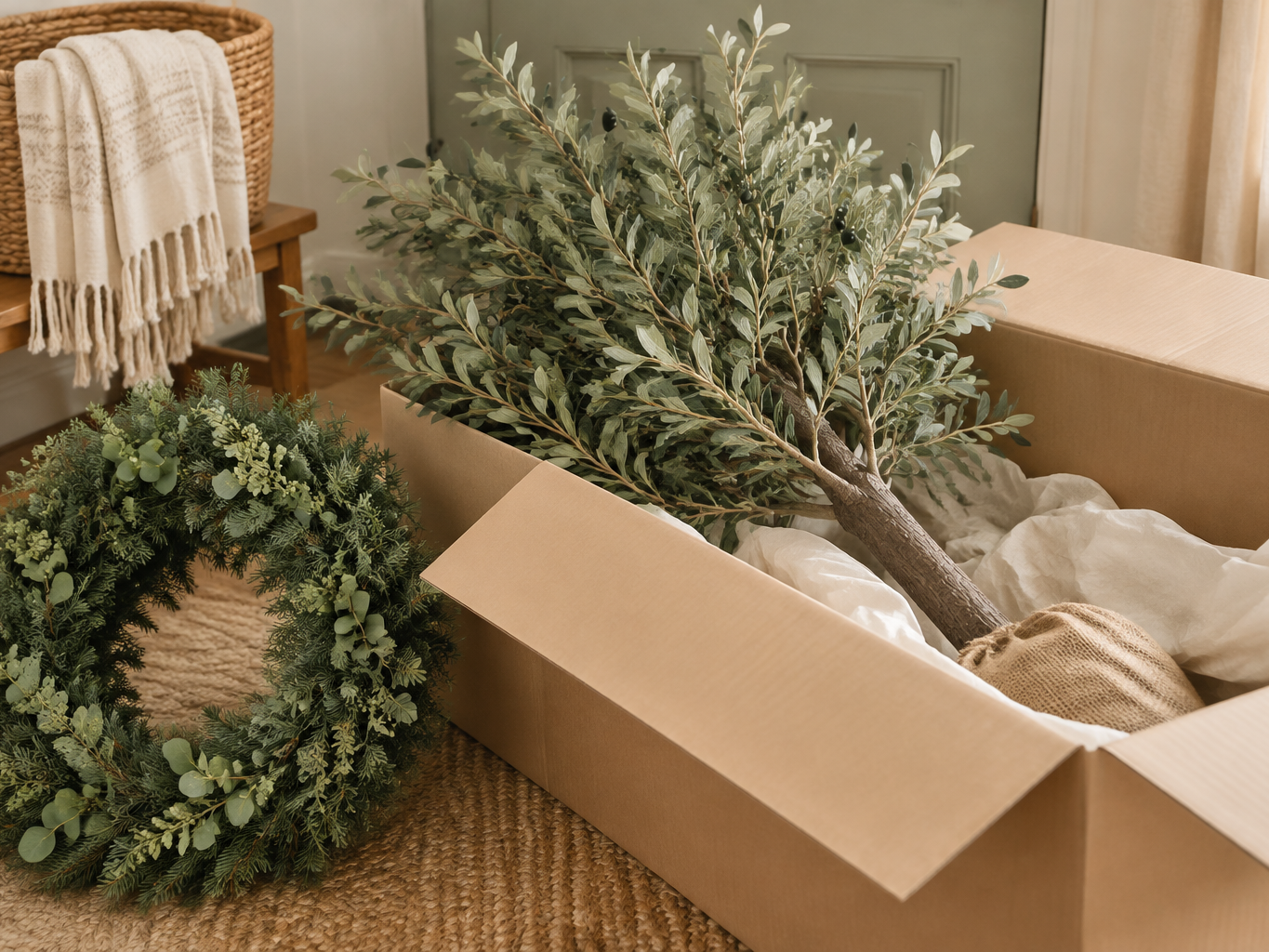
- No clock. Buy the tree in July at a sale, set it up in November — nothing browns and nothing arrives “not quite open.”
- No disposal job in January. The tree goes back in its box dry and cool, and next December it comes out for a touch-up fluff, not a repurchase. A tree bought once and lit five Decembers running costs less per year than a fresh-cut tree every season — that reuse arithmetic is the whole case for artificial.
- No watering, no needle sweep. The daily chore list around the tree goes to zero.
- The honest trade-off, stated plainly: the first setup includes real fluffing time, transit compression is normal across the whole industry, and an artificial tree asks for storage space all summer. Schedule the fluff, don’t fight it; give it the bin.
How to Pay Less (Without Buying a Bad Tree)
- Shop the post-Christmas week. Clearance windows in this category run deep — major tree retailers clear seasonal stock at 40–70% off in the week after Christmas (competitor prices as of October 2026) — and an artificial tree bought for next year stores as easily as one bought in November.
- Buy unlit if you own strands. Light strands are reusable across trees and years; unlit listings cost less and never strand you with a built-in failure.
- Enter through the small sizes. The T1 band at $19–59 (as of October 2026) is the cheapest full Christmas statement in the entire category — desk tree, kids’ tree, or the pair for the windowsill.
- Bundle the line, not the SKU. Tree-plus-wreath and tree-plus-garland bundle discounts are a standard mechanism in the category and in our cart — the entry tree and the garland for the stair rail land together.
- Check branch count, not brand poetry. Branch count and light count are the listed specs that predict fullness and glow; they are on the listing, they are comparable, and they are what you are actually paying tiers for.
FAQ
Is a real Christmas tree cheaper than an artificial one?
For one Christmas, yes — a fresh tree’s single-season outlay ($80–150 typical for 6–7 ft) beats a mid-market artificial’s one-time price. From the second season on, the fresh tree restarts at full price while the artificial tree is already paid for, so the crossover lands in season two or three for most full-size buys.
How many years does an artificial Christmas tree last?
Commonly cited at five to ten seasons with dry, unstressed storage (typical industry guidance). Branches are wire-cored and re-shape by hand; the usual end-of-life event on pre-lit trees is a light section, not the foliage — which is why unlit-plus-your-own-strands is the longevity play.
What does a real Christmas tree really cost all-in?
The tree at $80–150, plus a stand ($20–40 if you don’t have one), possibly delivery, and disposal in January — call it $100–200 per season in the years it repeats (typical, as of October 2026).
When is the cheapest time to buy an artificial Christmas tree?
The week after Christmas, when seasonal clearance clears inventory at 40–70% off at major retailers (competitor prices as of October 2026). The tree doesn’t know what day it is, and storage is the same box either way.
Are expensive artificial trees worth it?
The tier jumps are real and readable: higher PE tip counts, more branches, higher light counts, hinged construction. Whether they are worth it depends on years-of-use — a $300 tree kept ten seasons costs $30 a December; the same tree replaced every three years does not. Buy the tier you will actually keep.
Where to Start
- The full range with the height guide: artificial Christmas trees — and the small-tree band: small & mini trees — free US shipping over $200
- First-setup ritual: how to fluff an artificial Christmas tree
- Placement ideas for the small ones: small Christmas tree ideas