
Blog
Can You Put Water in a Ceramic Vase? The 10-Second Check Before You Fill It


By Evercombe Team · Updated October 13, 2026 · 7-minute read
Quick answer: Yes, if the interior is fully glazed or sealed — no, if the body is porous. Fully glazed ceramic holds water indefinitely (that is most of the market); matte-looking pieces with sealed interiors hold it too; raw, unglazed bodies wick water through the clay and belong to dry display. The check takes ten seconds: look inside, find the glaze line, and trust the watertight flag on the listing over the word “ceramic.” Shop ceramic vases with the flag stated per piece.
The question sounds like it should have a one-word answer, and the one-word answer people usually get — “yes, it’s ceramic” or “no, it’ll leak” — is how tables end up with rings. “Ceramic” names a family of kiln-fired clay bodies, not one material behavior: the same word covers a glossy glazed stoneware jug that holds water for years and a raw terracotta piece that sweats through in an afternoon. What decides the answer is the surface the water actually touches — the interior — and whether that surface has been vitrified or sealed. Three body types, one check, and the whole topic follows.
The Three Kinds of Ceramic Body
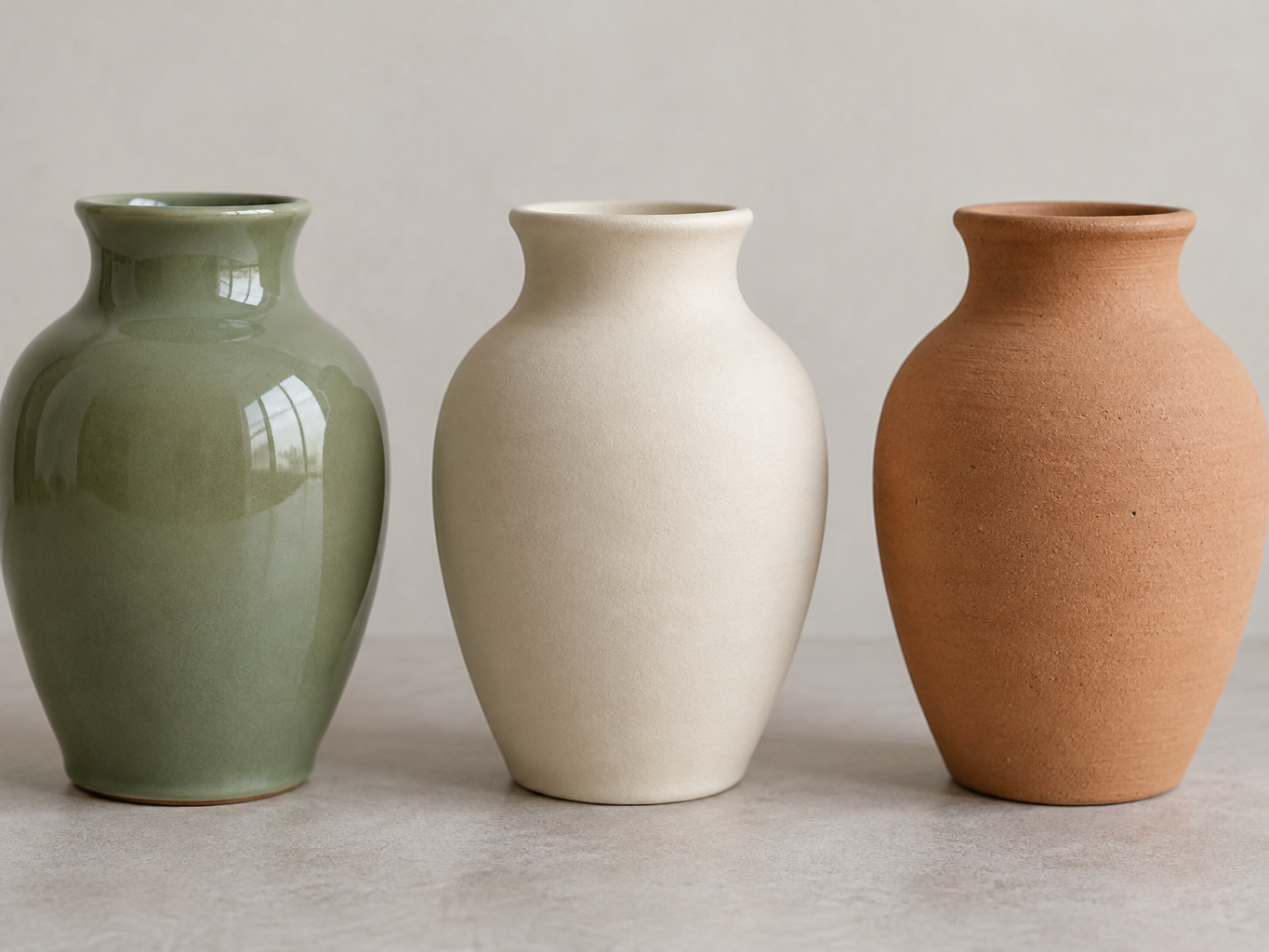
Fully glazed. Glaze is glass fired onto the clay body — inside and out. The interior looks glossy or satin-smooth, sometimes a different color than the exterior, and it is effectively a glass liner: non-porous, wipeable, and indefinite with fresh water. This is the majority of the ceramic vases market, and the state our watertight flag marks.
Sealed interior, unglazed exterior. The outside reads matte, raw or textured; the inside has been coated with a clear sealer. These pieces hold water — the raw look is cosmetic, on the outside only. The tell is visible in most listings: an interior that looks glassy under a matte exterior, or a stated “sealed interior.” When a listing photographs both faces of the vessel, this is what it is showing you.
Fully porous. Unglazed inside and out — terracotta plant-pot territory, plus deliberately raw decorative bodies. No sealer, no glaze, no barrier: water migrates through the clay itself. A porous vase does not fail like a cracked glass; it seeps — a slow dampness at the base, then a ring on the surface under it, then mineral blooms on the exterior as the water finds its way out. These are dry-display pieces for faux and dried stems, and honest listings say so.
The 10-Second Check
Run this on any ceramic you already own, in order:
1. Look straight down into the interior. Glossy, glassy or satin-smooth under your fingertip = glazed or sealed. Water is fine. 2. Look for the glaze line. On many pieces you can see where glaze stops — often at the rim or the top of the neck. Glaze that stops short of an interior floor that looks chalky or grainy means the bottom is unsealed: decorative only. 3. Run the dry-fingertip test on the interior floor. The lowest point is where water sits longest, so it is where the answer lives. A fingertip that comes away with chalk or clay dust is a fingertip that just answered the question. 4. When buying, skip to the flag. The watertight flag on the listing outranks every visual guess above — it is the seller telling you which of the three bodies you are holding. “Ceramic,” “stoneware” and “porcelain” as words do not tell you; the flag does.
What Happens If You Fill a Porous One Anyway
The failure is slow and quiet, which is what makes it expensive. Water wicks through the clay wall and evaporates from the outer surface, so a porous vase “holds” water while steadily dampening its own base — on wood, that is a ring within days; on unsealed stone, a shadow. As the water migrates it carries dissolved minerals, which bloom on the exterior as white efflorescence: the crust you may have seen on old terracotta pots. None of this breaks the vase. All of it marks the furniture, and exterior mineral staining on unglazed clay is largely there to stay.
There is also the fresh-flower quality angle: porous bodies pass water through faster than a bouquet drinks it, so a full vase needs topping daily in dry indoor air. A sealed body loses water only to the stems and the air surface, which is what cut flowers actually want.
Fresh Stems vs Faux Stems: Different Answers
The question underneath the question is usually one of two. For fresh flowers, you need water, so the vase must be fully glazed or sealed-interior — no exceptions, because the failure mode above starts on day one. Glass sidesteps the entire issue (it is sealed by nature), which is one honest reason glass vases win the fresh-flower default; the full material trade-off is in ceramic vs glass vases.
For faux stems, you need no water at all — an opaque ceramic holding faux stems is the lowest-maintenance arrangement that exists. A brief exception: ceramic bodies tolerate fresh water for a short display event (an evening, a weekend) without harm, provided the interior is glazed; the piece to keep out of even short-term water is the fully porous one, which marks itself in hours to days. If you want the water look permanently without any water, the next section is the answer.
Faux Water: The Third Option
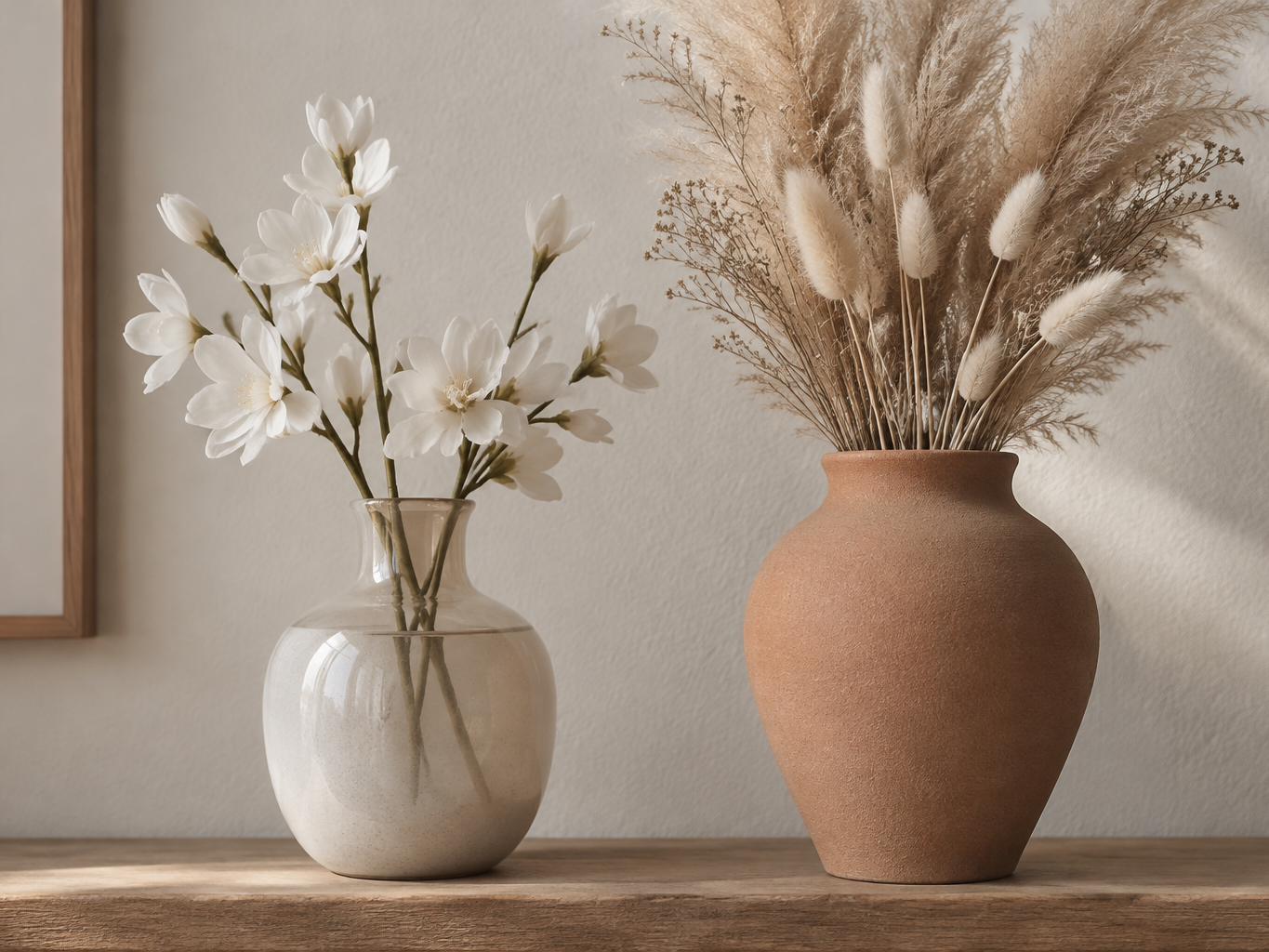
“Faux water” is clear-casting resin poured and cured in the vase around the stems — the permanent water-line look that ready-made arrangements ship with. In a glazed or sealed ceramic it is the third state: not wet, not dry, but permanently “filled,” with stems locked at the exact angle you set them. It suits entries and console pieces that would otherwise be dusted-and-refilled forever.
Two practical notes. First, resin is a commitment — stems set in it are set; changing the arrangement means a new pour, so it belongs in vases whose look you intend to keep. Second, the pour belongs in watertight bodies only: resin cures by exothermic reaction that a porous wall can both stain and be stained by. The pairing math for which stems sit at which height in which body lives in vases for artificial flowers, and the flower vases collection carries the watertight bodies a pour needs.
The Body × Water Matrix
| Body type | Fresh water | Short-event water | Faux water resin | Dry faux/dried stems |
|---|---|---|---|---|
| Fully glazed (inside and out) | Yes | Yes | Yes | Yes |
| Sealed interior, matte exterior | Yes | Yes | Yes | Yes |
| Fully porous (unglazed) | No — seeps | No — marks within hours-days | No — stains both ways | Yes — its best use |
The right-hand column is worth reading twice: a porous body is not a defective glazed one, it is a different product whose job is dry display — raw terracotta with a bundle of pampas is a legitimate look, and the finish-grouped ideas cover it.
Care Once Water Is In It
Glazed and sealed ceramics wash like dishware: cool water, mild soap, a bottle brush for the neck. Two habits keep them in shape — empty and rinse between fresh-flower rounds rather than topping off (bacteria build at the waterline clouds nothing on opaque ceramic but shortens the next bouquet), and dry the exterior base after filling, since the seam where glaze meets the unglazed foot can hold a film of water against wood. Cleaning the stems themselves is its own topic, covered by material in how to clean artificial flowers.
FAQ
Can ceramic vases hold water?
Most can: bodies with fully glazed interiors or sealed interiors hold water indefinitely, and they are the majority of the ceramic market. Fully porous unglazed bodies cannot — they wick water through the clay and mark the surface beneath. The watertight flag on the individual listing states which body you are buying.
How do I know if my ceramic vase is sealed inside?
Look into the interior for a glossy, glassy or satin-smooth surface, check whether the glaze line runs all the way down to the floor, and fingertip-test the lowest point for chalk or clay dust. A smooth interior floor means sealed; a grainy or dusty one means decorative only.
What happens if you put water in an unglazed vase?
The water seeps through the clay wall: a damp base within hours, rings on wood within days, and white mineral efflorescence blooming on the exterior over weeks. The vase does not break — it stains, mostly irreversibly, and it loses water fast enough to need daily topping.
Can you leave water sitting in a ceramic vase?
In a glazed or sealed body, yes — but empty and rinse it between flower rounds rather than letting it sit, because stagnant waterline buildup shortens the next bouquet’s life. In a porous body the question answers itself: there is no “sitting” water, only leaving water.
Related Guides
- Ceramic vs Glass Vases — why glass is the fresh-flower default and ceramic the faux-stem one
- Ceramic Vase Ideas — fifteen looks by finish, including dry-display pieces for porous bodies
- How to Clean Artificial Flowers — the stems above the waterline, by material
- Shop ceramic vases · vases for artificial flowers · glass vases · all flower vases