
Blog
15 Ceramic Vase Ideas Grouped by Finish, With Stem Counts and Heights That Work

By Evercombe Team · Updated October 13, 2026 · 7-minute read
Quick answer: The three ceramic recipes that always work: 3 hydrangea heads in a 6-inch white matte body for dining tables, a single orchid in a glossy 4-inch bud for shelves and bathrooms, and 48-inch branches in a 24-inch textured floor piece for empty corners. The rule underneath every one of them: flowers stand 1.5-2× the vase’s height, and the busier the room, the quieter the glaze. Shop the ceramic vases collection by finish, not by accident.
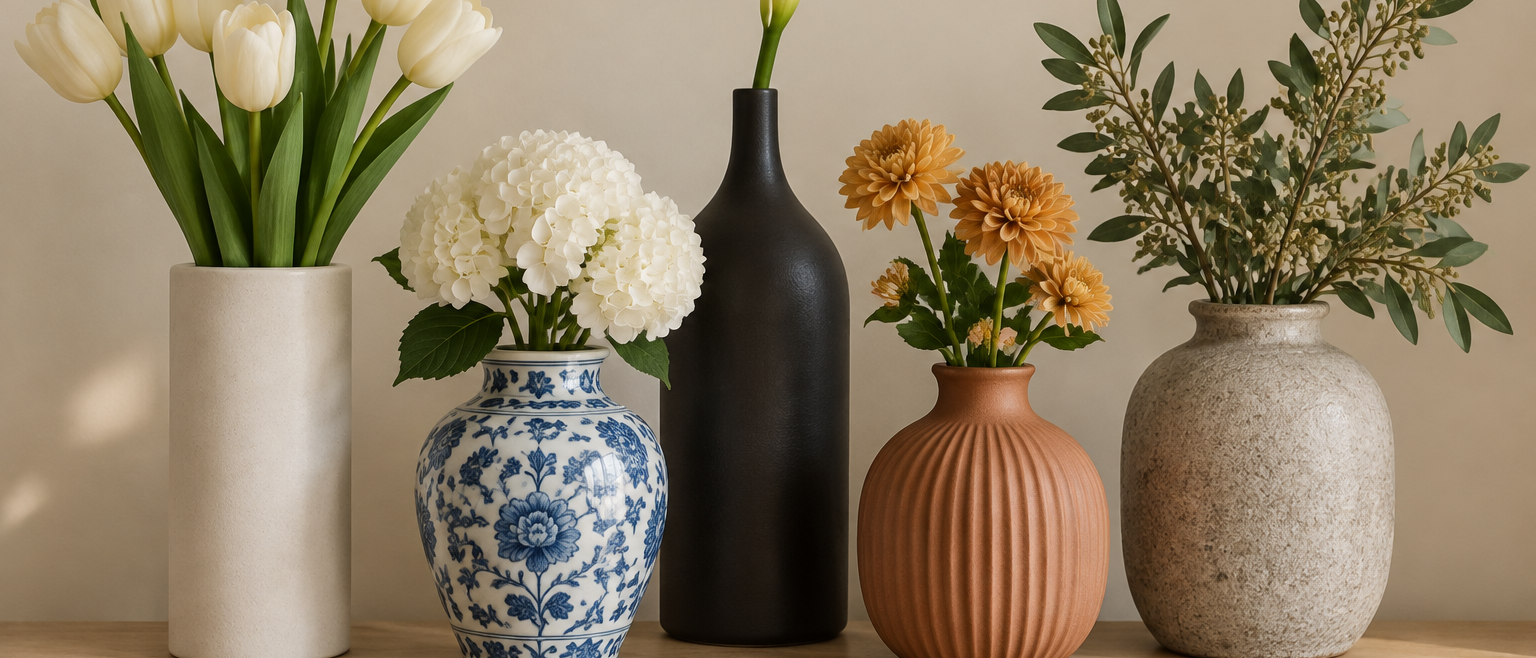
A glass vase’s job is to disappear. A ceramic vase’s job is to speak — through glaze, color and weight — which is why “ceramic vase ideas” is really a finish decision before it is a flower decision. A blue-and-white baluster and a matte black bottle hold the same stems, but they belong in different rooms, different color stories, different decades. The fifteen ideas below are grouped by finish so the grouping itself does half the styling work, and every card carries the three numbers that make it repeatable: vase height, stem count, finished height.
Gallery White and Cream
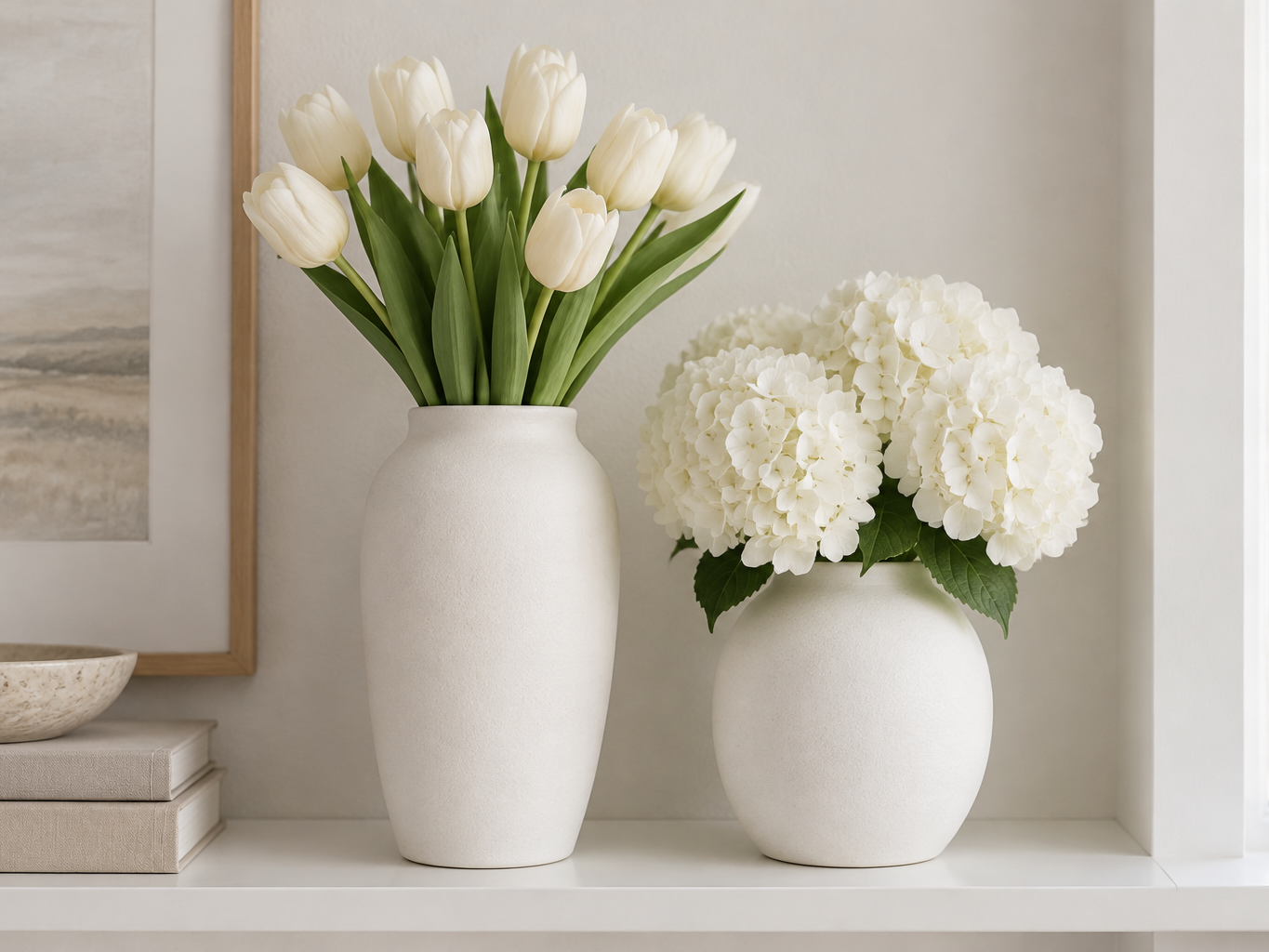
The quietest ceramic story: white and cream bodies read as sculpture rather than container, and they let the flowers carry all the color. This is the group for rooms that already have pattern — toile, wallpaper, busy upholstery. Start at the white and cream end of the collection.
1. The Quiet Column — an 8-10 inch white matte cylinder carrying 5-7 cream tulips, stems cut to stand 16-18 inches total. The matte body swallows light instead of competing with it; this is the single most forgiving ceramic build for a hallway console. Easy.
2. The Three-Bud Line — three 4-inch white bud vases in a row, one stem each: a rose, a ranunculus, a spray carnation, alternating heights by an inch or two. Reads curated rather than arranged, and moves to the bath or nightstand when the table needs its surface back. Easy.
3. The Mass Bowl — a 10-inch wide white bowl packed with 6-8 short-stem peonies or 4 hydrangea heads trimmed to 3-inch stems, finished under 12 inches total. The low-and-wide silhouette is the one shape that never blocks sightlines across a coffee table. Easy.
Blue-and-White Traditional
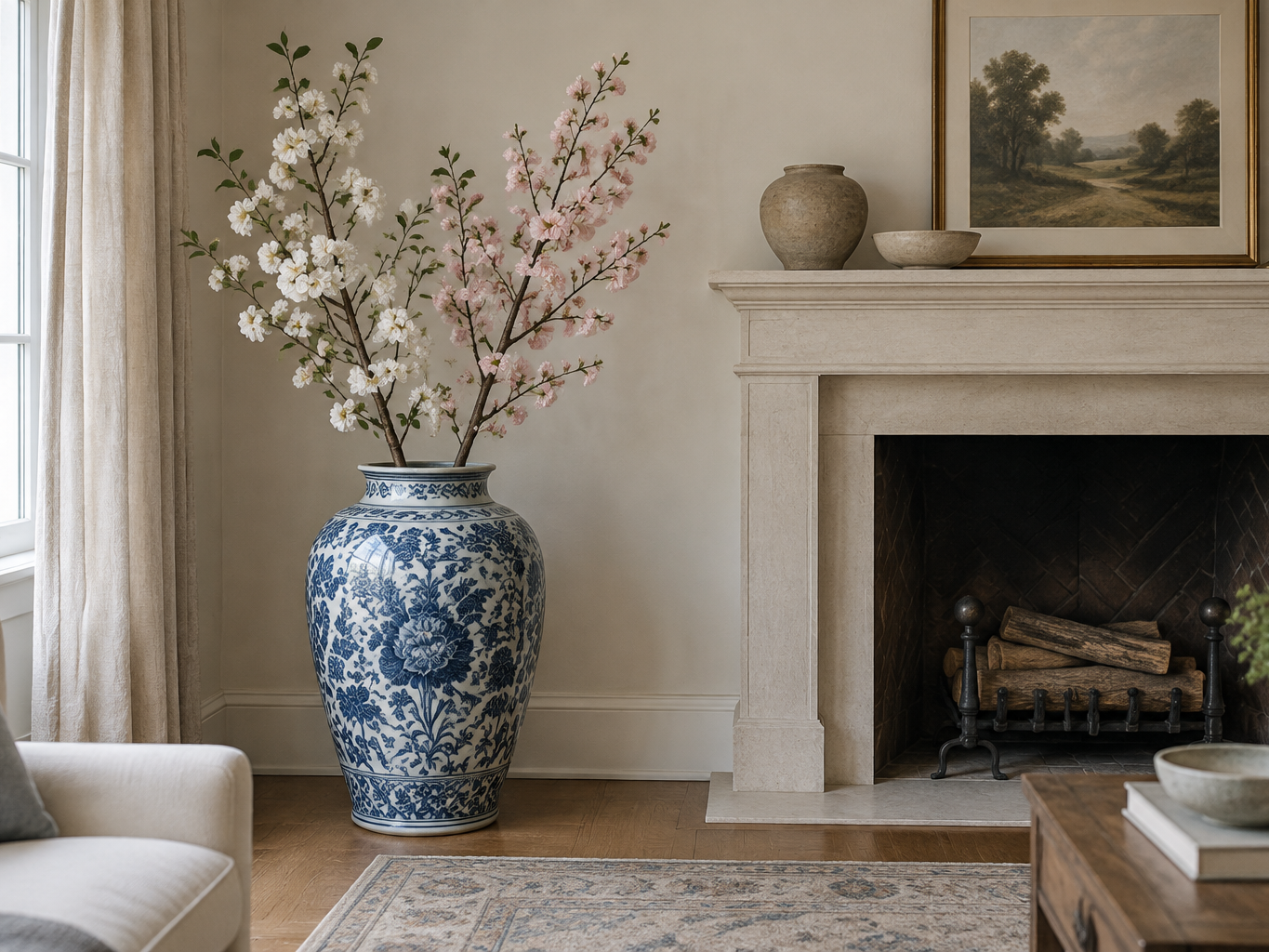
The pattern group. Blue-and-white ceramics lean traditional and chinoiserie, and they bring so much visual information that the flowers above them should be near-solid — whites, creams, blushes, greens. The pattern is glazed at the factory under the finish, so it lives in the glaze rather than sitting on top of it the way painted decoration does.
4. The Mantel Pair — two blue-and-white baluster vases (10-12 inch) flanking a mirror or artwork, each holding 5-6 white or blush stems cut level, 18-20 inches total. Symmetry is the whole point here; buy the pair, don’t hunt two lookalikes. Easy.
5. The Chinoiserie Corner — one 20-24 inch blue-and-white floor jar holding two artificial blossom branches at 40-48 inches, curly willow in the mix. This is the highest-impact-per-minute idea in the entire list: one vessel, two branches, a dead corner becomes a composition. Easy.
6. The Kitchen Ledge — small 5-6 inch blue-and-white ginger jars down a shelf or window ledge, one stem each — rosemary-style greenery, a single garden rose, a lavender bunch. The pattern carries the styling; the stems are punctuation. Easy.
Matte Black and Modern Gray
Ceramic’s modern register. Matte black and speckled gray bodies photograph like gallery pieces and ground a room the way a black frame grounds art — which also means they want restraint above the rim: monochrome stems, branches, single statements.
7. The Sculpture Swap — a matte black bottle vase (8-10 inch) holding exactly one calla lily or one curly branch at 18 inches. On a desk or entry table this reads as an object, not an arrangement; adding a second stem ruins it. Easy.
8. The Gray Speckle Trio — three speckled stoneware bodies at 6, 8 and 10 inches, each carrying the same monochrome greenery (eucalyptus, ruscus, olive branches) at staggered heights. The speckle does the texture work; identical greenery across three sizes reads intentional rather than repetitive. Easy.
9. The Console Anchor — a 12-inch matte black body with 3 tall stems or a pampas plume reaching 24-26 inches, sitting at the end of a console rather than the center. Black ceramics weigh more than they look like they should, which is exactly what a console’s edge position needs. Easy.
Terracotta and Textured Bodies
Warmth and distance. Ribbed, speckled, hammered and raw-edged bodies read from across the room, which is why texture is the finish choice for large pieces and far walls, and terracotta tones pull garden and southwest palettes together. This is also the group where floor vases earn their keep.
10. The Ribbed Terracotta Trio — three ribbed terracotta cylinders (5, 7, 9 inch) down a runner, amber and cream blooms, 2-3 stems each. The vertical ribs echo the stems; keep the flowers loose rather than mounded so the ribbing stays visible. Easy.
11. The Hammered Statement — one hammered-glaze body (10-12 inch) holding 3 statement stems — protea, artichoke-style blooms, or a single branch of orchids. The surface moves light around; the stems just need to stay out of its way. Easy.
12. The Raw-Edge Dried Look — a sand-tone textured vase with raw, unglazed edges holding dried-style stems: pampas, bunny tails, bleached ruscus. The unglazed shoulder is the visual rhyme with dried material — but check the watertight flag on any raw-body piece before it holds fresh water (see Buying Notes below). Easy.
Scale Plays: Bud, Table, Floor
The same finish logic at three sizes, because scale changes the job — bud ceramics are punctuation, table ceramics are composition, floor ceramics are architecture.
13. The 24-Inch Corner — a tall textured floor ceramic (24 inch+) with curly willow or blossom branches reaching 48 inches, standing alone in a corner the room forgot. Weight is the feature: the body that holds four feet of branch steady is the body a vacuum bump cannot walk across the floor. Easy.
14. The Nightstand Bud — a 4-inch glossy bud holding one orchid stem or garden rose at 9-10 inches, beside the lamp. The smallest ceramic does the most repeated work — it is the arrangement you see first and last every day. Easy.
15. The Tablescape Run — three mixed-height ceramics (6, 9, 12 inch) down a dining runner, same flower throughout, cut to three finished heights. The graduated line styles the whole table without hiding a single guest. Easy.
The Sizing Cheat Sheet
| Finish group | Vase size | What goes in | Stems | Finished height | Where it wins |
|---|---|---|---|---|---|
| White/cream | 6 in | Hydrangea heads | 3 | Under 10 in | Dining table |
| White/cream | 10 in wide bowl | Peonies, short | 6-8 | Under 12 in | Coffee table |
| Blue-and-white | 10-12 in pair | White/blush stems | 5-6 each | 18-20 in | Mantel |
| Blue-and-white | 20-24 in jar | Blossom branches | 2 | 40-48 in | Corner |
| Black/gray | 8-10 in | One calla or branch | 1 | ~18 in | Desk, entry |
| Terracotta | trio 5/7/9 in | Amber, cream blooms | 2-3 each | 12-18 in | Runner |
| Textured | 24 in+ | Curly willow | 2-3 | ~48 in | Floor |
The height column is the one people skip: flowers standing 1.5-2× the vase’s height is the difference between “styled” and “stumpy” at every size in the table. Our vase size finder runs the arithmetic for any combination.
Buying Notes That Save Returns
- Buy ceramic by weight and opening, not by photo. A listing stating weight and opening width next to height is telling you where the vase can live — 3-8 lb for consoles and shelves, 5-10 lb for dining tables and tall builds. Photos flatter every ceramic equally; numbers do not.
- Check the watertight flag before any fresh-water plan. Fully glazed interiors hold water indefinitely; unglazed exteriors with sealed interiors hold it too; fully porous bodies are dry-display pieces for faux and dried stems. The flag on the listing, not the word “ceramic,” is the contract.
- Pattern means glazed-in pattern. The blue-and-white looks above come from glaze fired onto the body — not paint sitting on the surface, which is where finish complaints in this category cluster. If a listing says “hand-painted,” ask where the paint sits relative to the glaze before it meets a wet sponge.
FAQ
How do you style a ceramic vase?
Pick the finish for the room first — quiet glazes for busy rooms, pattern and texture for plain ones — then hold stems to 1.5-2× the vase height. Ceramic hides stems, tape grids and foam, so the outside silhouette is the only thing the room sees: build wide at the mouth and let the body hide the engineering.
What flowers look best in a ceramic vase?
Near-solid blooms whose color plays against the body: white and blush stems over blue-and-white pattern, monochrome greenery in matte black, amber and cream in terracotta. Because the body is opaque, stems can be cut short and packed — hydrangea heads at 3-inch stems and peonies by the half-dozen are the two most reliable builds.
How tall should flowers be in a ceramic vase?
1.5-2× the vase height: a 6-inch body carries a 9-12 inch arrangement above the rim, a 10-inch body carries 15-20, a 24-inch floor piece carries branches around 48. Below 1.5× the build reads stumpy; above 2× it tents and the physics of a top-heavy arrangement starts mattering more than the styling.
Can you mix ceramic and glass vases in one room?
Yes, and the mix reads intentional when the scale differs — glass bud vases at 4 inches alongside a 12-inch ceramic anchor, for example. What reads accidental is same-height alternation of the two materials, which looks like shopping rather than styling. The full material comparison lives in ceramic vs glass vases.
More Vase Guides
- Ceramic vs Glass Vases — the material head-to-head this page keeps referencing
- Artificial Flowers with Vase Ideas — the same recipe format for pre-matched sets, room by room
- How to Clean Artificial Flowers — keeping the stems above these ceramics dust-free, by material
- Shop ceramic vases · bud vases · floor vases · glass vases · all flower vases