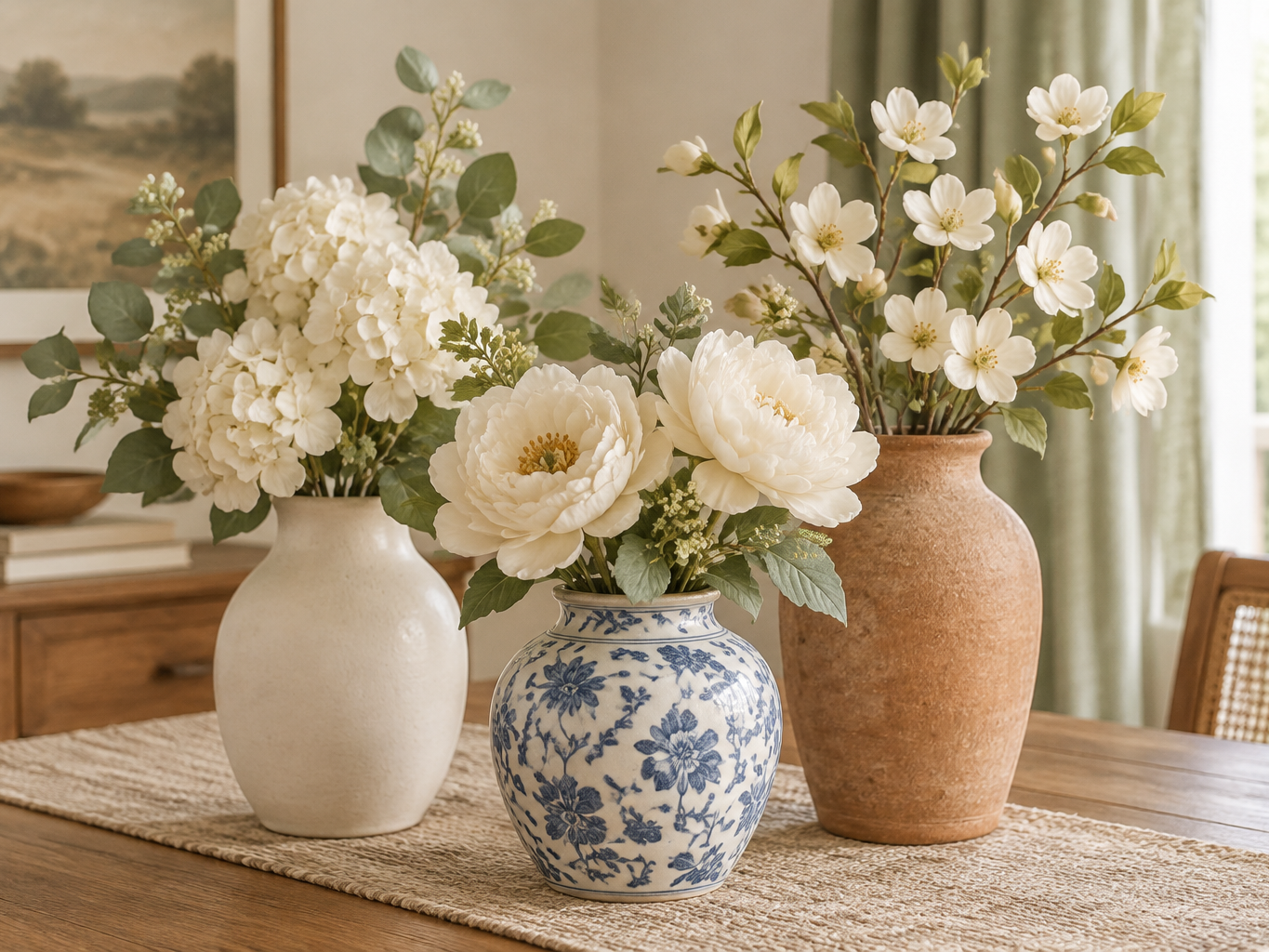
Bud Vases
Small vases built for one stem each — a single rose, three tulips, a sprig of lavender — that do their best work in groups. Line a windowsill, scatter them down a wedding table, cluster three on a nightstand. Singles, sets of three, event boxes of twelve to twenty-four; every listing states the neck width, so you know which stems stand straight.
Quick answer: A bud vase holds one to three stems, and its real power is multiplication — three down a dining runner, five down a banquet table, a dozen across a wedding. For artificial stems choose narrow necks (under 1 inch grips a single wired stem with no mechanics), and group in odd numbers: 3, 5, 7 reads composed where even numbers read stiff.
Bud Vases, Explained
What a bud vase is
A bud vase is a small vessel — four to eight inches tall with a neck under an inch and a half — sized for one to three stems, not a bouquet. That restraint is the point: one good bloom, given a whole piece of glass to itself, reads as a gesture; ten down a table read as a style. The form runs from test-tube clarity to hand-thrown ceramic, and each piece carries so little that groups stay light and cheap — singles run $15–40 typical (as of October 2026, USD).
The bud vase is the smallest unit of floral design, and the format's entire appeal is compositional: instead of one built arrangement, you place single stems — a rose here, a tulip there, a sprig of eucalyptus between — and the table becomes the arrangement. It is why restaurants run bud vases almost exclusively (they reset in seconds and never block a view), why wedding designers use them to make long banquet tables feel garden-gathered, and why they are the friendliest possible entry into styling with artificial stems: one stem, one vase, no arranging skill exists to be lacking.
The four formats, compared
Groups, and the odd-number rule
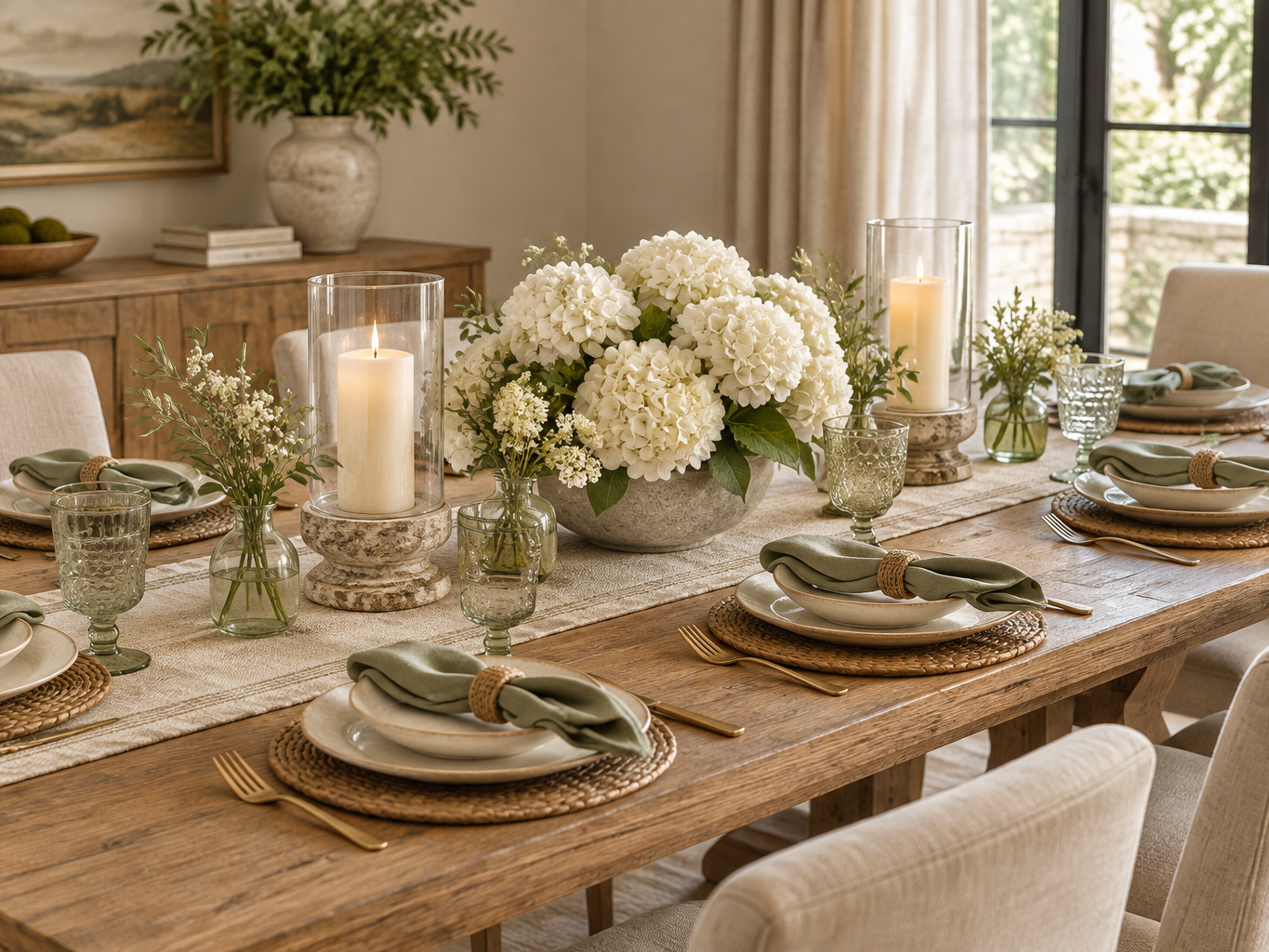
Bud vases compose in odd numbers — three on a nightstand, five down a runner, and for tables, as many as the linen allows — because the eye reads asymmetry as natural and even numbers as stiff. Down a dining runner, space them in a loose zigzag rather than a rank-and-file row; on a mantel, cluster them in a triangle with varied heights; at a wedding, alternate them with candles the length of the table. Height variation keeps a group from reading as a shop display: pair a 4-inch with a 6- and an 8-, or shop the pre-mixed sets of three, which state their height spread. Color repetition works the same way — same glass, three heights, or three glazes, one height; mixing both readings is how groups go wrong, and the sets are curated so they do not. The one compositional rule worth keeping: vary the vessel, not the stem — mixed vases carrying one flower family reads collected, identical vases carrying mixed flowers reads busy.
Wedding tables, by the count
The event math, from our shoppers and the wedding press alike: five to seven bud vases per 60-inch round (two trios plus a solo, or scattered with candles between), and eight to twelve down an eight-foot rectangle — the standard rhythm being five vases alternating with four candles down the runner, repeated or loosened to fill the length. Event boxes run twelve, fifteen and twenty-four in matched glass — two to four rounds; mixed sets of six and nine pair two heights per box. Event quantities get their own delivery and unboxing notes at checkout, because glass to a venue is a different freight problem from glass to a door.
Glass, ceramic, and what goes in them
Glass bud vases — the majority of the collection and its own filter — show the single stem below the waterline (or the resin line, for permanent faux displays); they are the laboratory version of the form, and the event-and-table choice because glass disappears visually, letting the stems float and multiply well in mass. Ceramic bud vases hide the stem and hold their ground on bumped shelves — the kitchen-and-bath choice, where opaque bodies hide whatever holds the stem and matte finishes shrug off hard-water spots and daily wipe-downs better than glass shows them; collected interiors often run both. What goes in either: single heads with presence — one rose, one ranunculus, a tulip, a mini sunflower, lavender. Our loose-stem singles are sold by the stem for exactly this use, and each listing names the head size it was photographed with.
Why bud vases and artificial stems fit each other
A fresh single stem in a bud vase is a countdown — one to two weeks at best, then a bottle of dead water. The artificial version is permanent: the same rose sits in the same neck for years, dusted occasionally, and a season's refresh is swapping one stem for another in seconds. For events the math compounds: sets of bud vases loaded with artificial stems are packed, shipped, arranged and re-used across many weddings — the format that made permanent florals standard in the event industry. The engineering side of that pairing — neck widths, weights, mechanics — is laid out on the vases for artificial flowers page.
Bulk without the case-load
The wholesale suppliers in this market sell bud vases by the case of twenty-four identical pieces — a florist's unit. Here the event lane is different: batches of three to twenty-four, mixed heights, no business account, no closet of nineteen spares after the wedding. For planners who need true case quantities, the bulk note on each listing states our largest single-batch count; beyond that, the honest answer is a floral wholesaler, and we would rather say so than sell the wrong unit.
How to Choose Bud Vases
- Count the table first.
5–7 bud vases per 60-in. round, 8–12 down an 8-ft. rectangle (five vases plus four candles is the standard rhythm); home groups run three or five. The set sizes here (3/6/9/12/15/24) map to those counts.
- Glass or ceramic.
Glass shows the single stem and suits permanent faux displays with resin — and multiplies best in event mass; ceramic hides the stem, survives shelf bumps and hard-water spots — event boxes default to glass, home groups to taste.
- Vary the heights, hold one constant.
Groups read natural with either three heights in one glass, or one height in three finishes — the pre-mixed sets state their height spread so the rhythm is decided. And vary the vessel, not the stem: mixed vases with one flower family reads collected.
- Match the neck to the stem.
Neck width per listing: under 1 in. for rose and ranunculus singles — where a wired artificial stem grips with no mechanics at all — 1–1.5 in. for tulip trios and lavender sprigs; the difference between standing straight and leaning.
- Buy for the next use too.
Event groups become home groups after the night — matched glass re-scatters onto windowsills and nightstands, and the whole set re-uses for the next event, which is the honest case for glass over one-use rentals.
Frequently Asked Questions
What is a bud vase?
A small vessel, typically four to eight inches tall with a neck under an inch and a half, built to hold one to three stems instead of a bouquet. The form runs from test-tube-clear glass to hand-thrown ceramic, and it is designed to be used in groups — one bloom per vase, three or five vases per surface, scattered or clustered. Singles run $15–40 typical (as of October 2026, USD); the point of the form is that a whole table of them still costs less than one large arrangement.
How many stems go in a bud vase?
One to three. The format's whole point is the single-stem read: one bloom plus, at most, a filler sprig in the 3–5 inch sizes, and up to three stems in the 5–7 inch necked versions. Crowding more turns a bud vase into a small arrangement and loses the minimal look the format exists for.
How do I arrange bud vases on a table?
Odd numbers — 3, 5, 7 — spaced in a loose zigzag down the runner rather than a rank-and-file row; alternate with candles at events; cluster in height-varied triangles on mantels. One compositional rule worth keeping: vary the vessel, not the flower — mixed vases carrying one flower family reads collected, while identical vases carrying mixed flowers reads busy.
How many bud vases do I need per wedding table?
For 60-inch rounds: five to seven, worked as two clusters of three plus a solo candle between, or scattered loose down the linen. For eight-foot rectangular tables: eight to twelve in a staggered line — five vases alternating with four candles is the standard rhythm, repeated to fill the length. Height matters as much as count — alternating a 4-, 6- and 8-inch rhythm keeps a full table from reading flat, and our mixed sets of six and nine pair two heights per box for exactly that. The event boxes of twelve, fifteen and twenty-four cover two to four rounds at those counts. Because the stems are artificial, vases can be loaded before the event — no morning-of filling, no wilt through the reception.
Do bud vases need water for artificial stems?
No — and skip the water-look filler in narrow necks, where it clouds and gathers dust. An artificial stem in a 1-inch neck grips without any mechanics; in wider ceramic minis, a pebble or a pinch of sand holds the stem vertical and hides inside the opaque body. The fresh-flower habit of topping up water is the only thing a permanent bud-vase display asks you to unlearn.
What flowers look best in bud vases?
Heads with presence that don't need company: a single rose (standard or spray), one ranunculus, a tulip, a mini sunflower, a stem of lavender, a spray of wax flower. The neck is the filter — under an inch holds rose and ranunculus singles tight; 1–1.5 inches lets tulip trios and lavender sprigs stand naturally. Our faux singles are sold by the stem for exactly this use, and each vase listing names the head size it was photographed with, so the match happens before checkout.
How do you transport bud vases to a venue?
Empty and boxed, in the same shaped cartons they arrive in — bud vases travel best as glass, not as arrangements. If stems must go in before the venue, two tricks from event crews: a half-inch of water (not full — sloshing is the enemy) or a bead of clear floral tape over the neck to pin the stem for the ride. Pack vases standing, not lying, with a soft layer between; and for the return trip, the original cartons are the storage — event glass that boxes back up is event glass you still own next season.
Do you sell bud vases in bulk?
In small batches, yes: singles, sets of three, and event boxes of twelve, fifteen and twenty-four in matched glass — no business account, no case minimums. That is a deliberate difference from the wholesale suppliers here, who sell cases of twenty-four identical pieces as their smallest unit. If you need true case quantities beyond our largest single-batch count (stated per listing), the honest answer is a floral wholesaler — we would rather point you there than sell the wrong unit for a venue.
Will a set of glass bud vases arrive intact?
Sets ship with dividers between the pieces and protective wrap around the box — small glass is freight we plan for, and the final double-boxing spec is being confirmed with suppliers and prints on every listing once set. If anything arrives cracked or chipped: a photo and the order number brings a replacement, no need to pack the evidence back up. Sets are inspected as sets — count and condition — before they leave, because a five-of-six delivery is a replacement job, not a discount.