
Blog
“How to Decorate a Christmas Tree: The Order Professionals Use (6 Steps, With Counts and Costs)”

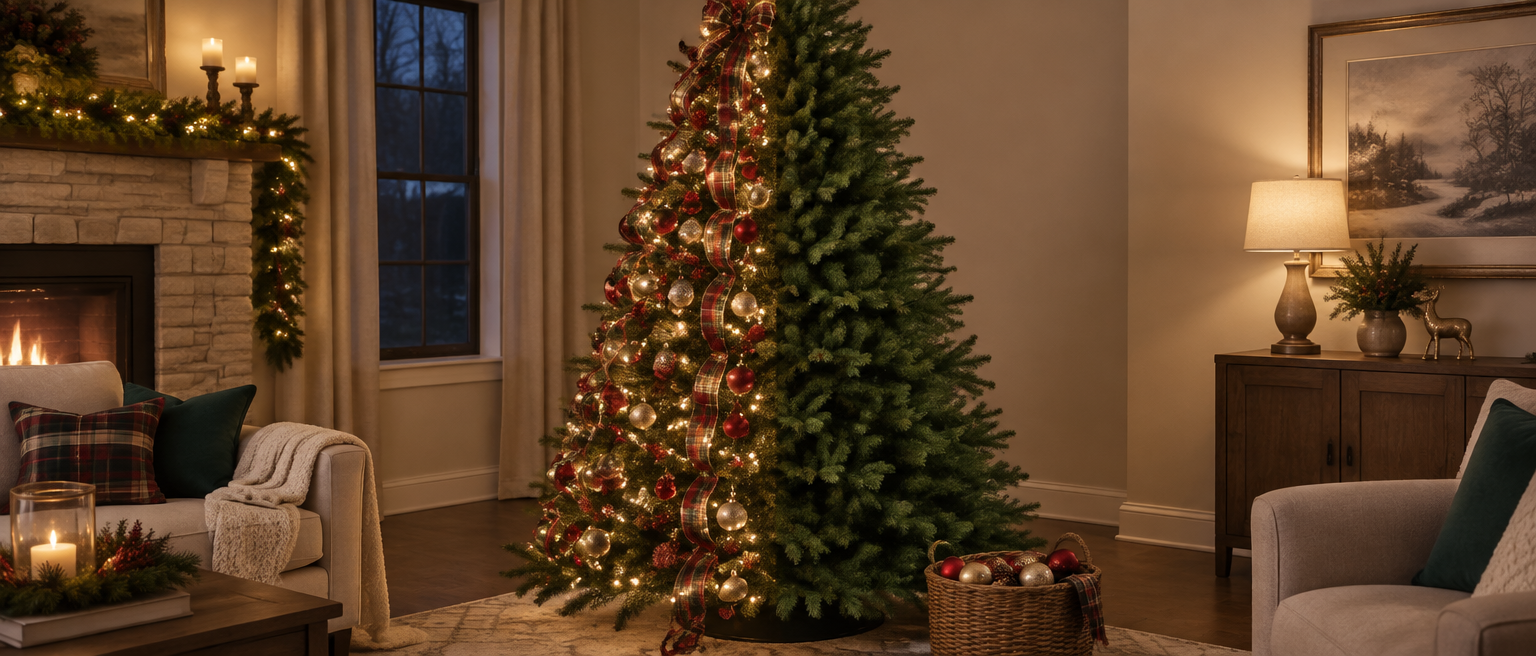
By Evercombe Team · Updated October 14, 2026 · 8-minute read
Quick answer: Decorate a Christmas tree in this order: shape the branches first, then lights, then ribbon, then ornaments working inside-out from the trunk, then the topper, then the skirt. For an unlit tree, plan roughly 100 lights per foot of height; for ornaments, start at 10 per foot and scale to taste. Ribbon goes on before ornaments because it fills visual space and cuts the number of ornaments you need.
Most tree-decorating guides stop at “add lights, add ornaments” — which is how people end up with a tree that looks fine from across the room and empty up close. The professional order exists for a reason: each layer hides the mechanics of the previous one. This guide runs the six steps in order, with the counts and the why, written for artificial trees (where a seventh of the work happens before any decoration goes on at all).
Step 1: Shape the Tree Before Anything Touches It
On an artificial tree, decoration starts with architecture. Branches come out of the box flattened from storage, and lights and ornaments hung on a flat tree just hang in a plane — no depth, no places for anything to sit in. Shape first: pull each tip outward and slightly upward, splitting fan tips in two directions, working bottom to top. A proper first-time shaping takes 30-60 minutes on a 7.5-foot tree, and it is the single highest-return hour in this whole process. The full method, including what “done” looks like and how to handle a hinged vs. hook branch tree, is in our guide to how to fluff an artificial Christmas tree.
If you’re shopping rather than decorating: tip count matters more than price tier. Under about 900 tips on a 7.5-foot tree, the tree will read sparse no matter how you decorate it — browse artificial Christmas trees with tip count in mind, not just height.
Step 2: Lights, Working Up From the Trunk
The count: a tree that arrives unlit wants roughly 100 lights per foot — about 750 for a 7.5-footer. Pre-lit trees (most quality artificial trees now) skip this step entirely, which is half the reason to buy one.
The method when you do string your own: don’t spiral lights around the outside like a garland. Weave in and out toward the trunk and back out again, section by section, working from the bottom up. Lights sitting deep in the tree create the glow that reads “full” from across the room; lights only on the tips read like a stage set. Test each string before it goes on — the middle of tree-decorating is the worst possible moment to find a dead strand.
Step 3: Ribbon Before Ornaments (This Is the Step Everyone Skips)
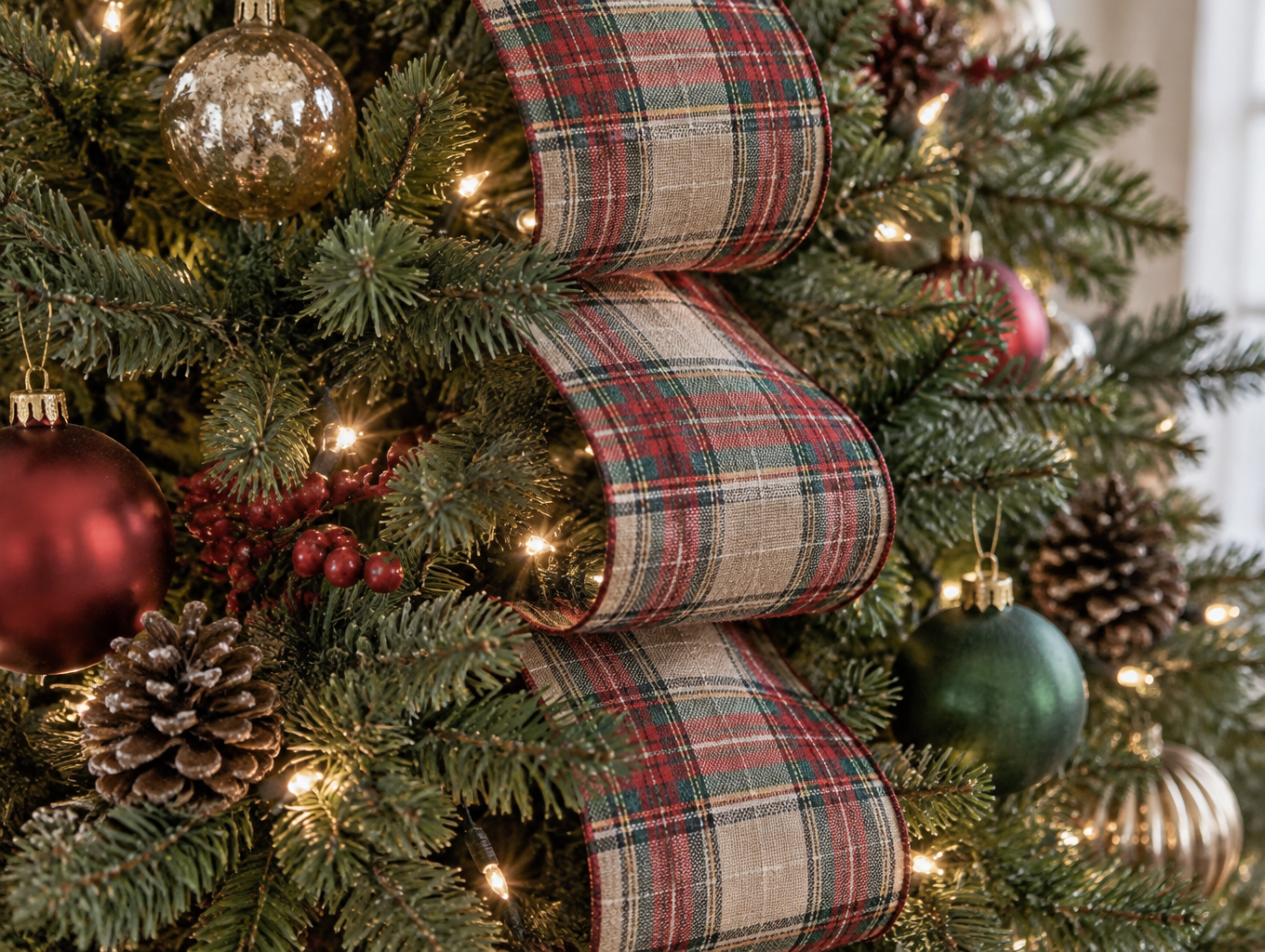
Ribbon is not a garnish; it’s structure. Wide wired ribbon — 2.5 to 4 inches — woven into the tree fills a surprising amount of visual volume. The practical consequence: a tree with ribbon needs noticeably fewer ornaments to look finished, often around a third fewer than the same tree without. That’s why professionals hang ribbon before a single ball goes on — ornaments can tuck around ribbon, but ribbon can’t weave through a fully hung tree without knocking things off.
Two ways to hang it: vertical cascades (long strips folded in half, tucked deep, running down 2-3 feet — the current magazine look) or wrapped swirls (the classic diagonal wrap). Vertical uses about 2-3 rolls of 9-foot ribbon per 7.5-foot tree; swirls use more. Wired ribbon holds its fold; unwired satin slides and frustrates. Spools live in wired ribbon.
Step 4: Ornaments, Inside-Out and Odd-Numbered
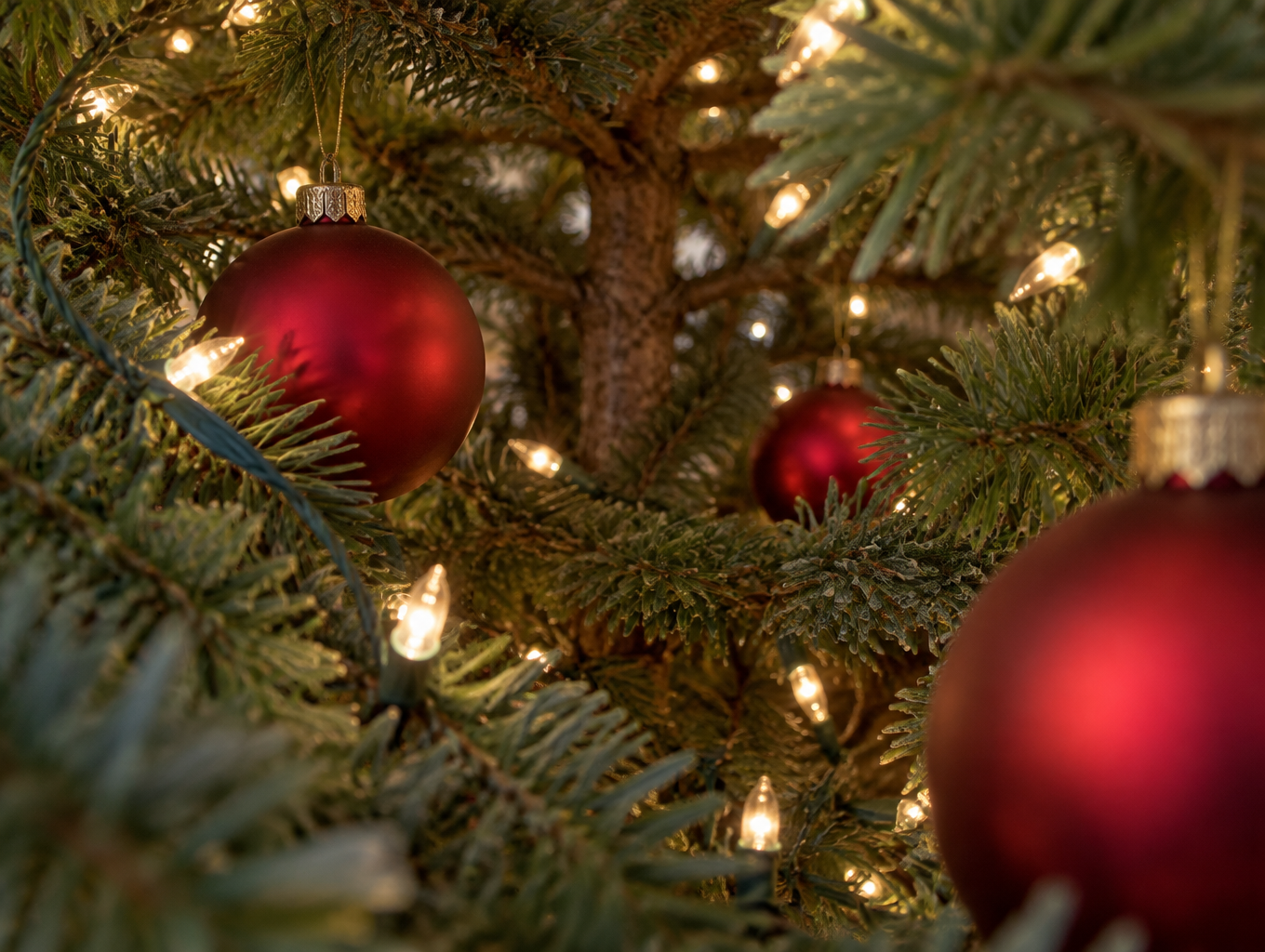
The count formula: start at 10 ornaments per foot of tree height (75 for a 7.5-foot tree) as a baseline, 12-15 per foot for a lush designer look, and stop around there — past that density you’re hiding the tree, not decorating it.
The method: three passes.
- Filler pass: plain matte balls in your base color (usually 60% of total), hung deep in the tree near the trunk. This is the pass most people skip, and it’s why their trees look hollow inside. Deep fillers also catch and bounce the light strings behind them.
- Feature pass: your meaningful and larger ornaments, hung at the mid-branch and tip line, spread so no two large pieces sit at the same height side by side.
- Accent pass: small sparkly or unusual picks, 5-9 of them, clustered in odd-numbered groups of three — one cluster per visible face of the tree.
Hang every ornament on a hook or loop, not the ornament’s thread alone, and step back after each face of the tree. Fix gaps now; you won’t after the topper goes on.
Step 5: The Topper (Three Options That Actually Work)
A star or angel works only if its scale matches — measure your ceiling clearance: topper plus tree should stay at least 6 inches under an 8-foot standard ceiling. The two lower-effort alternatives that designers actually use: a large wired-ribbon bow (10-12 inch loops, two tails running down the top foot of the tree) or a spray of botanical picks (a fan of 3-5 glittered twigs or berry stems, zip-tied and fluffed). Both weigh less than a topper, which matters on tapered top sections, and both hide the pole better than you’d expect.
Step 6: Skirt or Collar, and the Final Walk-Around
The skirt or basket collar does two jobs: hides the stand and anchors the tree’s visual base. Skirt diameter should be roughly the tree’s widest branch spread minus a few inches — a 48-inch skirt under a full 7.5-foot tree, a 36-42 inch under a slim. Then the final check professionals run: walk a full circle. Every tree has a “back” that ended up sparse; rotate it toward the wall and bring the best face forward. Finish the room with the rest of the greenery line — Christmas garlands follow a matching formula for mantels and staircases, and the door gets its own treatment in Christmas wreath ideas.
The Quick-Count Table (Lights and Ornaments by Tree Size)
| Tree height | Lights (unlit tree) | Ornaments (baseline) | Ornaments (lush) |
|---|---|---|---|
| 4-4.5 ft | 400-450 | 40-45 | 55-65 |
| 5-5.5 ft | 500-550 | 50-55 | 70-80 |
| 6-6.5 ft | 600-650 | 60-65 | 85-95 |
| 7-7.5 ft | 700-750 | 70-75 | 100-115 |
| 9-9.5 ft | 900-950 | 90-95 | 130-140 |
Read it as 100 lights and 10 ornaments per foot, scaling to 12-15 ornaments per foot for the lush end. Pre-lit trees already carry the light column; small trees under 5 feet follow the scaled-down rules in the next section rather than this table’s straight-line math.
Small Trees (3-5 Feet): A Different Math
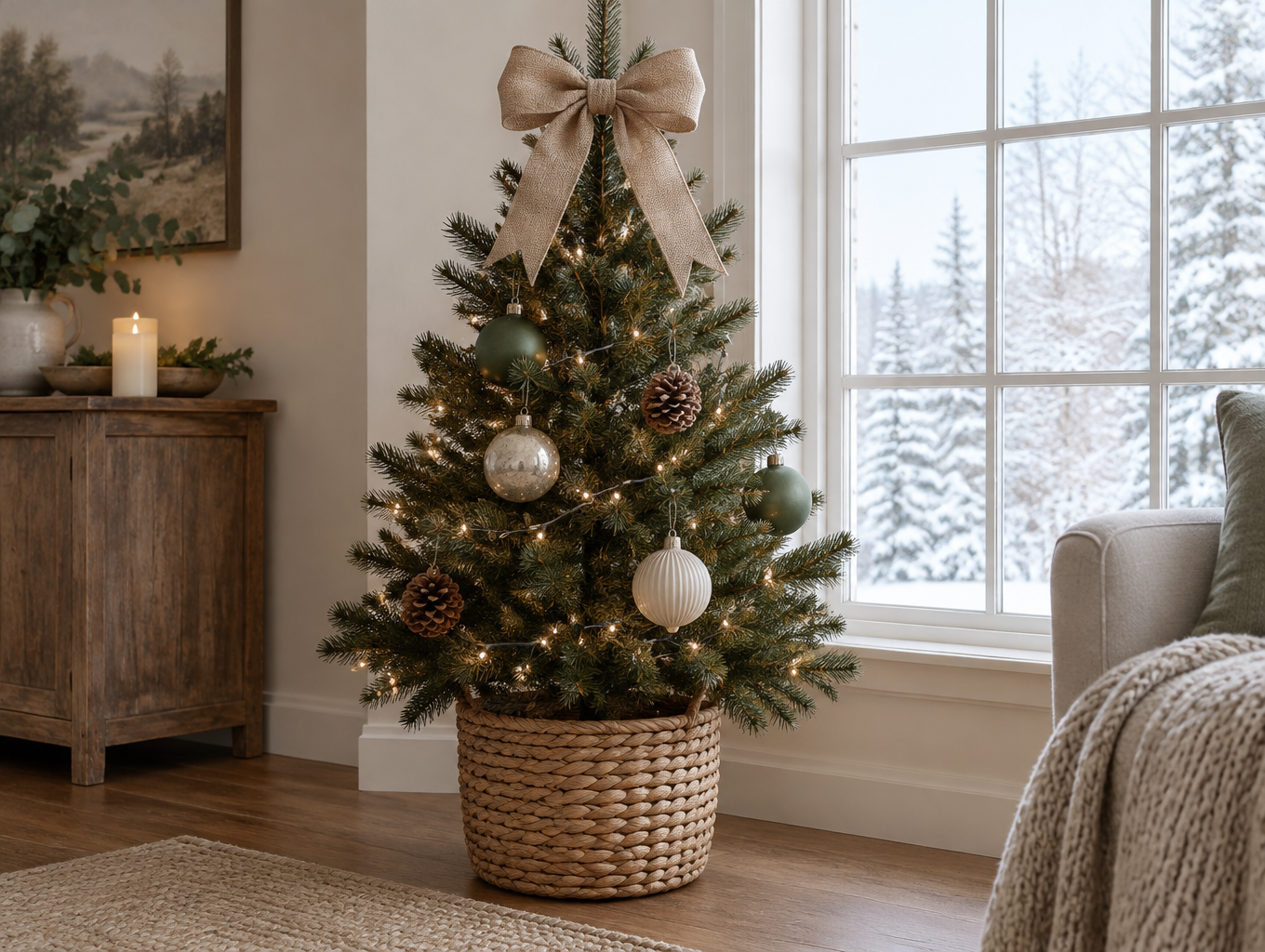
Tabletop and slim trees follow scaled-down rules, and most guides ignore them entirely. Ornaments: drop to 5-6 per foot — small trees drown at full density, and fewer-but-larger pieces (4-inch balls on a 4-foot tree) read deliberate. Lights: 50 per foot is plenty; most small artificial trees come pre-lit at about that density. Weight is the real issue under 4 feet — a light tree with a heavy topper or a curious cat will tip, so use a wider base or a bag of rice hidden in the skirt. For the full sizing logic (height by ceiling, by room, by tabletop), see small Christmas tree ideas — the collection page and our small tree ideas guide cover which rooms take which size.
What This Costs (and Saves) Over Ten Years
Decorating supplies amortize: lights, ribbon and a core ornament set bought once typically survive 8-10 seasons, after which only the tree’s light strings age out first (5-8 years is the usual failure point, not the branches). The year-one-versus-fresh-tree arithmetic — including what a cut tree costs per season over the same decade — is laid out with numbers in artificial vs real Christmas tree cost.
FAQ
What order do you decorate a Christmas tree?
Shape the branches, then lights, then ribbon, then ornaments (inside-out, in three passes), then the topper, then the skirt. Ribbon before ornaments is the step people skip — it fills space and reduces how many ornaments the tree needs.
How many ornaments do I need for my tree?
Plan about 10 ornaments per foot of height as a baseline — roughly 75 for a 7.5-foot tree — scaling to 12-15 per foot for a lush look. On small trees under 5 feet, drop to 5-6 per foot and favor larger pieces.
How many lights does a Christmas tree need?
About 100 lights per foot of height for an unlit tree (750 for 7.5 feet). Weave lights toward the trunk and back out rather than wrapping the outside, so the glow comes from inside the tree. Most quality pre-lit artificial trees arrive at this density already.
How do you put ribbon on a Christmas tree?
Cut 2-3 foot strips of 2.5-4 inch wired ribbon, fold them in half lengthwise, and tuck the fold deep into the branches so the tails cascade down and outward — 8-12 strips per face for a 7.5-foot tree. Wired ribbon holds its shape; unwired ribbon slides off branches within days.