
Blog
“Wedding Flower Checklist: Every Piece Counted, by Role (Printable Worksheet)”

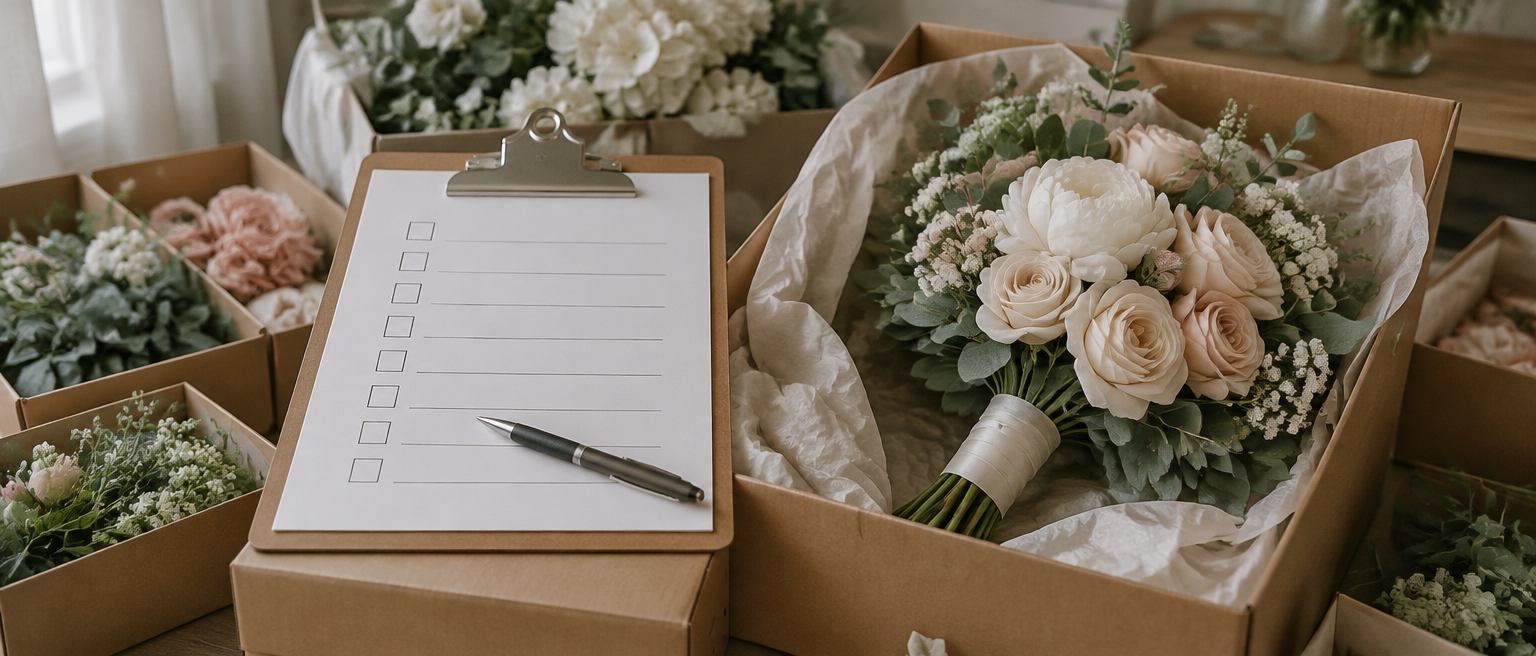
By Evercombe Team · Updated October 14, 2026 · 6-minute read
Quick answer: Count wedding flowers in three groups — carried (bouquets: 1 bridal + 1 toss + 1 per bridesmaid), worn (boutonnieres for groom, groomsmen, fathers, grandfathers + corsages for mothers, grandmothers, readers), staged (centerpieces by table, ceremony florals, cake surround). A 100-guest wedding runs roughly 35-45 floral pieces; the per-role formulas below scale to any headcount. Add spares: 2 extra boutonnieres, 1 extra corsage.
Most wedding flower checklists list categories — “bouquets, arrangements, ceremony decor” — and leave you to discover at 9 a.m. on the wedding morning that nobody counted the grandfathers. This checklist counts: every role that traditionally carries or wears a piece, every table that holds one, with formulas so the list works for 30 guests or 300. It’s the flower-specific companion to our full wedding planning checklist (which handles the whole-timeline view — this page is the flower order, counted).
Group 1: Carried (Bouquets)
| Piece | Formula | 100-guest example |
|---|---|---|
| Bridal bouquet | 1 | 1 |
| Toss bouquet | 1 (optional but standard) | 1 |
| Bridesmaid bouquets | 1 per bridesmaid | 4-6 |
| Flower girl petals/basket or mini bouquet | 1 per flower girl | 1-2 |
| Flower girl or bridesmaid crowns (optional) | 1 per wearer | 0-3 — build method in our flower crown tutorial |
The bridal bouquet is the one piece worth buying premade even in a full-DIY plan — it’s the most photographed object of the day. Premade options in every palette: artificial wedding bouquets. Bridesmaid bouquets are the highest-value DIY build — same materials, lower stakes, and the method is in how to make a wedding bouquet.
Group 2: Worn (Boutonnieres and Corsages)
| Piece | Formula | 100-guest example |
|---|---|---|
| Groom boutonniere | 1 (distinct from groomsmen’s) | 1 |
| Groomsmen boutonnieres | 1 per groomsman | 4-6 |
| Fathers/stepfathers | 1 each | 2 |
| Grandfathers | 1 each | 0-2 |
| Ushers, officiant (optional) | 1 each | 0-2 |
| Mothers/stepmothers corsages | 1 each | 2 |
| Grandmothers corsages | 1 each | 0-2 |
| Readers/singers (optional) | 1 each | 0-2 |
The spare rule, from the failure stories: order 2 extra boutonnieres and 1 extra corsage beyond your count. Boutonnieres are the pieces that get crushed in hugs, pocketed, pinned wrong and bent — they’re small, cheap, and the single most common “does anyone have a spare” moment of a wedding morning. Pre-tied boutonnieres and corsages arrive ready to pin; the pinning method (left lapel, two pins, angled stem down) is illustrated in our boutonniere guide.
Group 3: Staged (Arrangements and Ceremony)
| Piece | Formula | 100-guest example |
|---|---|---|
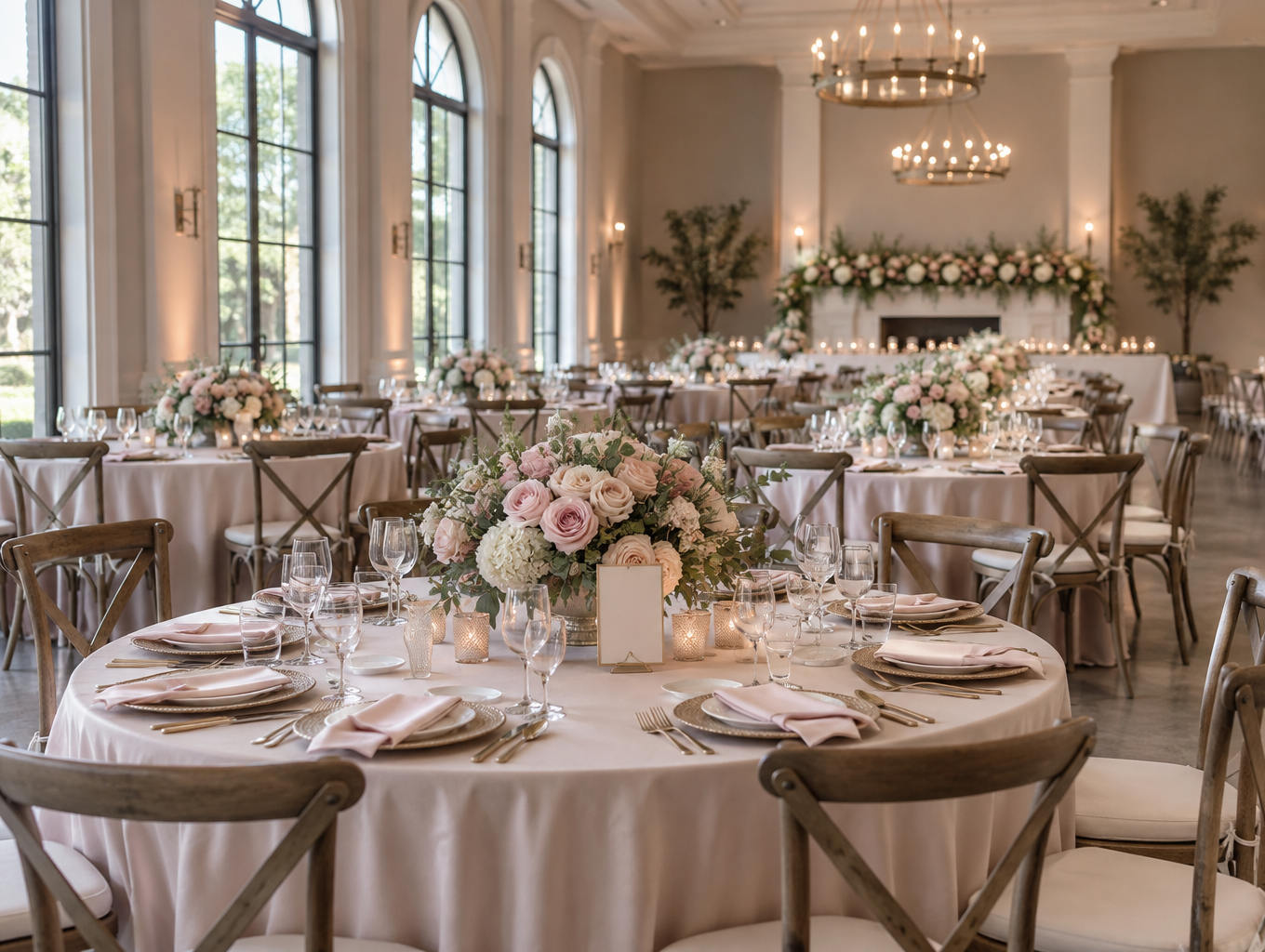
| Guest-table centerpieces | 1 per table (8-10 guests/table) | 10-13 |
| Head table arrangement | 1-2 long or 3 medium | 1-3 |
| Cake table surround | 1 garland + 2-3 arrangements | 3-4 |
| Ceremony arch/install | 1 install | 1 |
| Altar or standing arrangements | 2 (no arch) | 0-2 |
| Welcome/guest-book table | 1 | 1 |
| Restroom or lounge (optional) | 1 each | 0-2 |
Centerpiece count comes straight from your seating chart — lock the floor plan before the flower order, not after. Add it up: the 100-guest example lands at 38-46 pieces across all three groups, which is why florists quote four-figure full service and why the piece-counted cost math in wedding flowers cost is worth five minutes before you place any order. Still deciding who builds what? The three-variable framework is in DIY wedding flowers vs a florist.
Staging and Timing (The Part That Saves Wedding Morning)
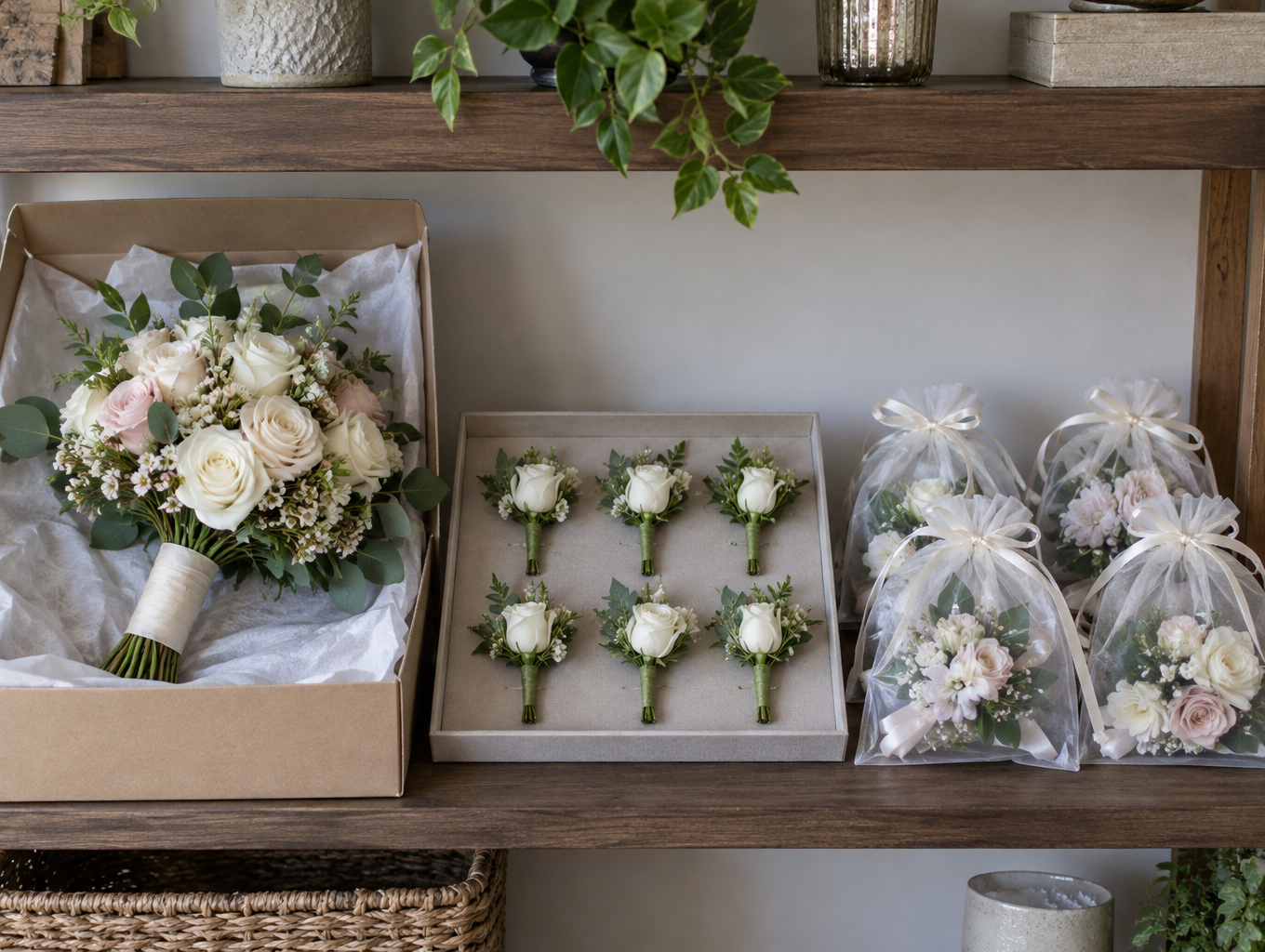
Two different clocks, depending on your materials:
Faux timeline: all carried and worn pieces staged in labeled boxes by room and person at 1-2 weeks out (“ceremony box,” “bridal party box,” “reception tables box”). Venue-permitting, staged pieces deliver and set the day before. Wedding morning: one box per room, handed to a named person.
Fresh timeline: everything arrives in the final 48 hours and follows the processing-building-holding sequence — the unedited version of that sprint is in the DIY-vs-florist guide. The one line-item couples forget on this clock: buckets, shears, and water treatment are part of a fresh order; nobody ships you the infrastructure.
Copy-Paste Worksheet
“` WEDDING FLOWER COUNT — [date] — total pieces: ___
CARRIED: bridal 1 / toss 1 / bridesmaids ___ / flower girls ___ WORN: groom 1 / groomsmen ___ / fathers ___ / grandfathers ___ / ushers-officiant ___ corsages: mothers ___ / grandmothers ___ / readers ___ SPARES: +2 boutonnieres, +1 corsage STAGED: centerpieces ___ tables / head table ___ / cake table ___ / arch or altar ___ welcome table 1 / extra ___
STAGING: boxes labeled by room / handed to: ___ TIMING: faux staged by [date] / fresh delivery [date, 2 days out] “`
After the Count: Assign, Transport, and What Happens to the Leftovers
Three logistics rows that make the difference between a counted order and an executed one:
Assignment: every piece gets a named owner before the wedding morning — who carries the bouquets to photos, who pins boutonnieres (one person with the method from the boutonniere guide, not four people with four opinions), who checks centerpieces against the seating chart. Write the names on the staging boxes.
Transport: faux florals travel boxed by room with tissue keeping shapes apart; nothing stacks on bouquet boxes. Fresh florals travel bucketed in water for anything with more than an hour between build and place. Budget the vehicle accordingly — the classic day-of failure is a sedan asked to carry an arch’s worth of florals.
Leftovers: plan the afterlife in the same order you place the order. Fresh centerpieces go home with guests (assign takers table by table or the venue bins them). Faux pieces get the better endings: kept and repurposed as home decor (a wedding centerpiece lives happily on a dining table for years), gifted to the wedding party, or resold — used faux wedding florals move briskly in bridal resale groups at 30-50% of new price, which effectively rebates a chunk of your flower budget after the day. The preservation route for the bridal bouquet specifically is covered in how to preserve a wedding bouquet.
FAQ
How many boutonnieres and corsages do I need?
One boutonniere each for the groom, every groomsman, each father and grandfather (plus ushers/officiant if you’re including them); one corsage each for each mother and grandmother, optionally readers and singers. Add two spare boutonnieres and one spare corsage — worn florals take the most damage of anything on the list.
How do I count centerpieces?
One per guest table from your final seating chart (assume 8-10 guests per round table), plus the head table, cake table, and welcome table. Lock the floor plan before ordering — centerpiece counts change when table counts change, and that’s the most common re-order.
Do I need a toss bouquet?
Only if you’re doing a bouquet toss. Modern alternative: skip the toss and hand the bridal bouquet to a designated keeper after the last dance — many couples now order no toss bouquet at all and use a bridesmaid’s bouquet for the toss moment if it happens spontaneously.