
Blog
“Holiday Flowers Guide: What to Use for Every Holiday, What to Buy Once and Reuse”

By Evercombe Team · Updated October 14, 2026 · 7-minute read
Quick answer: Holiday flowers split into two jobs: gift/delivery flowers (a local-florist errand) and decorating flowers (this guide). For decorating, the year runs on five moments — Thanksgiving, Christmas, New Year, spring holidays, and summer parties — and the efficient play is a base of neutral faux botanicals that stays out year-round, plus one or two seasonal accent pieces per holiday that store flat and return next year.
“Holiday flowers” as a search is a messy phrase: half the results want to sell you a delivery bouquet for someone else, the other half want to help you decorate a table. If you’re here for the second job, the one that starts at your front door and ends at your centerpiece, this guide runs the holiday calendar from November through the new year — which blooms belong to which holiday, what fresh ones actually cost per season, and which faux pieces do double and triple duty.
Thanksgiving (Late November)
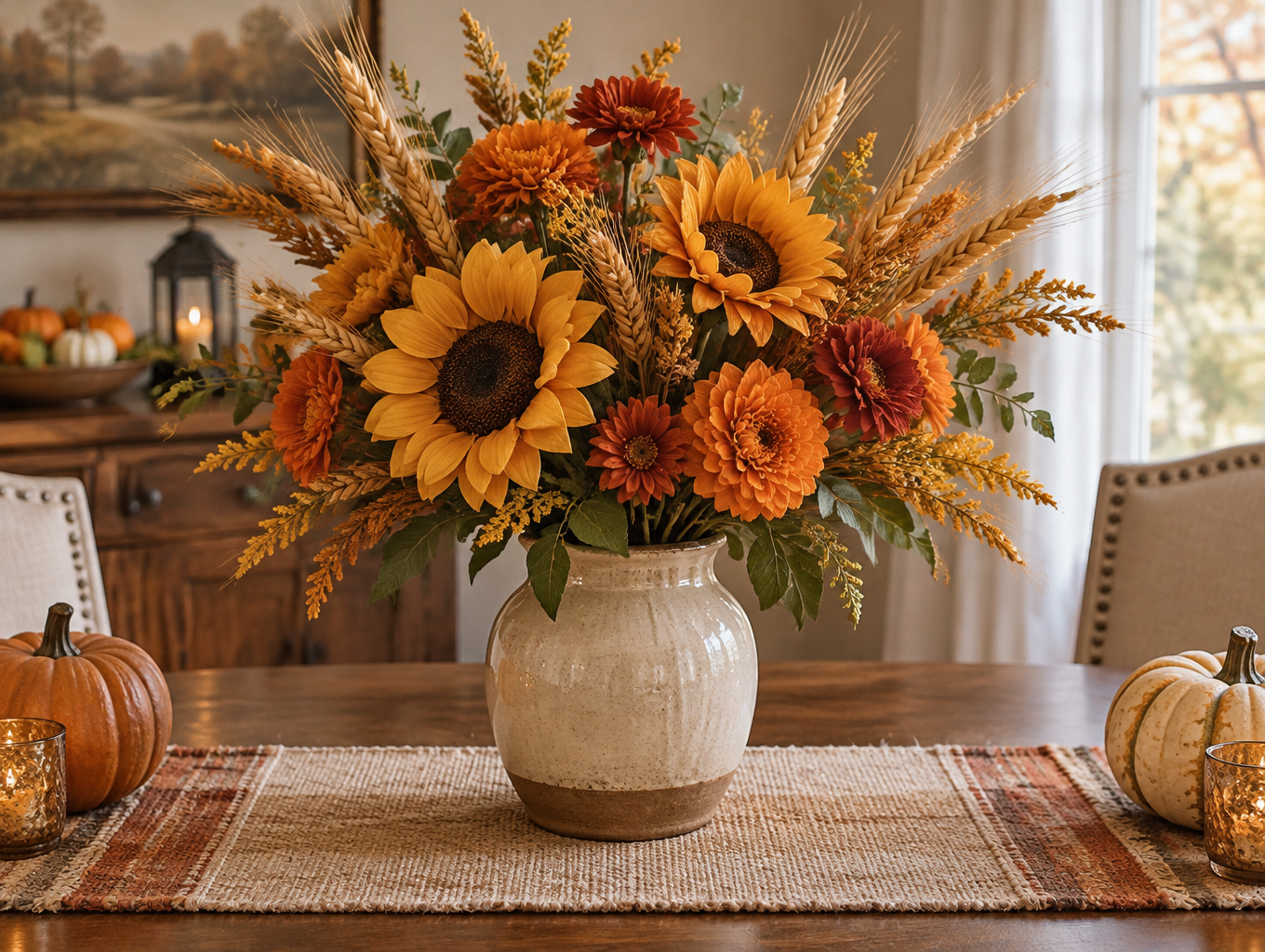
The harvest palette: sunflowers, marigolds, wheat, amber and rust chrysanthemums. Fresh versions of all of these hit peak price in the week before Thanksgiving along with everyone’s grocery run. The faux case is strongest here of any holiday: real marigolds shatter within days, real sunflowers drink themselves limp in under a week — while faux versions of both hold their shape from the weekend before Thanksgiving straight through the long weekend. Build logic and 15 specific looks live in our Thanksgiving table decor guide.
Christmas (December, the Big One)
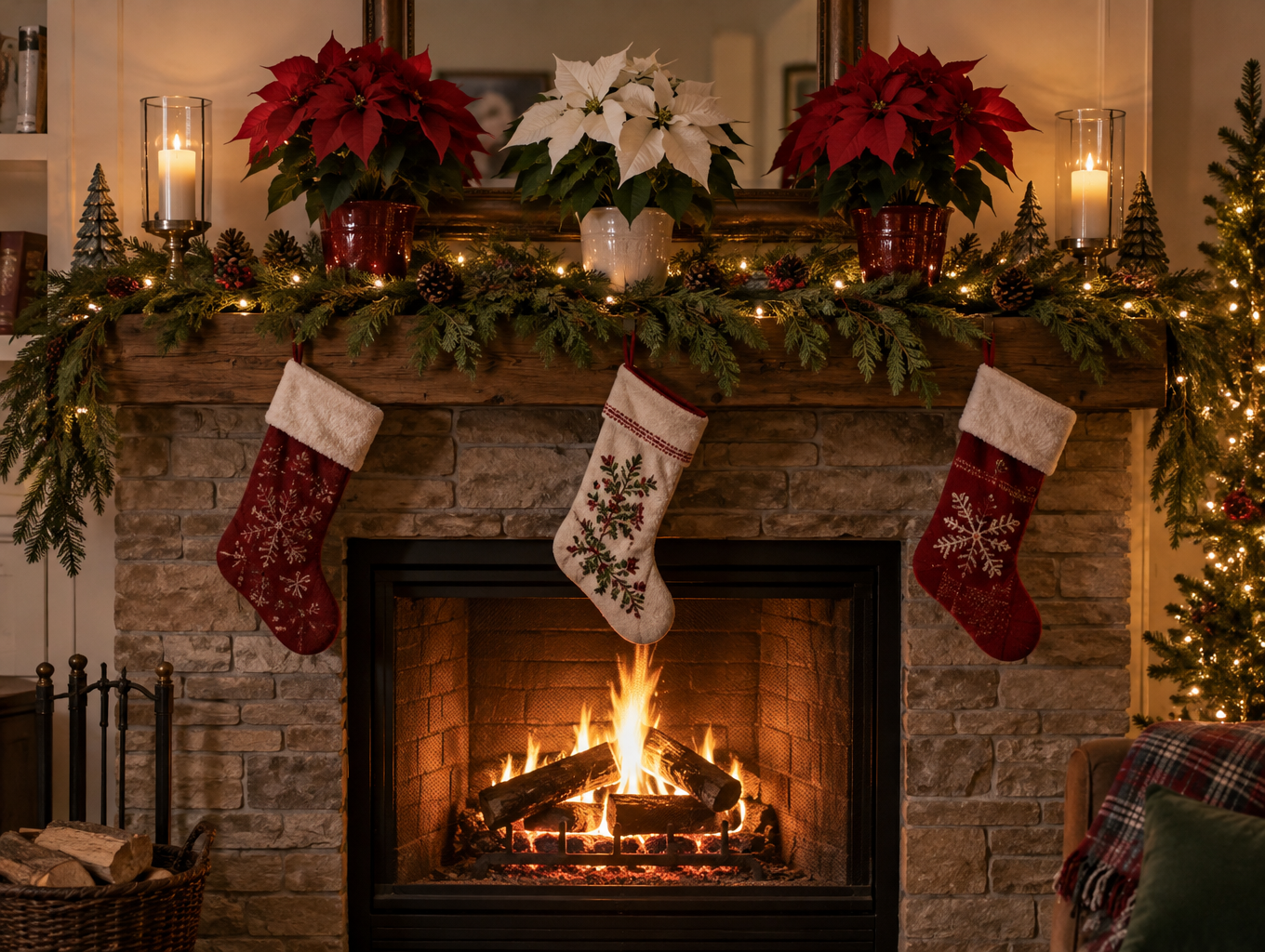
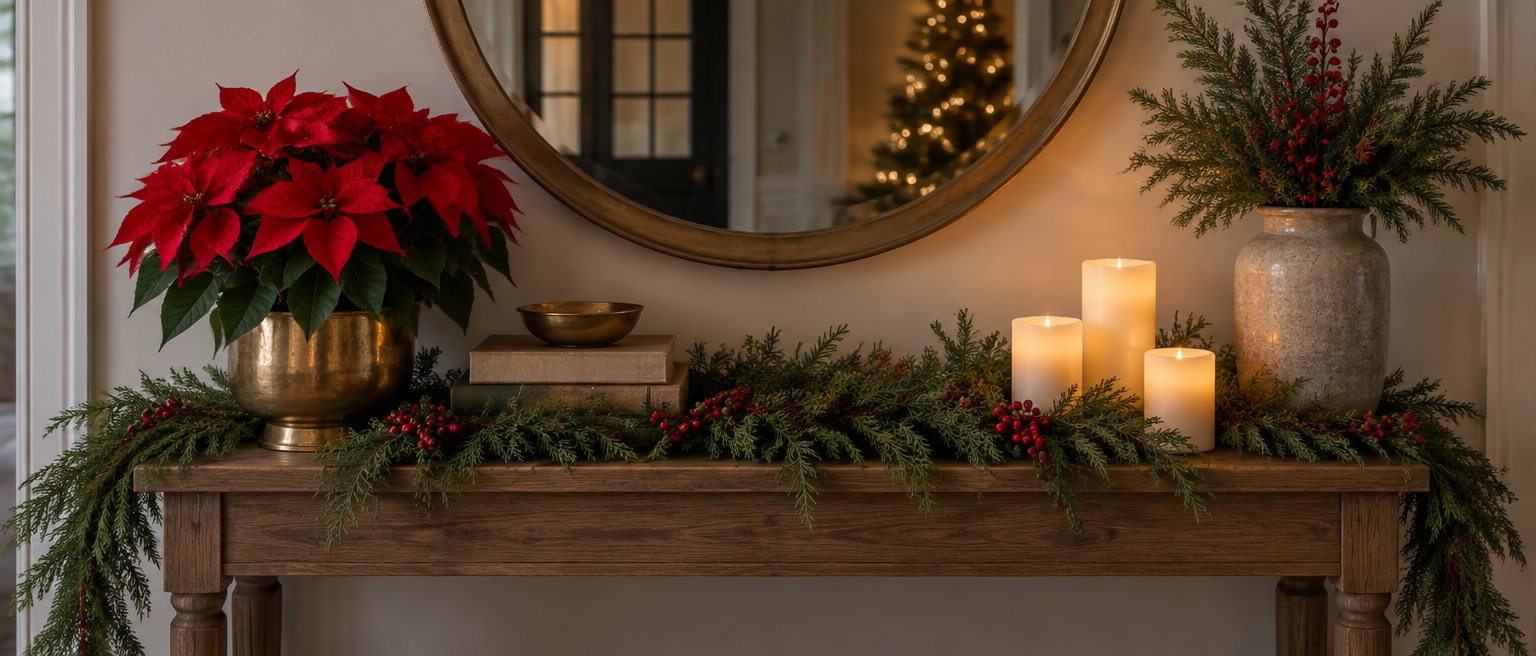
Christmas is the deepest flower-and-greenery holiday of the year, and it runs on four botanicals:
- Poinsettias — the default Christmas plant, in red, white, and pink cultivars. Fresh ones are genuinely fussy (drafts, overwatering, cold car rides); faux poinsettias hold flat, even bracts all December with zero of that drama. The full collection is in artificial poinsettias.
- Evergreen garland and greenery — cedar, pine, fir, eucalyptus. The workhorse that defines doors, mantels and runners; see artificial garlands and our Christmas wreath ideas for the door.
- Red berries and rosehips — the accent that reads “Christmas” faster than anything else you can add to neutral greenery.
- Amaryllis and paperwhites — the tall bulbs for entry tables and powder rooms; faux versions skip the 6-week growing wait.
Table logic — scale by table type, sight lines at seated eye level, and what survives a full month of display — is its own subject, covered in Christmas centerpiece ideas.
New Year’s Eve (December 31)
The quietest-decorated major holiday and the easiest: New Year’s wants metallic and white — silver eucalyptus, white roses, mercury-glass vases, candles. Two things make it nearly free if you decorated for Christmas: your white/neutral Christmas pieces convert directly, and one metallic accent spray upgrades a December 26 table into a December 31 one in ten minutes. This is the holiday where buying a dedicated fresh arrangement feels weakest — it’s one evening.
The Winter-to-Spring Run (Valentine’s Through Easter)
The February-through-April stretch belongs to red roses, tulips, and Easter lilies — each with the same seasonal price spike in its own week (red roses most notoriously of all). Two honest notes for the decorating side: these are primarily gifting holidays rather than decorating ones for most households, and faux spring bulbs (tulips, daffodils) are among the most convincing faux categories made — a bundle of faux tulips in a pitcher carries the whole season for pennies per week. Filler greenery that bridges the gap lives in flower arrangements.
The Once-a-Year Stock List (What to Buy vs. Rent from the Calendar)
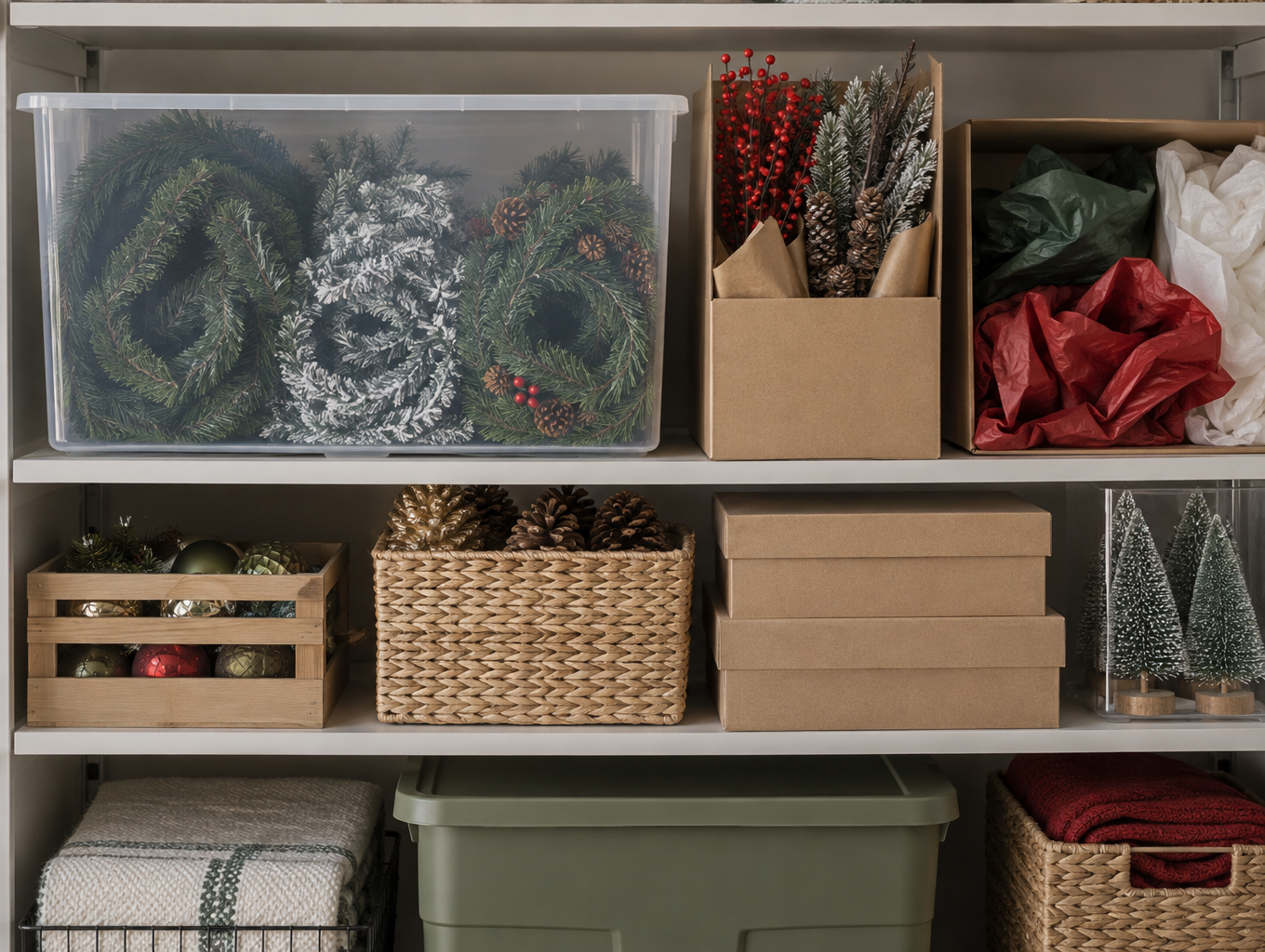
The math that changes how people decorate: seasonal fresh florals are a subscription you keep paying; faux botanicals are equipment. A base list that covers three-plus holidays per year:
| Piece | Covers | Stores |
|---|---|---|
| Seeded eucalyptus garland, 6 ft | Thanksgiving, Christmas, New Year, spring | Rolls flat, bin |
| Cream/neutral faux arrangement | All five seasons | Box |
| Red berry picks (6-8) | Christmas, New Year | Flat |
| Poinsettia, 2 (one red, one white) | Christmas | Bin with tissue |
| Metallic sprays (3-4) | New Year | Flat |
| Wheat bundles | Thanksgiving, fall generally | Flat |
Year-one outlay for that list runs roughly $80-150 depending on sizes; the fresh-floral equivalent for the same coverage runs $40-90 per holiday — the crossover where faux becomes cheaper lands in year two, and every year after that is the discount. The same arithmetic at wedding scale, with a full comparison table, is worked through in our wedding flowers cost guide. Storage is the other half of the deal: garlands roll, stems lay flat in bins, bows stay on their wreaths — the method is in how to store wreaths, which applies to garlands and arrangements too.
Indoor Holiday Flowers vs. Outdoor (The UV Rule)
One distinction the calendar above hides: where a piece lives changes what it should be made of. Indoor holiday florals — table arrangements, mantel garland, entry-table pieces — can be any quality tier, because they face only dust and the occasional candle. Outdoor pieces (porch pots, door wreaths, mailbox garland, window boxes) face sun, wind, and freeze-thaw, and faux botanicals degrade by exposure: UV fades dye (southern-facing placements fade first and fastest), wind is the top killer of lightweight stems, and unsealed foam and latex get brittle below freezing.
The practical rules: buy UV-resistant materials for anything getting direct sun — the ratings and material differences are explained in our guide to outdoor artificial flowers — weight or anchor anything taller than it is wide, and take the outdoor display down in the January lull rather than leaving it to gray out until spring. A faded, sagging February wreath helps no one’s curb appeal; the same wreath stored in a bin in January comes back full-color next November. Storage method, including how to keep shapes from crushing, is covered in how to store wreaths.
Timing: When Holiday Flowers Get Expensive
Fresh holiday florals follow a predictable curve: normal pricing until about 10 days out from the holiday, a premium from about a week out, and clearance starting the day after (poinsettias crash in price on December 26 if you want one fresh for cheap). Faux pieces run the opposite play — holiday assortments sell out mid-season and restock in January at clearance. If you’re buying faux for next year, the week after each holiday is the cheapest window of the calendar.
FAQ
What are the traditional flowers for each holiday?
Thanksgiving: sunflowers, marigolds, wheat, chrysanthemums. Christmas: poinsettias, amaryllis, evergreen greenery, red berries. New Year’s: white and metallic arrangements. Spring: tulips, daffodils, lilies. Each holiday’s full decorating guide is linked above.
Are faux holiday flowers acceptable for entertaining?
The current generation of faux botanicals reads as real at conversation distance — the failure modes are specific (single-tone glossy plastic, too-perfect symmetry), not the category. Two-tone stems, varied heights, and odd-numbered groupings read as styled; the judgment distance that matters is about a meter, which is where guests actually see a table.
How do I decorate for two holidays back to back without buying twice?
Keep the neutral base (greenery, cream arrangements, glassware) and swap only the accent: marigold picks out, red berry picks in for Christmas; berries out, metallic sprays in for New Year’s. The swap list approach above covers three holidays with one base.
When should I buy holiday flowers?
Fresh: before the 10-days-out premium window, or after the holiday for clearance. Faux: mid-season for full assortment, or the week after the holiday for next year at 40-70% off typical pricing.