
Blog
“Cake Table Flowers: The Three-Layer Method (With the Food-Safety Rules Nobody Mentions)”

By Evercombe Team · Updated October 14, 2026 · 6-minute read
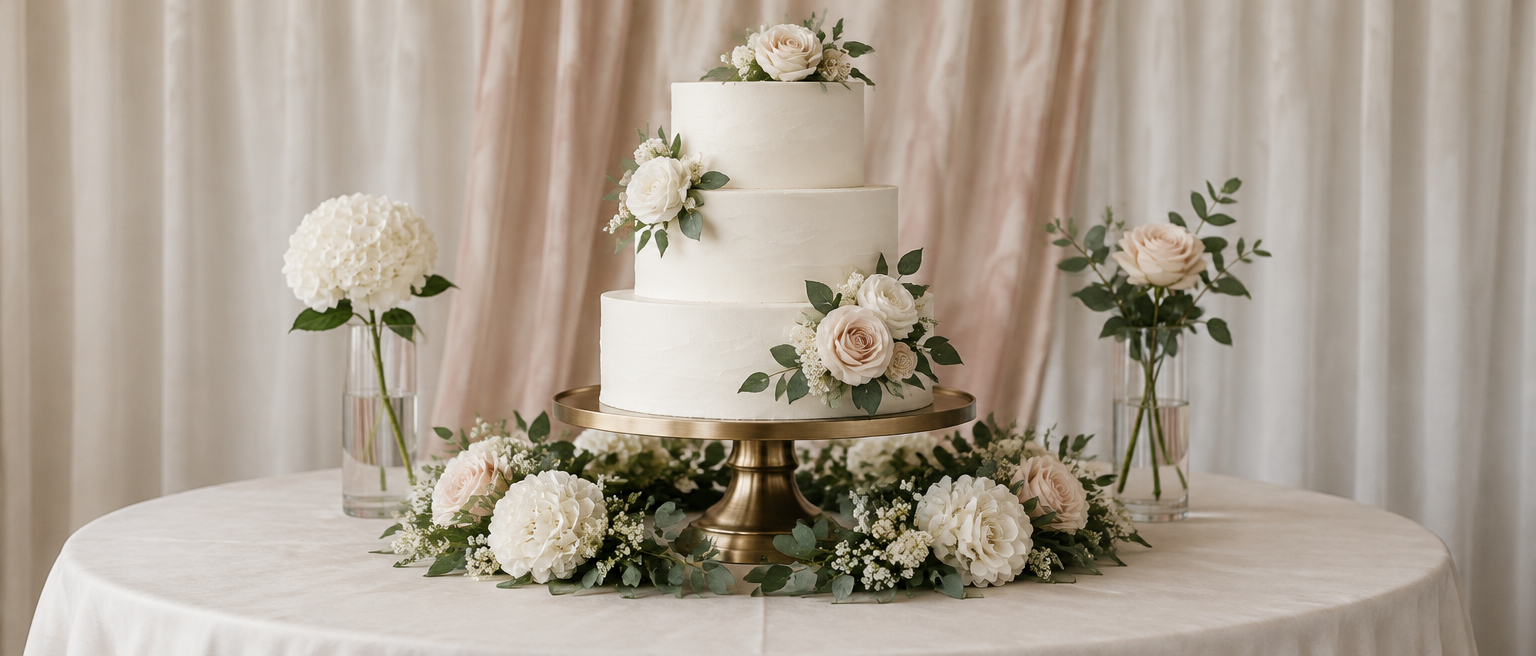
Quick answer: Decorate a cake table in three layers — a backdrop that frames photos, table-surface flowers at graduated heights around the cake, and flowers on or around the cake itself. The one hard rule: nothing that isn’t food-safe touches an eating surface — faux flowers surround the cake’s base and table, while flowers placed on the cake need food-grade fresh blooms or sugar flowers. Faux garland around a cake stand is the standard, safe, reusable play.
The cake table gets photographed almost as much as the couple — the cake cutting is a scheduled photo moment — yet it’s usually the most hastily decorated table at the reception. The Pinterest version hides a method; this is the method, plus the food-safety boundary that most guides skip entirely and cake bakers wish couples knew.
Layer 1: The Backdrop (Photos Come From Here)
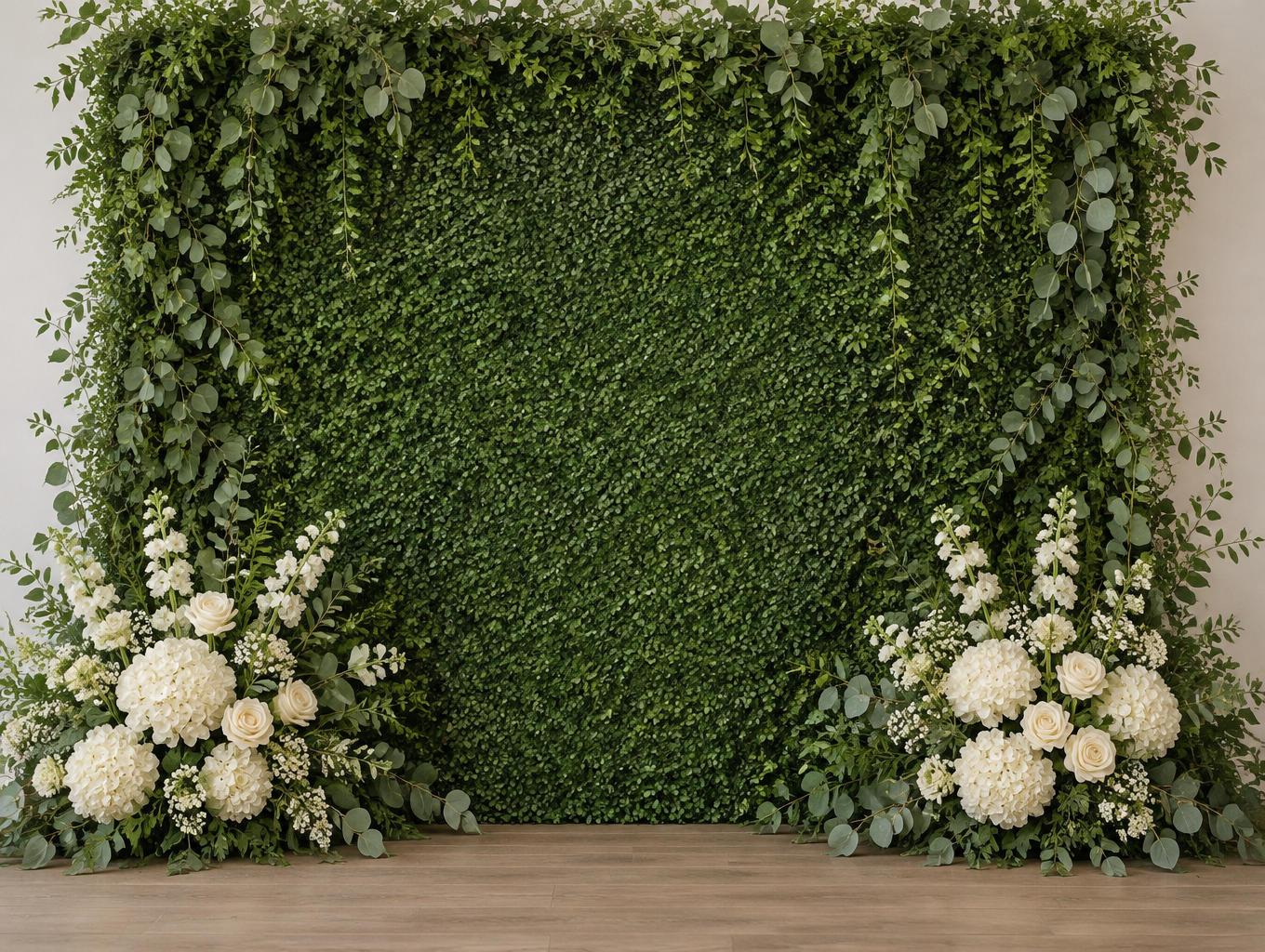
The backdrop is what the cake-cutting photos are actually taken against. Three options, cheapest first:
- Existing wall, dressed — a fabric or paper panel hung behind the table (even a rented pipe-and-drape frame). Neutral, and the flowers carry the scene.
- Greenery-and-flower panel — a grid or curtain of greenery with flower clusters concentrated at the bottom two corners and the top center (the frame the cake stands in). Budget note: full-flower walls are expensive; greenery-dominant with floral corner clusters delivers 80% of the look at a fraction.
- Arch or frame — a small arch with flowers repositioned from the ceremony is the double-duty move; plan it at ceremony setup so it migrates rather than gets rebuilt.
Backdrop height rule: the frame should top out 2-3 feet above the cake’s top so photos include flowers above the cake, not bare wall.
Layer 2: The Table Surface (Graduated Heights)
Around the cake itself, work in three height bands so the table reads composed from every angle:
| Band | Height | What goes here |
|---|---|---|
| Back | 18-30 in | Tall cylinder vases with single-stem arrangements, candelabras (venue rules on flame) |
| Middle | 8-16 in | Medium arrangements, 2-3 of them, flanking the cake at asymmetric distance |
| Front | 0-6 in | Low blooms, votives, a petal scatter — nothing that hides the cake’s front face |
Two spacing rules that matter: leave the cake’s front-left quadrant clear (that’s the standard cutting position — the knife hand works there), and keep every arrangement’s footprint within the table’s back two-thirds so guests reaching for served slices don’t fight the florals. Medium arrangements come straight from the wedding flower arrangements and centerpiece collections — buy them identical to your guest-table centerpieces for the coordinated look, or one style up for emphasis.
Layer 3: The Cake Itself (The Safety Boundary)
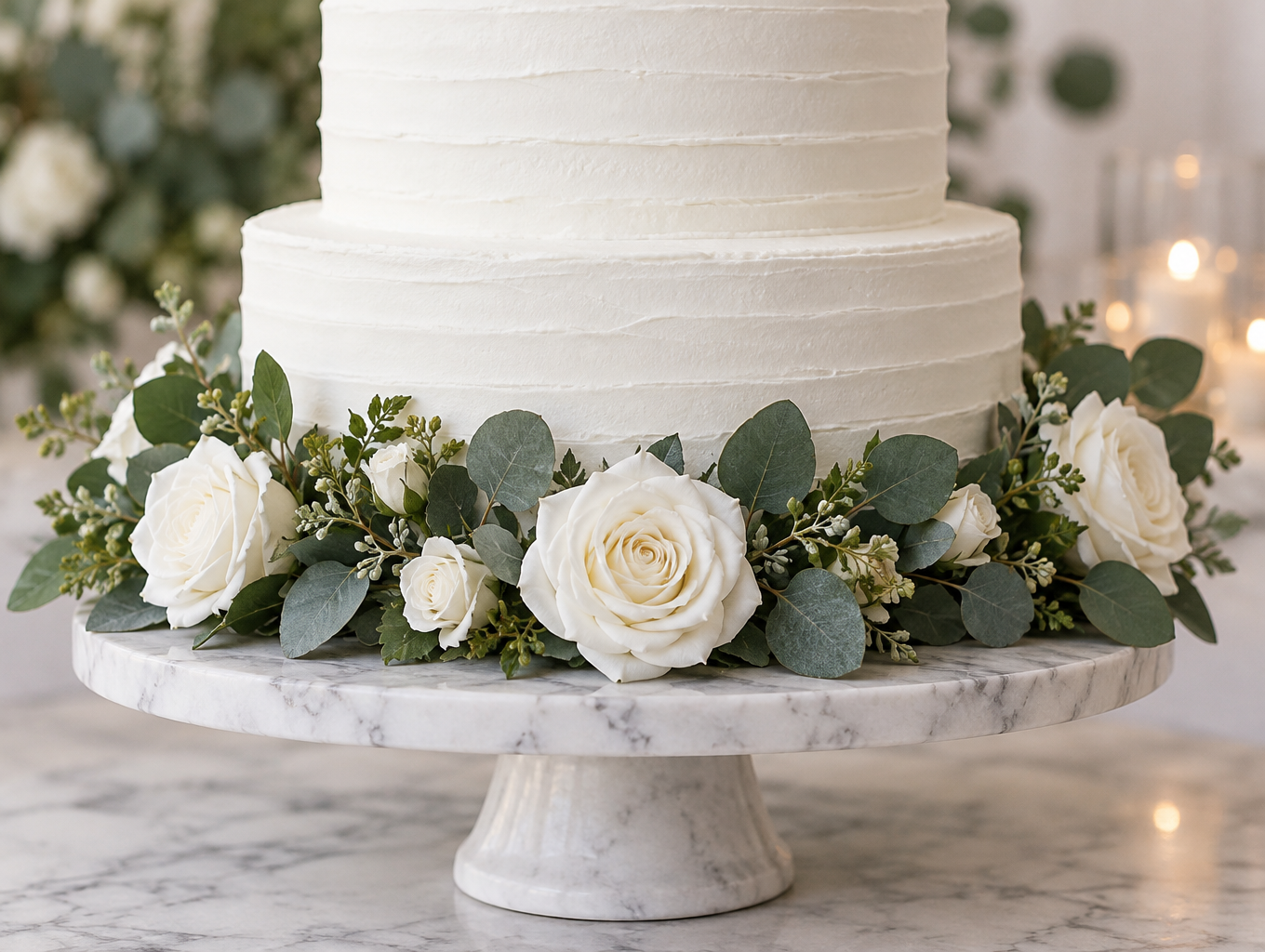
This is where correct and incorrect diverge, so plainly:
- Faux flowers and the cake: faux belongs around the cake — garland wreathing the stand, blooms circling the cake’s base on the table, a ring of stems on the board. Faux materials (plastic, wire, dye) are not food-safe and should never be inserted into or laid against an eating surface. A faux garland around the cake stand’s base is the industry-standard look and entirely safe: it touches the stand, not the cake.
- Fresh flowers on a cake: only food-grade (organically grown, pesticide-free, specifically sold for food use) blooms should contact icing, and bakers generally insert them via stems wrapped in floral tape or food-safe picks — confirm with your baker before ordering flowers, because many will only work with blooms they source themselves.
- Sugar flowers: the premium option — handmade, fully edible-safe, priced accordingly.
Why faux works so well in layers 1-2 and the surround: no pollen, no moisture. Fresh flowers near cakes carry two real risks bakers complain about — pollen drop and condensation drip from hydrated stems — both solved by the faux ring. And the practical bonus for your timeline: the faux surround, backdrop and table florals can all be placed the day before (venue permitting), which on wedding morning means one less thing competing for the 48-hour fresh-flower window. The full reception florals schedule — what stages when — is in our wedding flower checklist, and the budget-side breakdown of all these pieces lives in wedding flowers cost.
Keeping It Coordinated (The One-Thread Rule)
A cake table reads “designed” when one thread connects it to the room: the same dominant flower, the same greenery, or the same color story used on guest tables (see wedding centerpieces). Pick the thread, hold it across backdrop, table and cake surround — three different flower styles on one cake table is three different decisions competing.
FAQ
How much greenery and how many flowers does a cake table need?
A standard 6-foot cake table: one backdrop treatment (a panel or corner-clustered greenery, roughly 15-20 stems equivalent), two medium arrangements and one tall vase for the surface, and a 4-6 foot garland for the cake base surround. Buying faux, that’s a one-time $60-150 in materials; renting or fresh florist service typically runs $150-400 for the same coverage.
Can you put artificial flowers on a wedding cake?
Around it — yes (stand, board, table surface). On the cake’s icing — no: faux materials aren’t food-safe. Flowers laid directly on or stuck into a cake should be food-grade fresh blooms (inserted by the baker with wrapped stems) or sugar flowers. The faux garland wreathing the cake’s base is the standard setup precisely because it delivers the look with zero food contact.
Should the cake table flowers match the guest table centerpieces?
Match the thread, not necessarily the piece: the same dominant bloom or color story, with the cake table allowed one upgrade in scale (a taller arrangement or the backdrop). Exact replicas of guest centerpieces undersell the cake table; a completely different style breaks the room’s coordination.