
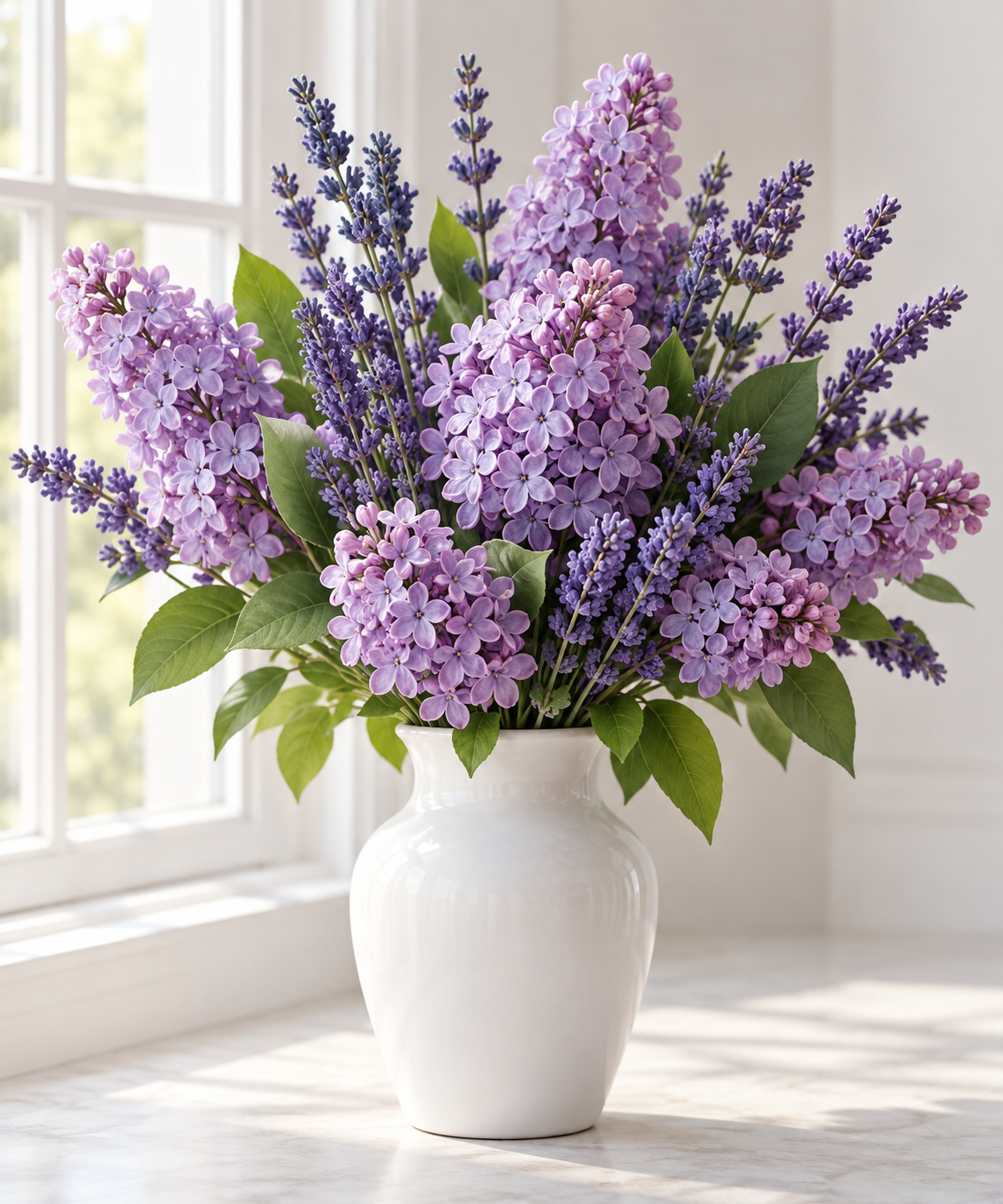
Purple is the widest axis in flower color — at its soft end, lilac and lavender read like a spring garden; at its deep end, plum and aubergine read formal, even theatrical. This collection holds both ends and the middle: garden-soft pieces, deep statement arrangements, and purple-with-cream pairings that keep the depth from dominating. Bloom, greenery and stem materials are stated on every card.
The 30-Second Purple Pick
- Start here: pick the end of the axis first — lavender and lilac for garden softness, deep purple for formal weight, purple-and-cream when you want both tempered.
- Materials per piece: fabric, PE-film or latex-touch petals, wired stems — stated bloom, greenery and stem separately on every card.
- Heights: stems 18–24 in for your own vases; potted pieces 8–14 in; finished arrangements 10–20 in — exact H×W per listing.
- Price band: single stems from $13, potted pieces $29–58, finished arrangements $40–180; free US shipping over $200.
Why purple, and where it works hardest
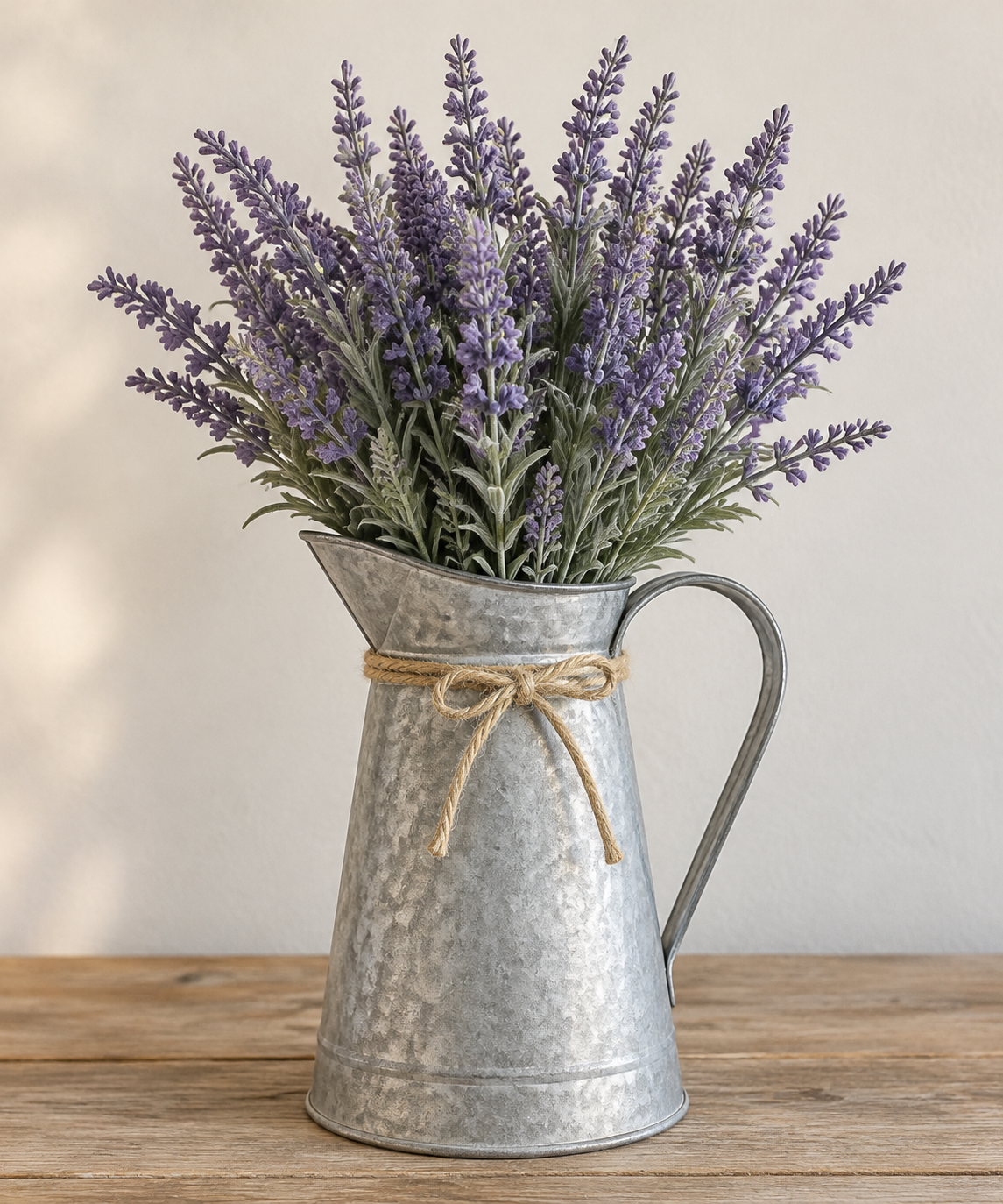
Purple is the only flower color that spans two completely different registers, which is why it turns up in both cottage kitchens and formal dining rooms. The soft end — lilac, lavender, wisteria tones — carries spring and garden associations year-round, the closest thing to planting a garden without maintenance. The deep end — plum, aubergine — reads rich and deliberate, historically the expensive dye, still the fastest way to make a cream room feel intentional. Choose the end before the flower; the two purples are not interchangeable.
How to Choose Purple Faux Flowers
Four decisions — the axis end comes first, because everything else follows it.
- How much purple?
Soft-end purple works in multiples — a lilac bunch on the counter, lavender on the nightstand, no argument between them. Deep purple is a single-statement color: one plum arrangement carries a room; two start a theme.
- What room is it for?
Cottage, farmhouse and bedroom rooms pull from the lavender-lilac end; formal dining and entry rooms take deep statements with cream or gold alongside. The plant-and-color dual meaning of lavender has its own page.
- How close will people stand?
Deep purples hide material texture well — across-the-room statements read fine in standard fabric. Pale lilacs show petal grain the way whites do; bedside pieces reward the latex-touch line.
- Daylight or lamplight?
Daylight keeps lilac cool and plum deep; warm lamps can flatten the difference between the ends — a lilac can read lavender under bulbs. Judge depth from the warm-lit photo when the piece lives under evening light.
Frequently Asked Questions
What do purple flowers mean in home decor?
In decorating terms purple runs two registers: the soft end (lilac, lavender) carries garden, spring and cottage associations — the lowest-maintenance way to make a room feel planted; the deep end (plum, aubergine) reads rich and formal, a legacy of purple's history as the most expensive dye. Decorators use the soft end for calm and the deep end for intention. Neither register is 'the' meaning — choosing the wrong end for the room is the actual mistake.
What colors go well with purple artificial flowers?
The classic pairing is purple with cream — cream lifts the depth so a room reads rich rather than heavy, and the Purple & Cream group is pre-built that way. Purple with silver-grey reads modern; lavender with sage is the cottage-garden combination. For formal rooms, deep purple with gold metallics is the traditional route — one deep arrangement, brass or gold in the lighting, nothing else competing.
What are purple artificial flowers made of?
Petal and leaf materials are stated per product — across this collection you will find polyester-blend fabric, PE film and latex-touch pieces, with wired stems for shaping. The greenery is specified at the same material grade as the blooms, and every card lists bloom, greenery and stem separately rather than one catch-all word — worth checking twice on pale lilacs, where petal grain shows first.
How do I keep purple artificial flowers clean?
Dust weekly with a soft brush; deeper clean every few months with a 50/50 water-and-vinegar mist on a cloth — but keep liquid away from latex-touch petals and never soak finished pieces with wired stems. Deep purples hide dust well; pale lilac shows it early, same as white. Our cleaning guide covers each material.
What is the difference between purple and lavender flowers?
Depth, and a second meaning. Lavender sits at the softest end of purple — grey-leaning, pastel — and it doubles as a plant name: a lavender stem can mean the herb bush itself, with its own cottage and calming associations. Purple covers the rest of the axis up to plum. On this site the two have separate pages so the depth question is settled before ordering: this page for the full axis, the lavender page for the soft end and the plant itself.
Shop by Color & Scene
Flower Guides
Lilac to plum — the two registers of purple and where each belongs.
Which material families earn their keep where — soft purples included.
Pale lilac shows dust early — the method that keeps it soft.