
Potted green without the watering schedule. Olive trees, palms and potted plants in nursery-ready pots, each with leaf counts, heights and pot dimensions printed per listing. These are the pieces that carry corners, flank doorways and fill the spot where a real plant never survived.
Trees, Plants and the Corners They Fill
Artificial Plants
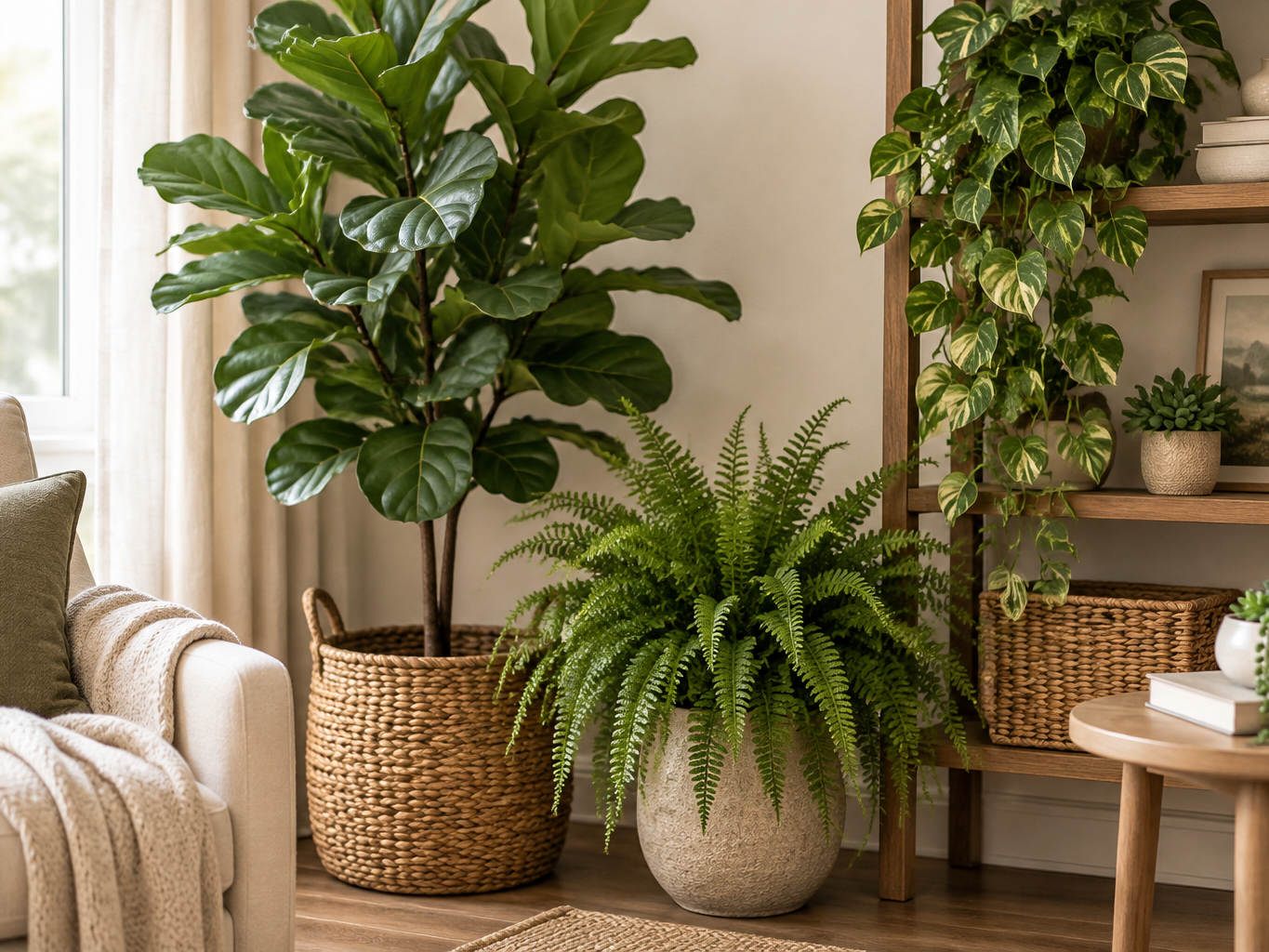
Artificial plants are whole plants — a potted fiddle leaf fig, a floor olive tree, a hanging pothos — built stem by stem into a finished form that arrives ready to place. Call them…
Artificial Olive Trees
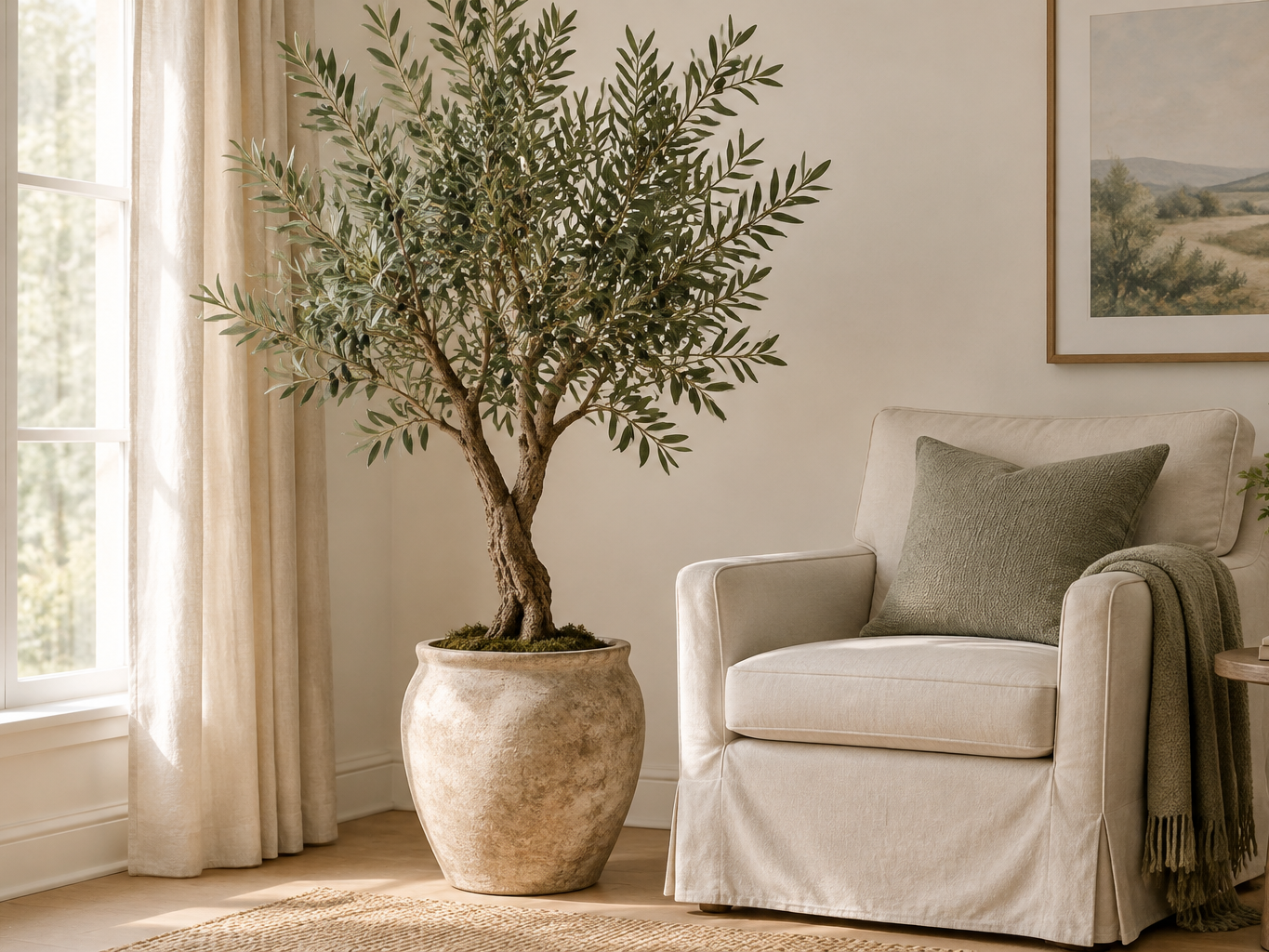
The olive tree is the statement plant of the decade — that gnarled, silver-green Mediterranean presence designers reach for when a corner needs a tree, not a filler. Real ones are a gardener's project;…
Artificial Palm Trees
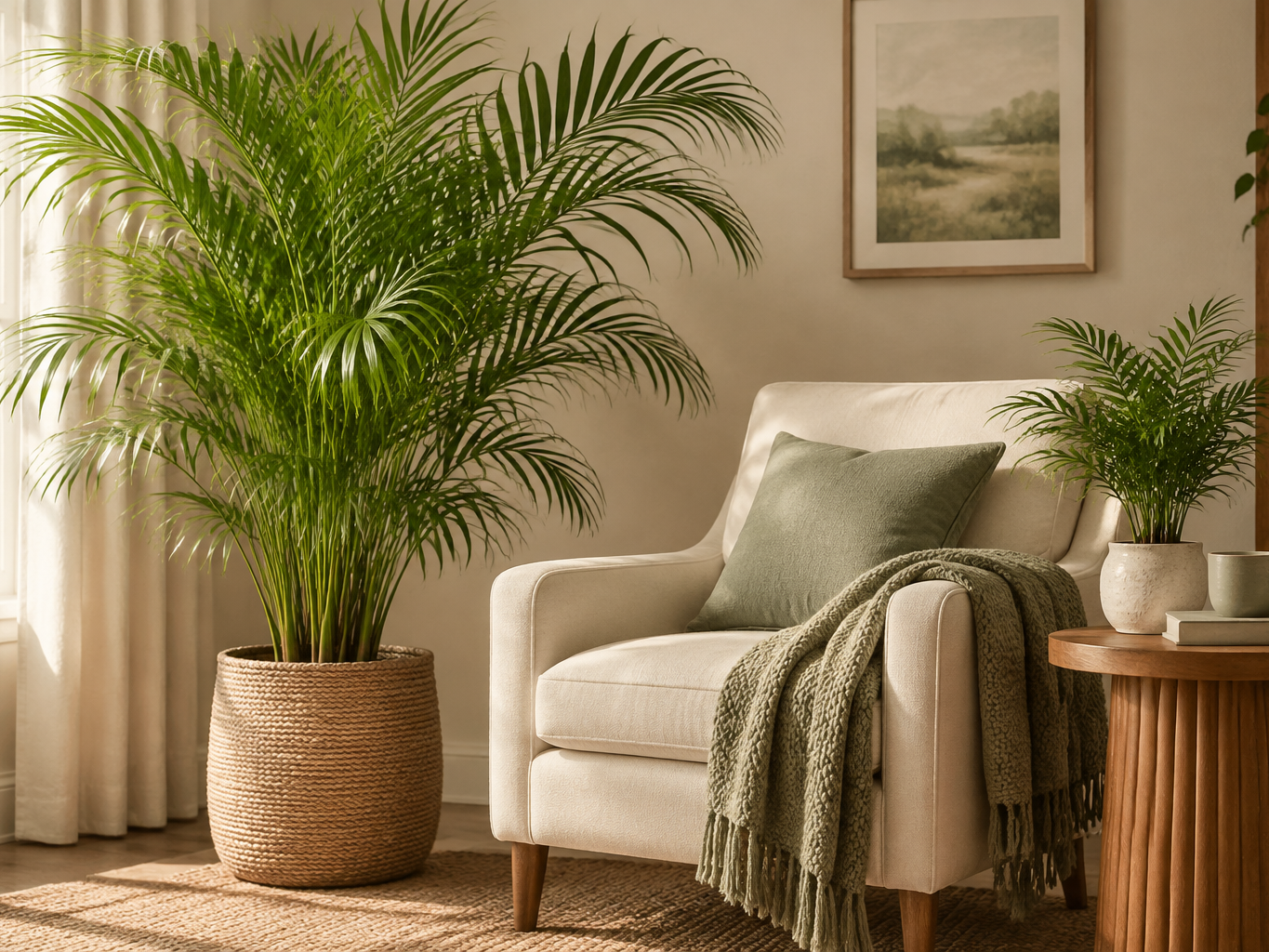
A palm is a room's shortcut to somewhere warmer — and an artificial palm is the version that works anywhere: the dim office corner, the covered patio, the entry that never sees sun. This…
How to Choose an Artificial Plant
- Size from the spot, in feet.
A corner behind a chair takes a 4-5 foot tree; a doorway flank wants two matched pieces at 5-6 feet; shelves and desks carry potted plants under 16 inches. Measure the ceiling clearance before the pot height.
- Read the pot as part of the piece.
Listings photograph the exact nursery pot shipped. Some buyers drop them into heavier cache pots — the pot diameter printed per listing tells you which outer pot fits without replanting anything.
- Check the leaf build for your light.
Silk leaves read softer and suit bedrooms; PE-molded leaves catch light with harder edges and suit entries and offices. Both are stated per listing, and neither fades the way real foliage does in a dark corner.
Frequently Asked Questions
How do I make an artificial tree look real?
Two moves: shape and stagger. Bend the branches out of the ship-shape symmetry so the silhouette reads uneven, and set the tree slightly off-square to the wall. A layer of real or faux moss over the nursery pot closes the last visual gap.
Do artificial plants work outdoors?
Only the UV-resistant line does — standard silk builds fade within a season of direct sun. The outdoor plants collection carries the UV-stabilized builds; everything on this axis is rated for indoor use unless the listing says otherwise.
What heights do artificial olive trees come in?
Typically 4, 5 and 6 feet, measured from the floor to the tallest branch tip as shipped. Pot dimensions and trunk detail are stated per listing so the footprint is known before checkout, not after.
How much do artificial plants cost?
By size class across the market: small potted plants under 12 inches run $4.97–$10; tabletop and mid-size builds $10–$22; floor plants and trees at 3–5 feet $39.99–$100; and designer pieces from the decor brands start near $39 and run to $699 at the ceiling. Within any size class, the price drivers are leaf material (silk versus molded PE), trunk detail, and the pot shipped — a stated height plus a photographed pot are the two marks of a listing that prices honestly.
What Artificial Plants Cost, by Size
"How much do artificial plants cost" is among the most-asked questions in this category, and the honest answer needs the size axis before the number means anything:
| Size class | Market range | Typical pieces |
|---|---|---|
| Small potted (under 12 in) | $4.97–$10 | Shelf succulents, mini bushes, core plants in white pots (the mass-market potted line sits near $10) |
| Tabletop and mid (12–30 in) | $10–$22 | Counter ficus, core plants, small statement greenery |
| Floor plants and trees (3–5 ft) | $39.99–$100 | Dracaenas, fiddle leaf figs, cycas — the corner-carrying scale |
| Designer and statement | $39–$699 | Decor-brand plants where pot, trunk and leaf molding are the product; rare large pieces mark the ceiling |
The two ends of that table are different products wearing the same name. The $5-to-$45 rung is mass-market greenery — serviceable, replaceable, bought by the corner. The $100-plus rung is decor-brand goods, sold on planter materials and leaf molding; rare statement pieces at one mass retailer list as high as $633.99, which is the ceiling talking, not the market. Neither end is a scam — they answer different questions. The buying risk sits in the middle, where a $60 plant with a $10 build is common, which is why leaf material (silk versus PE-molded), stated height and pot dimensions matter more than the price tag at checkout.
Shop This Collection
Flower Guides
Placement-first decor thinking — where greenery and whole plants carry a room, from the 54-post library.
The method-by-material cleaning guide behind this page's FAQ — silk, PE and everything between.
Light, travel, budget and statement sizes — the full decision frame this page's FAQ answers in brief.