
Blog
January Birth Flower: Carnation and Snowdrop Meanings, Colors, and Gift Ideas

By Evercombe Team · Updated October 12, 2026 · 9-minute read
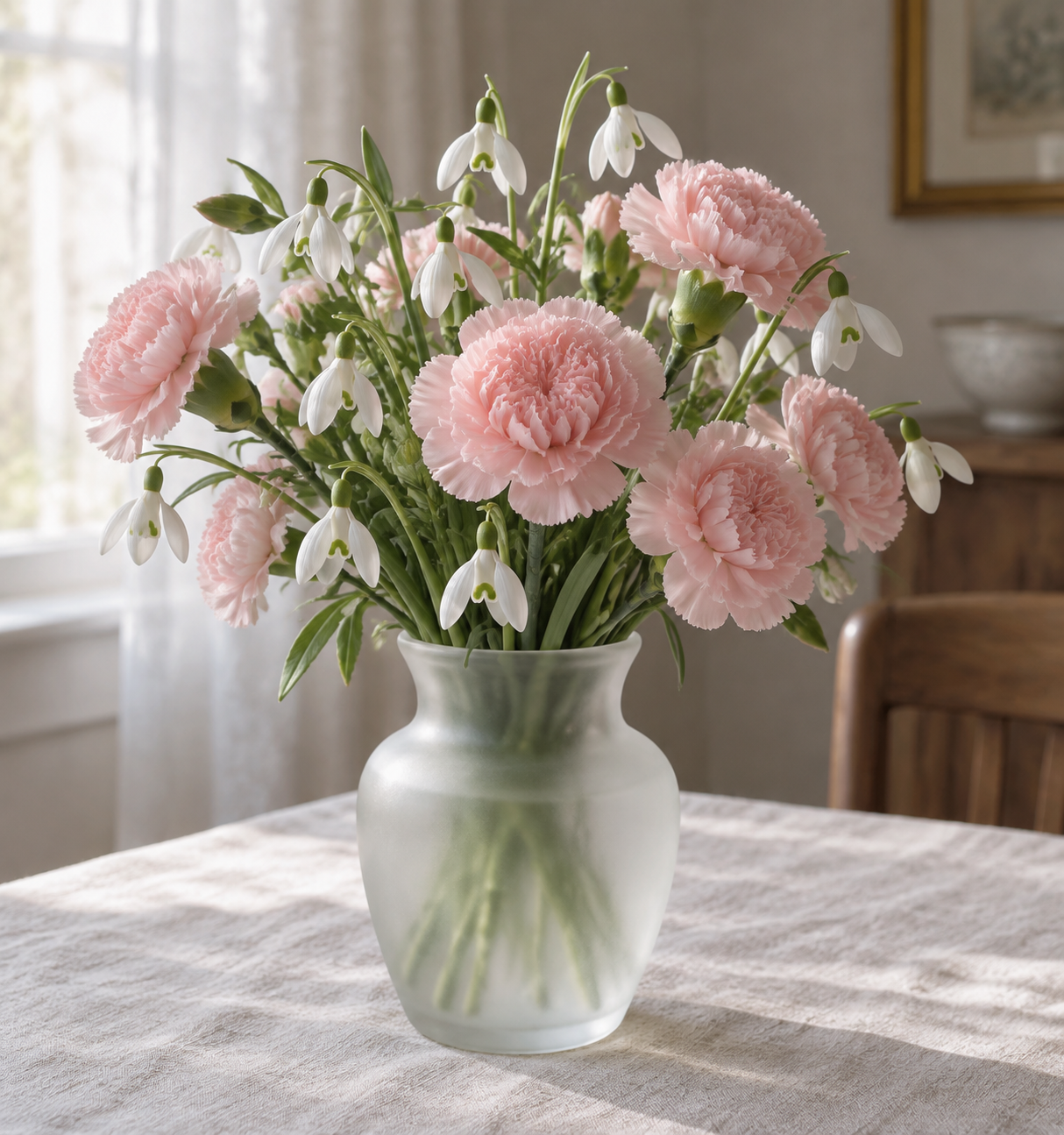
Quick answer: January has two birth flowers: the carnation, meaning devotion, distinction, and a love that distinguishes itself — and the snowdrop, meaning hope against the odds. Carnation color carries the fine print: red for a mother’s love, white for pure love and luck, pink for a memory that stays. For January birthdays, a white-and-blush carnation arrangement is the month’s signature.
January birthdays arrive in the year’s thinnest floral month — after the holiday rush, before the spring greenhouse, with the garden frozen and the flower shop at its barest. Which is exactly why the month’s birth flowers mean what they mean. The carnation holds its ruffled form through cold transport better than almost any cut flower; the snowdrop doesn’t wait for conditions at all, pushing up through snow crust because January is when it blooms, weather notwithstanding. People born in the month collect the same description — resolute, devoted, better at fresh starts than anyone — and the flowers agree.
Carnation: The Primary January Birth Flower
Meaning: devotion, distinction, and love that endures workdays.
The carnation is one of the oldest cultivated flowers on record — grown around the Mediterranean for some two thousand years and worn in ceremonies since Rome. The name’s origin depends on who you ask: from Latin corona (a crown, for its use in garlands) or from carnis (flesh, for the original pink of its petals) — both etymologies have scholars, neither has a verdict. The meaning took its clearest form in the Victorian dictionaries: distinction, devoted love, and a flower for tenderhearted regret when stripes got involved.
Its modern credential is more concrete: the carnation is the Mother’s Day flower, full stop. Anna Jarvis, who founded the American holiday in 1908, chose white carnations — her own mother’s favorite — for the first celebration, and more than a century later the flower still runs the second Sunday of May. A January-born mother receives a birth flower that doubles as the maternal emblem; the two meanings share a stem.
Carnation Color Variations
| Color | Refined meaning | Best for |
|---|---|---|
| Red | A mother’s love; deep devotion | Mothers, grandmothers, partners |
| White | Pure love, good luck | January weddings, formal gifts |
| Pink (light) | Gratitude, a memory that stays | Thank-yous, remembrance gifts |
| Pink (deep) | Bold tenderness | Romantic January birthdays |
| Yellow | Disappointment, refusal (classic dictionaries) | Knowing, playful “no” gifts — or skip |
| Striped | Regret, a refusal softened | Apologies with a wry streak |
Giving Carnations
Give carnations for January birthdays, of course, but also where their ruffled density earns it: corsages and boutonnieres (they out-travel any garden rose), office gifts that must survive a day unwatered, and big abundant arrangements where three dozen carnations cost what six peonies would. Pair blush carnations with white stock and eucalyptus for the month’s signature softness, or red with evergreen sprigs for a January that leans wintry rather than sad. Browse artificial flower arrangements.
Snowdrop: The Secondary January Birth Flower
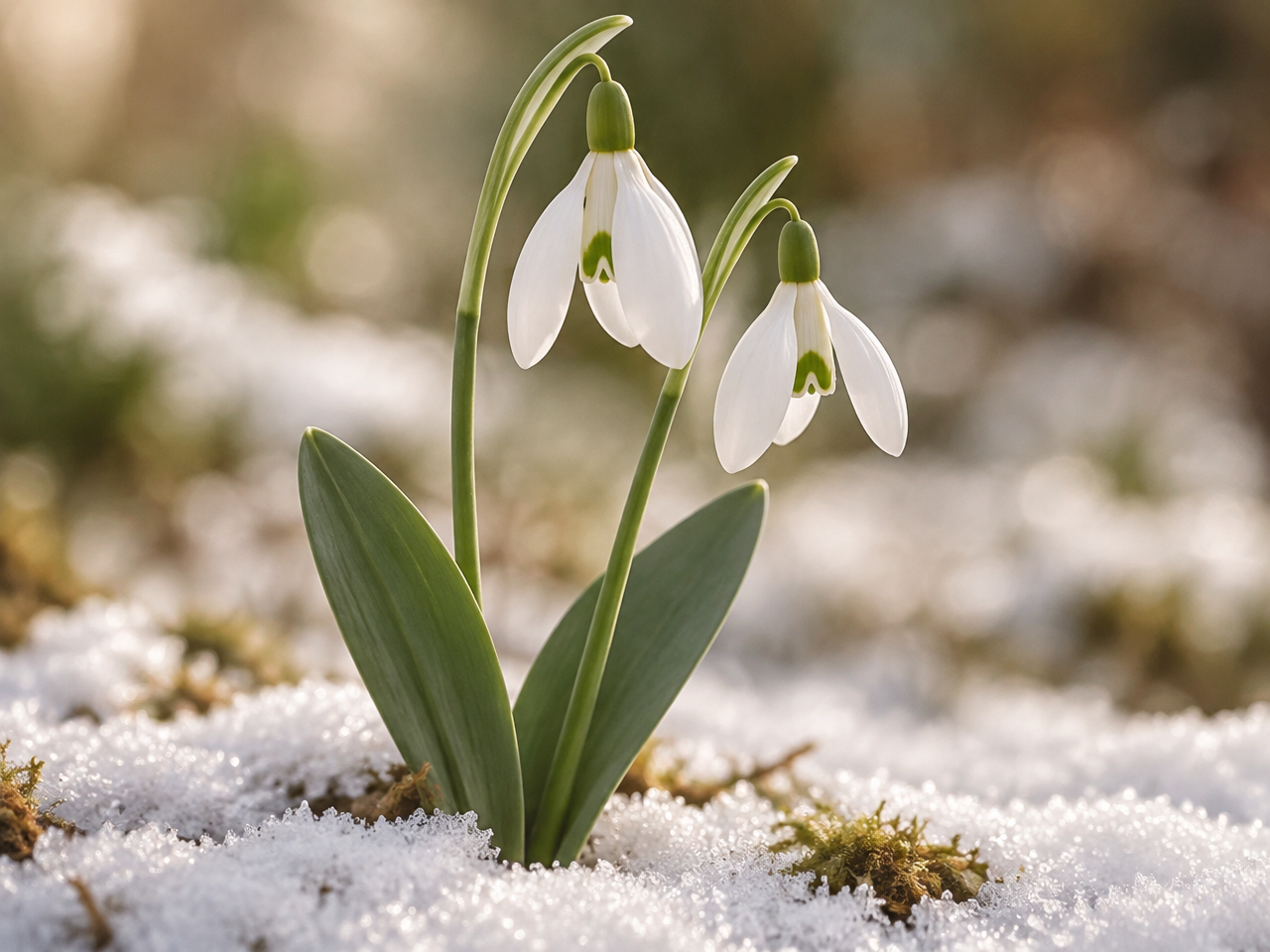
Meaning: hope against the odds — consolation, arriving first.
The snowdrop is the first flower of the year in the Northern European garden, often blooming in January through crusts of snow, and floriography assigned it the exact virtue that requires: hope, consolation, the promise that warmth is coming. One legend makes the snowdrop the flower that consoled Eve after the fall, blooming when an angel granted winter a small mercy. The Victorians kept a caution on file too: a single snowdrop meant consolation, but bringing them indoors was thought to bring bad luck in parts of rural England — a superstition worth knowing for exactly as long as it takes to ignore it.
As a cut flower the snowdrop is impractical (short stems, fleeting bells), so like September’s morning glory it lives in décor almost exclusively as faux stems and printed motifs — the artificial version isn’t the compromise; it’s the standard delivery method.
Giving Snowdrop Imagery
Give snowdrop stems or imagery for new starts in the year’s first weeks — jobs that begin in January, recoveries, first anniversaries of hard years — where “first flower through the snow” is the whole blessing. White-and-green arrangements with snowdrop accents suit January memorial gifts better than almost anything else on the calendar; the flower was built for consolation.
Carnation or Snowdrop: Which Do You Give?
| If the January person is… | Give… | Why |
|---|---|---|
| Traditional, wants the official flower | Blush carnations | The month’s primary, done softly |
| A mother or grandmother | Red or white carnations | The Mother’s Day flower, in her birth month |
| Starting over this year | Snowdrop stems | Hope against the odds, on schedule |
| Bereaved, or marking a hard anniversary | White snowdrop mix | Consolation, the flower’s core job |
| A partner | Deep pink carnations | Devotion with tenderness, not red’s weight |
| Fresh-flower averse (allergic, practical) | Faux carnation arrangement | Ruffled density that never wilts on them |
Building a January Birthday Gift Around the Flower
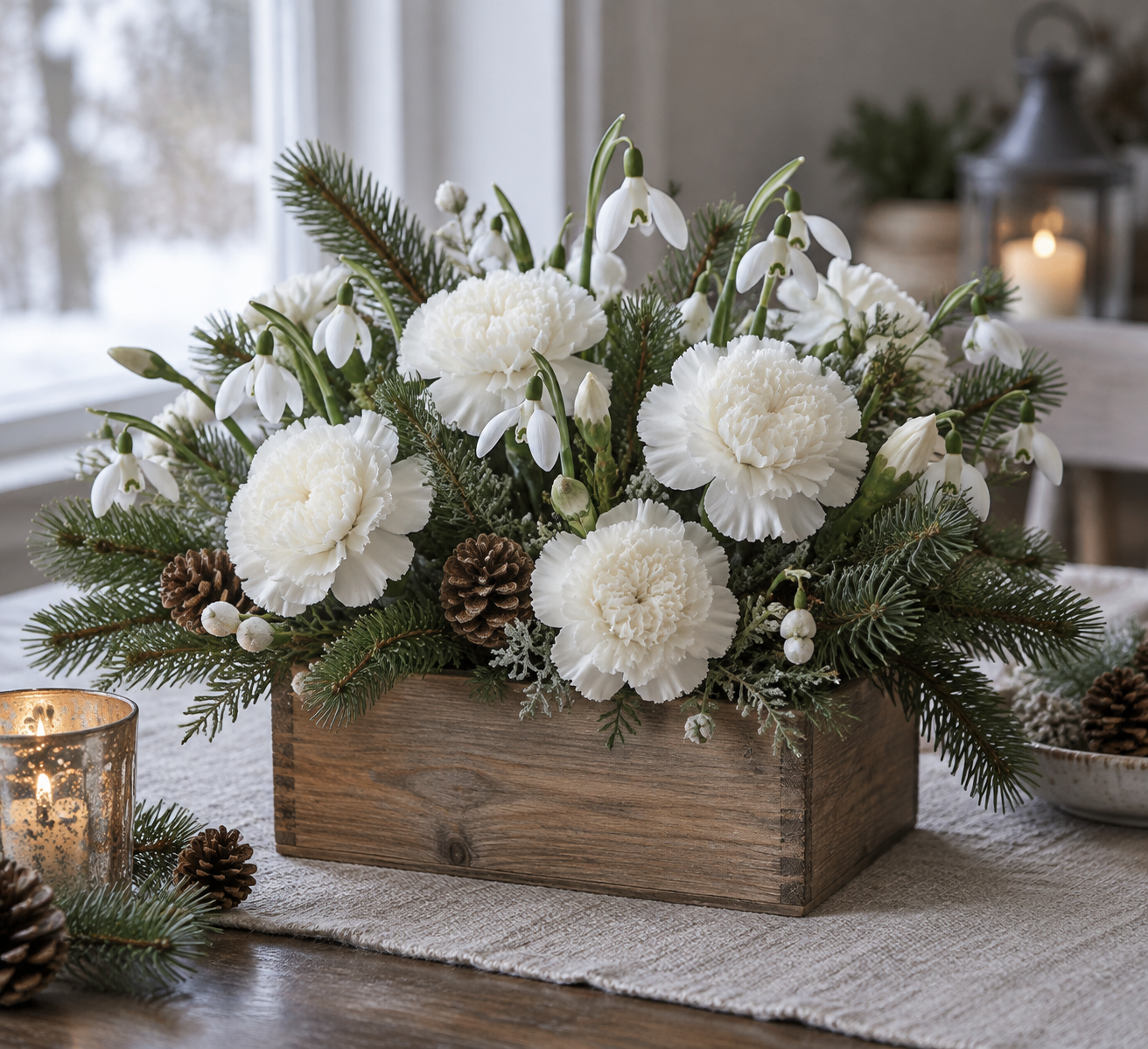
January’s palette runs white, blush, and evergreen — the year’s reset in flower form. An arrangement that reads intentional: blush carnations as the mass, white stock or snapdragons for height, evergreen sprigs and silver accents underneath, a few snowdrop-style bells at the edge. It photographs like fresh snow at golden hour, which is the month’s whole aesthetic.
The calendar is thin — that’s January’s gift. New Year’s Day swallows the 1st; Martin Luther King Jr. Day (the third Monday) makes a long weekend; and beyond that the month belongs to birthdays unencumbered by competing holidays — the only month on this list where the birthday is the biggest floral event of its own weeks. Practical notes: post-holiday flower shops commonly run their thinnest stock of the winter, and a January birthday delivered on the exact day lands in a quiet room — no competition, full attention.
When the exact blooms run short, the January message survives in the palette — any convincing white-and-blush mix with evergreen structure does both flowers’ work. Start from artificial flower arrangements; the color fine print continues in our red, white, and pink collections, and the full year’s chart lives in birth month flowers.
FAQ
What is the birth flower for January?
Carnation (primary) and snowdrop (secondary). Carnations mean devotion, distinction, and enduring love; snowdrops mean hope and consolation against the odds. Both appear on the standard lists.
What do carnations symbolize?
Devotion, distinction, and love that lasts — the flower has been cultivated for some two thousand years and has doubled as the Mother’s Day flower since 1908.
What do snowdrops symbolize?
Hope against the odds: the first flower through snow, blooming in January. Old traditions add consolation — one legend makes it the angel’s winter gift to Eve.
Do carnation colors change the meaning?
Sharply: red for a mother’s love, white for pure love and luck, light pink for gratitude and memory, yellow for disappointment and striped for refusal in the classic dictionaries — the widest color dictionary of any winter birth flower.
Are carnations a cheap flower?
They’re inexpensive, which is a different thing. The carnation’s ruffled density, cold tolerance, and two-week vase life outperform costlier blooms; in faux, the same density reads abundant at any budget.
Can I give snowdrops as cut flowers?
Not practically — short stems and fleeting bells. Snowdrops ship as faux stems, imagery, and potted bulbs; treat those as the standard delivery method, not a compromise.
Related Reading
- Birth Month Flowers — all 12 months, both flowers, one chart
- February Birth Flower — violet and primrose, the month next door
- Shop the January palette: white flowers · pink flowers · arrangements