
Blog
“DIY Wedding Flowers vs Florist: The Honest Trade, Priced With Your Actual Hours”

By Evercombe Team · Updated October 14, 2026 · 7-minute read
Quick answer: The DIY-vs-florist decision is one-third money and two-thirds hours: a DIY silk program saves $800–2,000 on a 100-guest wedding but costs 20–40 hours of real labor — buying, building, transporting, installing (typical ranges, October 2026). Florists sell design skill, delivery logistics, setup-and-strike labor, and a professional standing behind the day. The hybrid that works for most couples: DIY the tables and furniture-zone pieces, buy or florist the bouquet, and decide by which of the four florist services you would actually be paying to replace.
Every wedding-planning resource covers this question in money; almost none cover it in hours, and the hours are where the decision actually lives. This page prices both sides honestly. It pairs with wedding flowers cost (the full budget picture), wedding flower packages (the middle path), and wedding flower timeline (when each path’s work happens).
What a Florist Actually Sells (Four Services, One Invoice)
The florist line on a wedding invoice bundles four distinct services, and pricing them separately is the first step in the decision:
| Service | What it is | What it costs standalone-ish |
|---|---|---|
| Design | The concept, palette execution, build quality | 30–40% of the flower bill |
| Delivery & staging | Refrigerated transport, timing logistics | $150–400 |
| Setup & strike | Install the morning-of, remove the night-of | $200–500 |
| The standing | A professional accountable if something fails | The margin |
The DIY question is really: which of these four are you able and willing to perform yourself? Couples with design confidence and a helper crew replace three of four. Couples without the morning-of crew keep the florist for exactly the logistics — many florists sell setup-only or delivery-only service on couple-supplied stems, an option most planners never mention because it is asked about least.
The Money Side: Three Programs, One Wedding
The same 100-guest wedding, three ways (October 2026):
| Line | Florist (fresh, full service) | DIY silk | Hybrid (silk tables + florist/bought bouquet) |
|---|---|---|---|
| Bouquet + party | $350–700 | $80–160 (built) | $150–350 (bought or florist) |
| Ceremony (arch + aisle) | $400–900 | $120–280 | $120–280 |
| Reception (11 tables + head) | $900–2,200 | $180–420 | $180–420 |
| Delivery/setup/strike | $350–900 | $0 (your labor) | $0–250 (partial help) |
| Total | $2,000–4,700 | $380–860 | $450–1,300 |
The headline savings are real — $800–2,000+ over the florist program — but the table’s bottom rows are where the decision hides: the DIY column’s $0 lines are hours, and they are next.
The Hours Side: What DIY Actually Spends
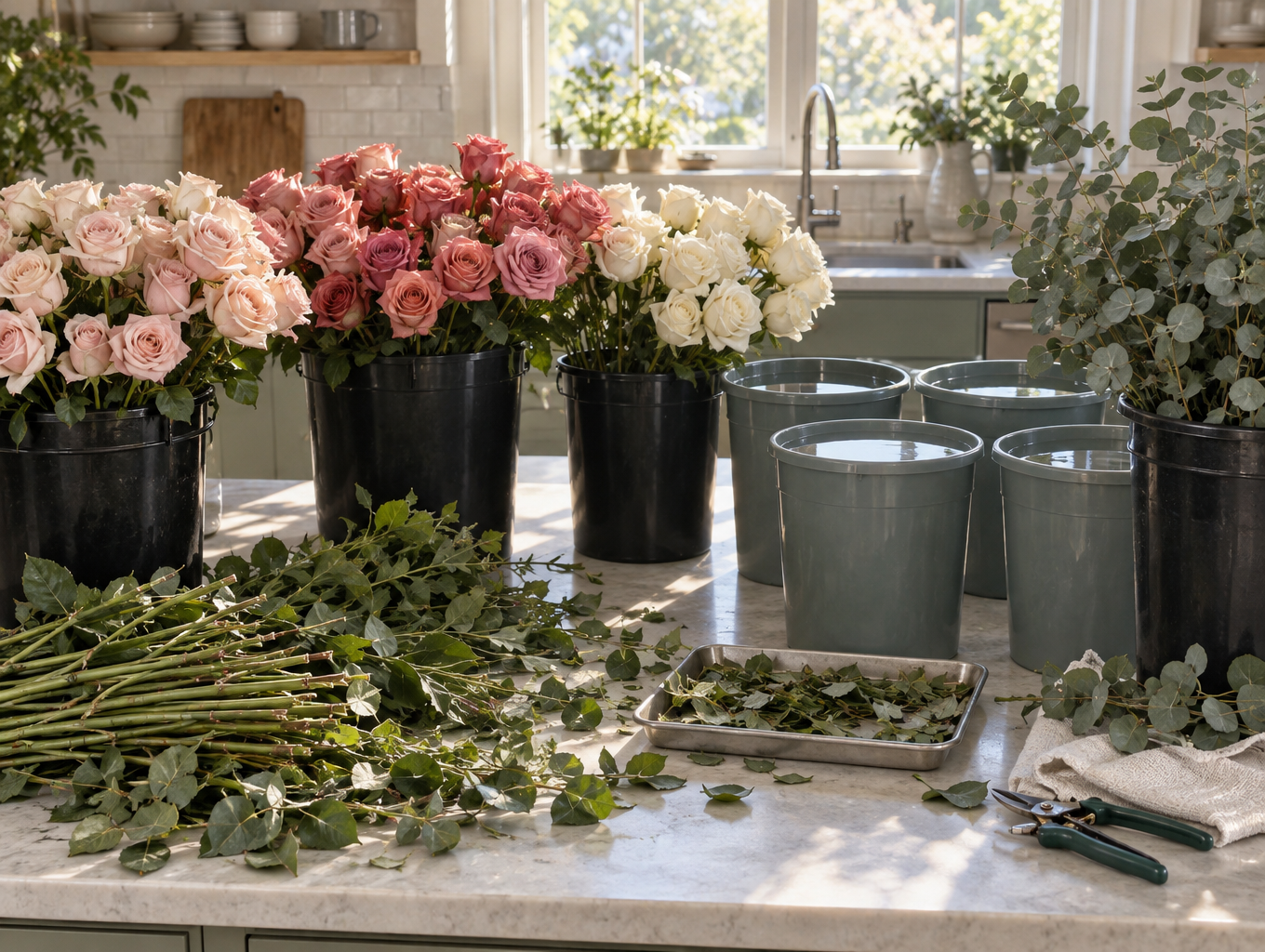
The honest labor ledger for a 10–12 table silk program (project-time figures from typical DIY programs):
| Phase | Hours | When |
|---|---|---|
| Research, sourcing, ordering | 4–8 | Months out |
| Table pieces (10–12 builds at 1–1.5 hr each) | 12–18 | 2–4 weeks out |
| Bouquet + party (if DIY) | 4–8 (2× if first-timers) | 1–2 weeks out |
| Transport + install + strike | 4–8 | Wedding week |
| Total | 20–40+ |
Two structural notes on the ledger. First, first-timer multiplier: every build category takes roughly twice as long the first time — budget a practice bouquet before the real one (how to make an artificial wedding bouquet is the tutorial). Second, the silk-vs-fresh difference inside the DIY column: silk’s hours shift earlier (builds happen weeks out, in evenings, no wilt clock), while DIY-fresh compresses everything into a 48-hour pre-wedding window — DIY-fresh is the single most stressful version of this decision, and silk’s main gift to DIYers is moving the labor off the wedding week entirely. That schedule difference is the timeline argument at wedding flower timeline.
Who Should Actually DIY (and Who Shouldn’t)
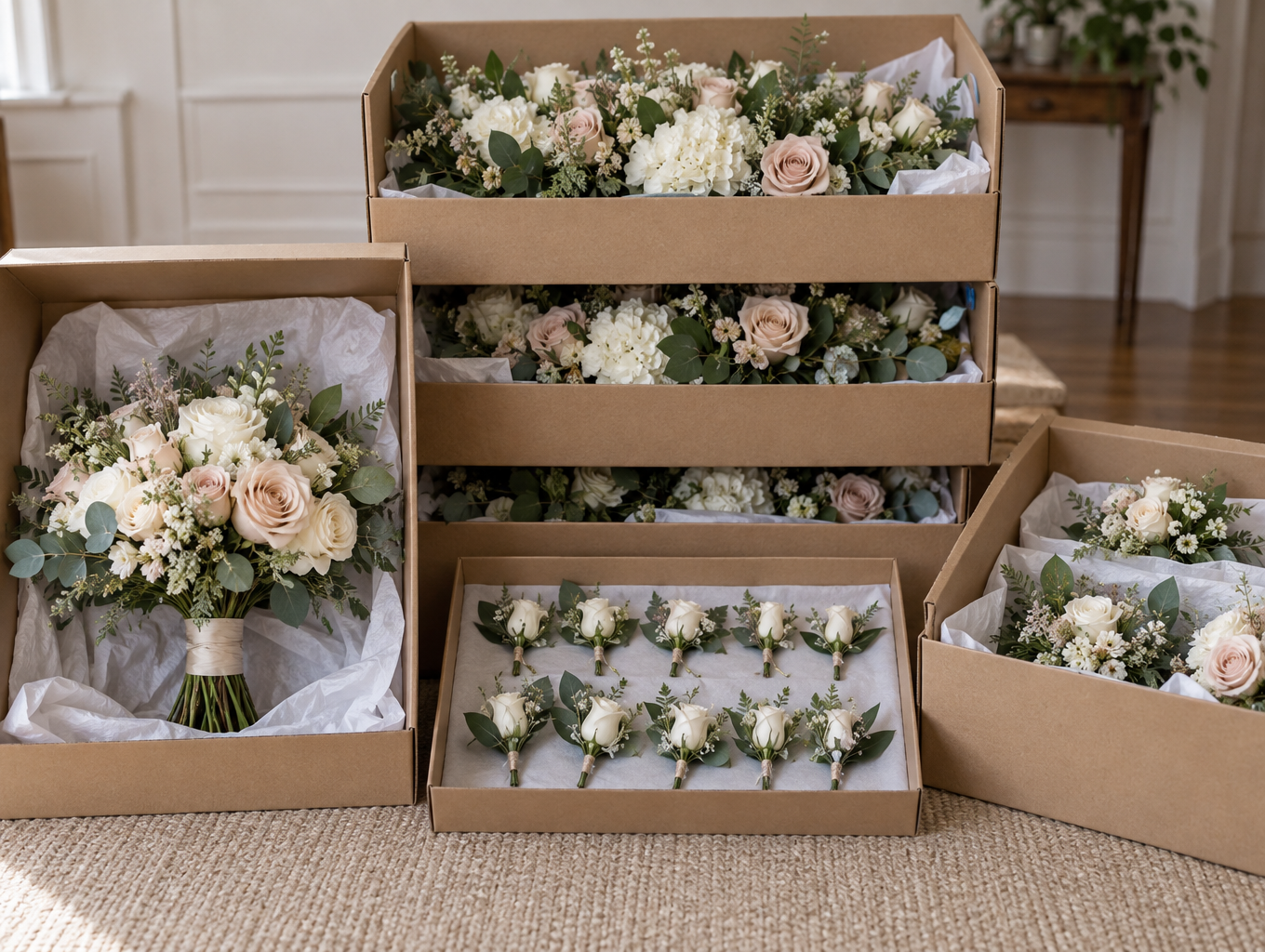
DIY fits: couples with 20+ spare hours pre-wedding, a helper crew of 2+ for setup, silk or dried programs (the schedule forgiveness), and venue setups where nothing depends on a professional’s failure insurance. The florist fits: peak-Saturday logistics where the couple is also getting ready in the same hours, complex fresh programs, and any wedding where the flowers failing is unacceptable enough to pay for accountability. The hybrid fits most: silk tables via bulk stems and DIY labor, with the carried pieces bought finished (wedding flower packages or artificial wedding bouquets) — the money saves on the volume, the hours concentrate on the low-risk builds, and the highest-stakes piece arrives finished.
The Failure Modes Each Path Owns
Honesty cuts both ways. DIY failure modes: the build quality gap on the bouquet (the one piece studied at handshake distance — the most common DIY regret), the morning-of labor crunch when setup runs long, and no recourse when a box of stems arrives wrong (silk’s re-order window of days beats fresh’s impossible, but the risk exists — order 3+ weeks out). Florist failure modes: the vision gap (the most common florist complaint — the invoice’s design line buys their concept, not necessarily yours), peak-season quality variance (substituted blooms at your peak date), and the silent markup on simple builds — mason-jar programs that cost $60 in stems invoiced at $600. Every one of these is a reason for the hybrid, not a reason against either path.
FAQ
Is it cheaper to DIY wedding flowers?
Yes, by $800–2,000+ on a typical 100-guest program — but the honest unit is money-plus-hours: DIY costs 20–40 hours of real labor across sourcing, building, and installing. The hybrid (DIY silk tables, bought or florist bouquet) captures most of the savings at a fraction of the labor risk.
How many hours does DIY wedding flowers take?
20–40 hours for a full 10–12 table program, plus 4–8 for a DIY bouquet — and every category runs about twice as long for first-timers, so budget a practice round. Silk programs shift the hours to comfortable evenings weeks out; DIY-fresh compresses everything into the 48 hours before the wedding, which is the version to avoid.
What does a wedding florist include for the money?
Four services on one invoice: design (concept and build quality, roughly 30–40% of the flower bill), refrigerated delivery and staging, setup-and-strike labor on the day, and professional accountability if something fails. Also worth asking about: delivery-only or setup-only service on couple-supplied stems, which many florists sell but few couples ask for.
Can I DIY some flowers and hire a florist for the rest?
The hybrid is the most-recommended split: DIY the volume pieces (tables, welcome table, chair ties — silk, built weeks out) and buy finished or florist-build the bouquet and party flowers (the pieces studied closest, where build quality shows most). The split’s logic and the package middle-path are at wedding flower packages.
Related Reading
- The money picture: wedding flowers cost · The table tiers: wedding centerpiece budget
- The middle path: wedding flower packages · The schedule: wedding flower timeline
- Build it: how to make an artificial wedding bouquet · Shop: DIY wedding flowers · bulk artificial flowers