
Blog
“Wedding Planning Checklist 2026-2027: Month-by-Month Timeline With the Flower Decisions Built In”

By Evercombe Team · Updated October 14, 2026 · 11-minute read
Quick answer: Plan a wedding along six big deadlines: book venue and key vendors at 12+ months, florist and attire at 8-10 months, invitations at 4 months, final counts and floral orders at 2-3 months, confirmations at 1 month, and staging at the final week. Flowers thread through the whole timeline — budget set at 10 months, samples at 6, orders placed at 2-3 months — and whether you go fresh or faux changes your final-two-weeks completely. Full month-by-month list below, plus a copy-paste template.
Here’s an honest observation from reading the first page of wedding planning checklists: they are nearly identical — the same 12-month skeleton, the same vendor list, and flowers reduced to one line (“book a florist”) somewhere in the middle. Flowers are typically 10-15% of a wedding budget and the single most photographed decoration of the day, which earns them more than one line. This checklist keeps the complete timeline everyone needs, and marks every floral decision point with the timing it actually requires — including the schedule difference between fresh flowers (a 48-hour endgame) and faux (a 2-4 week runway), which changes what your final month looks like.
Skim the timeline for your phase, then copy the plain-text template at the bottom into your notes app.
12+ Months Out: The Four Decisions That Set Everything

- Set a total budget and a guest-count ceiling — these two numbers constrain every later decision. (Skipping this is why a third of couples overspend; every line below assumes these exist.)
- Book the venue and date. Venue before everything: it caps your guest count, dictates your decor style, and determines whether you’re allowed open flames, outside florals, or rigged arch installations.
- Book the photographer and caterer — top-tier ones in popular months are the first vendors to fill, often 12 months ahead.
- Choose a rough color story (2-3 colors, one dominant). It doesn’t need to be final, but every sample you’re offered from here on needs to be judged against something.
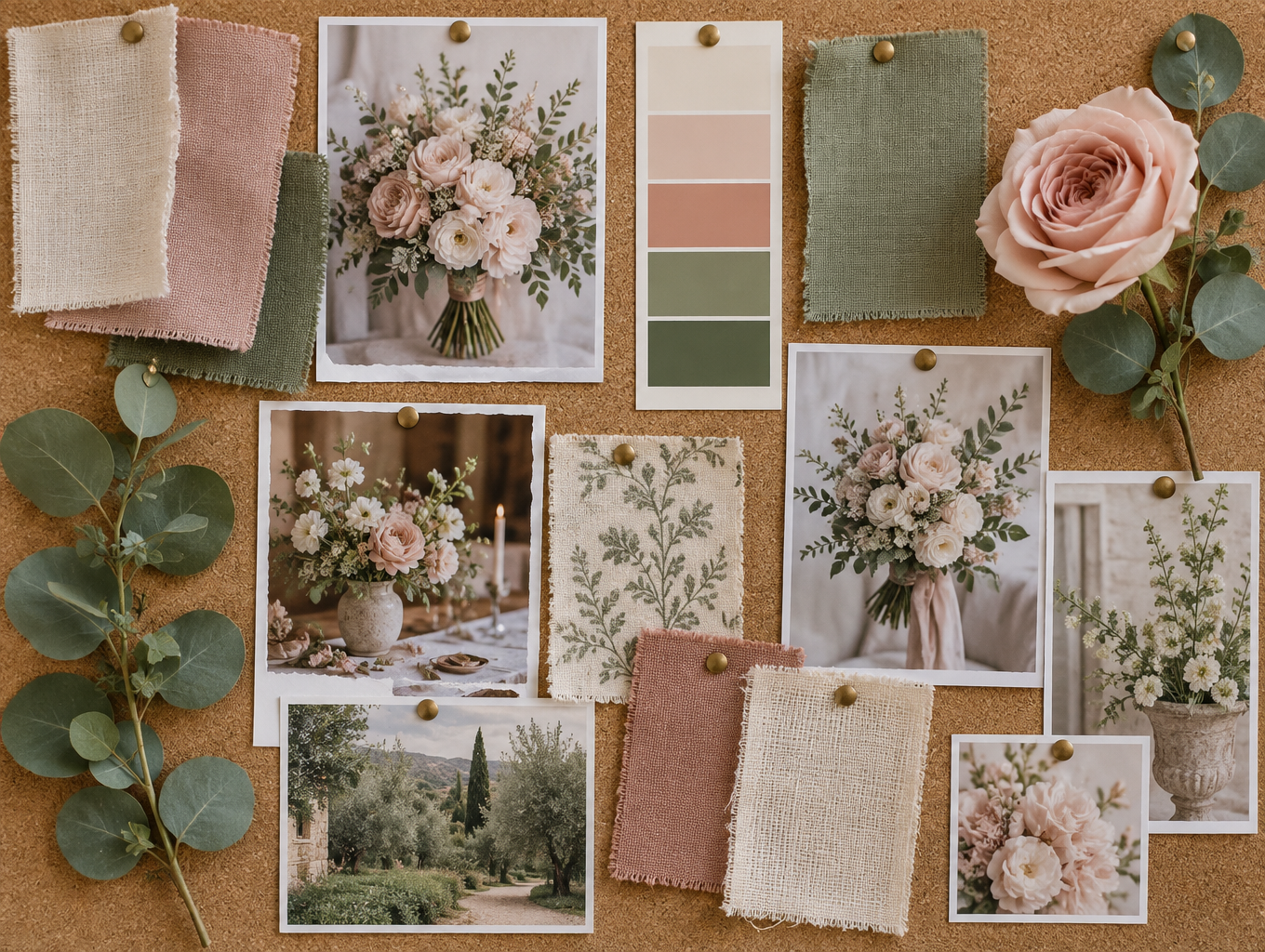
Floral marker: start a flower folder — screenshots, saved posts, three bouquets you love. You’ll show this to a florist in a few months; “I’ll know it when I see it” costs money in consultations.
10 Months Out: Vendors Round Two
- Book remaining major vendors: DJ/band, videographer, transportation, officiant.
- Order the dress (bridal shops quote 6-9 months for made-to-order gowns with alterations).
- Send save-the-dates if you have travel guests.
- Reserve hotel room blocks.
Floral marker: set the flower budget as a number, not a vibe. The industry convention is 10-15% of total wedding budget for full floral service (bouquets, arrangements, ceremony decor). A lower number is fine — it just means making different choices (DIY, faux, or fewer arrangements), not the same plan with cheaper flowers. Our wedding flowers cost guide breaks the budget down by item so the number you set here survives contact with reality.
8 Months Out: The Florist Conversation
- Book the florist (or make the faux/DIY decision — see 6 months).
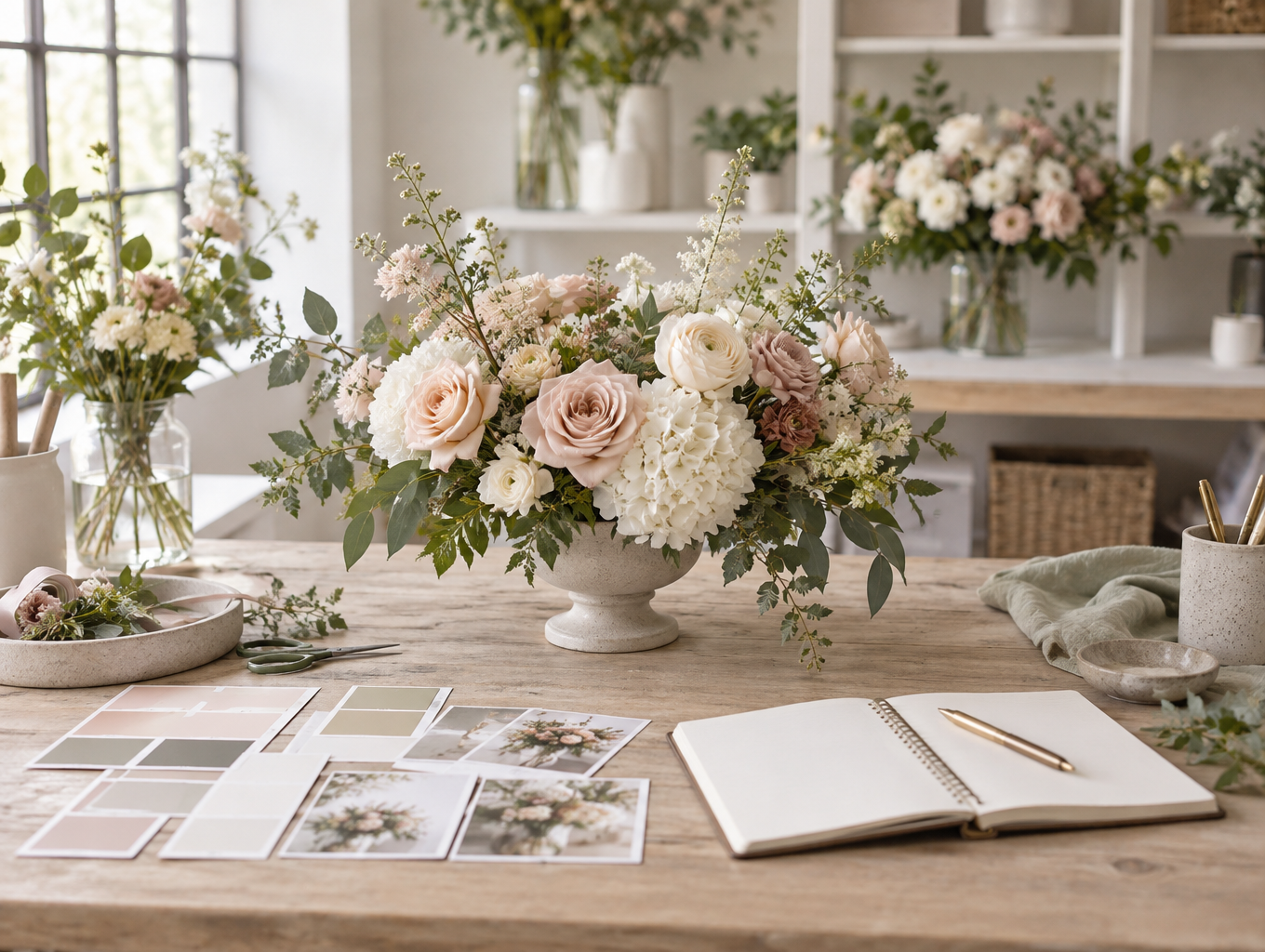
- Finalize the color palette with fabric swatches. Swatches, not phone screens: screens shift color, and this is the stage where “blush” forks into six different pinks.
- Book hair and makeup; schedule the dress’s first fitting.
- Start the registry and wedding website.
Floral marker — the florist meeting: bring your flower folder, your swatches, your venue photos, and your per-item budget. Ask each candidate florist two questions that separate professionals: “What’s in season around my date that does this look for less?” and “What would you cut from this plan if the budget dropped 20%?” A florist who won’t answer the second question will overshoot your budget by exactly that much later. (If your date lands in September-October, the seasonal premium is real — the full fall palette logic and its faux pricing workaround is in fall wedding flowers.)
6 Months Out: Samples and Attire
- Order bridesmaid dresses and formal attire (allow 4-6 months).
- Book the cake baker; schedule the menu tasting.
- Book rentals (tables, chairs, linens) — rental quantities come from the floor plan you’ll finalize later, so book the company now, lock counts at 3 months.
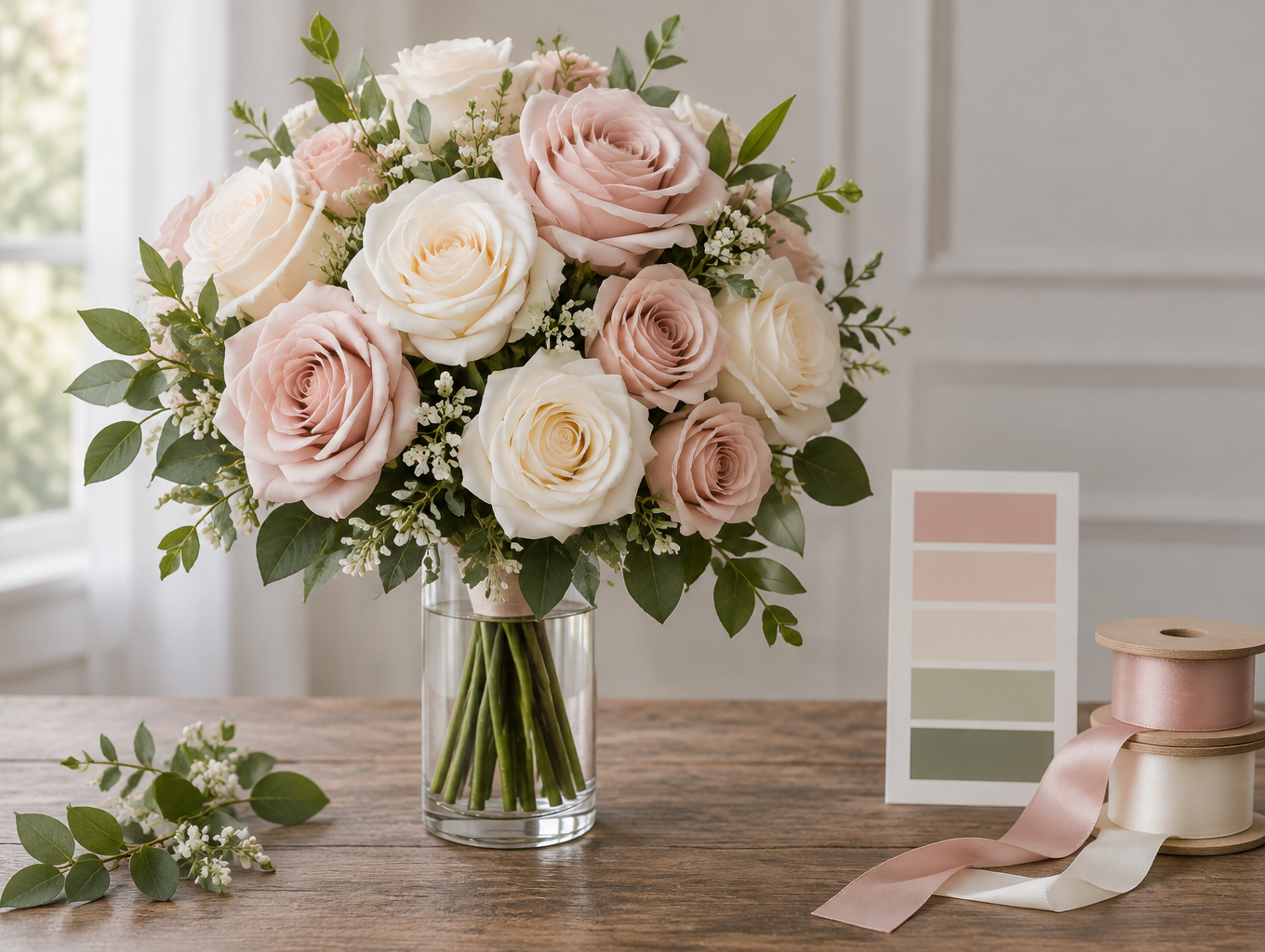
- Floral marker — samples. If you’re going fresh: request a sample bouquet or mockup from your florist now (many include one; some charge — either way, it’s worth it) to check the palette against your swatches in real light. If you’re going faux or part-faux: order sample stems now — one bridal bouquet and a few loose stems in your palette. Judge them in daylight against the swatches. Faux quality varies enough that the $40-80 sample round is the cheapest insurance in this whole checklist.
4 Months Out: Invitations and Paper
- Order invitations (mail at 8 weeks for a local crowd, 10-12 for travel guests).
- Book the rehearsal dinner venue.
- Finalize the menu and cake design.
- Reserve guest accommodations deadlines; book honeymoon travel.
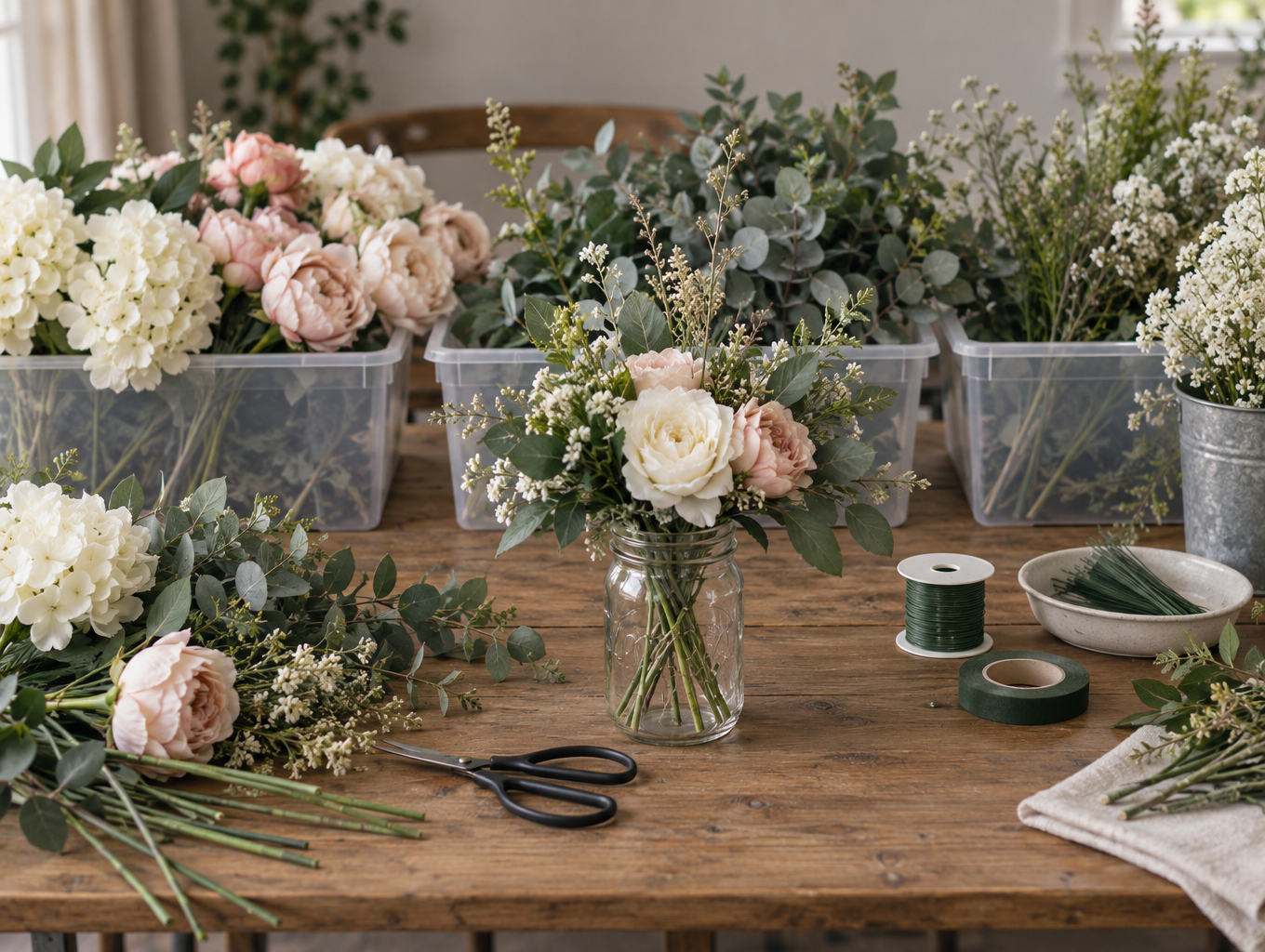
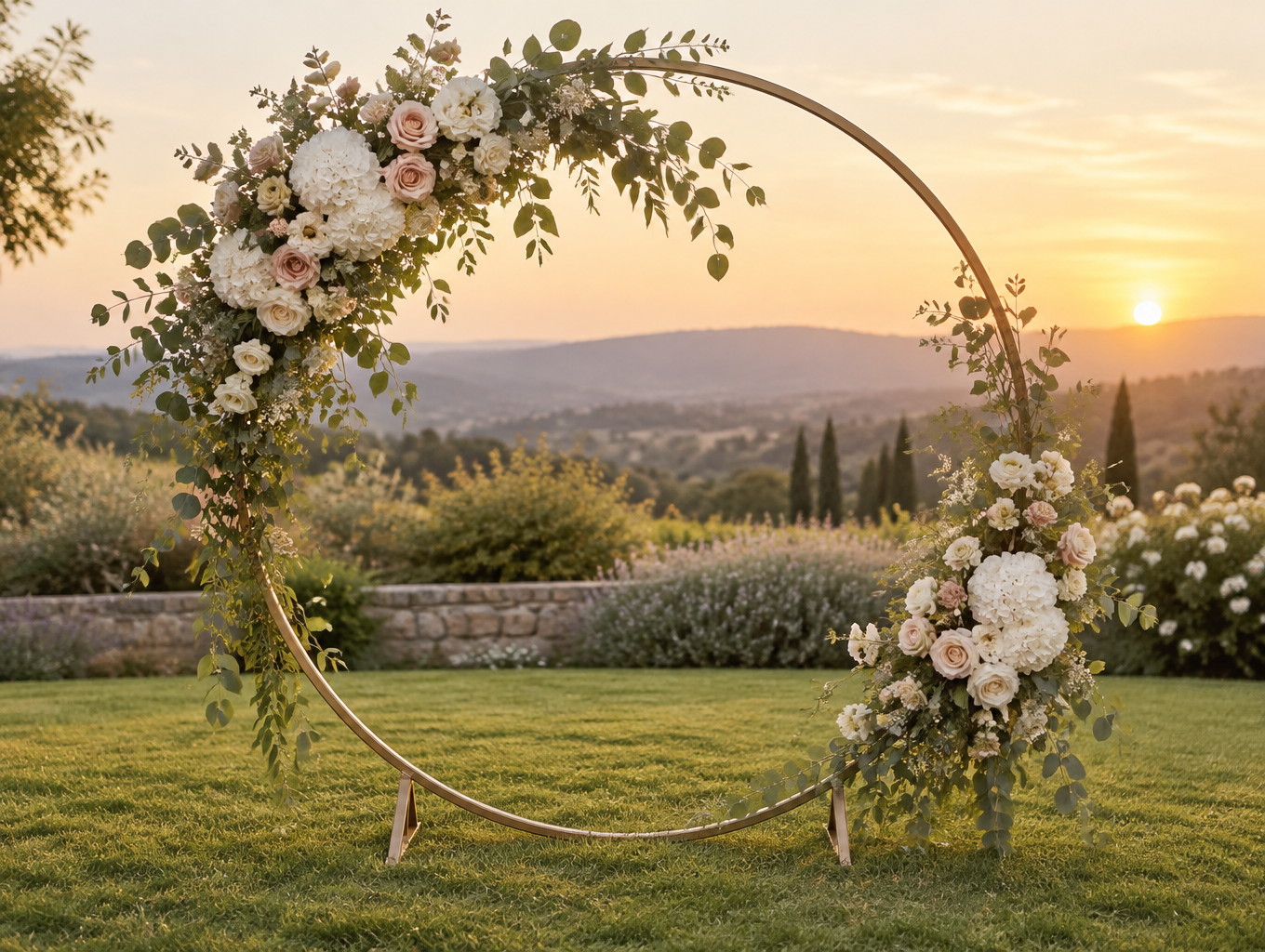
Floral marker for DIY couples: this is when a DIY or part-DIY flower plan gets real. If you’re building your own bouquets, centerpieces, or arch flowers, materials ordering happens at 2-3 months — which means the design (what, how many, from where) is due now. The honest decision framework for DIY-vs-florist — including the cases where DIY saves 50% and the cases where it just moves the cost into your labor — is its own guide: DIY wedding flowers vs a florist.
3 Months Out: Counts and Orders
- Finalize the guest list; address invitations.
- Lock rental counts from the floor plan.
- Order the wedding cake.
- Break in the shoes. Really.
Floral marker — place the flower order. Fresh florists need the final item list with quantities at 2-3 months (peak-wedding-month florists won’t hold your date past this without it). Faux orders need the same lead time for a different reason: large orders of matching stems ship in batches, and you want time to check dye-lot consistency — the same “rose” from two batches can run two shades apart. The item-by-item counting worksheet for this order is our wedding flower checklist — piece counts by role (bouquets, boutonnieres, corsages, arrangements) so nothing is discovered missing on the morning.
2 Months Out: Details and Programs
- Mail invitations (if not already out); track RSVPs.
- Order favors, programs, place cards, signage.
- Final dress fitting; finalize the playlist and must-play list.
- Marriage license (check your county’s window — some states issue 30-60 days out, not more).
Floral marker for faux couples: begin assembly of anything handmade — bouquets can be built now and stored (faux doesn’t wilt), boutonnieres and corsages likewise. This is the faux advantage compounding: assembly spread over two relaxed weekends instead of one frantic 48-hour window. The build methods: how to make a wedding bouquet, and for the men’s side, wedding boutonnieres pre-tied arrive ready — pinning guide in our boutonniere guide.
1 Month Out: Confirm Everything
- Final headcount to caterer and venue (usually due 2 weeks to 10 days out — but confirm their deadline now, it varies).
- Write vows; order of events to DJ/officiant; final payments timeline.
- Confirm every vendor in writing: arrival time, load-in door, contact on the day.
- Assemble the emergency kit (see final week).
Final Week: The Two Endgames
Fresh-flower endgame (the 48-hour window): fresh wedding flowers arrive 1-2 days before the wedding. They need hydration, temperature management, and immediate processing — this is the weekend you pay a florist to own, or the weekend you and three friends spend processing buckets. Every DIY-fresh story that went wrong went wrong here.
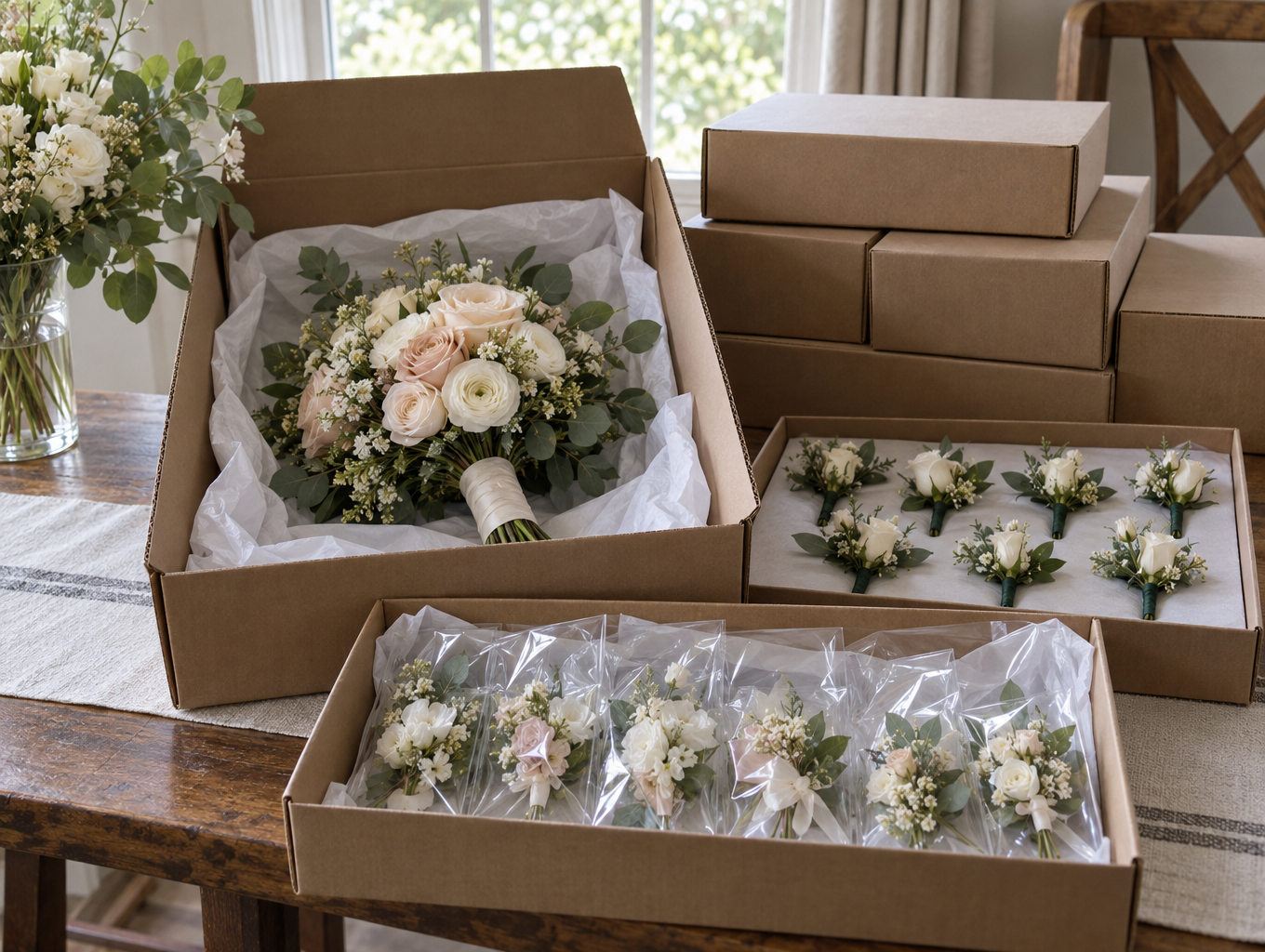
Faux-flower endgame (the calm version): everything assembled over the past two months gets staged — bouquets in boxes by room, boutonnieres pinned-ready in one tray, arch pieces boxed in build order. Faux florals can be delivered and set at the venue days ahead where the venue allows, which takes setup entirely off wedding morning. On the day itself, one person carries one box per room.
Both endgames share this week’s universal list: confirm vendor arrivals, pack the emergency kit (scissors, floral tape, spare pins, safety pins, steamers, painkillers, snacks), charge everything, print the timeline, and hand off every job on the day to a named person.
The After-the-Wedding List (The Month Nobody’s Checklist Covers)
Every checklist ends at “day of” — and then there’s a month of real tasks after it that couples consistently underestimate:
- Name and address changes — Social Security (if changing names), driver’s license, passport, bank accounts, insurance. Start the SSN/driver’s license steps within 2 weeks; some states sequence them strictly.
- Thank-you notes — the classic window is within three months; the modern practice that actually works is 10-15 cards a week starting the week after the honeymoon. Keep a photo of each gift with its giver as gifts arrive — reconstructing who gave what in week six is the single most-dreaded post-wedding task for a reason.
- Vendor reviews — leave reviews for the venue, florist, photographer, and caterer within the month while details are fresh; the vendors you loved genuinely need them, and the ones you didn’t deserve the accurate version.
- Florals: the faux afterlife. This is the quiet bonus of the faux route nobody prices in: fresh wedding flowers are trash by day three; faux bouquets, arch clusters, and centerpieces get boxed and kept, gifted to the next marrying friend, or resold — bridal resale groups and marketplaces move used faux wedding florals routinely at 30-50% of new price. A bouquet that cost $80 and resells at $35 cost $45 for its day — run that math across 40 pieces and the faux budget line shrinks again. Preservation-in-place (shadow box for the bridal bouquet) is its own craft, covered in how to preserve a wedding bouquet.
- Returns and rentals — rental companies collect within days; anything rented, return on schedule or the late fees find you. Registry completion discounts (most stores give 15-20% on unpurchased items for a window after the wedding) expire — worth one deliberate shopping pass, not a lingering tab.
- The financial close-out — final vendor payments confirmed paid, the joint account or budget consolidation done, and the wedding insurance claim window (if you carried it) checked against anything that actually went wrong.
The Six Deadlines at a Glance
| Deadline | The tasks that can’t slip | Why it’s placed here |
|---|---|---|
| 12+ months | Budget, guest ceiling, venue, photographer | Peak-month venues and photographers book a year out |
| 8-10 months | Florist, dress ordered, flower budget set | Made-to-order gowns take 6-9 months; florists hold peak dates |
| 4-6 months | Samples, invitations ordered, DIY design due | Floral samples reveal palette problems while there’s time to fix them |
| 2-3 months | Flower order placed, rental counts, guest list final | Florist lead time; faux orders need dye-lot checking room |
| 1 month | Final headcount, written vendor confirmations | Caterer/venue count deadlines cluster here |
| Final week | Staging by room, emergency kit, jobs handed off | The 48-hour fresh window — or the calm faux staging version |
Copy-Paste Checklist Template
“` WEDDING PLANNING CHECKLIST (12 months to day-of)
12+ MO: budget + guest ceiling / venue + date / photographer + caterer / color story / flower folder 10 MO: DJ + video + transport + officiant / order dress / save-the-dates / room blocks / FLOWER BUDGET (10-15% rule) 8 MO: BOOK FLORIST (or DIY decision) / palette w/ swatches / hair+makeup / registry + website 6 MO: bridesmaid dresses / cake baker / rentals reserved / FLOWER SAMPLES (fresh mockup OR faux sample stems) 4 MO: order invitations / rehearsal venue / menu + cake final / honeymoon / DIY DESIGN DUE 3 MO: guest list final / rental counts / cake order / FLOWER ORDER PLACED (fresh: item list to florist; faux: full order, check dye lots) 2 MO: mail invitations / favors + programs + signage / final fitting / vows / FAUX: begin assembly (bouquets, bouts, corsages) 1 MO: final headcount / vendor confirmations in writing / emergency kit / payments scheduled 2 WKS: license window check / order of events / venue walkthrough with all vendors 1 WK: confirm arrivals / stage faux florals by room / charge everything / hand off every job to a named person DAY-OF: fresh = 48h processing window starts / faux = boxes by room / emergency kit with a person “`
FAQ
When should I start planning my wedding?
Start 12 months out for a popular-month wedding (May-October in most of the US), 8-10 months for off-season or smaller weddings. The deadline that actually breaks plans is venue-plus-photographer availability — those two books fill a year ahead in peak season, everything else has more slack.
What percentage of my budget should flowers be?
The industry convention is 10-15% of the total budget for full floral service. If your number is lower, the honest moves are fewer arrangements, faux, or DIY — not the same plan squeezed. The item-by-item breakdown (what a bouquet, centerpieces, and arch flowers each typically cost, fresh versus faux) is in our wedding flowers cost guide.
How far in advance do you order wedding flowers?
Fresh: place the final order with your florist 2-3 months out, samples at 6 months. Faux: order at the same 2-3 month mark (matching dye lots and shipping time), then assemble from 2 months out — faux turns the last 48 hours, the most fragile window in fresh-flower weddings, into setup you can finish a week early.
What if I’m planning on a shorter timeline?
Compress the front, never the back: venue, officiant, and florist still want 1-2 months minimum, and the floral order (fresh or faux) shouldn’t drop below 4-6 weeks out. Faux or part-faux is the standard rescue for short timelines precisely because it removes the 48-hour fresh-delivery gamble — see the DIY-vs-florist guide for where the line sits.