
Blog
Ceramic vs Glass Vases: Weight, Light, Style, Flowers and Safety, Settled

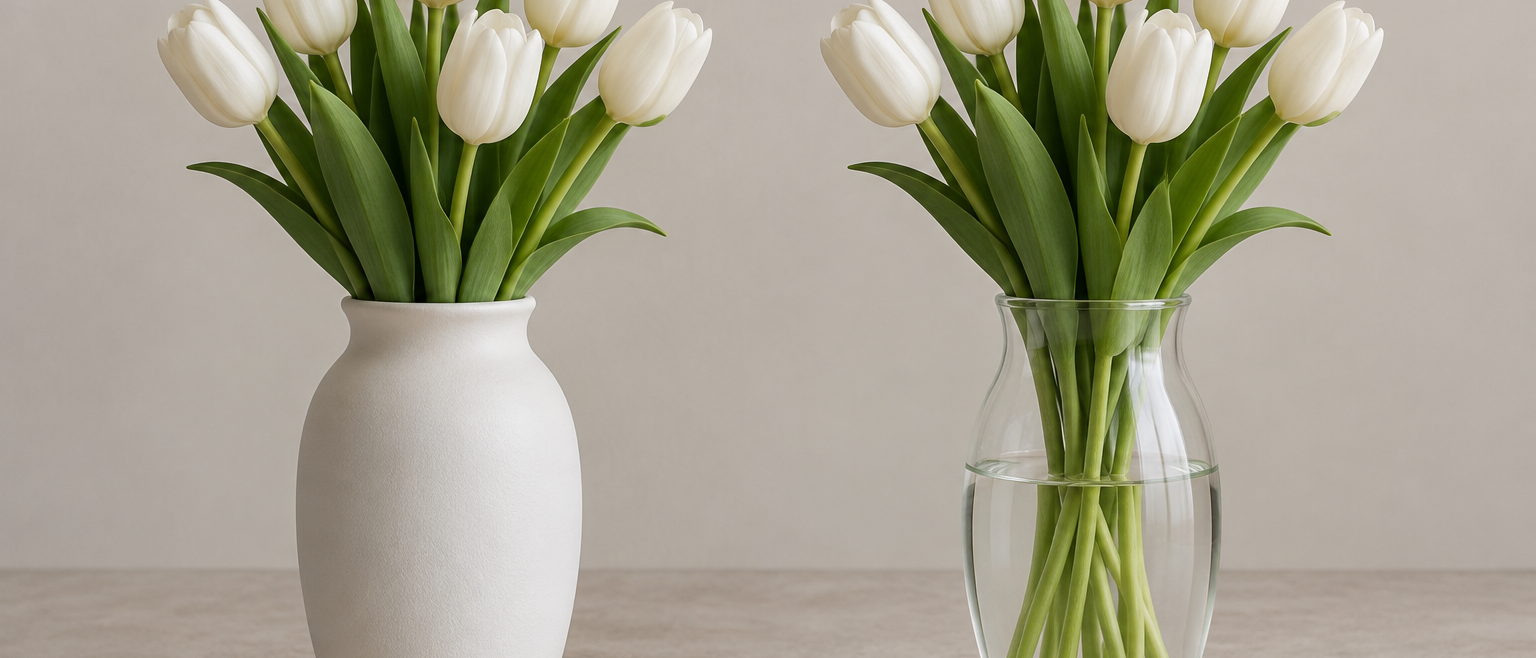
By Evercombe Team · Updated October 13, 2026 · 8-minute read
Quick answer: Ceramic wins on weight (a glazed stoneware body runs 2-5× heavier than glass at the same size), on hiding foam and tape mechanics, and on warm opaque color. Glass wins on light, visible stems and the floating-water look. At typical sizes both materials run $15-90, so this is a physics and style decision, not a budget one. Busy rooms and sculpted builds go ceramic; quiet shelves and narrow-neck posies go glass.
The comparison gets framed as taste, which is why most write-ups on it are useless — “it depends on your aesthetic” is not an answer, it is a shrug. The real decision runs on four physical facts: ceramic is heavier, ceramic is opaque, glass transmits light, glass fails suddenly. Everything practical about the choice — which flowers, which shelf, which household, which water plan — falls out of those four facts, and the whole argument is on the table below.
The Two Materials in One Paragraph Each
Ceramic is kiln-fired clay — earthenware, stoneware or porcelain — finished with a glaze (glossy or matte) or left textured and raw. The firing makes the body opaque and heavy; the glaze decides whether it holds water. It is the material of pattern, color and weight.
Glass is silica melted and blown or molded into a vessel. It is transparent or translucent, lighter at every size, and it shows everything inside — which is either the point (visible stems, water lines, decorative fillers) or the problem (foam, tape grids, stem construction). It is the material of light and minimalism.
The Comparison Table
| Dimension | Ceramic | Glass |
|---|---|---|
| Weight (same size) | 2-5× heavier | Light |
| Light and stems | Opaque — hides stems, foam, tape | Transparent — shows everything |
| Style range | Pattern, texture, matte, color (traditional to modern) | Clean, airy, modern; limited to shape |
| Best flower build | Wide-mouth foam builds, packed short stems, branches | 1-5 stem posies, water-lines, filler stones |
| Safety and failure | Chips at the rim under knocks; rarely fails outright | Shatters clean but suddenly |
| Water | Glazed/sealed bodies hold it; porous bodies don’t — flag per listing | Holds water by default |
| Typical price | $15-90 at our sizes | $15-90 at our sizes (as of October 2026) |
Weight and Stability
Weight is ceramic’s whole pitch. A glazed stoneware body weighs two to five times a glass vessel of the same size, which means tall faux branches, top-heavy peony builds and cats with opinions all meet their match. The stability changes where a vase can live: pieces that would tip on a hall console hold steady there in ceramic, and floor vases carrying four feet of branch are almost always ceramic for exactly this reason.
Glass runs the opposite play. Light bodies sit safely on high shelves you reach with a step stool, travel to the sink one-handed, and cost nothing to rearrange when the room changes its mind. The failure mode is the trade: glass does not warn before it goes.
Light, Stems and Transparency
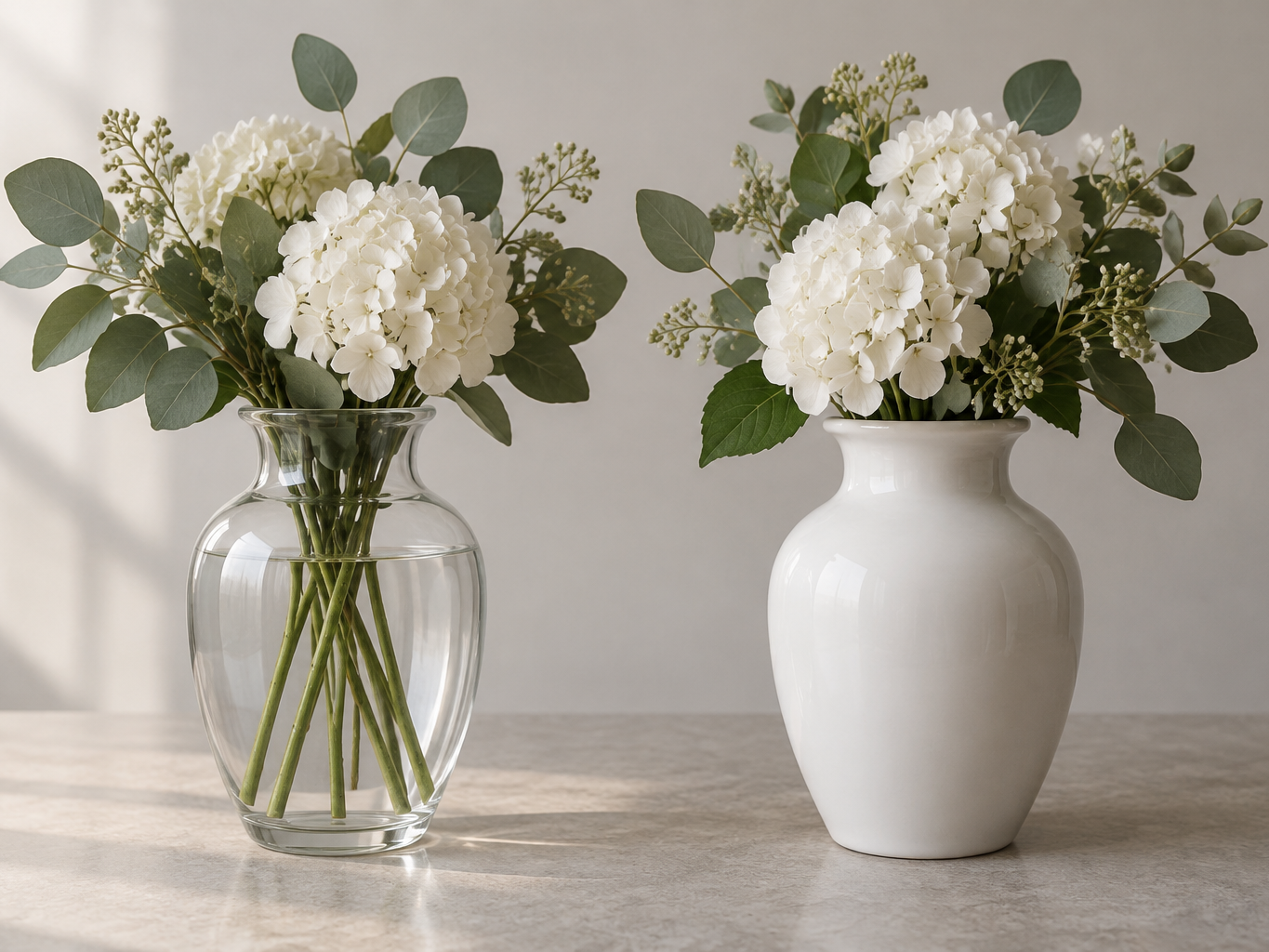
Transparency is glass’s signature and its tax. Visible stems are the reason narrow-neck glass posies photograph like still-life paintings — one to five stems, clean water line, maybe glass filler stones catching light. The same transparency betrays every mechanical trick in bigger builds: floral foam, tape grids and the wire construction of faux stems all sit on display, which is why glass favors arrangements small enough to need none of them.
Ceramic’s opacity is arrangement freedom. Wide-mouth builds look sculpted rather than engineered because the body hides the scaffolding — foam blocks, chicken wire, taped grids all disappear. This is the quiet reason vases for artificial flowers skew ceramic: faux stems have construction (bends, taping, wire) that clear glass exposes and opaque bodies don’t.
Style Range
Ceramic owns pattern and finish. Blue-and-white glazed tradition, matte black modernism, ribbed and speckled texture, terracotta warmth — the material takes all of it, because glaze is a surface you can work. If a room’s style runs through the vessel itself — chinoiserie corners, gallery-white minimalism, boho texture stacks — ceramic is carrying that story.
Glass owns light. It reads as absence rather than presence: the vessel disappears and the flowers float. Glass suits rooms where the architecture and the stems are the statement and the container should claim nothing — and its style ceiling is its shape (cylinder, bud, bubble, hurricane) since the material itself has no finish to style with. The fifteen looks ceramic does by finish are grouped here.
Which Flowers Go in Which
Pairing follows the transparency split. In glass: single stems and small posies you want framed — tulips, a rose or three, paperwhites over pebbles, anything where the water line is part of the composition. Faux stems in glass need opaque wraps or an inner cup to hide their construction at the waterline.
In ceramic: builds that need hiding. Hydrangea heads packed at 3-inch stems, peonies by the half-dozen, foam-built centerpieces, branch arrangements in tall bodies — anywhere the mechanics would embarrass glass. The stem-count and height arithmetic for those builds lives in our fit and pairing guide, and pre-matched sets (both problems solved at once) sit in flowers with vase included.
Safety, Chips and Shelf Life
The two materials fail differently, and the difference matters more with kids, pets and high shelves. Ceramic chips — at the rim, under a hard knock, visibly and gradually. A chipped rim is a cosmetic event; the body keeps holding flowers for years. Glass shatters — clean, sudden, and all at once, into pieces that find bare feet. Households with toddlers and tail-swishing dogs solve this with ceramic at floor and table level, glass on shelves the household cannot reach.
Both materials outlast the flowers by decades, which is why faux-stem households treat the vase as the durable purchase and the stems as the seasonal one.
Water, Cleaning and Care
Glass holds water by default — a sealed, non-porous body, no qualifications. With ceramic, the glaze decides: fully glazed interiors hold water indefinitely (most of the ceramic market), unglazed exteriors with sealed interiors hold it too, and fully porous unglazed bodies wick water through the clay — dry-display pieces for faux and dried stems only. The watertight flag on the listing answers this per piece; the material name alone does not.
Cleaning splits the same way. Glass rinses like a drinking glass and shows its own residue, so it stays honest. Glossy ceramic wipes clean the same way; matte bodies hide water spots that gloss wears like fingerprints — which makes matte the lower-maintenance finish, and glass the self-policing one.
If-Then Picks
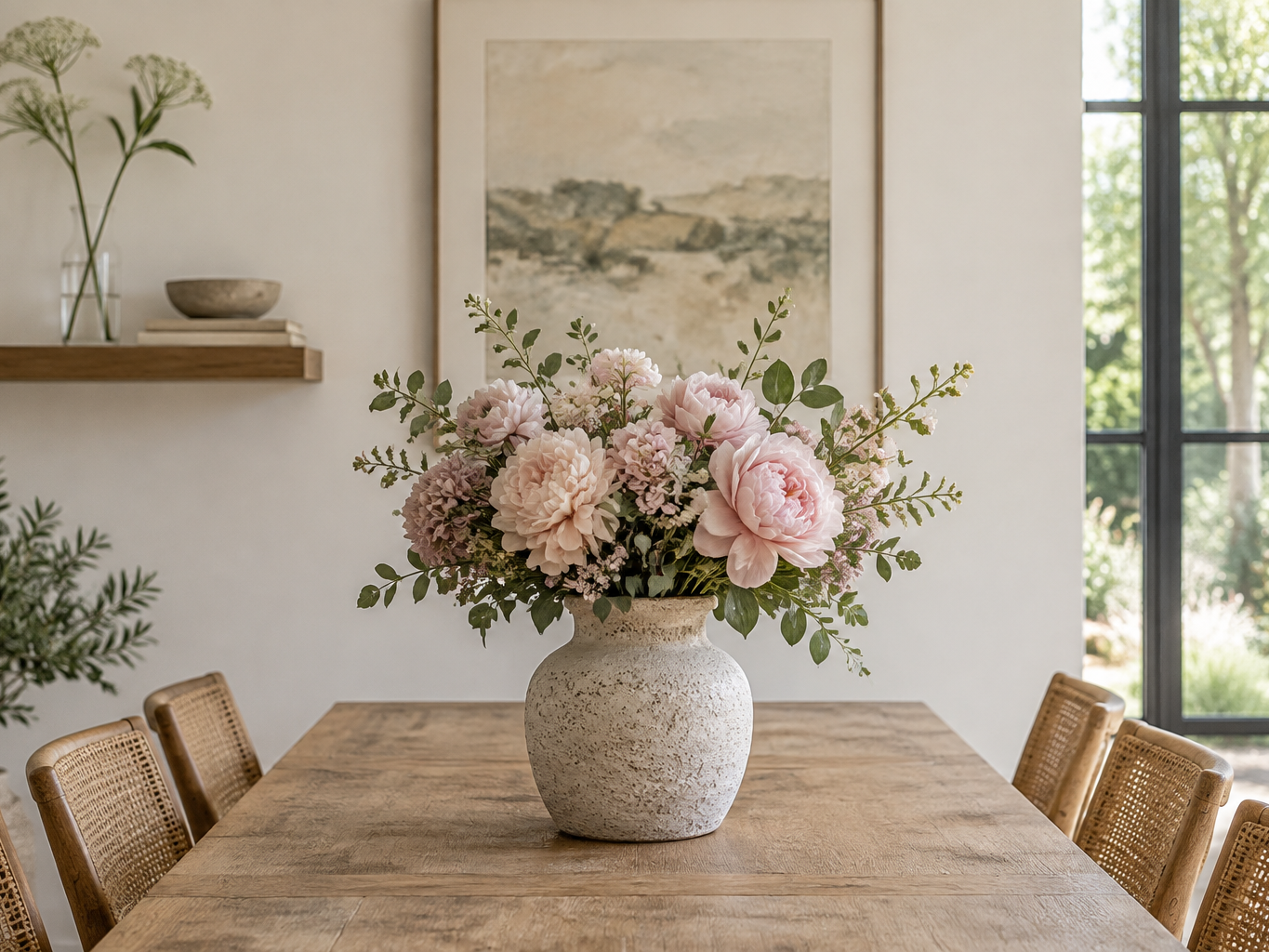
- If the vase holds a foam or wide-mouth build → ceramic; the body hides the engineering.
- If it holds one to five stems you want to show → glass; the frame is the point.
- If cats, kids or tall branches are in the picture → ceramic; the weight is the safety feature.
- If the shelf is high and the budget lean → glass; lighter to reach, cheaper to replace.
- If the room’s style runs through pattern or texture → ceramic; glaze is a style surface.
- If the look is floating stems and light → glass; nothing else does it.
The Honest Weaknesses
Ceramic’s weakness is its weight in the wrong context: it is heavier to ship, heavier to move when you repaint, and a dropped ceramic floor piece takes the tile with it. On a wobbly shelf or a rented apartment you redecorate quarterly, that weight stops being stability and starts being furniture.
Glass’s weakness is brittleness and the maintenance of transparency — hard water films, dust on inner walls, stem construction on display, and a failure mode without a warning shot. Neither list is short. Both are the price of the strengths above, and the table is which price your house can pay.
FAQ
Is ceramic more expensive than glass?
No — at typical sizes the two materials run the same $15-90 band (as of October 2026). Higher prices follow size and finish complexity (oversized floor ceramics, multilayer glazes), not the material choice itself. The budget decision between them is really about replacement risk, not sticker price.
Can you put water in both ceramic and glass vases?
Glass, always. Ceramic, depends on the body: fully glazed interiors hold water indefinitely, sealed interiors under unglazed exteriors hold it too, fully porous unglazed bodies do not. The watertight flag on the individual listing is the answer — “ceramic” alone does not tell you.
Which is safer around kids and pets?
Ceramic, on weight and failure mode: it chips at the rim under a knock but rarely fails outright, while glass shatters suddenly and completely. The standard split keeps ceramic at table and floor level and moves glass to shelving the household cannot reach.
Do ceramic vases chip easily?
Rim chips under hard knocks are ceramic’s most common wear event — a knock from a faucet or a dropped stem weight against the lip. Chips are cosmetic; they do not spread or end the vase’s working life. Glass, by contrast, has no chip state: it holds or it shatters.
Related Guides
- Ceramic Vase Ideas — fifteen looks grouped by finish, with stem counts
- Artificial Flowers with Vase Ideas — the pairing recipes in pre-matched set form
- Silk vs Latex vs Foam Flowers — the layer under this debate: what the stems themselves are made of
- Shop ceramic vases · glass vases · centerpiece vases · all flower vases