
Blog
Silk vs Fresh Flowers: The Honest Comparison, With Real Cost Tables and When Each Wins

By Evercombe Team · Updated October 12, 2026 · 9-minute read
Quick answer: Fresh flowers win on scent, and the first-hour perfection — nothing else. Silk wins on total cost (roughly a third to half of fresh for equivalent volume), zero day-of logistics, no seasonal availability ceiling, and permanence. The honest rule: fresh for close-in, short-lived, scent-critical moments (a dinner party, an anniversary dozen); silk for anything that must survive a full day, a full season, or a full year. Mixed weddings — fresh ceremony arch, silk everything reusable — are the fastest-growing compromise.
Both sides of this argument are usually sold by people with inventory to move. Florists quote you the romance; faux shops quote you the amortization. What follows is the neutral version: dimension-by-dimension, with actual price tables, a wedding-day model, a rent-versus-buy section (rental is the third option nobody compares), and verdicts you can act on.
First, Terms: What’s Actually Being Compared
“Silk” flowers today are mostly silk-look woven polyester; premium tiers add latex/PU “real touch” coatings that pass a fingertip test (the full material map: silk vs latex vs foam). “Fresh” means cut stems from a florist or wholesaler, typically 3-10 days of vase life. The comparison below assumes mid-to-premium silk, not the dollar-store tier — comparing craft-store foam to florist peonies is how both sides cheat.
Dimension 1: Cost (The Tables Nobody Publishes)
Per-piece retail, US, typical ranges (competitor prices as of September 2026):
| Piece | Fresh (florist) | Quality silk | Notes |
|---|---|---|---|
| Single rose/carnation stem | $3-8 | $2-6 | Silk bulk pricing closes the gap at volume |
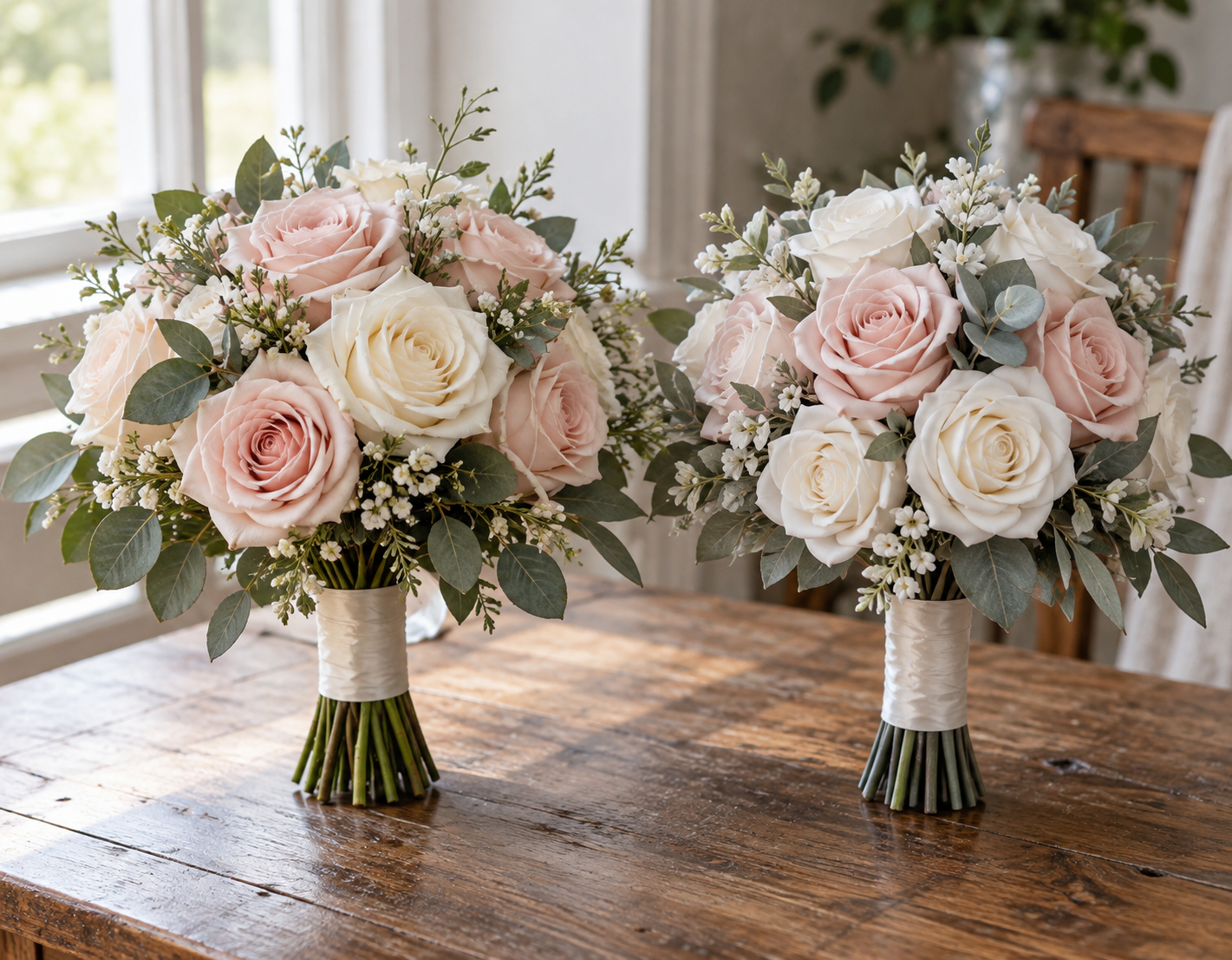
| Bridal bouquet | $150-350 | $60-180 | Silk bouquets: buy pre-made or DIY stems |
| Bridesmaid bouquet (each) | $75-150 | $30-80 | |
| Boutonniere/corsage (each) | $15-35 | $8-18 | See wedding boutonnieres |
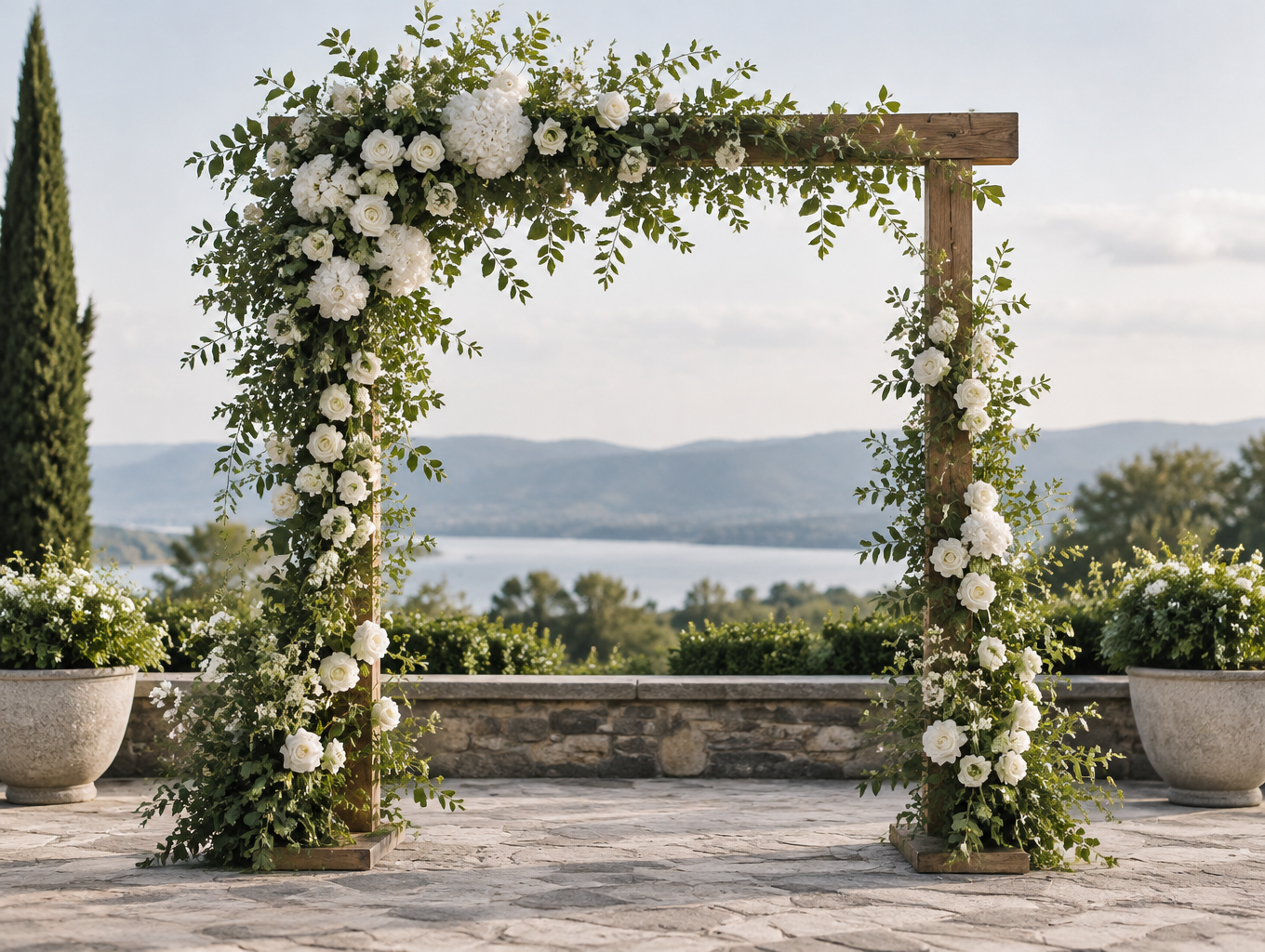
| Ceremony arch flowers | $300-1,000+ | $150-500 | |
| Centerpiece (each) | $60-200 | $35-120 | |
| Delivery + day-of setup | $75-300 | $0-50 (ships ahead) | Fresh requires day-of timing |
A 100-guest wedding, three ways (competitor prices as of September 2026):
| Line | Fresh florist | Quality silk | Notes |
|---|---|---|---|
| Bridal + 4 bridesmaid bouquets | $450-950 | $180-500 | |
| 8 boutonnieres + 4 corsages | $180-360 | $90-175 | |
| Ceremony arch | $300-1,000 | $150-500 | |
| 12 centerpieces | $720-2,400 | $420-1,440 | |
| Delivery/setup/teardown | $150-400 | $0-50 | |
| Total | $1,800-5,100 | $840-2,665 | Silk runs roughly 40-55% of fresh in this model |
| After the wedding | Compost | Sell or reuse | Silk resells in local wedding groups at 40-60% of retail (competitor prices as of September 2026) |
The big published averages — The Knot’s ~$2,500, Zola’s ~$2,700, WeddingWire’s ~$1,500 (competitor prices as of September 2026) — are all fresh-florist baselines. That definitional mud is worth remembering whenever a headline number shocks you either way. The full budget walkthrough: wedding flowers cost.
Dimension 2: Realism (Distance Decides)
Fresh wins by default at zero distance — it is real. But the gap is narrower than the florist industry admits, and it’s a distance function:
- 0-0.5 m (bouquet in hand): fresh wins; real-touch silk is the only faux tier that contests it, and only in thick-petaled species (roses, peonies, ranunculus).
- 0.5-2 m (guest view): premium silk ties. Nobody at a reception is petal-inspecting.
- 2 m+ (arch, room décor): silk wins outright — fresh wilts through a 6-hour event; silk holds hour zero’s shape through hour ten. The realism-by-distance ranking: best fake flowers that look real.
The two honest fresh-only advantages: scent, and the visible life of stems in water at a dinner table. If those two matter more than everything else in the table, no amount of amortization math should talk you out of fresh.
Dimension 3: The Wedding Day Itself (The Underrated Dimension)
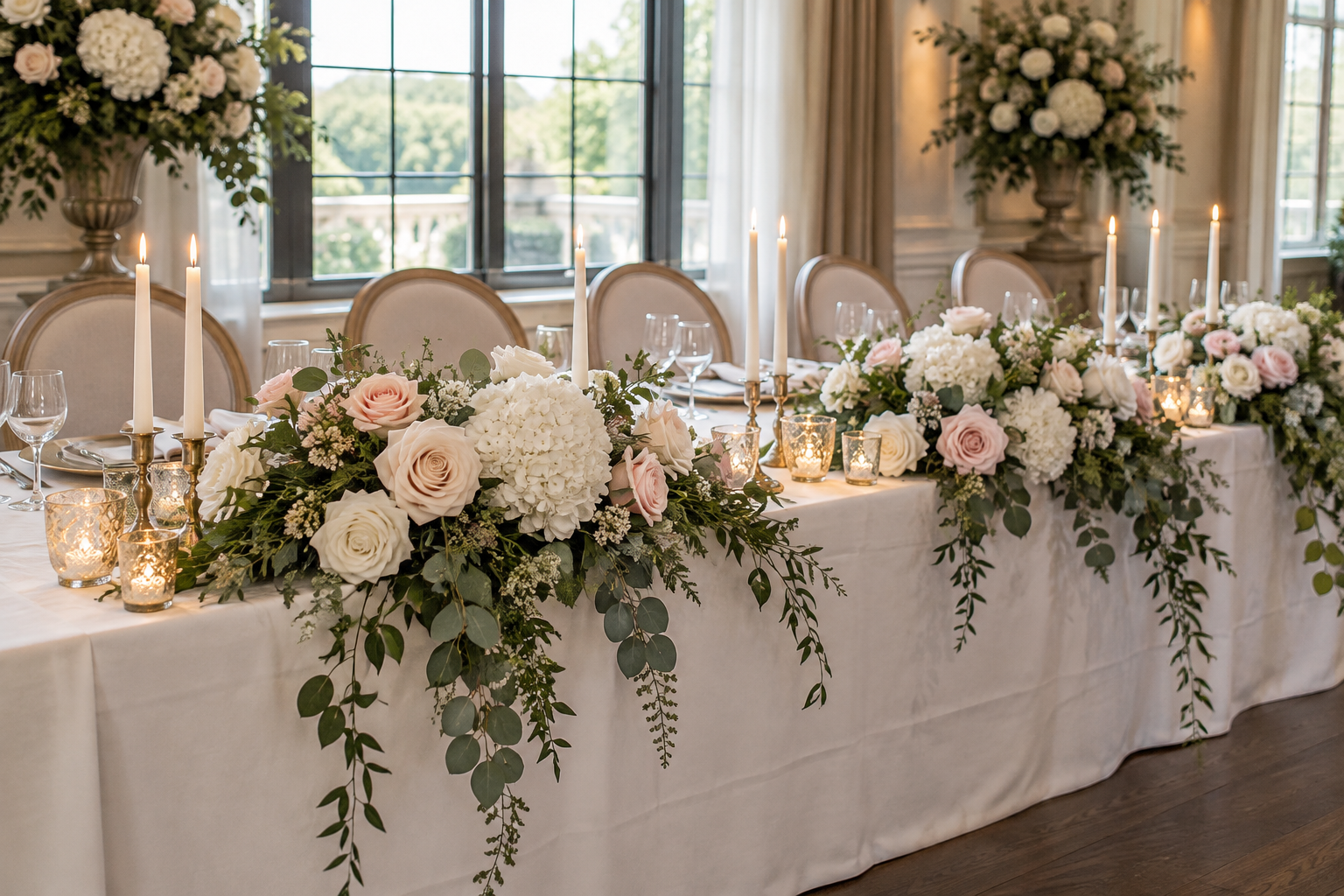
Fresh flowers impose a schedule: they’re delivered the morning of, conditioned, arranged within hours, and start declining immediately. Every florist story collection includes the August wedding where the peonies gave up during the vows. Silk imposes none of it — arrangements are done a month early, sit in a spare room, and look identical at 10 p.m. as at 10 a.m.
That scheduling difference also runs in silk’s favor for setup access: venues with morning-of-only access crush fresh timelines, and florist delivery windows are a real failure point in wedding-day reviews. We don’t promise timelines we haven’t verified — but “no day-of dependency at all” is a structural property of silk, not a service level.
Dimension 4: Lifespan, Allergies, Pets, and the Rest
| Dimension | Fresh | Silk |
|---|---|---|
| Lifespan | 3-10 days | Years (indoor silk 3-7+; the bouquet outlives the marriage stats) |
| Allergies | Pollen triggers; ~10-30% of adults report flower/pollen sensitivity | None — though dusty old arrangements need cleaning |
| Pets | Some fresh species are toxic to cats (lilies seriously) | Generally inert; watch for pets chewing wire stems |
| Heat/venue rules | Wilts in heat; some venues restrict petals | Heatproof; most venues welcome silk petals |
| Scent | The real thing | None — or add scent separately (candles, diffusers) |
| Environmental | Single-use, water/glyphosate/air-freight footprint; compostable | Manufactured once, reusable for years, ultimately landfill plastic — the honest weak point of silk; reuse is what earns its green case |
| Maintenance | Water, trimming, disposal | Monthly dusting; occasional reshaping — how to clean |
The environmental row is where silk advocates overreach most. Reused across years or many events, silk’s per-use footprint beats fresh’s air-freighted, single-use profile; bought for one occasion and binned, it doesn’t. The material and reuse math deserve the same honesty as the price math.
The Verdict Matrix (If-Then)
| If… | Then… | Because |
|---|---|---|
| It’s a bouquet held for hours and photographed at arm’s length | Real-touch silk, or fresh if scent is non-negotiable | Real-touch tier passes the touch test; see real touch flowers |
| It’s a ceremony arch or large installation | Silk | Holds through the full day and heat; half the cost at that scale |
| It’s a holiday dinner centerpiece | Fresh (small) or silk (season-long) | Decide by display length: evening vs six weeks |
| It’s an outdoor memorial display | Silk | Has to survive weeks outdoors — outdoor options |
| It’s a gift for a hospital or office | Silk | No water, no maintenance, no allergy |
| The couple wants to keep the bouquet | Silk | Fresh preservation is its own expensive, imperfect process — how to preserve a wedding bouquet |
| It’s a first-date “just because” | Fresh | Scent and spontaneity are the point |
The Third Option: Renting (Mostly for Weddings)
Flower rental sits between the two, and it’s worth a paragraph because rental companies’ marketing rarely mentions the catch:
- What renting is: pre-arranged silk (and some preserved) wedding packages — arch sets, centerpieces, aisle décor — delivered, sometimes styled, returned. Typical ranges $500-1,500 for package tiers (competitor prices as of September 2026).
- The catch: you don’t keep anything, availability is first-come for peak Saturdays, damage fees are real, and — the structural one — rental inventory is built to survive many weddings, not to maximize realism. Rental silk tends toward the sturdy, not the delicate.
- The math that surprises people: at $900 rented versus $1,100-1,400 owned (similar volume, higher realism), renting saves money only if you never resell. Silk wedding sets resell at 40-60% of retail in local wedding groups (competitor prices as of September 2026), which can make owning the cheaper option outright — plus you keep the bouquet.
Rent if: peak-season, one-day, budget-capped, zero-storage. Own if: you want the keepsake, a non-Saturday date, resell discipline, or higher-grade flowers than rental fleets carry.
The Mix Strategy (What Working Planners Actually Do)
The sophisticated answer isn’t either/or: fresh where noses are, silk where eyes and hours are.
- Fresh: personal flowers at nose height (bride’s bouquet if scent matters), table buds at a seated dinner.
- Silk: everything architectural — arch, aisle, large arrangements, all boutonnieres and corsages (they get hugged, twisted, and pocketed; fresh ones are dead by photos), centerpieces for multi-hour receptions.
- Resell the silk after: arch sets and centerpiece collections move fast in local wedding marketplaces.
A wedding built that way lands visually identical in the album at roughly 60-70% of the all-fresh bill (competitor prices as of September 2026) and keeps the bouquet on the shelf afterward.
FAQ
Do silk flowers look tacky at a wedding?
The tier decides, not the material: single-color stems with glossy plastic greenery read cheap; two-tone silk-poly with real-touch hero blooms and quality greenery passes at guest distance. The distance-based realism tiers: best fake flowers that look real. Boutonnieres and corsages are the strongest silk case — they’re manhandled all day and fresh ones wilt by the golden-hour photos.
Is it cheaper to buy silk or fresh flowers?
At equivalent volume, quality silk typically runs 40-55% of the fresh-florist cost, and 20-40% of it comes back on resale (competitor prices as of September 2026). Fresh wins only at small scale where a $15 market bunch covers the need — nobody sells you six silk stems at a time for less.
Can guests tell the difference at a reception?
At guest distance (1 m+) with premium silk, reliably not; the tell isn’t petals, it’s bad greenery and uniform angles. At bouquet-in-hand distance, real-touch tier or fresh. Hybrid strategy above splits exactly along that line.
How long do silk wedding flowers last?
Indoors, years — 3-7+ for quality silk-poly, 2-5 for real-touch coatings (they scuff), which is why keepsake buyers pick silk and preservation buyers are preserving fresh. The preservation route, costs and failure modes: how to preserve a wedding bouquet.
Are silk flowers better for the environment?
Neither side wins clean. Fresh: grown-once, flown-in, composted — repeated monthly for a habit. Silk: manufactured plastic — amortized over years of reuse. Silk wins the per-use math only when actually reused; the single-use silk arrangement is the worst of both. Buy silk you’ll keep or resell.
Related Guides
- Wedding Flowers Cost — the full budget walkthrough, three sample weddings
- How to Preserve a Wedding Bouquet — the fresh-bouquet keepsake route, honestly
- Silk vs Latex vs Foam Flowers — the material layer under this debate
- Shop flower arrangements · wedding bouquets · wedding boutonnieres · real touch flowers