
The ceremony-site builds: flower walls for backdrops and photo moments, arch flowers for the vows themselves. These are the pieces the camera lingers on — coverage per square foot and per arch foot print in every listing.
Flower Walls and Arch Builds
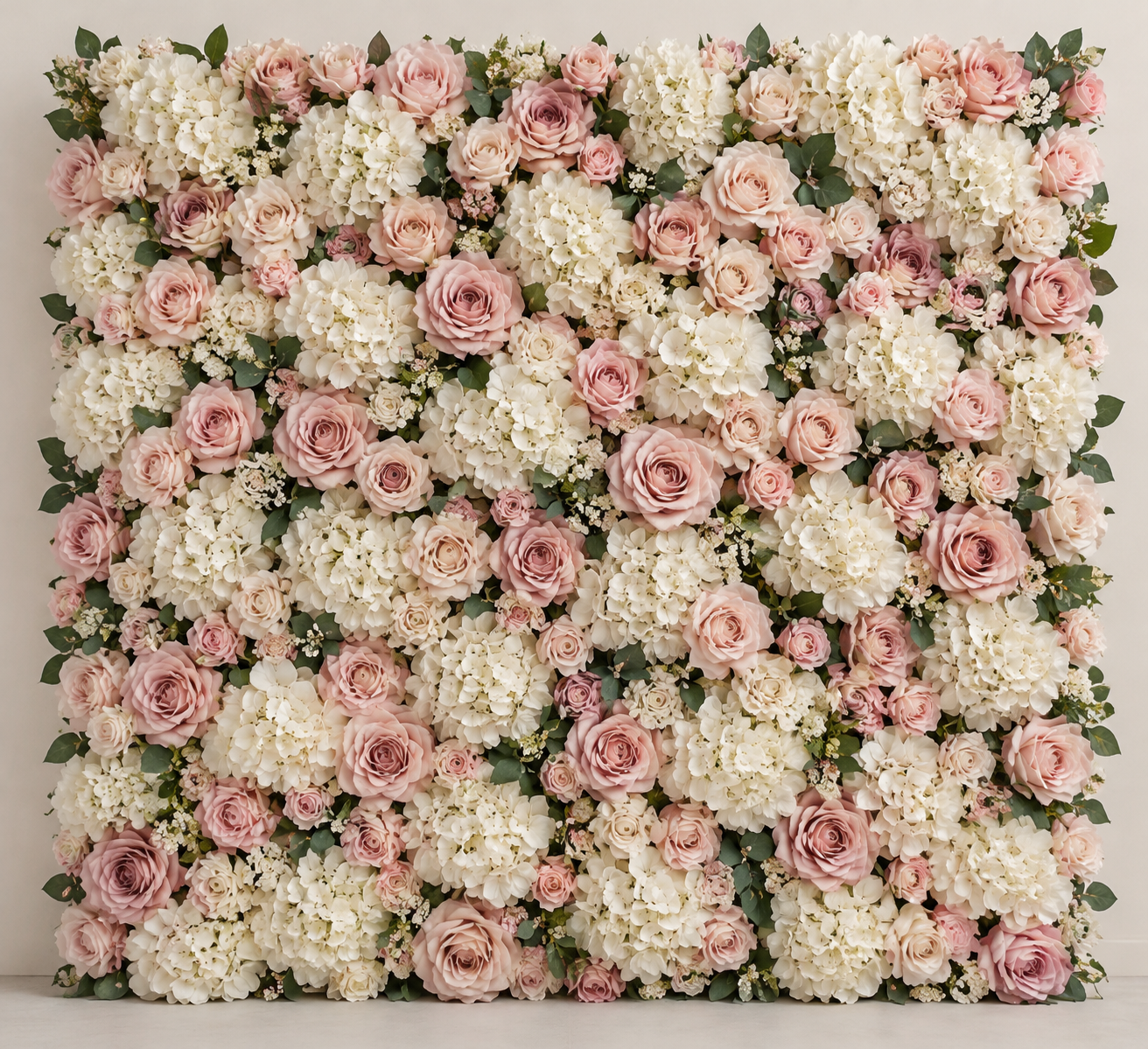
Artificial Flower Walls
Modular flower wall panels that build a photo backdrop one tile at a time — greenery bases and bloom-faced styles in silk-blend and PE, zip-tie mounted to any frame, grid or pipe-and-drape. Every listing…
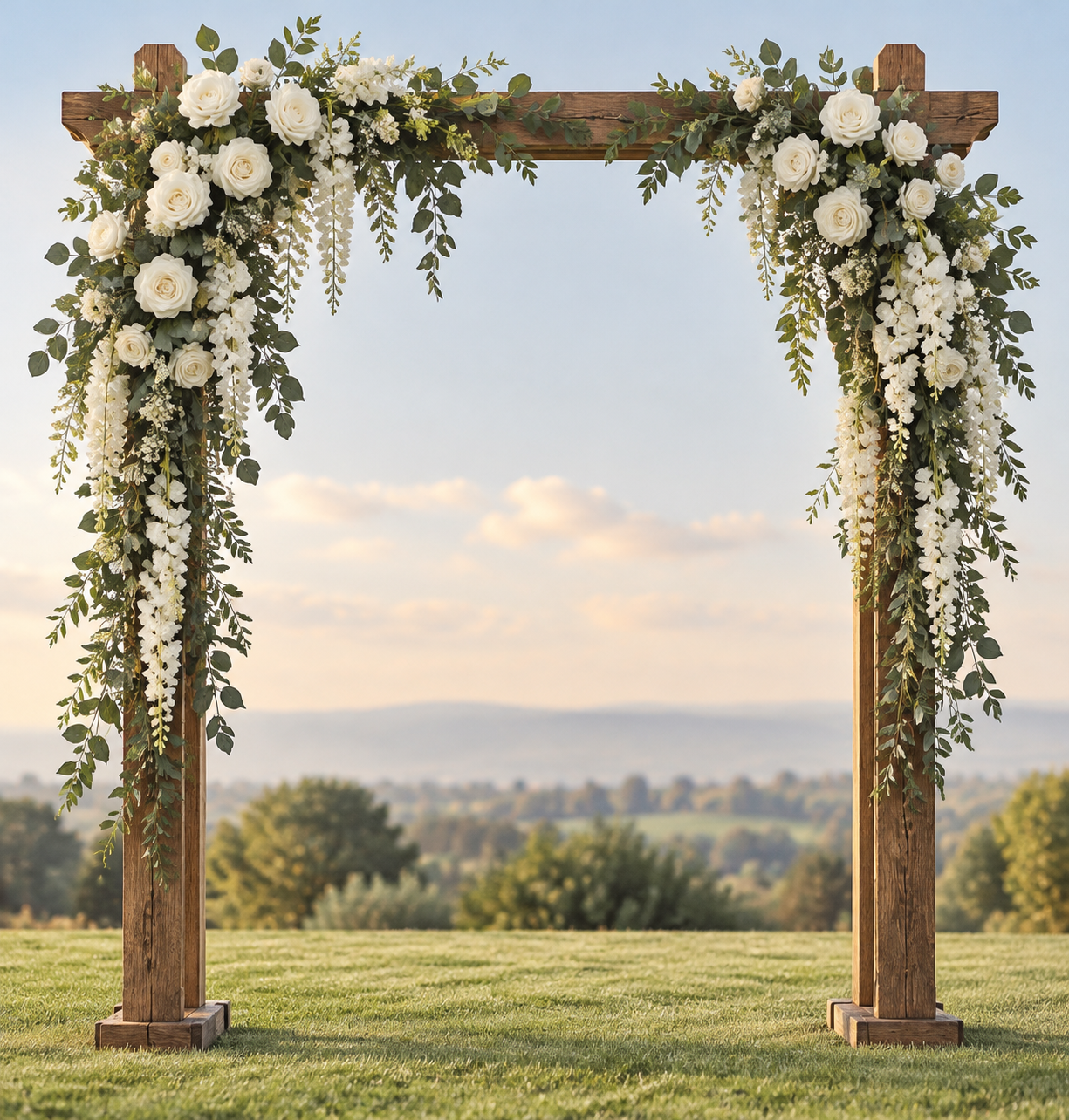
Wedding Arch Flowers
Flowers for the frame you'll say yes in front of — full arch kits, half-arch swags and by-the-meter garlands in silk-blend and real-touch, built to hold their silhouette through setup, ceremony and every wide…
How to Plan Ceremony Flowers
- Start from the venue photo, not the Pinterest board.
The venue's architecture decides: an ornate venue needs less build, a blank barn wall wants the full flower wall. Photograph the site before choosing coverage.
- Budget arch flowers by the foot.
Roughly three to four stems or one bush per foot of arch width is the standard full-coverage build; half-coverage accents run half that. The arch flowers page carries the per-foot math.
- Check what the venue allows you to attach.
Free-standing flower wall panels need no venue permission; tied arch builds need a frame. Listing notes state what each build attaches to.
Pick the Frame First: Arch Shapes and What They Carry
Browse ceremony-decor inspiration for ten minutes and the same frame shapes recur — because each shape flatters a different coverage strategy. Match the floral build to the frame before ordering stems:
| Frame shape | Reads as | Best-fit floral coverage |
|---|---|---|
| Classic four-post / rectangle | Traditional, church-adjacent | Corners plus a swag across the top beam — the lightest build that still photographs full |
| Round / circle ("the halo") | Modern, editorial — one of the most requested shapes of the decade | A half-moon of blooms on the lower arc, greenery fading upward; full wraps double the stem count |
| Hexagon | Geometric, garden-modern | One concentrated cluster per vertex reads designed; even scatter reads busy |
| Heart | Elopements, vow renewals, microweddings | Outline coverage in a single bloom type — mixed species blur the silhouette |
Swag or Full Coverage: The Budget Split
Across florist galleries and arch-kit listings alike, ceremony coverage sells at two distinct levels. A swag — one drooping run of blooms and greenery, hung at a corner or across the top beam — covers a frame's most-photographed third at roughly a third of the stem count of a full wrap. Full coverage dresses every visible inch of the frame and is what couples picture when they say "flower arch." The honest planning move: full coverage on the side your photographer shoots from, swags on the sides guests see obliquely — the album never notices, and the savings fund the reception pieces. Both builds, in kit and swag form, sit in the arch flowers line.
Outdoor Ceremonies: What Weather Asks Of the Build
Backyard and beach ceremonies made "weatherproof" a mainstream demand in arch florals — mass-retailer listings now say it outright. For faux builds the weather question has three parts. Wind is the real one: silk is lighter than saturated fresh stems, so outdoor frames want zip-tie anchors at every attach point and a sandbagged base, not just the frame's own feet. Sun is the slow one: UV-rated lines (flagged in the outdoor collection) hold their color through full-day exposure where standard interior grades can shift over a long afternoon in direct summer light. Rain, silk shrugs off entirely — petals shed water and the frame dries, where fresh petals bruise. An afternoon shower that would send a fresh arch to the florist's van for triage leaves a silk build exactly as installed.
Frequently Asked Questions
How many panels does a flower wall need?
A photo-corner wall runs four to six panels of the standard size; a full ceremony backdrop takes eight to twelve. Panel dimensions and coverage print per listing, so the wall is planned by multiplication, not hope.
Can arch flowers fit any arch shape?
The builds are on wire-cored stems and garland runs, so they tie to round, hexagon and square frames alike. The listing's per-foot coverage is the planning number; the shape is not a constraint.
Do ceremony builds double as reception decor?
Regularly — flower wall panels move to the head table, arch garlands re-run along the sweethearts' table. Building the move into the plan is cheaper than buying twice, and the listings' modularity is designed for it.
Will an outdoor arch build survive wind and sun?
Silk sheds rain and holds its shape in heat, but wind wants anchoring — zip ties at every attach point and a weighted frame base. For all-day direct sun, choose UV-rated stems from the outdoor line; interior grades are built for windowless venues and can shift in color after long exposure.
Shop This Collection
Flower Guides
Frame, tiles, stagger and the camera-side pass — the full build walkthrough this page's panels are cut for.
The framing alternative — coverage math and wiring for arch builds.
Fresh-florist arch quotes vs. faux kits, with the full-wedding budget worksheet.