
The base is the first spec that decides how a wreath reads on a door: grapevine's rustic open ring, dense evergreen greenery, or deco mesh's ruffled craft-fair color. This page sorts the wreath line by what lies underneath — pick the base for the architecture and the season, then let color follow.
Three Bases, Three Looks
Grapevine: rustic and see-through
A grapevine wreath is a real dried-vine ring you can see through, which is precisely its charm — the open structure reads farmhouse and handmade from the curb, in every season from summer lemon to Christmas berry. Grapevine takes heat and covered-porch exposure well, and its look suits doors with natural wood, brick and warm siding. The honest trade: the open ring carries less material than a dense build, so grapevine reads lighter at distance.

Greenery: dense and classic
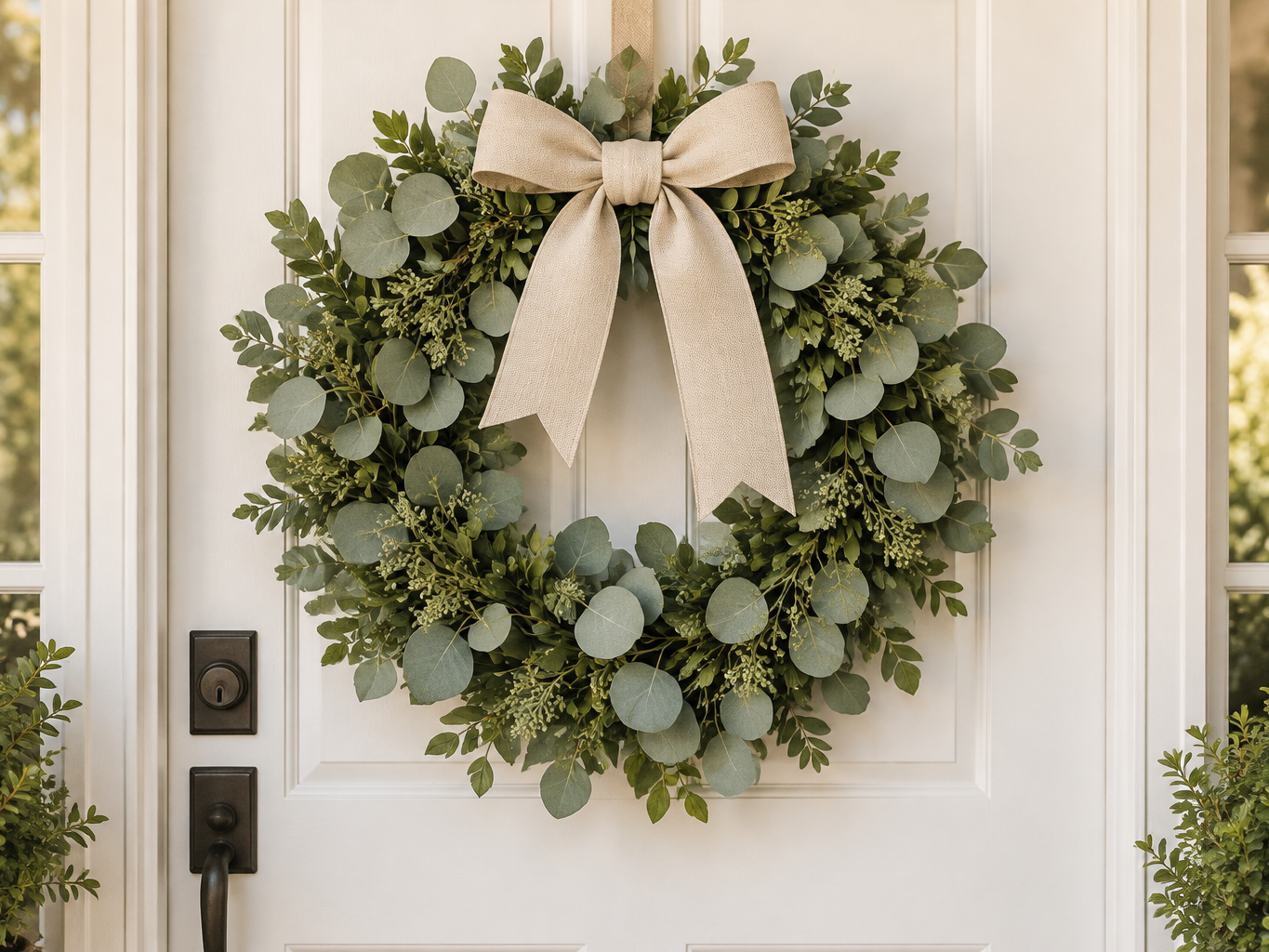
Greenery Wreaths — evergreen, eucalyptus, boxwood — are the dense builds, full silhouettes that read substantial from the street and carry the classic look every December. Eucalyptus and boxwood builds run year-round in muted greens; evergreen carries the holiday arc. Density is the working spec: fuller builds stand up to exposed doors and long display seasons.
Deco mesh: bold and color-forward
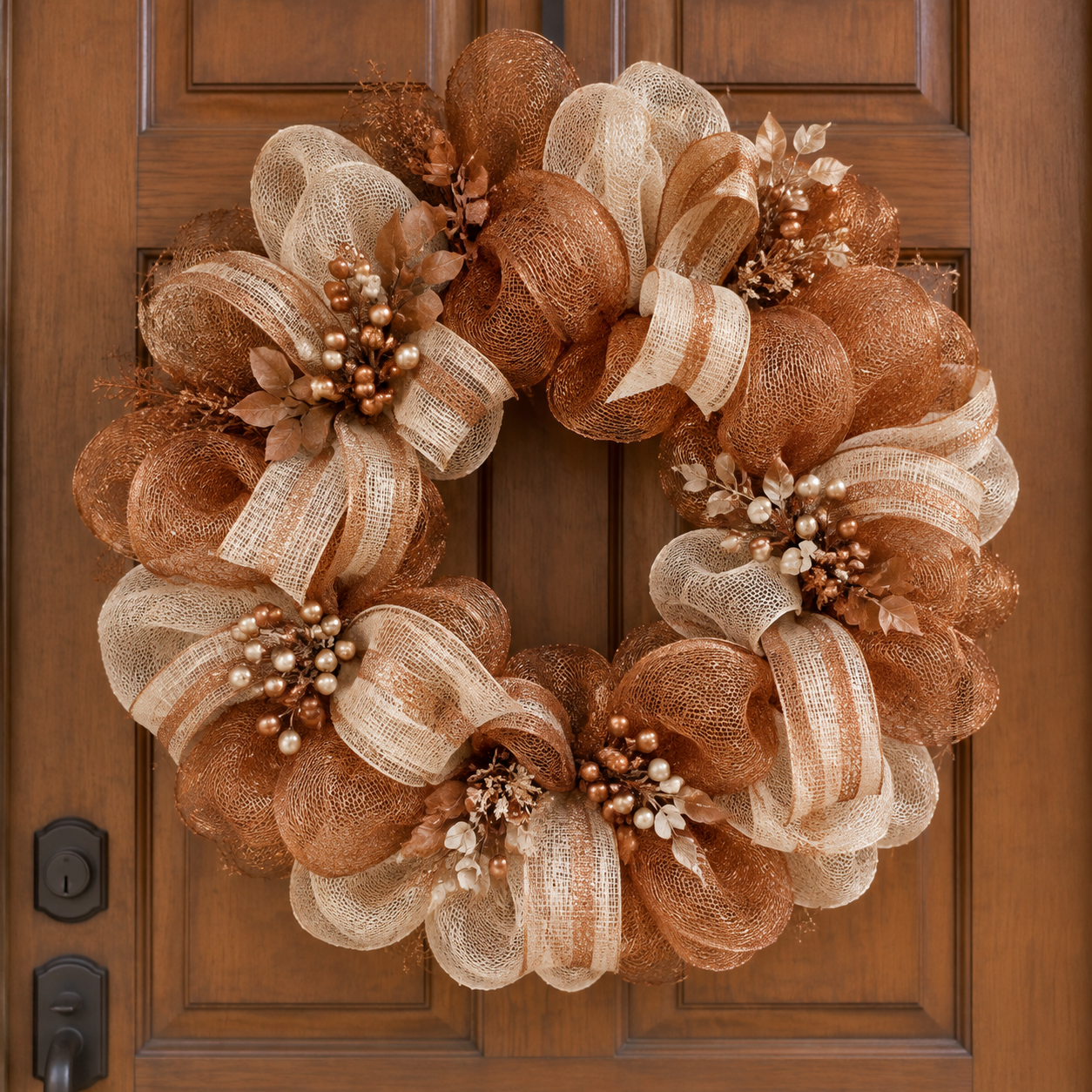
Deco Mesh Wreaths build on ruffled poly mesh ribbon worked into loops and curls — the craft-fair signature, saturated in color and unapologetically festive. Mesh is the base for Halloween orange, Christmas red and team-color builds where the color itself is the point. It is also the most dimensional base: the ruffles throw depth and shadow that flat petals cannot.
How to Pick a Wreath Base
Three questions, architecture first.
- Match the base to the house.
Wood, brick and warm siding take grapevine's rustic register; painted and modern doors take the clean density of greenery; festive and seasonal displays take deco mesh color.
- Match the base to the season.
Greenery owns the fall-winter arc, grapevine carries spring and summer beautifully, and mesh owns the single-date holidays where color is the message.
- Match the base to the exposure.
Dense greenery builds stand up best to exposed doors; grapevine tolerates covered-porch heat; mesh ruffles hold shape but want shelter from hard storms like everything else.
The Grapevine Price Gap: Bare Ring vs. Decorated
Grapevine is the clearest DIY economics lesson in the wreath world, because the same vine sells at two prices an order of magnitude apart:
| Form | Market range | Notes |
|---|---|---|
| Bare rings (craft stores) | $1.79–$17.75 | By size: 3-inch minis under $2, 6-inch at $4.49, 10-inch at $6.49, 18-inch at $7.99, 30-inch handmade rings at $17.75 |
| Oval and specialty shapes | $6.99 and up | Oval rings and bulk shapes from florist suppliers, for doors and mantels where a circle reads cramped |
| Decorated finished wreaths | $46.99–$195 | Green grapevine 20-inch builds at $47, rose-decorated rings at $71, floral-berry designs listing $117–$195 |
Read as a build cost: an 18-inch bare ring at $7.99 plus $25 to $40 of picks, mesh and wired ribbon produces the $70-to-$120 wreath — the decoration, not the base, is what the finished market charges for. That gap is why the wreath forms aisle and this finished line live one click apart: same door, two budgets.
Shapes, sizes, and how long the vine lasts
Round rings run from 3-inch mini sizes up to 36-inch statement pieces, with 18 to 24 inches the front-door mainstream. On lifespan: a grapevine wreath kept on a covered door and stored dry between seasons holds its structure for years — the vine itself is the durable layer, and it is usually the decoration that fades first. That decay order is the quiet argument for redecorating a good ring rather than replacing the wreath: strip the faded picks, keep the ring, and the next season's build costs materials only.
Frequently Asked Questions
What is the difference between a grapevine and an evergreen wreath?
Structure and read. A grapevine wreath is built on a visible ring of real dried vines — open, see-through, rustic — and its look is farmhouse handmade in every season. An evergreen greenery wreath is a dense build of branch material that reads substantial and classic, the silhouette most people picture at Christmas. Grapevine runs lighter at distance because the open ring carries less material; greenery runs fuller and stands up to more exposed doors.
What is a deco mesh wreath?
A deco mesh wreath is built from wide poly mesh ribbon worked into ruffles, loops and curls on a wire frame — the signature look of American craft-fair wreaths. Mesh delivers saturated solid color and strong dimensional depth, which is why it dominates Halloween, Christmas and team-color designs where the color itself is the message. The ruffles hold their shape in storage and re-fluff in minutes after unpacking.
Which wreath base lasts longest outdoors?
Dense greenery builds on covered porches are the longevity default — full silhouettes shrug off weather best, and a covered entry protects any base for years. Grapevine's real-vine frame itself is durable and takes porch heat well. Deco mesh holds its ruffles but, like every wreath, wants to come in for named storms and hard freezes. The base matters less than the exposure rating and the storage habit: covered placement plus a dry box between seasons extends every base.
How do I clean a wreath?
By base material. Greenery wreaths: a feather duster or a hairdryer on cool, low, held at arm's length, working with the branch direction. Grapevine: the same cool-air treatment plus a soft brush for the vine texture, which holds dust in its twists. Deco mesh: shake gently outdoors, then dust the ruffle folds individually — mesh holds dust in its curls and rewards the patience. None of the three takes water; a damp cloth on mesh only if something spilled, then air-dry fully before storing.
How long does a grapevine wreath last?
Years — the vine frame is the most durable layer of any wreath base. Kept on a covered door and stored dry between seasons, the ring itself outlasts its decoration several times over; fading picks and ribbon are what get replaced, not the base. Two things do shorten its life: hard weather on an exposed door (sun embrittles and storms crush the vines) and damp storage, which softens the twists. A ring that has served five seasons is a candidate for stripping and redecorating rather than retiring — the structure holds long after the first decoration stops earning its place.
What sizes do grapevine wreaths come in?
From 3-inch mini rings (wedding decor, candle surrounds, craft work) through 6, 10, 14 and 18-inch craft sizes to 24, 30 and 36-inch statement pieces. The front-door mainstream is 18 to 24 inches finished; remember the build adds width to the bare ring, so an 18-inch ring dressed with evergreen and mesh finishes near 22-24 inches. Oval shapes widen the options at 18 and 24 inches for doors and mantels where a circle reads cramped.