
One door, twelve seasons: Christmas, fall and Halloween Wreaths carry the heavy autumn-winter arc, Valentine's and St. Patrick's hold the late-winter lull, and spring, Easter, summer and patriotic designs carry the warm months. Shopping this page in season order — rather than wreath style — is the fastest route, because every collection below is already filtered to its date on the calendar.
The Wreath Calendar, Season by Season
The heavy arc: fall through Christmas
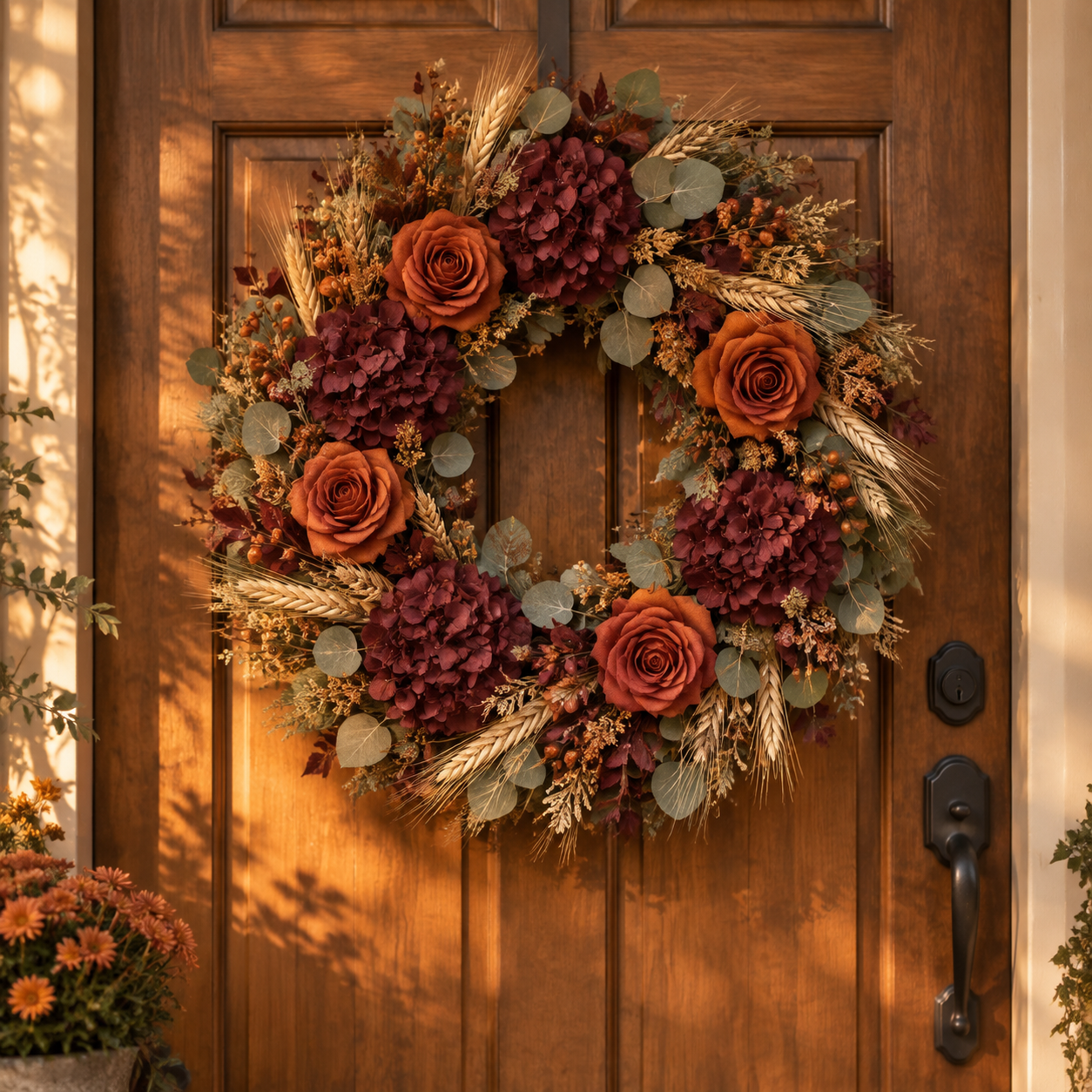
Three dates drive most of the year's wreath demand. Fall Wreaths in berry, wheat and rust tones run September through Thanksgiving, with Halloween Wreaths in black-and-orange cutting the month of October in half. Thanksgiving designs close November in harvest palettes, and Christmas wreaths — evergreen, pre-lit, flocked, berry — carry December as the single biggest wreath season of the year. A front-door calendar that buys fall, Halloween and Christmas covers three-quarters of the decorating year in three purchases.
The late-winter bridge: Valentine's and St. Patrick's
January and February are the months doors go bare, which is exactly why Valentine's wreaths in red, pink and cream and St. Patrick's designs in green hold their own seasons. Valentine's peaks in late January through February 14; St. Patrick's takes the first half of March and hands off directly to spring.
The warm months: spring, Easter, summer, patriotic
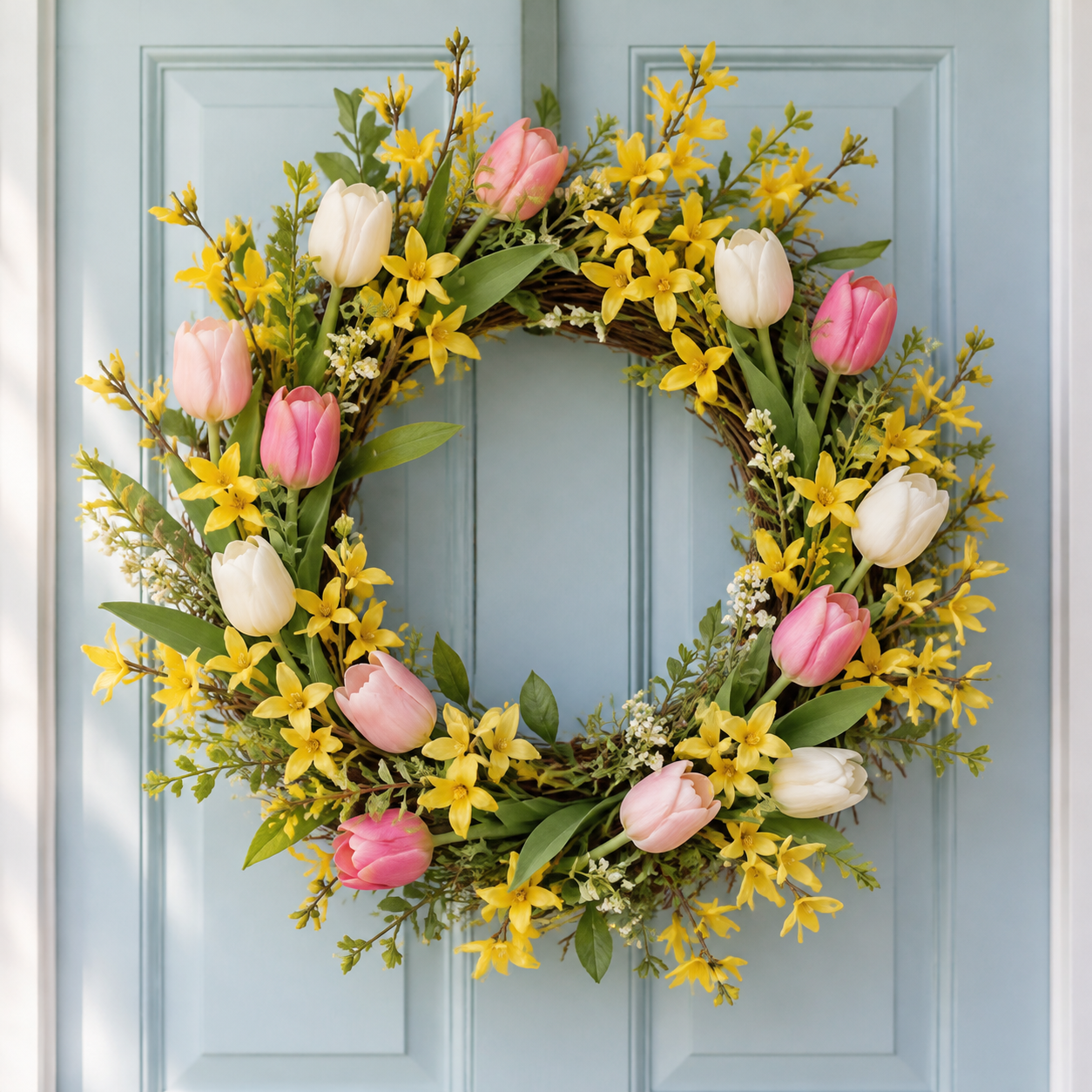
Spring wreaths in tulip, cherry blossom and pastel builds own April alongside Easter designs; summer wreaths lean on sunflower, lemon and tropical palettes through July, with patriotic wreaths in red-white-and-blue cutting across Memorial Day through the Fourth of July. Front door wreaths that skip any single holiday — the year-round designs — live in their own collection for the between-weeks.
Timing purchases to the calendar
Wreath search interest runs four to eight weeks ahead of each date itself: Christmas wreath searches climb hard in October and November, fall searches climb in August, and spring searches climb while snow is still on the ground in February. Buying two to four weeks before your display date keeps first choice of stock; buying at the date means choosing from what remains.
How to Shop This Page
Three moves, season first.
- Pick the date, not the style.
The calendar narrows twelve collections to one or two in a single click — date-driven shopping beats scrolling a mixed grid every time.
- Check the door proportion.
Wreaths read best spanning half to seventy percent of door width — 22-24 inches on a standard 36-inch door. Each seasonal collection carries its size range on the listing.
- Buy the between-weeks piece once.
A year-round front door wreath covers the gaps between holidays so the door never sits empty — then the seasonal pieces rotate on top of the calendar.
The Seasonal Wreath Market's Two Price Tiers
Seasonal wreaths price in two tiers with almost nothing between them, and knowing which tier you are shopping saves both money and disappointment:
| Tier | Range | What it buys |
|---|---|---|
| Retail seasonal | $15–$45 | Maple and eucalyptus fall wreaths — $33–$44 is the fall mainstream — and spring tulip and summer builds at the same marks; pine and berry Christmas designs start near $27 |
| Designer seasonal | $149–$229 | Premium fall berries-and-blossoms builds at $149–$159 and holiday designer pieces at $229 |
The gap between tiers is material density and botanic accuracy, not longevity — both store identically and both last years. What the designer tier sells is curb-distance detail; what the retail tier sells is the calendar itself, refreshed each season at a quarter of the cost. A three-wreath retail rotation runs about what one designer wreath costs, which is the arithmetic behind the calendar approach this page takes.
The crossover strategy: one wreath, two seasons
The most useful idea circulating in wreath planning is the crossover wreath — designs that read as spring but stay up through summer: eucalyptus, lavender, sunflower and lemon builds top the keep-it-up lists, and they turn a twelve-wreath calendar into an eight-wreath one. The DIY version runs further still: one permanent base with small seasonal branches swapped each month instead of the whole wreath — the interchangeable system. For most doors the honest math is three bought designs (fall, Christmas, a spring-to-summer crossover) plus one year-round base for the between-weeks; everything beyond that is enthusiasm, not necessity.
Frequently Asked Questions
What wreath should I hang in each season?
The working calendar: fall berry and wheat designs from September, Halloween builds for October's second half, Thanksgiving harvest tones into late November, Christmas evergreen from the day after Thanksgiving through December, Valentine's red and pink for late January into February, St. Patrick's green in early March, spring tulip and pastel designs from late March through April alongside Easter, then sunflower and summer palettes from May, with patriotic red-white-and-blue covering Memorial Day through the Fourth of July.
When should I buy a Christmas wreath?
Buy in late October through mid-November. Christmas wreath demand climbs steeply through November and the popular sizes and builds sell through before December, while the weeks before Thanksgiving still carry full choice. Artificial evergreen wreaths store perfectly, so buying early costs nothing — the wreath waits in its box until the display date.
Do I need a different wreath for every season?
No — a three-wreath calendar covers the visual year for most doors: one fall-to-Thanksgiving design, one Christmas design, and one spring or year-round design for the warm months. From there, add collections where your household actually celebrates — a Halloween household adds Halloween, a July Fourth block adds patriotic. The between-weeks gap is what the year-round front door collection solves.
How do I store seasonal wreaths between years?
Store each wreath in its own box or wreath keeper, shaped-side up, in a dry space away from attic heat and basement damp — crushing weight and humidity are what actually kill stored wreaths, not time. Slide the wreath into the box with nothing stacked on top, add the hanger inside so it surfaces with the wreath, and label the box by season. A wreath stored this way comes out needing five minutes of fluffing; one stored loose under other boxes comes out with a permanent flat side.
Can one wreath cover two seasons?
Yes — that is the crossover approach, and it works with the right species. Eucalyptus, lavender, sunflower and lemon designs read as spring yet stay convincing through summer; wheat and berry builds bridge fall into Thanksgiving; plain evergreen runs from late November into January. Building the door calendar from crossovers cuts a twelve-wreath year to roughly eight purchases. The rule of thumb: botanical, single-palette builds cross seasons well; holiday-specific symbols (jack-o'-lanterns, ornaments, eggs) do not — buy those small and cheap, and let the crossovers carry the long stretches.