
Vases built for artificial flowers — necks sized to grip wired stems, bases weighted for top-heavy builds, and silhouettes that hide the mechanics (foam, pebbles, grid) that permanent arrangements run on. Every vessel listing states opening width, suggested stem count, finished height and a watertight flag, plus filler notes — so a bouquet that stands up straight is arithmetic, not luck. Ceramic, glass and cylinder families, sized from single-stem to floor scale.
Quick answer: An artificial-flower vase needs three things a water vase doesn't: a neck narrow enough to grip wired stems (1.5–2 in. for 3–5 stems, 3–4 in. for 10–15), a weighted base for top-heavy builds, and an opaque body when foam or pebbles hide inside. Finished display runs 1.5–2× vase height; singles run $15–90 USD as of October 2026.
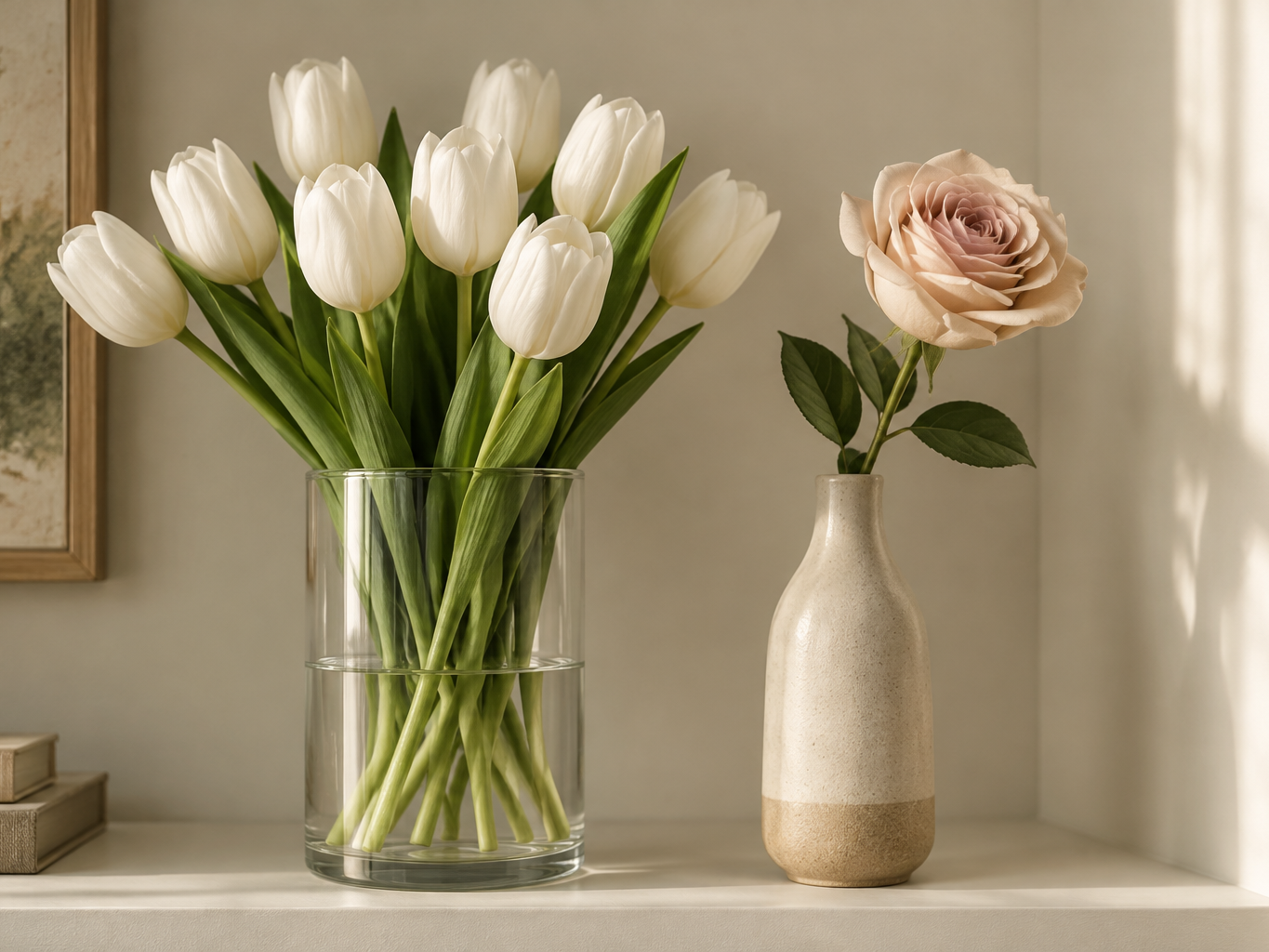
What Makes a Vase "For Artificial Flowers"
Fresh flowers need a reservoir; faux stems need an anchor — and that difference reshapes every choice on this page. Most vases are engineered around water: wide necks so fresh stems can drink and splay, and shapes that look right filled two-thirds with water. Permanent arrangements invert every one of those assumptions. Weight stops mattering — a slim glass cylinder holds a full faux bouquet that would tip a water-filled vessel. Straightness starts mattering — wired stems bend to shape but do not stiffen on their own, so a wide neck becomes a liability (nothing to grip, stems pivot and slump), and narrow necks, tape grids and foam do the work water once did. And the finish matters more, not less: with no water line to hide, the inside of the vase is on display — which is why clear-glass listings here state their interior finish too, and why ceramic, tinted and frosted bodies hide mechanics where clear glass exposes them.
| Vase spec | Why fresh-first vases fail | What the builds here do |
|---|---|---|
| Neck (mouth) | Wide water-drinking necks let wired stems pivot and slump | Narrow gripping necks that hold stem angle without foam |
| Base weight | Water ballast is assumed; empty, the vase is unstable under top-heavy builds | Weighted or thick-wall bases rated for tall permanent arrangements |
| Body opacity | Clear glass designed to show water lines exposes foam and pebbles instead | Ceramic, tinted and frosted bodies that hide mechanics; clear reserved for sand-and-pebble displays meant to be seen |
| Height ratio | Water-vase proportions assume stems cut short for water uptake | Proportioned for full-length wired stems: vase height about one-third of the finished arrangement |
The sizing rules, in numbers
Two rules carry almost every pairing. Height: the finished display stands one and a half to two times the vase's height — an 8-inch vessel tops out around a 16-inch display, a rule the wedding industry applies to fresh and faux alike, equivalently stated as vase height about one-third of the finished arrangement. Opening: stem count follows neck width — a 1–1.5 inch neck carries 3–7 faux stems unsupported, a 2–3 inch mouth wants 8–15 stems or a tape grid, and wide 4-inch-plus bowls are for layered foam builds or kneeling greenery. Both numbers print on every listing, next to the suggested stem count for the faux flowers we sell.
The fit table
The pairings our shoppers ask for most, in the format every listing on this page carries — neck width, stems, support, and typical price in USD as of October 2026:
| Vessel | Opening | Stems | Support expected | Typical price (Oct 2026) |
|---|---|---|---|---|
| Bud vase / narrow neck | 1–1.5 in. | 1–7, unsupported | None — stems lean on the glass | Under $30 |
| Small cylinder / posy vase | 1.5–2 in. | 3–5 | None | $15–60 (glass) |
| Medium cylinder / ceramic | 2–3 in. | 8–15 | Clear tape grid across the mouth | $30–75 |
| Centerpiece ceramic | 3–4 in. | 10–15 | Tape grid or foam | $45–90 |
| Wide bowl / statement mouth | 4 in. + | 20+ | Layered foam; kneeling greenery | $60–90 |
| Floor and tall vessels | 3 in. + | Branch-scale | Weighted filler — sand, pebbles, glass beads | Top of the $15–90 range |
Over-sizing the mouth is the classic mistake — a dozen stems swimming in a 6-inch mouth reads sparse and slumps inward — and the fix is a narrower vase, not more stems. If you already own the flowers and need only the vessel, the fit table works in reverse: match your stem count to the opening column.
Making stems stand straight
The question every faux-flower shopper eventually asks. Four tools, in order of effort: a narrow neck (the zero-tool answer — stems lean on the glass), clear tape grid across a wide mouth (a five-minute build that vanishes under blooms), floral foam block for permanent shapes, and weighted filler — sand, pebbles or glass beads — for tall vessels where a bare stem would rattle. Each listing names the support its opening expects, so the hardware ships with the plan.
The stems themselves run by variety at loose flower stems; the flowers hub with pre-built arrangements is at artificial flowers.
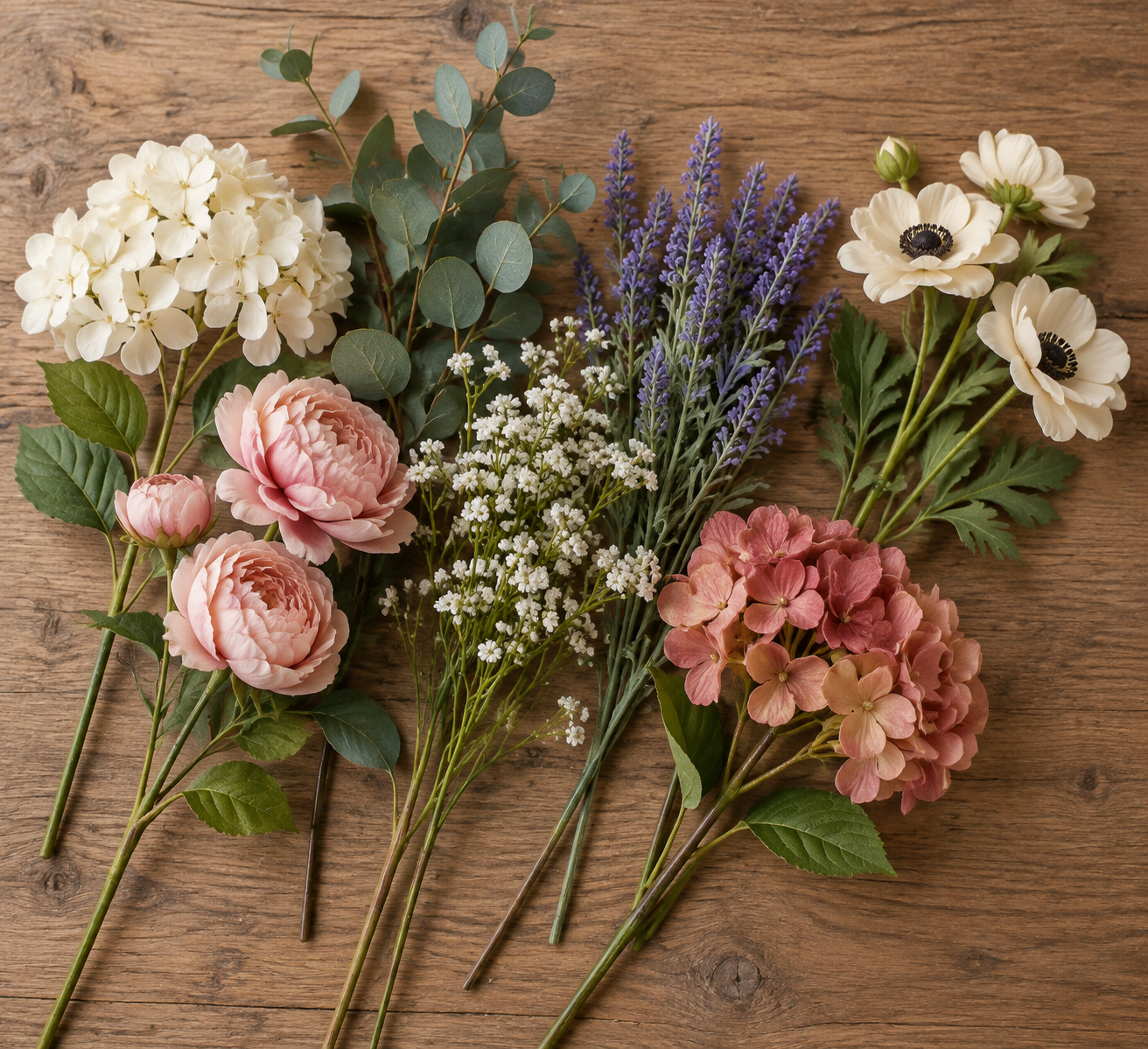
Choosing by Room and Light
Vessel style sets the room's read more than the flowers do: matte ceramic for kitchens, baths and modern rooms; clear cylinder for tables and events (sand-and-pebble mechanics on display); tinted and smoked glass for moody, layered interiors; tall floor profiles for empty corners and hearth sides. One room-level rule borrowed from stylists: match the vase's visual weight to the surface — petite bud vases float on shelves and nightstands, while a small vase on a large console reads lost no matter how good the flowers are.
The material families run deeper on their own pages: ceramic, glass, cylinder, bud, floor and centerpiece vases.
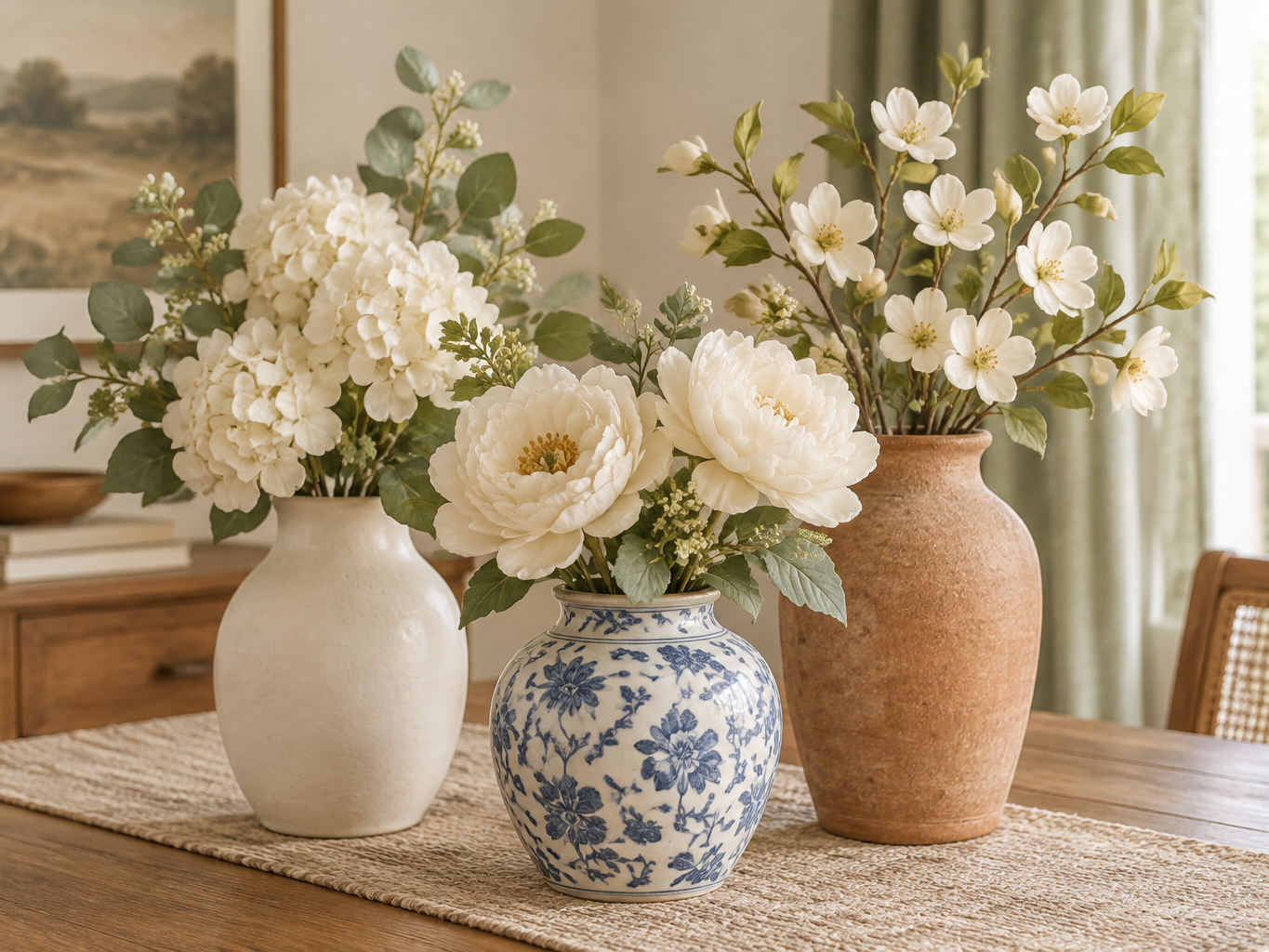
Water, Faux Water, or Dry Display
Every listing carries a watertight flag, and for faux stems the flag opens three routes. Dry display: the default — wired stems need nothing but an anchor. Real water: fine for hours and photo days; long soaks can wick into fabric wraps, so vase-and-out is the rule, and unglazed or decorative-only vessels stay dry regardless. Faux water resin: the permanent option — clear resin poured in a watertight vessel sets around the stems and reads as water for years; it is the standard trick behind catalog shots, and which vessels take resin safely (watertight, wide-enough mouth to work in) is noted per listing.
How to Choose a Vase for Faux Flowers
For shoppers who want the pairing decided, the with-vase collection sells the pair as one listing — faux arrangement, vessel, and the finished height stated together, stems already cut to fit the opening. The stem-to-length service our only vase-angle competitor offers as a courtesy is built into the bundle here. Typical singles run $15–90 USD across this page (as of October 2026); bundles price as one listing.
- Count your stems first. 1–3 stems → bud and narrow-neck vessels (under $30 typical); 5–15 → cylinders and medium ceramics; branch-scale → floor vessels. The stem count column on every listing is the entry point.
- Apply the height rule. Finished display = 1.5–2× vase height. An 8-inch vessel finishes around 14–16 inches with faux stems — measure the shelf or table clearance before falling for a shape.
- Choose your support. Narrow necks need nothing; wide mouths want a tape grid or foam; tall vessels want weighted filler. The support each opening expects is named per listing.
- Pick the water route. Dry display (default), real water for hours at a time, or faux-water resin for a permanent set — the watertight flag on each listing tells you which routes it allows.
- Bundle or self-pair. Want it decided? The with-vase bundles sell flowers, vessel and finished height as one listing. Want to use what you own? Work the fit table in reverse from your stem count.
Frequently Asked Questions
Do I need a special vase for artificial flowers?
A water vase works; a vase engineered for artificial stems works better, for three structural reasons. Wired stems don't splay like fresh ones, so wide water-necks let them pivot and slump — a gripping neck holds the angle without mechanics. No water means no ballast, so tall permanent builds need a weighted or thick-wall base. And where foam or pebbles hold the arrangement, an opaque or tinted body hides them where clear glass exposes everything.
What size vase for artificial flowers?
Use the same one-and-a-half to two times rule florists apply to fresh: finished display = 1.5–2× the vase height, which is the vase at about one-third of the arrangement. Then check the opening against your stem count — a 1–1.5 inch neck carries 3–7 faux stems unsupported, 2–3 inches carries 8–15 with a tape grid, 3–4 inches carries 10–15, and 4-inch-plus mouths are for foam builds of 20+. Every listing here states opening width, suggested stem count and finished height together, which is the short answer to this question per vase.
How do I keep artificial flowers from falling over in a vase?
Four tools in order of effort. A narrow neck — the zero-tool answer, stems lean on the glass itself (bud vases and 1–1.5 inch necks). A tape grid — clear floral tape criss-crossed over a wide mouth, five minutes, invisible under blooms. Floral foam — for permanent shapes in wide-mouth vessels; the block anchors each stem exactly where you place it. Weighted filler — sand, pebbles or glass beads in tall vessels where bare stems would rattle and lean. Clear-glass displays turn the fix into the look — layered sand and pebbles are the display, not the concealment. Each listing names the support its opening expects.
Do fake flowers need floral foam?
Only in wide-mouth vessels — and only if you want a fixed, sculpted shape. Foam is the right call for wide bowls and 4-inch-plus openings where stems need exact placement, and for arrangements that will not be rearranged. It is the wrong call for narrow necks (the glass already anchors everything) and for anyone who likes re-styling monthly, because foam is a one-shape commitment. Tape grids and weighted filler cover the middle ground: support that survives rearranging.
Can you put artificial flowers in water?
Yes, for hours at a time — photo sessions, party days, a dinner's worth of display. The two cautions: wired stems wrapped in fabric can wick moisture at long soaks, so vase-and-out is the habit; and unglazed or porous vessels marked decorative-only should stay dry regardless of what's in them. For a permanent water look, the standard route is clear faux-water resin poured in a watertight vessel — it sets around the stems and reads as water for years. The watertight flag on each listing is the route map.
Should the vase be one-third the height of the arrangement?
That is the working proportion — the same rule as "finished display = 1.5–2× vase height," stated from the other end: vase height about one-third of the finished arrangement, blooms about two-thirds. Artificial work has one advantage here — wired stems hold length without the wilting that forces fresh arrangements short — so permanent pieces can run taller and more architectural. Just keep the weighted-base rule in proportion as stems get taller.
Can I put artificial flowers in a clear glass vase?
Yes, with the mechanics designed rather than hidden: layered sand, pebbles or glass beads up to the gripping line turn the ballast into the display, and clear-glass listings here state their interior finish because the inside is on show. A resin-look filler reads as water without the dust line real water would collect. What to avoid is empty clear glass with raw foam or bare stem ends visible — clear works when the interior is styled, opaque when it is not.
Ceramic or glass vases for artificial flowers?
Glass shows the stems — which for faux is a feature twice over: the wired stem is part of the look, and with no water to hide, a clear cylinder makes even a three-stem posy read intentional. Ceramic hides the mechanics — the better stage for foam builds, tape grids and stems whose wraps are less pretty, and its weight steadies top-heavy faux branches. Practical tiebreakers: households with cats and kids favor ceramic's stability; renters favor glass's price ($15–60 typical, USD as of October 2026). Both materials' fit ranges are in the fit table above.
Do the vases ship safely — and what if one breaks?
Breakables ship with protective packaging specified per piece — the foam-lined, double-boxed treatment vases need; the final shipping spec is being confirmed with suppliers and will print on every listing rather than be promised here first. If a piece arrives damaged: a photo and the order number gets a replacement or refund, no need to ship shards back — transit damage is our claim with the carrier, not the shopper's to prove.
Shop the Vase Families
By Material
By Scale
Flower Guides
The pairing guide behind the fit table — tulips, roses, sunflowers, hydrangeas and peonies, each with its vessel math.
Single-stem faux picks sized for small necks — the bud-vase half of the pairing question.
Finished pairings from entry to floor — what the bundles look like styled.