
Sage wedding flowers — the soft gray-green palette that behaves like a neutral, built on eucalyptus, olive and fern greenery with cream and white blooms. Bouquets, corsages and ceremony pieces in one matched collection; ordered together, every piece ships from a single dye batch, so the sage read is identical across the whole wedding.
Quick answer: Sage greenery runs the show — a 55–60% greenery split with a 25–30% companion and ivory blooms as punctuation. Bridal bouquets run $42–78, garlands $22–38, free US shipping over $200 (as of October 2026). Order 2–3 months out: delivery lands at least two weeks before the date, and one checkout keeps every piece on a single dye batch.
The Green That Acts Like a Neutral
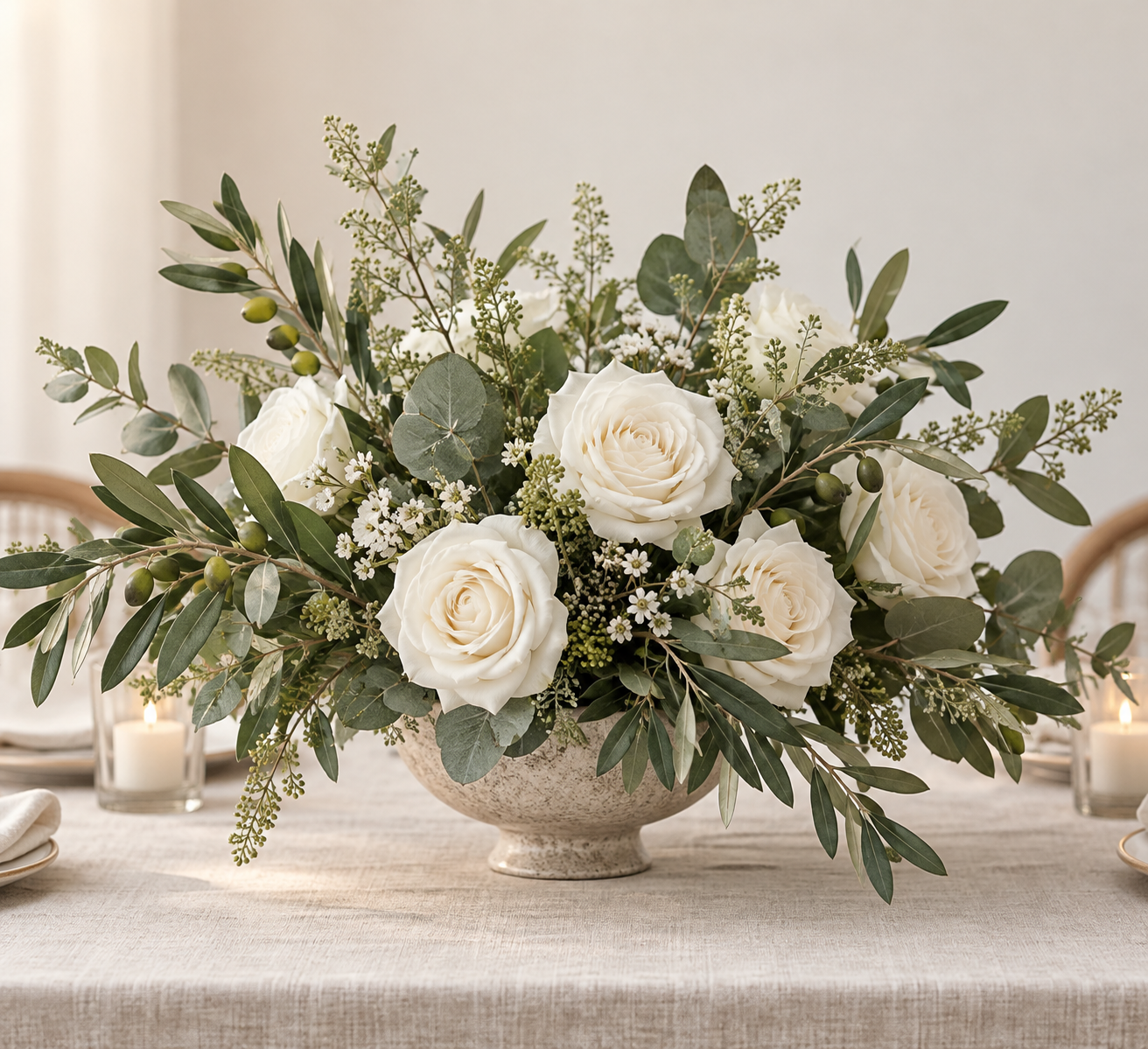
Sage occupies a slot no other palette can: it reads as a color (unlike pure greenery) and behaves as a neutral (unlike any bloom color). Cream gowns, terracotta linens, navy suits, burgundy accents — sage greenery frames all of them without competing, which is why it has become the default palette for garden, barn, vineyard and coastal weddings simultaneously. The split runs inverted from standard palettes: sage greenery at 55–60% as the main character, the companion color at 25–30%, ivory blooms as punctuation rather than mass — a fixed shortlist (ivory rose, ranunculus, peony) used sparingly, so the greenery reads deliberate rather than budget. Greenery is also season-neutral in photos, which stretches the palette from spring straight through fall, and it borrows from the venue: existing greenery in the space reads onto the palette for free, which is why sage weddings photograph richest in actual gardens. Indoor ballrooms can carry it with the dusty-blue companion and enough candlelight; hotel-beige banquet halls are its one weak room. Its second structural advantage is economic: greenery-dominant arrangements read lush at a fraction of the stem count of bloom-dominant builds, so sage weddings carry more visible floral volume per dollar than any bloom-led palette in the line — and greenery runs the lowest price per foot in the wedding line.
The greenery palette within the palette
Not all sage greenery is the same plant, and the read changes with the species: silver dollar eucalyptus (round, dusty, the classic), seeded eucalyptus (trailing, textured, the movement plant), olive branch (slim, silvery, the modern Mediterranean read with its signature leaf-and-fruit silhouette), jasmine vines (threading softness through built pieces), ruscus and Italian ruscus (the layered deep-green structure that keeps arrangements from reading flat), and fern (airy, wild, the garden read). Sage is the color — gray-green — and olive, eucalyptus and ruscus are the plants that carry it, each with a different read: olive warm with fruit texture, eucalyptus the coolest and grayest, ruscus deepest green. Depth comes from mixing at least three species — single-greenery sage reads thin in photos, which is why the collection's built pieces name their greenery mix per listing.
The neighboring palettes — blush, dusty blue, burnt orange — run on the wedding color collections page.
Running Sage Through the Wedding
| Element | Treatment | Reading |
|---|---|---|
| Bridal bouquet | Cream roses and ranunculus in a sage eucalyptus collar — greenery-built with 3–5 ivory focals | Soft, textured, quietly expensive — the signature sage bridal build |
| Bridesmaid bouquets | Greenery-heavy posies with one cream bloom family, greener and smaller than the bridal | Lush at low stem counts — the palette's efficiency play |
| Arch / ceremony | Full sage garlands with cream clusters at the crown — the ceremony pieces run almost pure sage | Greenery-scale coverage that reads garden-organic against wood or stone |
| Tables & venue | Eucalyptus runners, bud vases, pampas accents, wood and linen tones | Extends the palette across the room at greenery economics |
What each role costs, as of October 2026 (USD): bridal bouquets $42–78, bridesmaid bouquets $18–32, wearables (boutonnieres and corsages) $8–17, swags $45–88, and garlands $22–38 — the greenery runs price lowest per foot of anything in the wedding line, with free US shipping over $200.
Pairing sage with one accent color
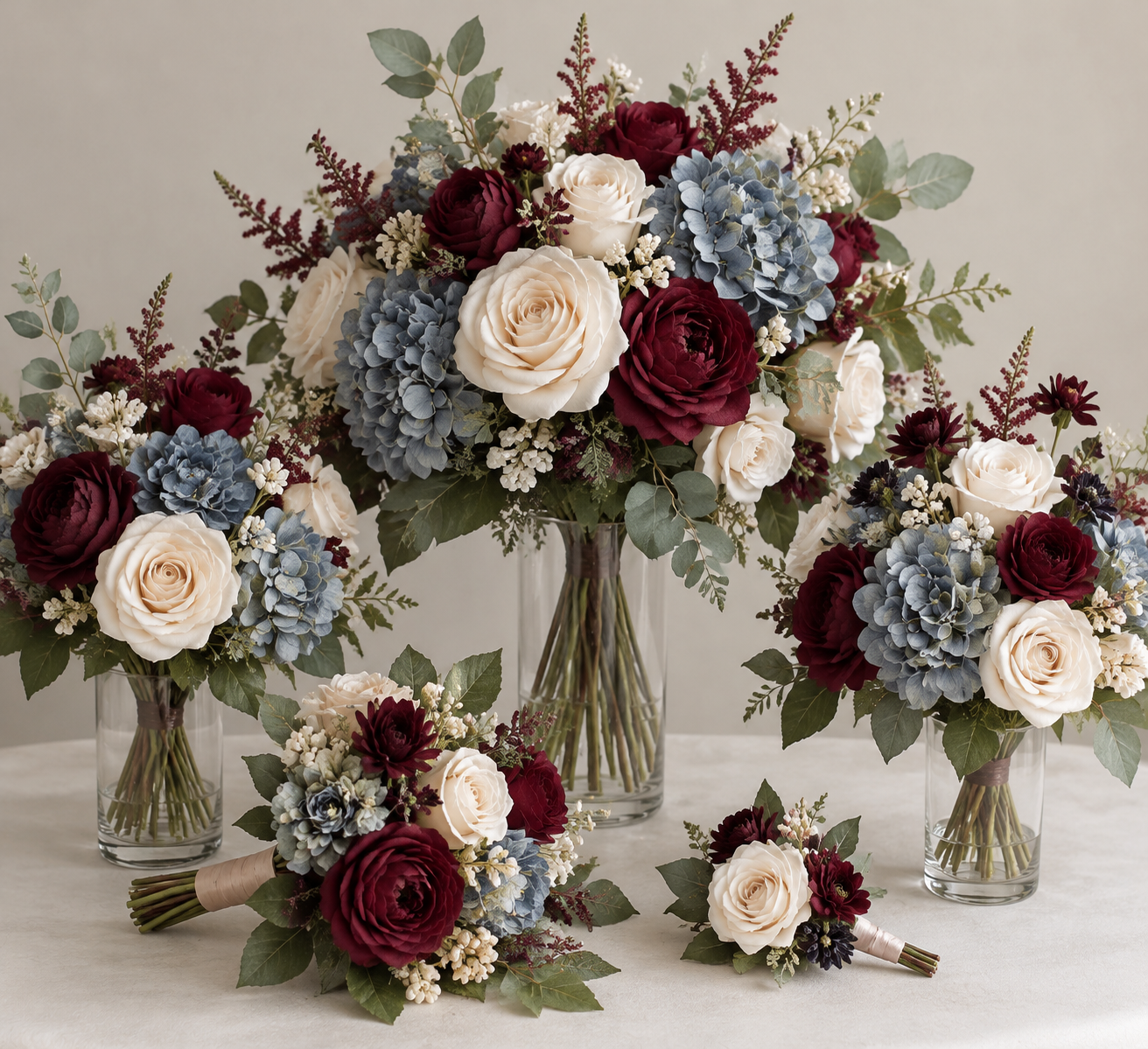
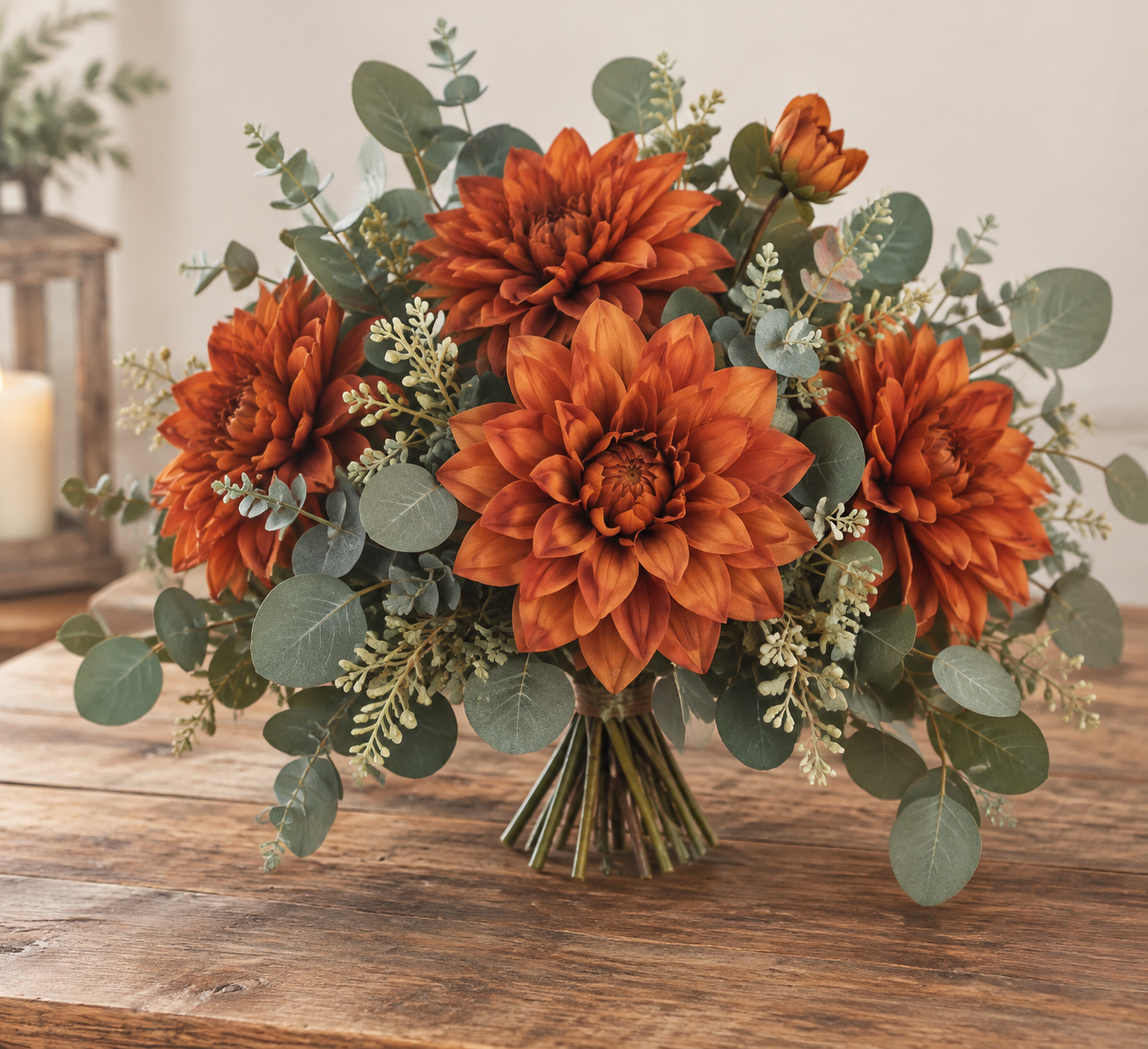
Sage alone is beautiful and slightly monochrome; one companion completes it. The pairings that hold: ivory (the minimal garden), terracotta and rust (the earthy wedding standard, bridged by dried-texture accents like wheat and pampas substitute), dusty blue (two gray-toned colors that never fight — the moody garden), blush (the softest read), and denim-and-burlap Americana registers. Choose the accent from the wardrobe and linens the wedding already owns, then order sage greenery and the accent blooms in one batch — greens show batch drift less than pinks and blues, but mixed greens from two sources still read two different gardens.
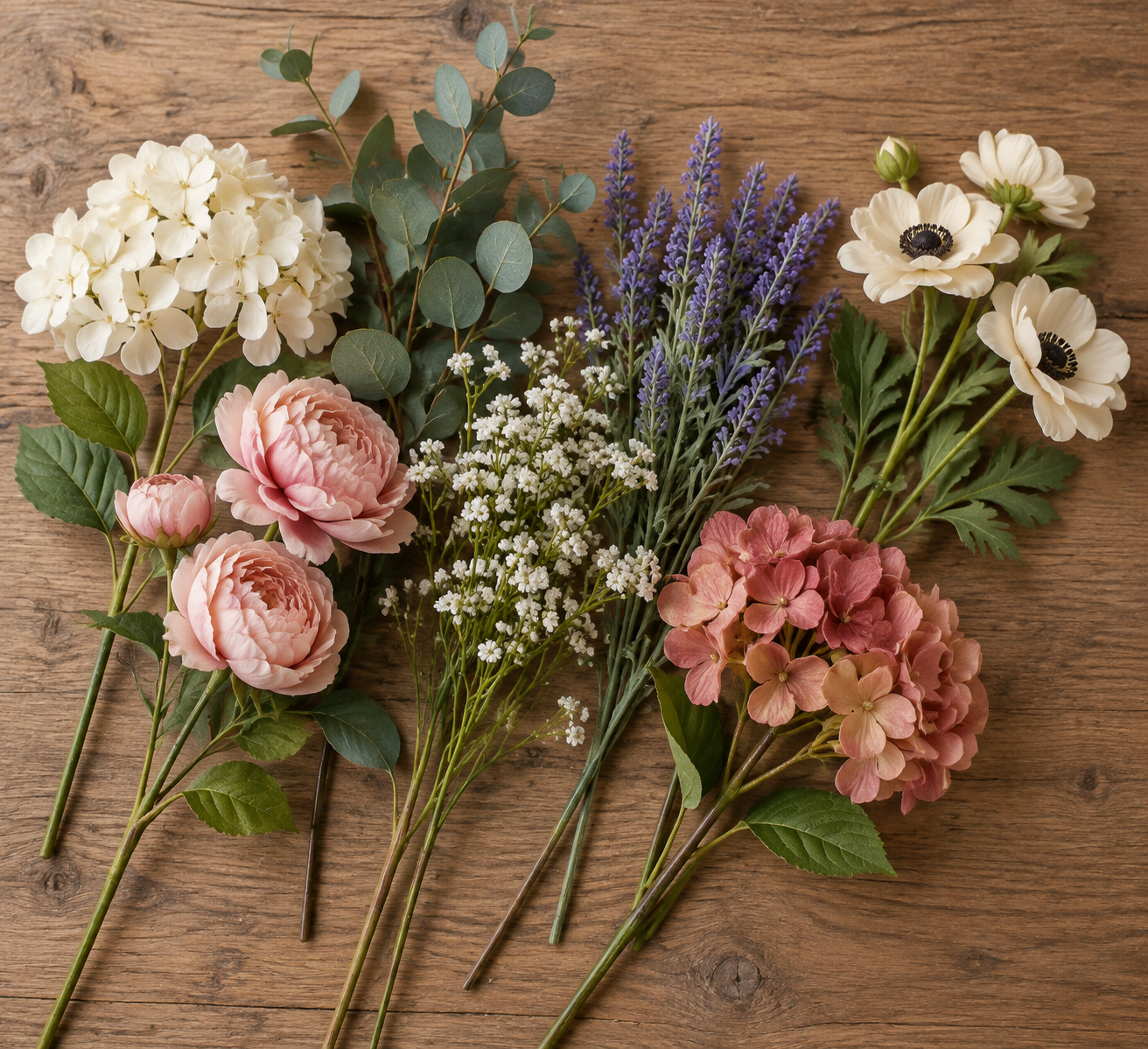
Finished pieces start at wedding bouquets; sage stems and greenery by species for builders are at loose flower stems.
Ordering Timeline and the Dye-Batch Rule
Wedding orders deliver at least two weeks before the date, buffer built into checkout — order 2–3 months out and use the window well. Two jobs for that window: the daylight check of the greenery tone against attire (sage against sage-bridesmaid dresses is the classic near-miss: same name, different undertone — "sage" spans a family from warm gray-green to cool silver-green, so a sample stem against the actual dress is the test), and the dry-lay of every garland run, since sage collections ship more footage than any other palette. Faux keeps indefinitely; early costs nothing. And the batch mechanism holds for greenery exactly as for blooms: one checkout keeps the sage read identical across bouquets, wearables and every garland run, while orders split across weeks can land on different dye lots. If the order must split, keep each role intact on its own order — a matched row and matched garlands photograph better than a partially-matched everything.
Frequently Asked Questions
What colors go with sage green wedding flowers?
Sage behaves as a neutral, so the honest list is long: cream and ivory (the softest read), terracotta and rust (the earthy standard, bridged by dried textures), dusty blue (cool-toned), blush (romantic), burgundy (moody, cold-weather) and pampas textures (boho). The working method is the reverse of most palettes — choose the accent from the wardrobe and linens the wedding already owns, then run sage as the frame at 55–60% greenery, 25–30% companion, ivory as punctuation.
What greenery is used in sage wedding flowers?
Six carriers, each with a different read: silver dollar eucalyptus (round, dusty — the classic), seeded eucalyptus (trailing — the movement plant), olive branch (slim, silvery — Mediterranean, with the leaf-and-fruit silhouette), jasmine vines (softness threaded through built pieces), ruscus and Italian ruscus (glossy, deep — formal structure) and fern (airy — wild garden). Mixed-species builds look collected; single-species builds read flat, so the arrangements here run two or three species together, named per listing.
Is sage a flower color or a greenery color?
A greenery color wearing the main role — sage palettes run greenery-first (olive, eucalyptus, jasmine, ruscus) with a shortlist of ivory blooms as punctuation. That inversion is the point: the greenery reads deliberate rather than filler, the blooms read chosen rather than mass, and the whole palette photographs grown rather than arranged — the aesthetic that made sage the outdoor-wedding standard.
Sage and eucalyptus — what's the difference?
Sage is the color, eucalyptus is one of the plants that carry it — the coolest, grayest read of the family. Olive runs warmer with its fruit texture, ruscus runs deepest green, jasmine threads softness. The collection's built pieces name their greenery mix per listing, and the daylight sample-stem check applies to greenery exactly as to blooms: "sage" spans warm gray-green to cool silver-green, so check the stem against the actual attire.
Is sage only for outdoor weddings?
It owns garden, barn, vineyard, greenhouse and boho venues, and it stretches from spring through fall because greenery is season-neutral in photos — but it travels: with burgundy accents and candlelight it carries winter ballrooms, with dusty blue it suits coastal and modern venues, and with pampas it is the default boho palette for industrial lofts. The one weak room is the hotel-beige banquet hall; the version that stays outdoors-most is the fern-heavy wild build.
Is a sage wedding palette budget-friendly?
Structurally, yes — greenery-dominant arrangements read lush at a fraction of the stem count of bloom-dominant builds, so sage weddings show more visible floral volume per dollar than bloom-led palettes, and greenery runs the lowest price per foot in the wedding line. The same logic scales the ceremony: sage garland coverage on an arch reads garden-organic at greenery economics where bloom coverage would triple the cost. The savings compound with the artificial route, where greenery pricing carries no seasonal spikes at all.
How far in advance should we order the collection?
Two to three months out, with delivery at least two weeks before the wedding (standing policy, buffer built into checkout). Sage collections ship more garland footage than any other palette — the two-week window is for the dry-lay of every run plus the greenery-tone check against attire. The classic near-miss is sage flowers against sage-bridesmaid dresses with different undertones; the daylight check against the actual dress is what catches it. Faux keeps indefinitely, so ordering early costs nothing.
Does the whole collection match if we order piece by piece?
Same-order, same-batch — the mechanism holds for greenery exactly as for blooms: one checkout keeps the sage read identical across bouquets, wearables and every garland run, while orders split across weeks can land on different greenery dye lots. If the order must split, keep each role intact on its own order — a matched row and matched garlands photograph better than a partially-matched everything.
Do sage and eucalyptus smell like the real thing?
No — and honest expectations matter here: artificial stems carry no scent. Couples who want the eucalyptus aroma at the venue add a few fresh stems to table arrangements (greenery is the cheapest fresh buy) or run eucalyptus essential oil in venue diffusers, keeping the permanent, batch-consistent artificial greenery as the visible palette. Scent is the one dimension fresh still owns; everything visible is a spec.
Shop Related Collections
Wedding Line
Other Palettes
Build Your Own
Flower Guides
The 60/30 ratio, two-color builds and greenery's remainder — and how sage inverts the whole structure.
The sage role list priced three ways — greenery-first palettes price lowest per piece.