
Wreaths rated by where they hang. Covered porch and overhang doors: dense builds that ride out the season in the dry. Open doors, fences and garden walls: UV-stable designs built for direct sun and weather. Placement guidance is printed on every listing — this page does not sell a blanket weather rating.
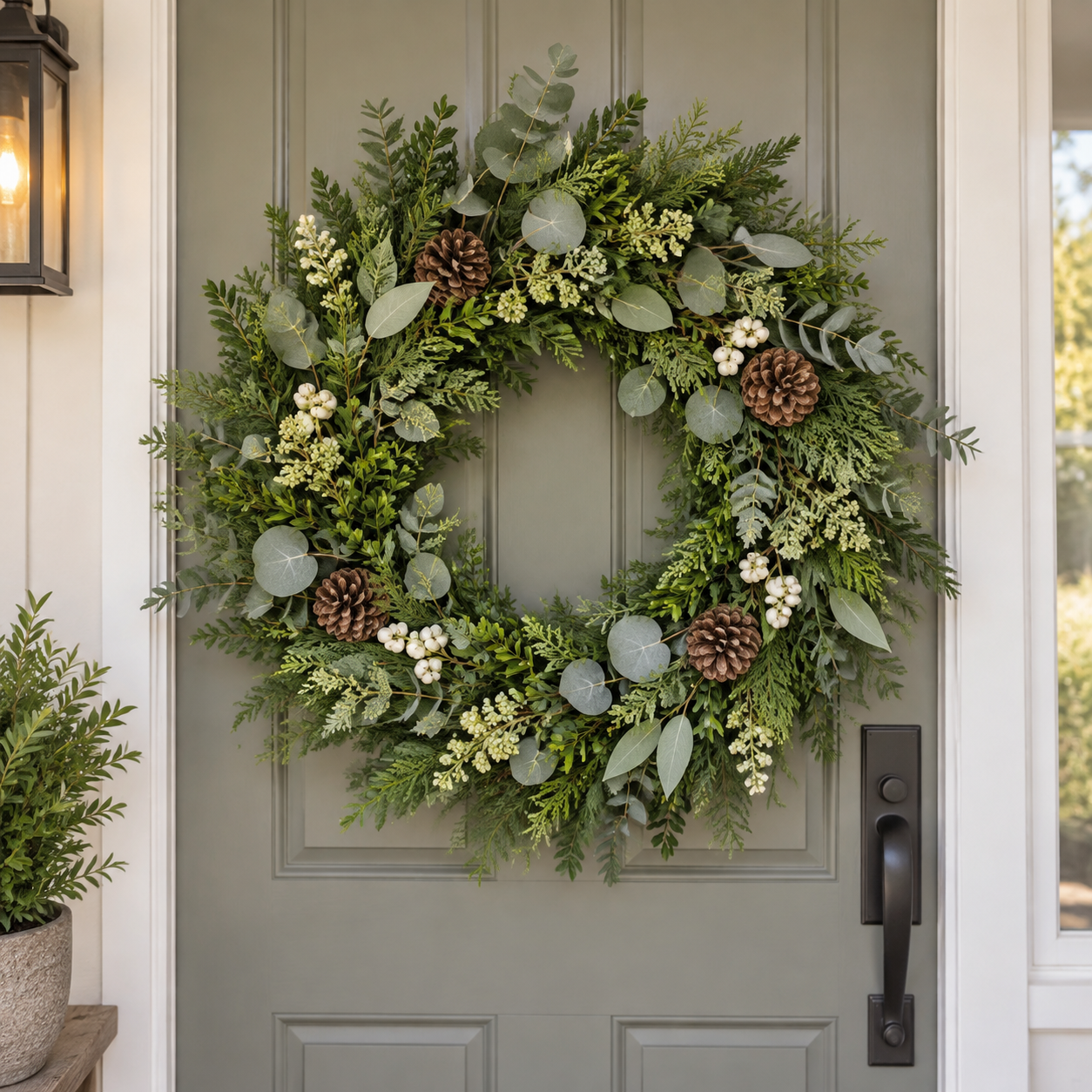
Outdoor Wreaths, Explained
The two exposure classes
Every wreath on this page carries a placement note, and they sort into two classes. Covered class: any dense build under a roof — porch, overhang, deep entry — where rain rarely lands and sun is filtered; the whole standard wreath line qualifies here. Open class: designs with UV-stabilized materials and rust-resistant frames for doors, fences, gates and garden walls that take direct weather. The honest part is the third bucket we do not sell: no artificial wreath is storm-proof, and the ones claiming full weather immunity are claiming something the material cannot do.
What actually fails outdoors
Three failure modes, in order of speed. Fading: UV breaks down unstabilized pigments — the reason open-class designs specify UV-stabilized materials (the material science behind that rating lives on our UV resistant flowers page). Frame and glue: repeated wet-dry cycles loosen glued trims and rust plain wire, so open-class builds use wrapped frames and mechanical attachment. Physical load: wind, snow and hail are crush events, not weathering — nothing survives a storm by being well made, which is why the storm routine (bring it in) applies to every class.
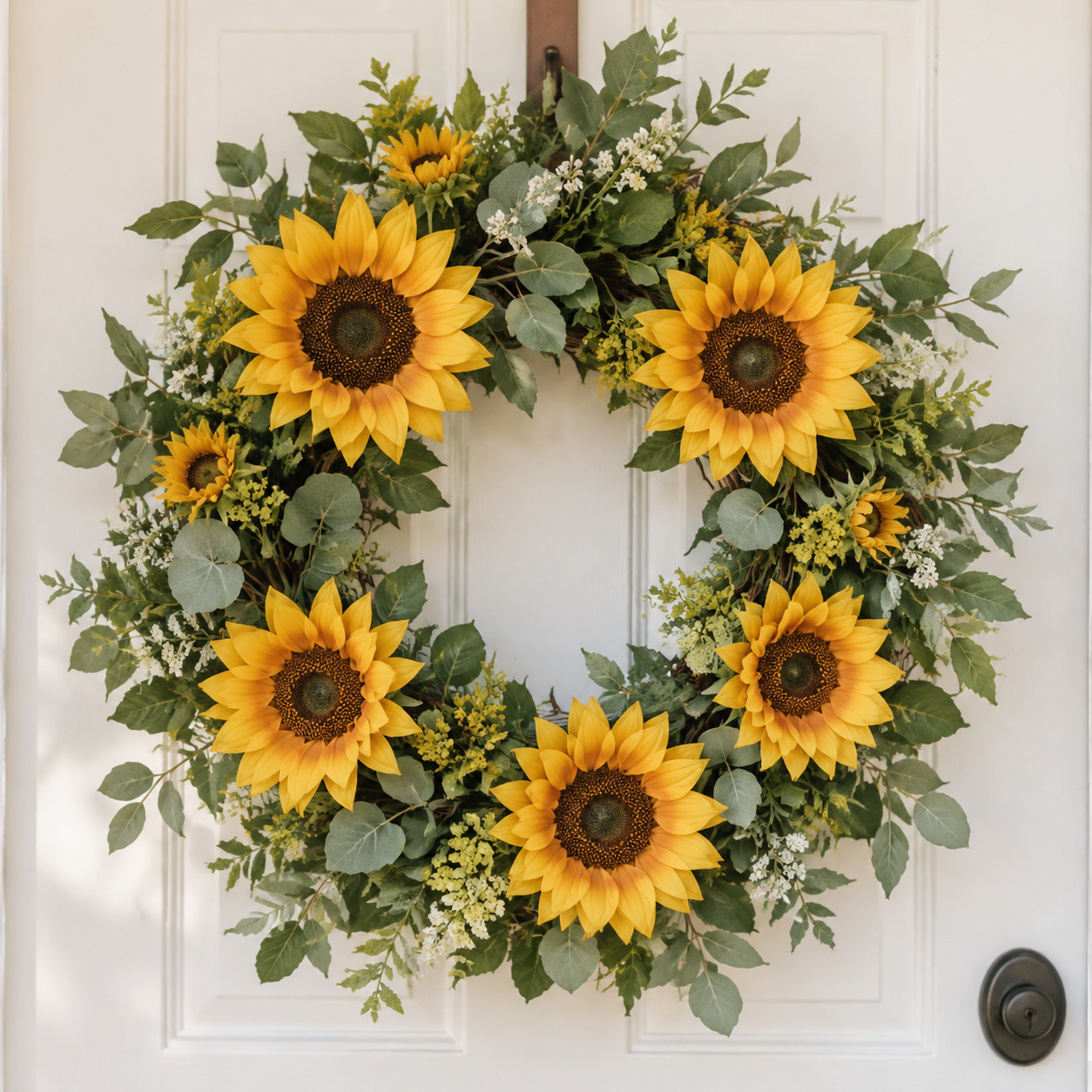
Where outdoor wreaths actually hang
The map is bigger than front doors: fence panels and gate posts (the most under-decorated outdoor surface in America), mailbox posts, garden shed doors, porch columns, railings and pool-cabana entries. Open-class designs matter most on west- and south-facing surfaces, where afternoon sun does the year's damage in a season. Fence and gate placements should use zip ties or hook screws rather than adhesives — surface texture eats adhesive rating — and mailbox posts want small-diameter builds that clear the carrier's arm.
Seasons, storage and the rotation
Outdoor wreaths age by exposure hours, not calendar. A covered-porch Christmas wreath boxed each January is young for years; an open-gate wreath left out year-round spends its life in weather. The discipline that pays: rotate pieces with the seasons (outdoor stock is built for it), box everything during named storms, and store open-class pieces dry over winter. Every listing states its exposure class and material spec; what the photo shows is the wreath that ships.
How to Choose an Outdoor Wreath
- Class the spot first.
Roof over it = covered class, any dense build. Direct sky = open class, UV-stabilized materials and wrapped frames only.
- Read the sun compass.
West and south faces take the year's UV in one season — open-class designs there or expect fading; north faces forgive.
- Mount for the surface.
Hook screws into fence and gate wood, zip ties on railings, rated hooks on doors — texture eats adhesive ratings outdoors.
- Adopt the storm routine.
No wreath is storm-proof — bring pieces in ahead of named weather and re-hang after; it is exposure hours, not make, that ages them.
- Rotate with the seasons.
Outdoor stock is built for rotation — box pieces dry over winter and the same wreath runs years of seasons.
Frequently Asked Questions
Can artificial wreaths be hung outside?
Sorted by exposure, yes. Under a roof — porch, overhang, deep entry — any dense wreath rides out the season. In direct sky — open doors, fences, gates, garden walls — the designs on this page specify UV-stabilized materials, wrapped frames and mechanically attached trims for exactly that job. What no artificial wreath does is survive storms by being well made: wind and snow load are crush events, so the storm routine (bring it in) applies to every class. Placement guidance is printed per listing; this page does not sell a blanket weather rating.
What makes a wreath UV resistant?
UV stabilization is a materials spec, not a coating promise: pigments and polymers formulated with UV inhibitors so sun breaks them down slower. It slows fading; it does not repeal it — every artificial botanical fades under enough sun, and an open west-facing wall still spends that budget fast. The full material story — which plastics hold color best, how exposure hours translate to seasons, and how to read a fade rating — lives on our UV resistant artificial flowers page, which is the material-science hub for the whole outdoor line. Wreaths here carry the spec on their listings.
How do I hang a wreath on a fence or gate?
Skip adhesives — fence texture and weather eat their ratings. Three real options: a hook screw into the fence board or post (holds years, leaves one small hole), a zip tie through the wreath frame around a picket or rail (zero damage, thirty seconds, ideal for rentals and seasonal rotation), or an S-hook over a smooth rail. For gates that swing, mount to the hinge side so motion does not work the mount loose, and check the tie or screw when you rotate the piece each season.
How long do outdoor wreaths last in the sun?
Exposure hours, not calendar, set the clock. A covered-class wreath boxed each season stays young for years. An open-class UV-stabilized design in direct sun holds its colors for multiple seasons — slower, not never, is the honest spec — while a standard indoor wreath pressed into open service fades noticeably within one strong summer. The practical read: match the class to the spot (printed per listing), prefer open-class designs on west and south faces, and rotate or re-task pieces as their colors retire.
Should I take my outdoor wreath down in winter?
Two different questions. Storms: yes, always — snow load and freezing rain are crush events for every class, so the routine is bring-it-in and re-hang after. Steady winter cold: covered-class pieces under a real overhang can ride a mild winter, but box anything you want young for next year — storage cost is one shelf, replacement cost is a wreath. Evergreen outdoor pieces that stay up year-round read deliberate; pieces that fade and stay up read forgotten. Rotate, box, re-hang.
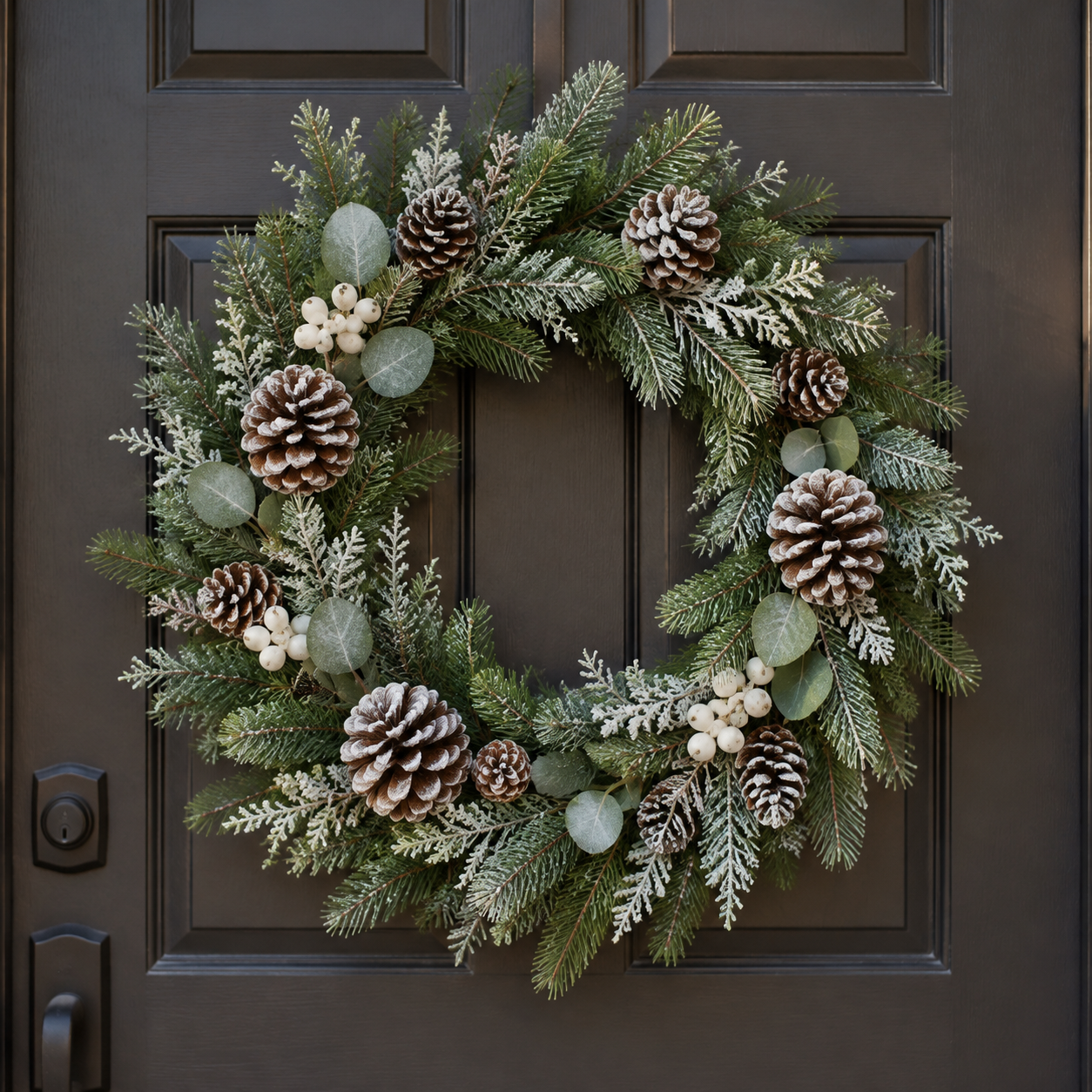
Shop the Wreaths & Outdoor Collections
Shop by Season
By Size & Base
Garlands