
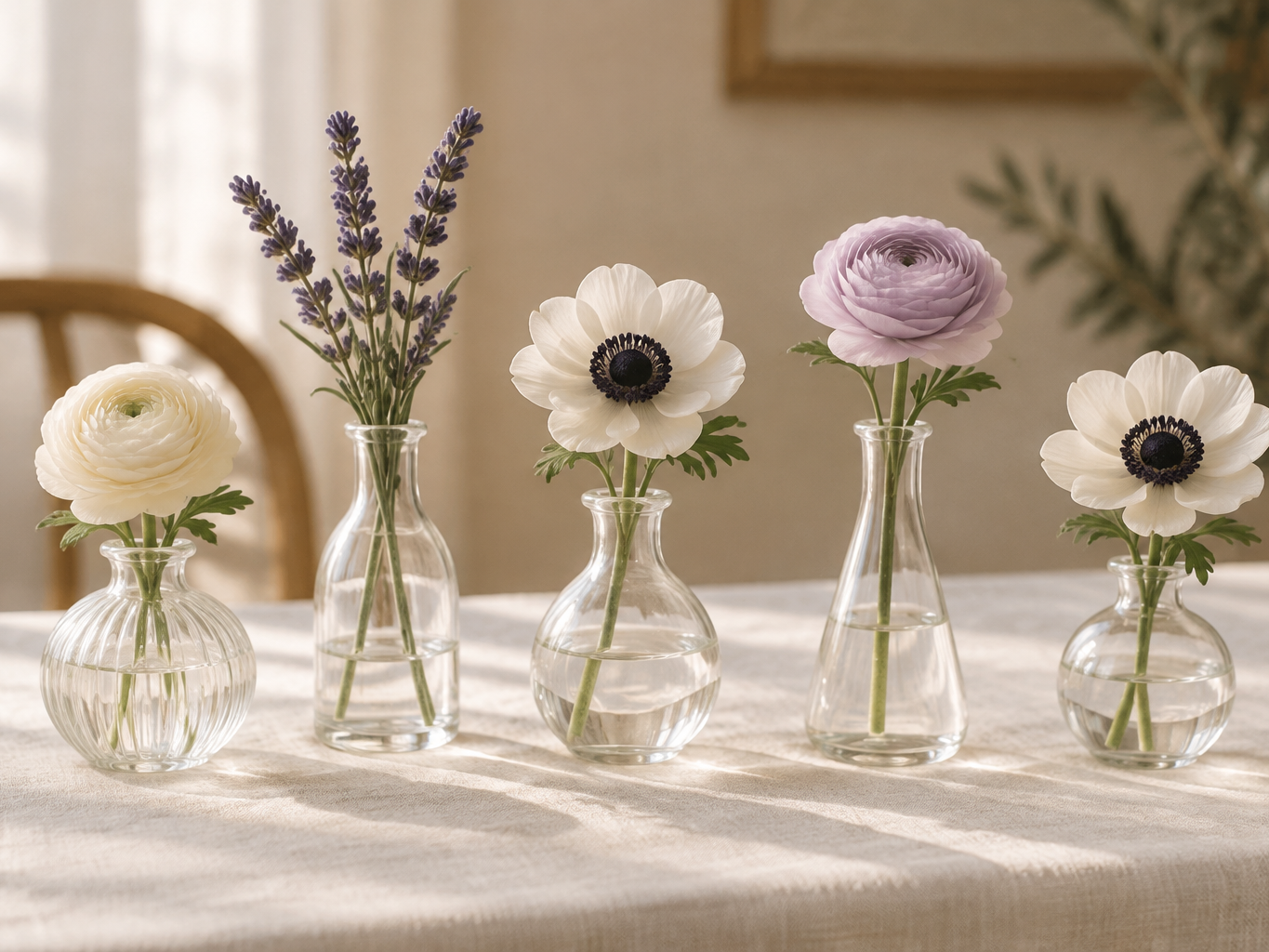
Every vessel this shop sells, on one axis: bud glasses, glazed ceramics, clear cylinders, centerpieces and floor statements. Each listing states the opening width, the total height and whether the body holds water, so pairing a vase with stems is a measurement rather than a guess. Start with the shape your room actually needs, then cut by material.
The Five Vase Shapes, and What Each Is For
Bud Vases
Small vases built for one stem each — a single rose, three tulips, a sprig of lavender — that do their best work in groups. Line a windowsill, scatter them down a wedding table,…
Centerpiece Vases
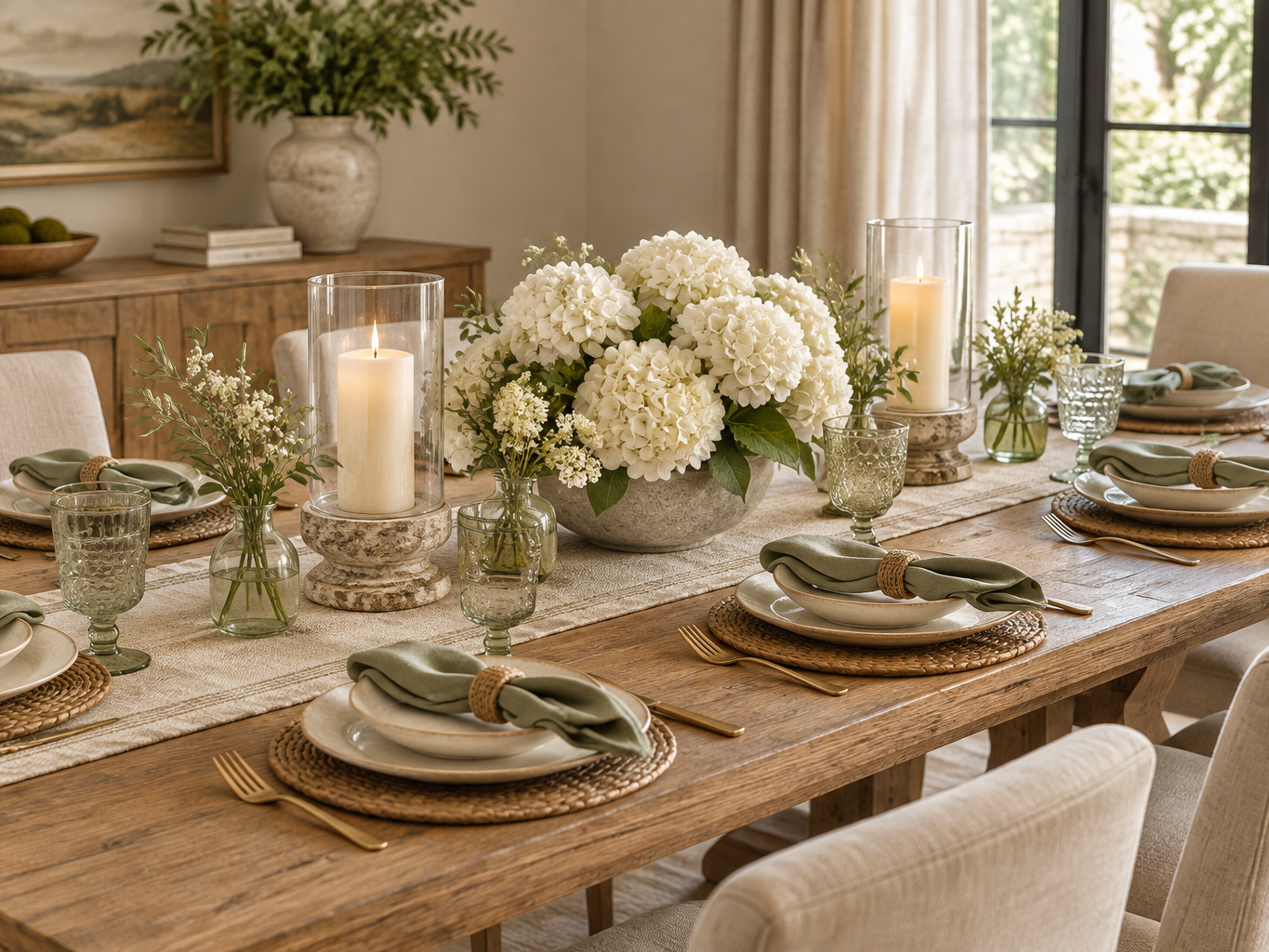
Vessels sized to the middle of the table — where the rule is not size but sightlines: guests see each other over the arrangement, or through it. Low bowls, mid-height cylinders, clustered buds, and…
Ceramic Vases
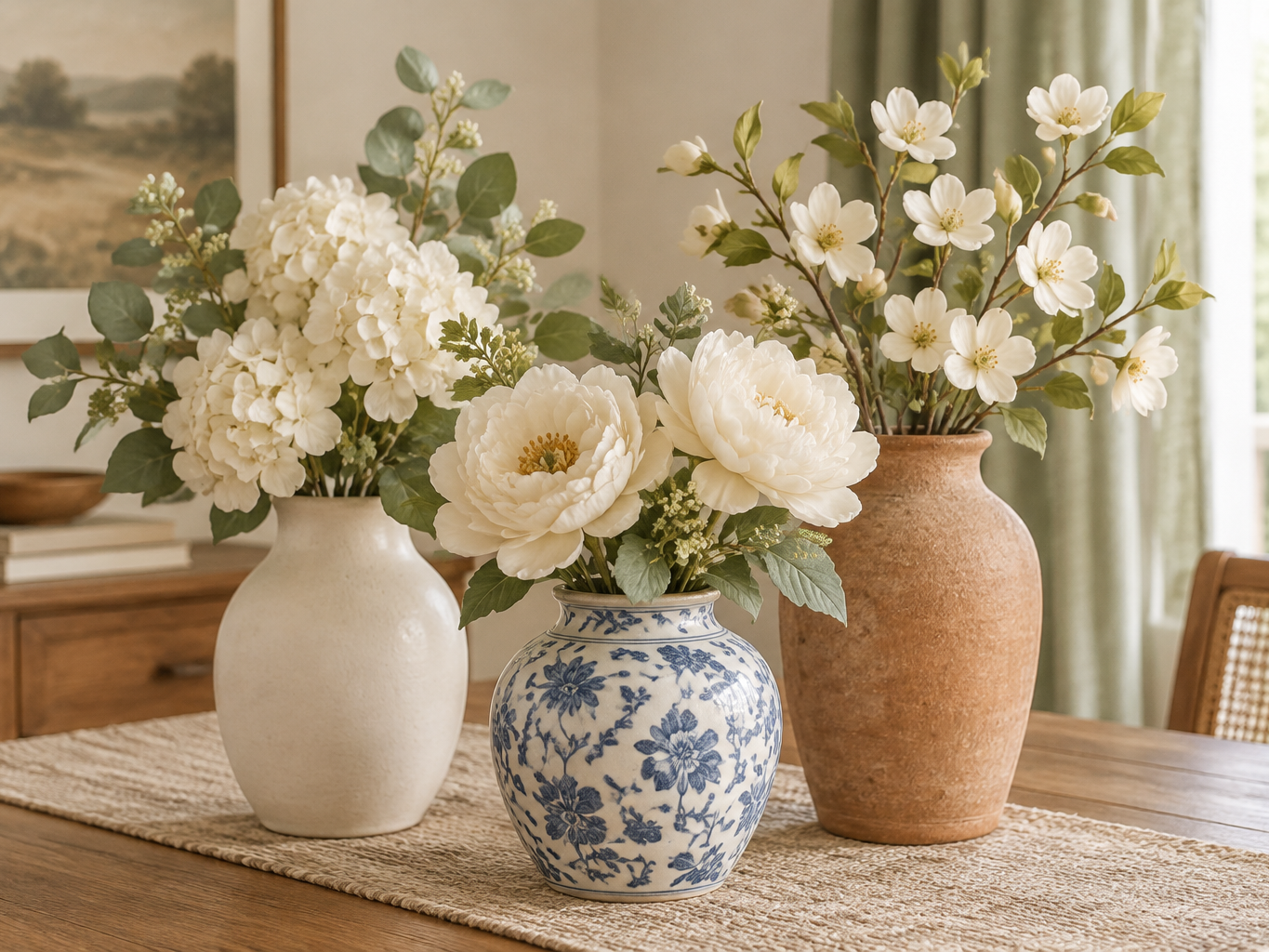
A ceramic vase is a kiln-fired clay vessel — glazed for shine and water-tightness, matte for softness, or textured for handmade character. Heavier than glass, it holds its ground on busy tables and under…
Cylinder Vases
The straight-walled workhorse of the vase world: a cylinder holds a pillar candle at a wedding, a sculpted bouquet on a shelf, rose petals at a shower — same glass, three jobs. Sold by…
Floor Vases
The vase that turns an empty corner into a place: floor and tall pieces from 24 to 40 inches in ceramic, glass and metal. Sized for branches, pampas and big statements — with base…
Flower Vases
Vases for every flower and every surface — bud glasses, glazed ceramics, clear cylinders and floor statements in one place. Each listing states the opening width, the total height and whether it holds water,…
Glass Vases
Glass does what no other material can: it shows the stems. Water lines, tape grids, the green of a stem against clear walls — the mechanics of arranging become part of the look. This…
Vases for Artificial Flowers
Fake flowers ask less of a vase than fresh ones do — no water weight, no wet stems, no wilting deadline — but they ask for the right opening. This collection pairs every vessel…
How to Choose a Vase in Three Steps
- Start from the surface, not the vase.
Dining tables want finished heights under 12 inches to keep sightlines open; consoles and buffets carry 12-20 inches; corners and entryways take floor pieces from 24 inches up.
- Match the opening to the stems.
One to three stems sit upright in a narrow neck with no support; a full bouquet needs a wide mouth plus a frog, foam or tape grid; long branches want tall floor bodies.
- Check the watertight flag.
Glazed ceramic and glass usually hold water, unglazed and porous bodies are decorative-only. The flag on each listing, not the material name, is the answer.
Two Vase Markets, One Shopping Decision
The vase market splits cleanly in two, and which half you are shopping in changes what a fair price looks like. The florist-supply channel sells by the case to working florists — plastic, ceramic and glass at wholesale pricing, priced per dozen, built to survive event trucks. The home channel — department stores, decor retailers, gift catalogs — sells single vessels and curated sets in porcelain, stoneware, glass and crystal, priced as decor objects, where the name on the box can double the sticker. This shop sits in the home channel's finish with the event channel's practicality: vessels sold individually and in curated sets of three, every listing printing the three numbers the florist channel assumes you already know — opening width, total height, and whether the body holds water.
For event buyers, the collection to open first is centerpiece vases and bud vases, which cover the per-table math; for room buyers, the material axis is the faster cut — the shapes recur in every material, so the room's texture decides whether the same cylinder arrives in glass, glazed ceramic, or matte stoneware.
The Shape Vocabulary Retailers Shop By
Browse vase catalogs widely and a shared shape vocabulary emerges — the same handful of nouns used across sellers from decor markets to department stores. Knowing them turns browsing into lookup:
- Bottle vases — narrow neck, rounded shoulder, the single-stem default; the tall versions carry branchy stems on consoles.
- Geometric vases — faceted, angular bodies that read as sculpture when empty; pair with structural stems, not soft mass blooms.
- Sculptural vases — organic curves and asymmetric forms that carry a tablescape alone; usually owned in ones, not sets.
- Hurricane and cylinder — the candle-and-petals workhorses; shop by inner diameter once you know your candle size. The cylinder line states it per listing.
- Bowl and low footed — the sightline-safe centerpiece bodies; foam or a tape grid bridges the wide opening for full builds.
| Surface | Finished height to keep sightlines |
|---|---|
| Dining tables | Under 12 inches |
| Consoles and buffets | 12–20 inches |
| Corners and entryways | Floor pieces from 24 inches up |
Frequently Asked Questions
Which vase shape is the most versatile?
A medium cylinder, 8-10 inches tall with a 3-4 inch opening. It carries single stems, small bouquets and pillar candles, works on dining tables and mantels alike, and pairs with every material this line offers. Most households start there and branch out once the room asks for it.
Do your vases ship individually, or only by the case?
Individually and in curated sets of three — this shop sells rooms, not florist stock. Event quantities of twelve and up are handled per listing on the bud vase and centerpiece pages rather than through case pricing.
Can I use these vases with fresh flowers too?
Wherever the watertight flag is set, yes — the vessel is a vessel. The collection is built around faux stems that never need the water, but glass and glazed ceramic bodies hold fresh arrangements on the same 1.5-2x height rule the listings print.
What material should I choose — ceramic, glass, or stoneware?
By room traffic and light. Glass for stems-forward looks and low tables where lightness matters; glazed ceramic for busy surfaces where weight keeps the piece planted; matte stoneware and porcelain where the vase reads as pottery first and flowers second. Every listing carries the watertight flag regardless of material, so the fresh-versus-faux question stays open on all three.
Shop This Collection
Flower Guides
The form, the sizes and the group math — the long answer to this page's first question.
Round, rectangular and eight-foot counts, with the height rhythms that keep them reading styled.
The single heads that earn a whole vase — fresh and faux, by neck width.