
The dried-flower look without the dried-flower fragility. Preserved and artificial dried stems — pampas, bunny tails, palo santo bundles, bleached ruscus — read exactly like the florist-dried originals, hold that look for years instead of one season, and never shed on the console. Every listing states stem counts and heights as photographed.
What 'Dried' Means Across This Collection
Dried Flower Bouquets
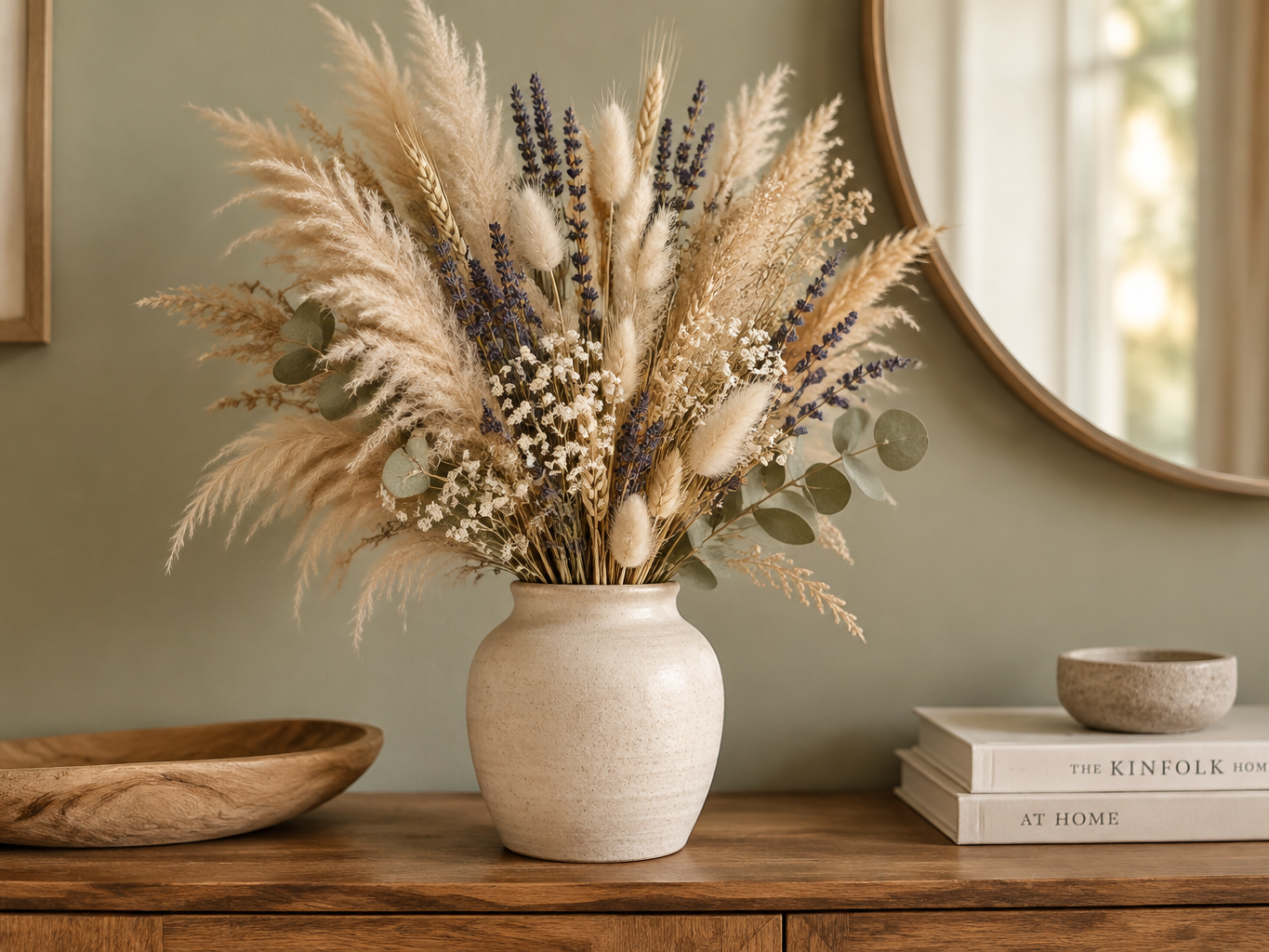
A dried flower bouquet is the decision already made — stems chosen, balanced and bound into a finished natural bunch that goes from box to vase in one move. This collection curates them: pampas…
Dried Flowers
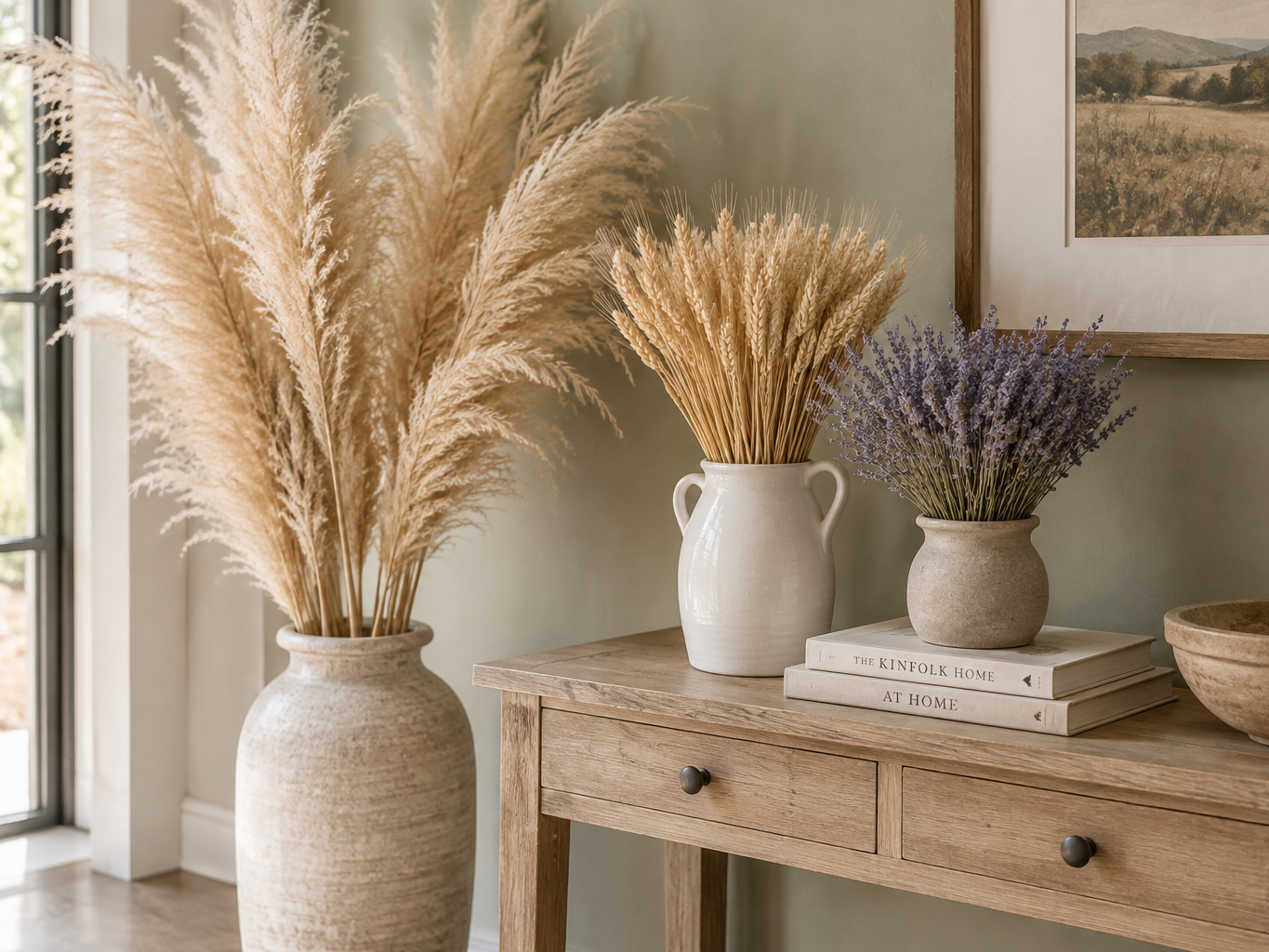
Dried flowers are the natural material this page is named for — pampas, wheat, lavender, cotton and preserved blooms, air- and silica-dried rather than molded from silk. Every bunch here is graded the way…
How to Choose Dried-look Stems
- Pick the silhouette first.
Pampas gives the soft plume mass, bunny tails the small texture, bleached stems the structural line. Most dried-style arrangements are two of the three, not all.
- Size to the vessel, not the photo.
Dried-style builds sit in narrow-neck vases where stems fan from a tight point. Check the per-listing height and plan the finished spread at roughly half the stem length.
- Decide real-preserved or faux-dried.
Preserved stems are plant material treated to hold their moment; faux-dried stems are fabric builds in dried palettes. Both are stated per listing — the difference matters for bathrooms and humid rooms, where preserved plant material can rehydrate.
What Dried Flowers Cost — Three Distinct Tiers
Dried is a rare category where the cheap end and the luxury end are both real and far apart. The visible market splits into three tiers, each with different sellers inside it:
| Tier | Range | What lives there |
|---|---|---|
| Entry bunches | $2.99–$7.99 | Craft-store mini bundles, single-species bunches, mass-market dried mixes (IKEA's dried line sits at $7.99) |
| Designed bouquets | $20–$40 | Curated multi-stem bouquets from decor retailers — preserved bouquets near $25, designed field mixes at $40 |
| Preserved-premium | $100–$500 | Preserved-arrangement studios, where treated plant material is graded and composed to last years |
Bulk sits beside the tiers rather than inside them: a 100-plus-stem DIY flower box runs about $128 — the event-planner's format, and the honest price anchor for anyone weighing real dried material against the faux-dried stems on this page.
Why the Faux-Dried Version Exists
The drying process itself is the best argument for skipping it. Real dried flowers are made by hanging 3 to 5 stems upside down in a dark, dry, well-ventilated space for two to four weeks — and even then the finished material stays humidity-sensitive and sheds. Preserved stems keep their moment but come with a standing care clause: keep them away from water and prolonged direct sun, permanently. Faux-dried stems — fabric builds in dried palettes — were engineered around exactly those two constraints: no drying window, no humidity rules, and the look holds in bathrooms, sunrooms and steamy kitchens where real dried material ages fastest. That trade, not price, is the reason most rooms land on the faux version while wedding budgets buy the real thing by the box.
Frequently Asked Questions
Do dried-style arrangements shed?
Real dried and preserved stems shed some fluff in their first week out of the box, then settle. Faux-dried builds — fabric stems in dried palettes — shed none, which is why humid rooms and allergy households usually land there. Each listing states which build it is.
How long do preserved flowers actually last?
One to three years kept out of direct sun and humidity, fading slowly toward the palette's softer end rather than collapsing. Faux-dried versions hold the same tones indefinitely. Neither wants a bathroom shelf with daily steam.
What pairs with pampas besides more pampas?
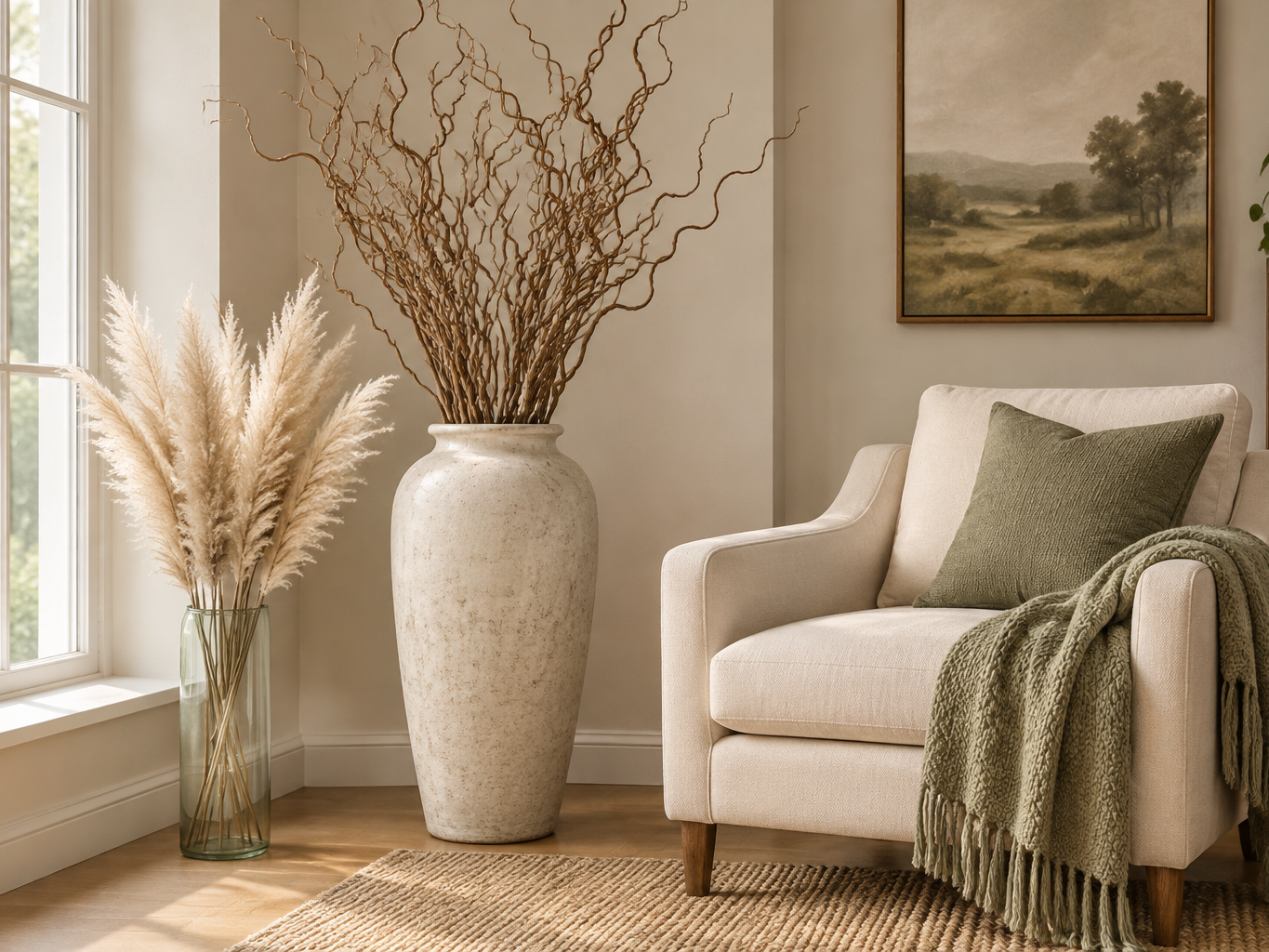
Bunny tails for small-scale texture at the rim, one bleached structural stem to set the height, and a matte or ribbed ceramic to ground the softness. That three-part build is the standard dried-style arrangement on this axis.
Which flowers read as "dried" even in faux builds?
The species that defined the dried look: pampas grass for plume mass, bunny tails for small texture, wheat and bleached branches for structural line, lavender and statice for color, strawflower and larkspur for preserved-bloom references. Those are the same species the air-drying tradition runs on, so a fabric stem in any of them reads instantly as dried decor. Most convincing dried-style arrangements use two species groups, not all of them — plume plus texture, or line plus bloom.
How much do dried flowers cost?
Across the visible market: entry bunches at $2.99–$7.99 (craft-store minis and single-species bunches), designed bouquets at $20–$40 from decor retailers, and preserved-premium arrangements at $100–$500 from specialist studios. Bulk DIY boxes of 100-plus stems run about $128. Faux-dried stems generally price against the entry and bouquet tiers but carry none of the humidity and direct-sun rules that real dried material carries.
Shop This Collection
Flower Guides
Years with the right placement — the sun and humidity rules for keeping a finished bouquet's palette intact.
The build anatomy — structure, texture, focal — applied to DIY; the reason finished bunches exist for everyone else.
Finished height against opening width — the pairing math that stands a bound bunch without filler.