




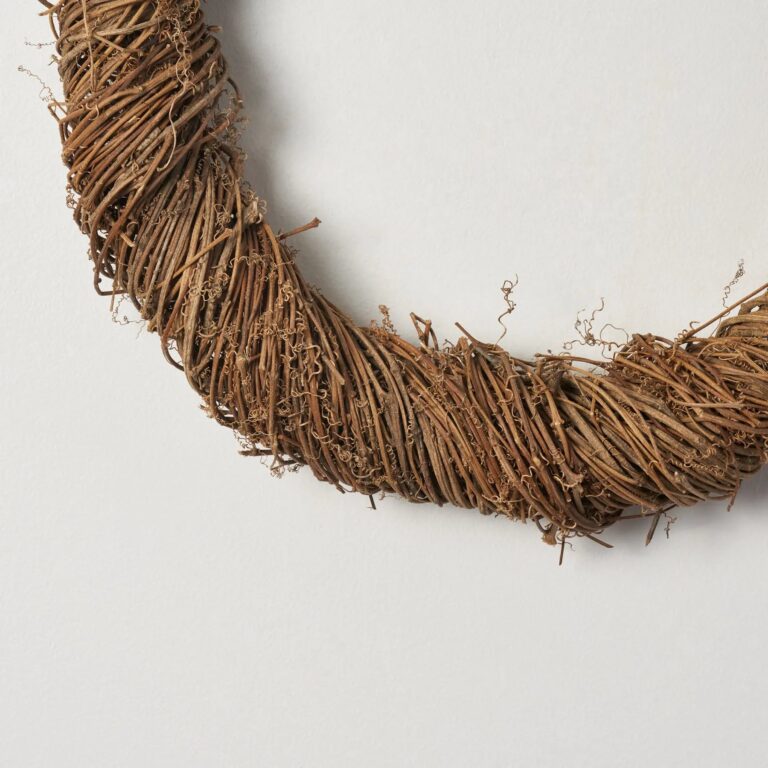

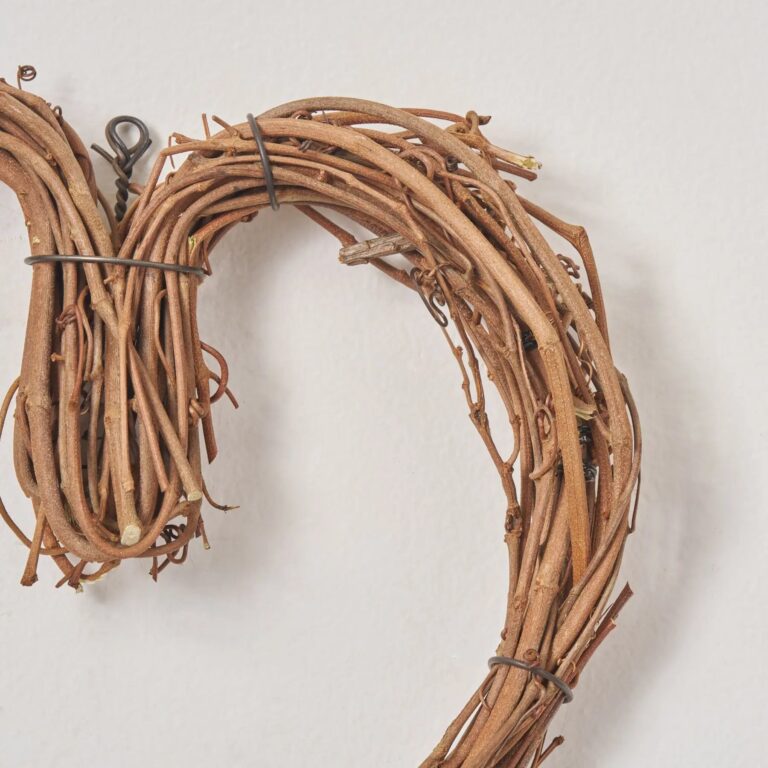
The grapevine wreath is the workhorse of American door decor — the twiggy circle that reads harvest no matter what you hang on it. Wreath builders buy them by the dozen because nothing else in the craft behaves like grapevine: wild texture, natural grip, and a shape that forgives every skill level.
Quick answer: Grapevine wreaths are real woody vine runners — pruned, wound into a ring and kiln-dried stiff — sold plain in 12 to 24-inch rounds or pre-decorated and hang-ready. The base defines the craft: see-through texture that grips picks without glue, weighs less than evergreen, and re-dresses season after season. A 22–24 inch ring fits the standard 36-inch front door.
Grapevine Wreaths, Explained
What grapevine actually is
Real grapevine — the woody runners pruned off vineyards — wound around itself into a ring and dried. The result is a stiff, knobby frame with gaps you can see through, no two rings identical in knot and bend. That irregularity is the point: it is the base material that reads farmhouse and woodland before anything is added to it. Decorated versions wire blooms, berries and ribbon onto the frame; plain versions ship as the bare ring, ready for your own build. Plastic "grapevine-look" bases exist in the market and live in the wreath forms collection as a separate, cheaper option — the material is stated on every listing so there is no guessing at the door.

Why makers choose grapevine over every other base
The three main wreath bases are looks, not quality tiers. Evergreen is dense and opaque — the classic Christmas silhouette with maximum curb presence. Deco mesh is ruffled ribbon in saturated colors — the craft-fair look that shrugs off porch weather. Grapevine is the quiet one: sparse, see-through, at home on a rustic door in every season, which is why fall and everyday designs lean on it hardest. On the door it also weighs less and catches less wind than a full evergreen build.
Size to door
Grapevine stock runs 12 to 24 inches. Small 12–18 inch rings suit interior doors, walls, windows, cabinets and gallery groupings; a 22–24 inch ring fits the standard 36-inch front door on the same two-thirds rule used across the wreath line; 24 inch rings carry oversized doors and statement porches. Two sizing effects work in opposite directions, and both are worth knowing. First, the ring is see-through, so grapevine reads a size smaller than an evergreen wreath of the same diameter — when torn between two sizes on a front door, take the larger (a 24 inch grapevine ring suits the same door as a 22 inch evergreen). Second, decorating adds apparent size — a base reads about two inches larger once picks and greenery go on, so buy the base one size down from the finished look you want. Every listing states the measured diameter, photographed flat with a tape reference.
Building and Refreshing
- Work in sections, not rings. Decorate one 6-to-8-inch arc at a time — clusters of three elements (bloom, berry, greenery), glued and wedged into the vine, then rotate and repeat. Full-ring decorating is how gaps happen. An 18–24 inch ring takes roughly 5–8 bushy picks or 3–5 mesh rolls for a full look; add ribbon with a pipe cleaner or floral wire loop. Mesh rolls, wired ribbon and picks all sit in wreath making supplies.
- Use the vine's grip. Grapevine holds pick stems by friction — the gaps between vines are your attachment points, so tuck wired stems and picks directly into the frame with no glue for a first build. Glue only what you want permanent. This is what makes grapevine the refresh base — pull the old season, tuck the new.
- Refresh, don't rebuy. One base, four seasons: spring blossom picks, summer greens, fall berries and rust blooms (dried orange, burlap, cotton are grapevine's signature register), Christmas evergreens — each swap runs a fraction of a new decorated wreath and stores flat between turns. Many buyers keep one ring and re-dress it by season for years.
- Hang on a protective loop. A ribbon or wreath hanger keeps vine-off-paint; the door's slam cycle is a wreath's real enemy.
How to Choose a Grapevine Wreath — Five Decisions
- Decorated or plain?
Hang-ready decorated designs if you want a finished look; the plain 12–24 inch ring if the fun is the build — mesh, silk stems and ribbon sit in wreath making supplies.
- Pick the season of vine.
Grapevine carries fall designs hardest (dried orange, burlap, cotton), then everyday farmhouse — for Christmas leans, the decorated evergreen collection is the better base.
- Size up, not down.
The see-through frame reads smaller than solid builds — a 24 inch grapevine ring suits the same door as a 22 inch evergreen. Measured diameters on every listing.
- Plan the exposure.
Covered porch: full seasons. Open door: bring it in during storms — the vine tolerates damp, the glued trim does not.
- Buy the ring for its afterlife.
A plain base re-dresses by season for years — one ring, many builds; store it dry and uncrushed between rounds.
Frequently Asked Questions
Are grapevine wreaths made of real grapevine?
Yes — the frames in this collection are real woody grapevine runners, wound into a ring and kiln-dried stiff. No two rings match knot for knot; the bends and forks in the photo of your listing are the bends in the wreath that ships. Plastic "grapevine-look" bases exist in the market and live in the wreath forms collection as a separate, cheaper option — the material is stated on every listing.
What size grapevine wreath for my front door?
Twenty-two to twenty-four inches for a standard 36-inch door — the classic proportion that reads from the curb without covering the door. Twelve-to-eighteen for interiors, windows and cabinet work; twenty-four only for oversized doors and porch statements. Remember two effects in opposite directions: the see-through frame reads a size smaller than solid builds (lean larger when torn), while decorating adds about two inches of apparent size (buy the base an inch or two under your target finished size).
How do you attach flowers to a grapevine wreath?
The gaps between vines are your attachment points: wedge wired stems and picks directly into the frame coils — the grip holds without adhesive for a first build — and hot-glue the insertion point for anything permanent. Work in 6-to-8-inch sections around the ring, clusters of three elements at varied angles; an 18–24 inch ring takes roughly 5–8 bushy picks or 3–5 mesh rolls for a full look. The vine's irregularity hides mechanics that would show on a smooth base.
Do grapevine wreaths last outside?
The honest split: the wood frame itself handles damp reasonably well — the vine is already dead wood and weathers slowly — but the glued blooms and ribbon on decorated designs do not, and constant rain eventually grays the vine. Covered porches and overhang doors carry grapevine for full seasons and the frame outlives several redecorations; open-exposure doors need a storm routine (bring the wreath in when heavy weather rolls through, box it dry at season's end) and a monthly check to re-glue anything the door slams have loosened. Nothing here is sold with a blanket weather rating — exposure guidance is stated per listing.
Why choose grapevine over an evergreen wreath or a wire frame?
Against evergreen: silhouette and weight — evergreen is dense and opaque with maximum December presence, while grapevine is sparse, see-through, lighter on the door and catches less wind; grapevine also season-hops better (the same ring reads fall with dried orange, everyday with eucalyptus, Christmas with cedar sprigs). Against wire frames: texture and grip — grapevine shows between decorations as part of the look with no full coverage needed, while wire frames want full floral coverage to hide the mechanics. If you want one base that changes clothes all year, grapevine is that base; most wreath closets hold both it and an evergreen.
How long does a grapevine wreath last?
The frame is the durable layer: stored dry and uncrushed, a kiln-dried ring holds its shape for years and survives being re-dressed season after season — which is why many buyers keep one ring and swap its clothes. The perishable layer is the trim: blooms fade after long direct sun and glued pieces loosen with age. Five minutes of fluffing and re-tucking when it comes out of the box is the whole maintenance budget.