


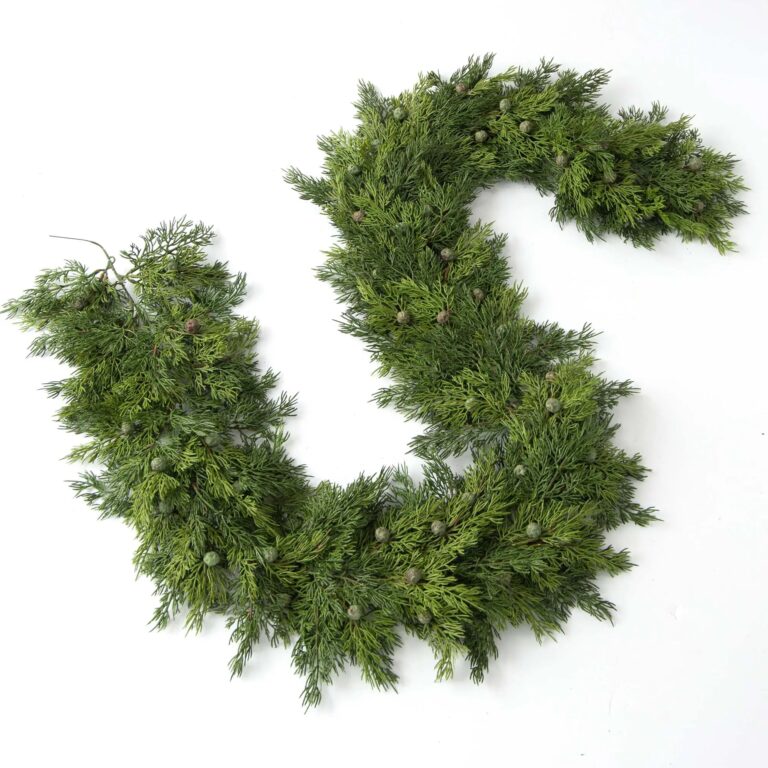
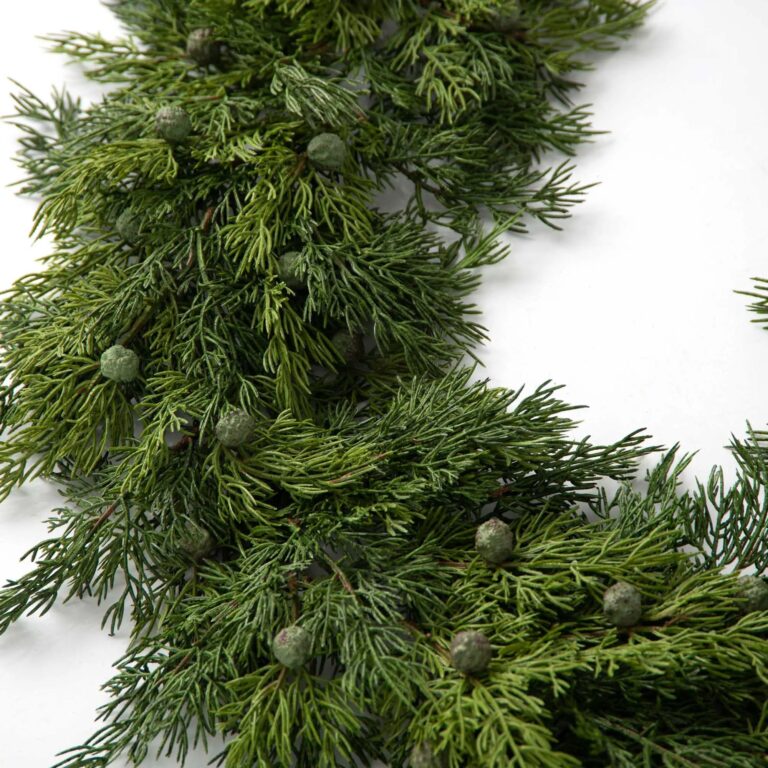









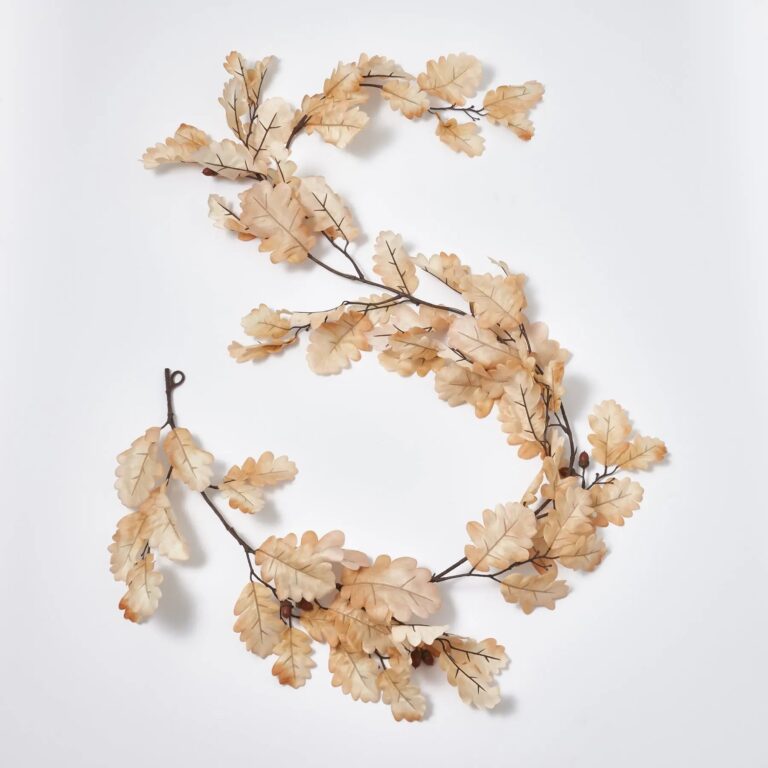

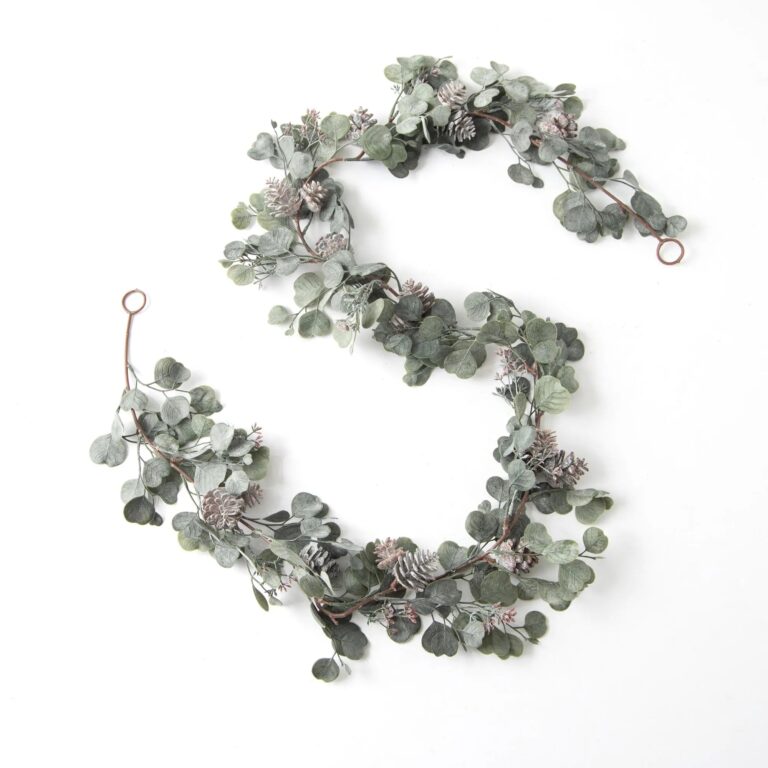




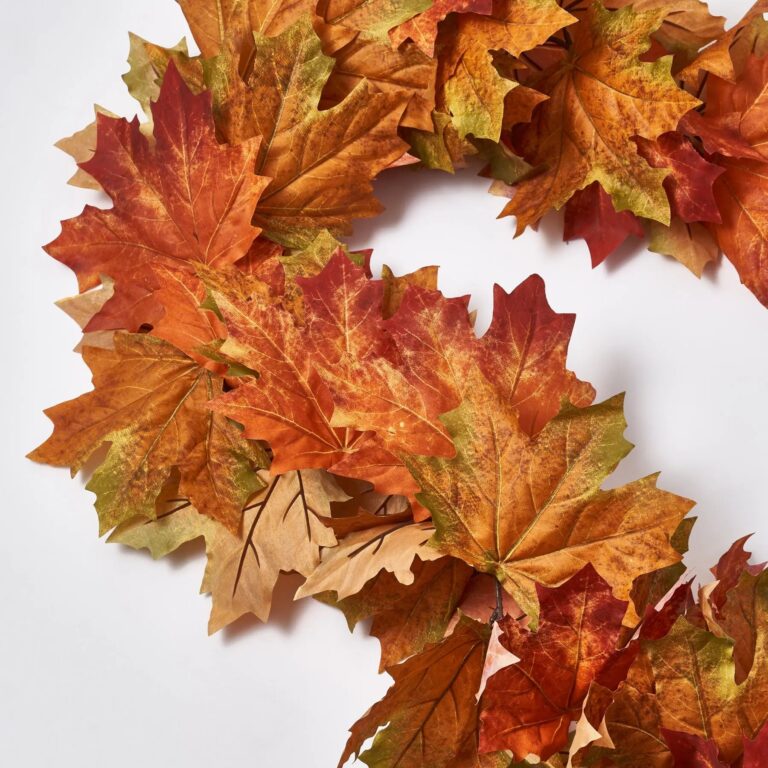
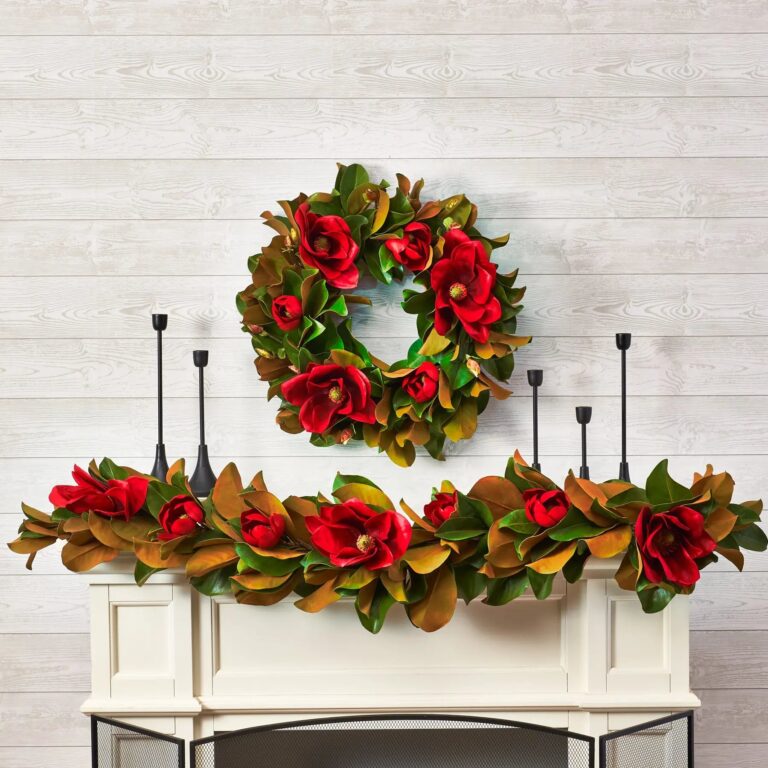




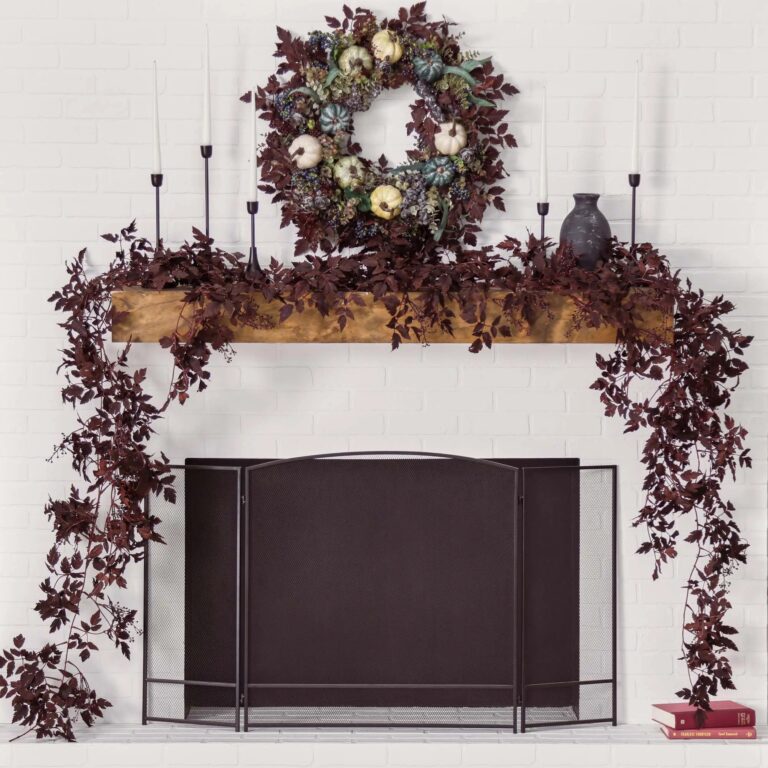
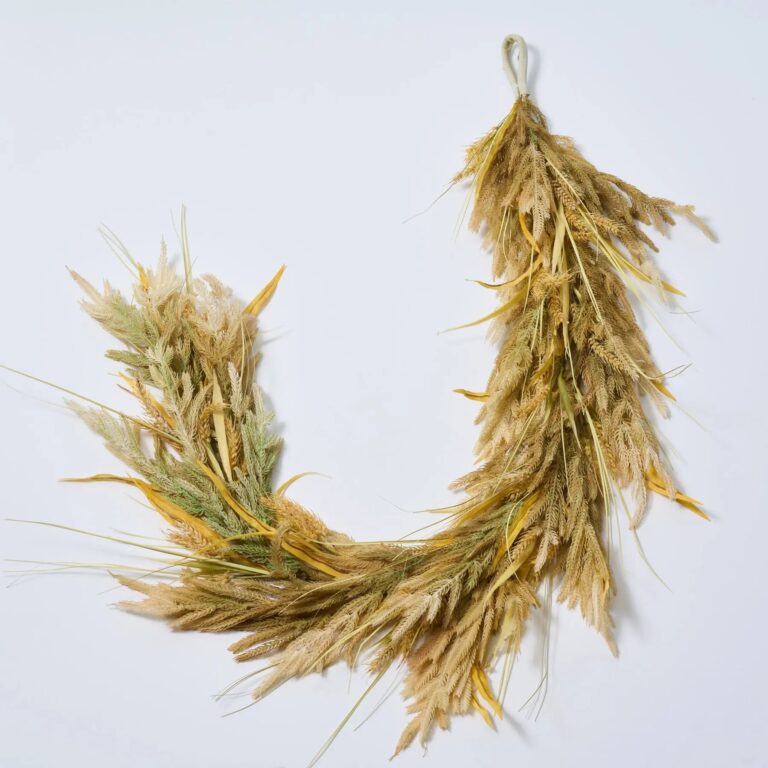

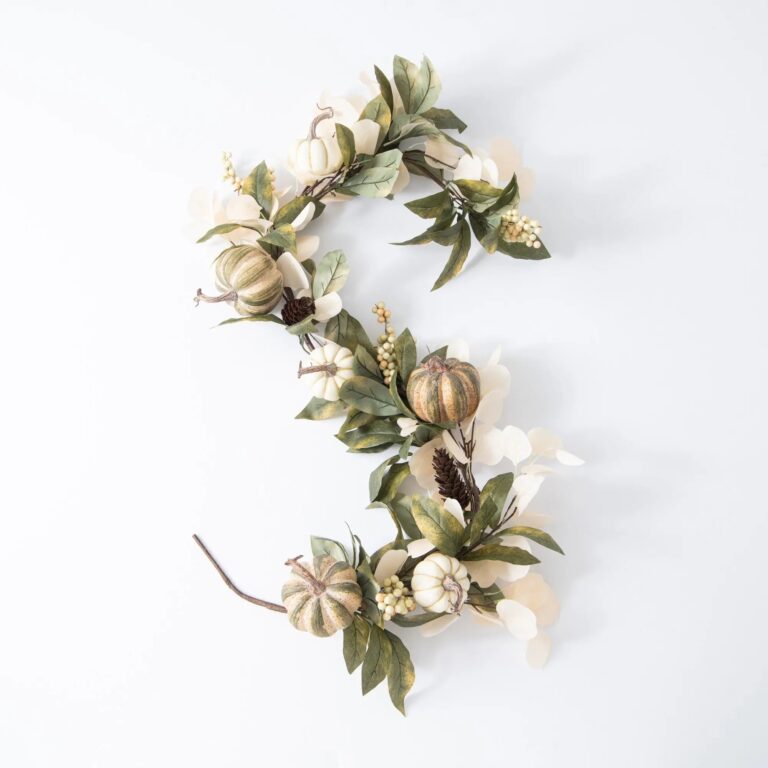

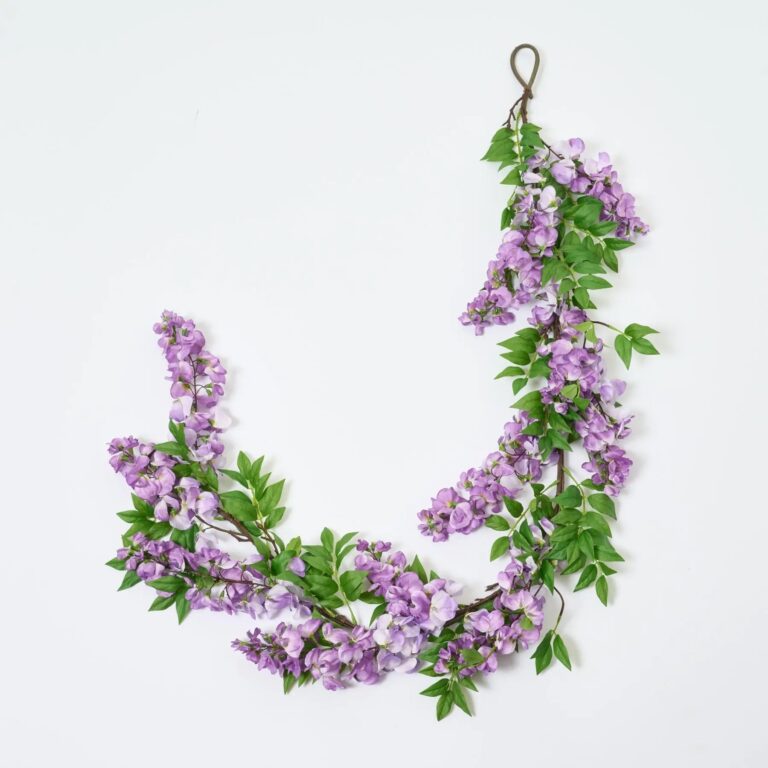

A mantel garland is the hearth's strand — greenery, blooms or seasonal builds on a wired spine, sized to the shelf width plus drape, laid across the one surface every room arranges itself around. This page is the fireplace mantel's own guide: the width-plus-drape arithmetic, the fire-safety rules that only this placement has, the stocking-and-candle layering that December adds, and the year of restyles one good base strand carries.
Quick answer: Mantel garland length = mantel width + 1-2 feet of drape per side — a standard 5-foot mantel takes 7-9 feet, a 6-footer takes 9. Keep greenery 12 inches from an active firebox and candles in glass. Market bands as of October 2026, USD: plain greenery $25-60 per 9 feet, decorated $50-130, pre-lit $70-180 — "mantel garlands" and "fireplace garlands" run the same 2,900 monthly lookups (one object, two words), peaking at 18,100 in November with the decorating weekend.
Mantel Garlands, Explained
What a mantel garland is
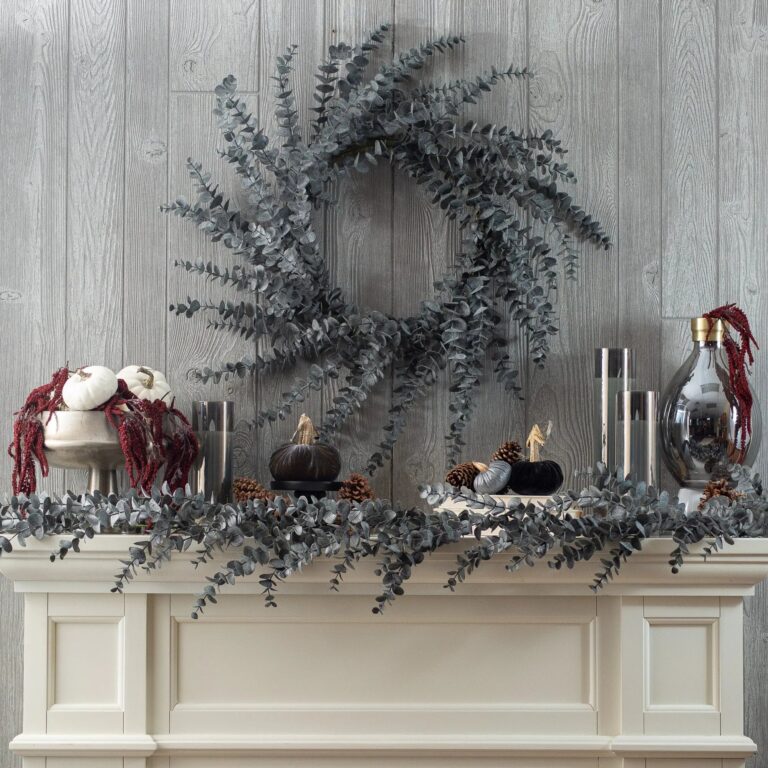
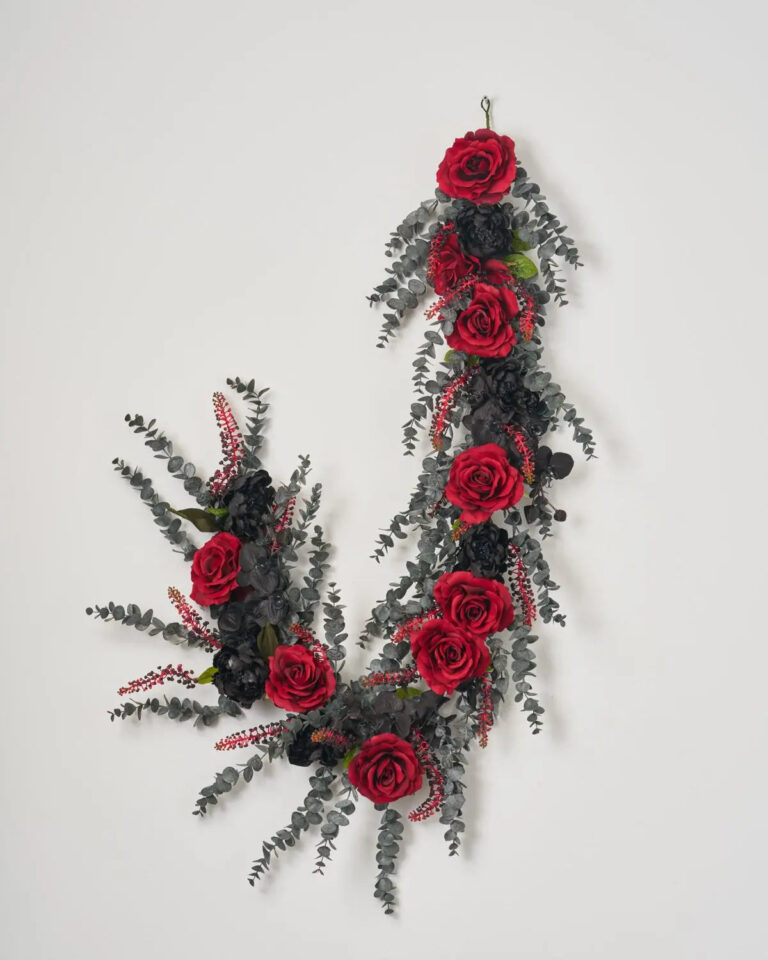
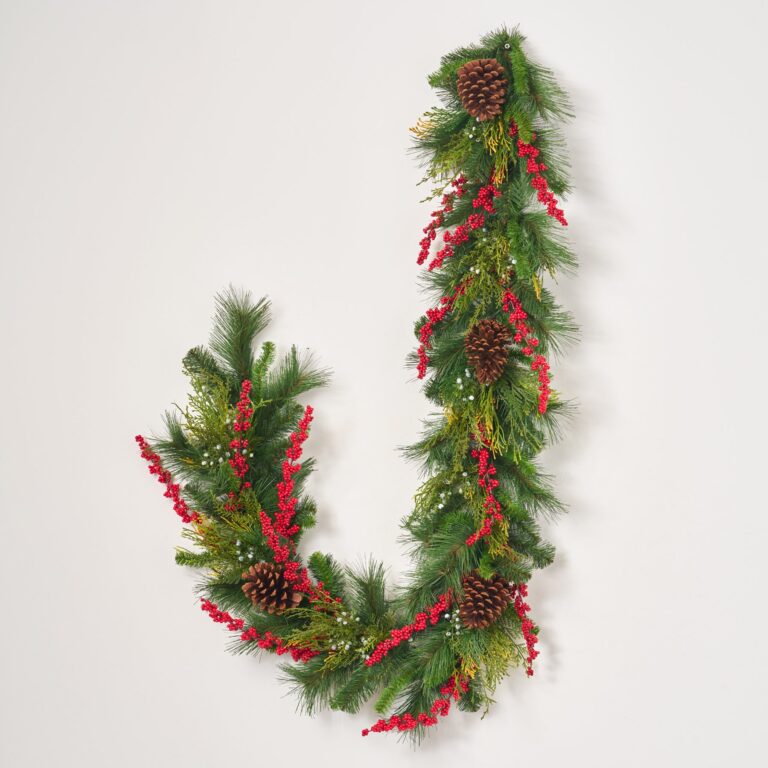
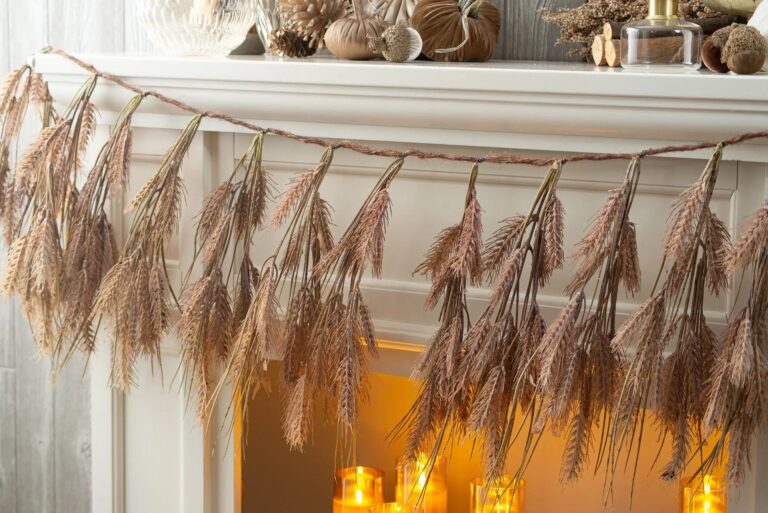
A mantel garland is a wired-spine strand laid across the fireplace mantel — the shelf-width piece that frames the hearth and anchors the room's seasonal styling. It is the placement with the longest calendar in the whole garland line: the same base strand reads Christmas in December (the origin of the entire category), harvest in November, spring in April — and it is the placement with rules no other garland answers to, because it hangs above a heat source and shares its shelf with candles and stockings. Two word families describe the same object: "mantel garlands" and "fireplace garlands" each run about 2,900 searches a month (both spellings, mantle and mantel, appear in both), peaking at 18,100 in November — this page treats them as one purchase, because they are.
Every listing states its measured length — 6, 9 and 12 feet are the standard retail sections, with 7-to-9-foot needs usually met from the 9-foot section — and the photo shows exactly one garland unless the title says a set.
The formula: mantel width plus 1-2 feet per side
Mantel sizing is width plus drape: measure the shelf's width, add 1 to 2 feet of hang per side, and buy the nearest section. A standard 5-foot (60-inch) mantel takes a 7-to-9-foot garland with the ends dropping 6 to 12 inches over each edge; a 6-foot mantel takes 9; a 7-foot mantel takes 9 with a generous drape or 12 for floor-length drops on tall fireplaces. The drape depth is a styling decision with a functional floor: less than 6 inches reads as a runner that happens to be on a mantel, more than 12 inches buries the shelf anything else needs to hold. Households running candles or a mirror on the shelf favor the shallow end (1 foot per side); households making the garland the room's single statement buy toward the top of the band. The one measurement mistake that cannot be styled around: measuring the fireplace instead of the shelf — brickwork runs wider than the mantel in most houses, and the garland drapes from the shelf, not the firebox.
Fire, heat, and the three safety rules of the placement
The mantel is the only garland placement with a heat source under it, and the rules are short because they are old. First, distance: with a wood fire or gas insert in use, keep the strand's drape ends at least 12 inches from the firebox opening — silk and PE are combustible materials, and a drafting fire pulls air (and loose ends) toward the opening; the fix is drape length chosen so the ends hang over the shelf's outer edge, not the inner one. Second, candles: flame lives in glass on a mantel — hurricanes, lanterns, saucers under pillars — never loose against the strand, and battery tealights inside the greenery replace flame entirely. Third, the seasonal honesty test: a mantel garland over a hearth lit every evening all winter ages faster than one over a decorative fireplace, and the heat that rises through December is real — rotate the strand's position a few inches side to side across the season, or accept a shorter working life over a working hearth. None of this is fine print; it is the placement's own physics.
What sits on the strand: candles, stockings, mirrors
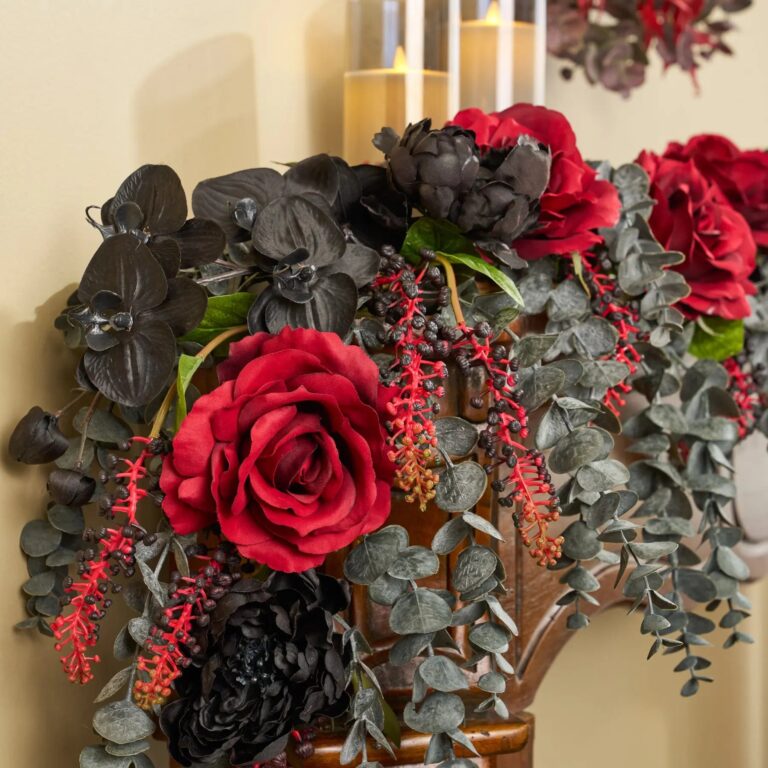
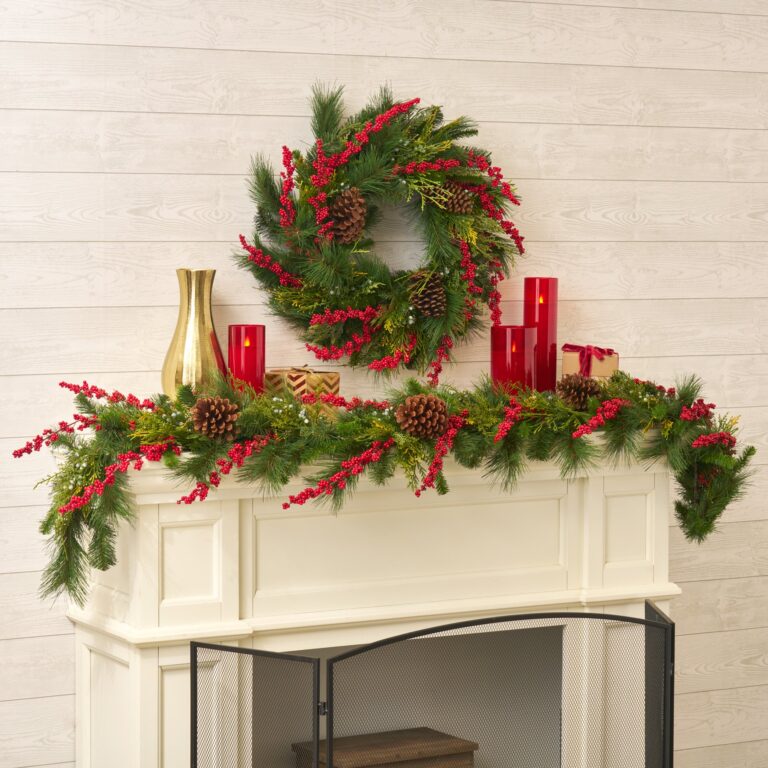
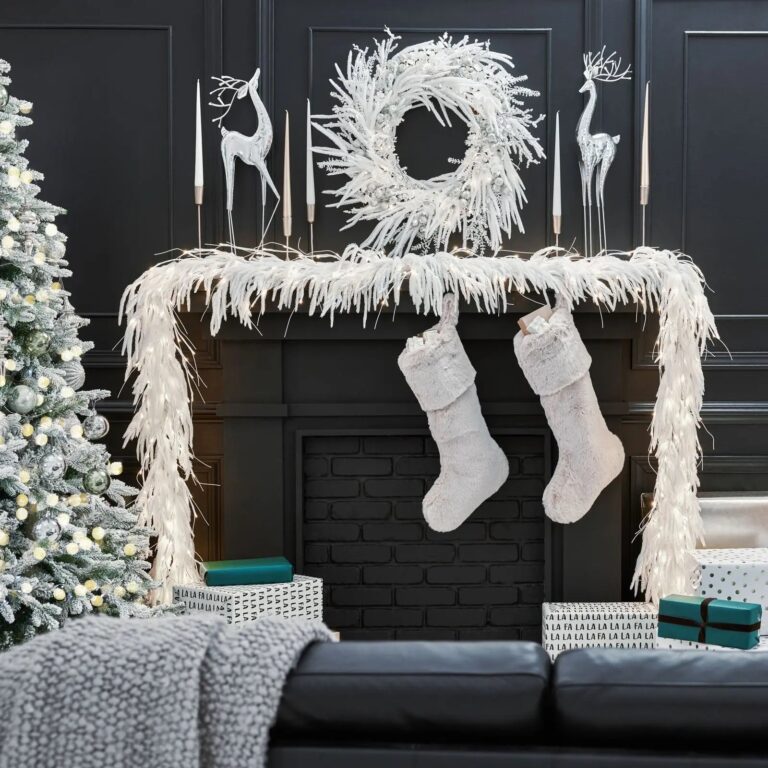
The mantel garland is a base for the shelf's other residents, and the pairing rules are worth more than any single styling idea. Candles: pillar pairs or an odd-number group set into the strand's flat sections, always on saucers or in hurricanes, sized so the flame's airspace clears the greenery by several inches. Stockings: December's addition — stocking holders (the weighted hook kind) sit on the shelf and the strand runs around or over their stems; the working order is holders first, strand second, so the garland's line breaks where the hooks stand rather than fighting them, and heavy stockings pull the strand's drape straight by January unless the anchors take the load. Mirrors and art: the strand runs under, not over — a garland laid across the shelf in front of a leaning mirror reads as depth; anything wired up the mirror's face reads as clutter. The seasonal restyles all follow the same grammar: change what sits on the base, not the base itself.
The paired entry: door and mantel in one palette
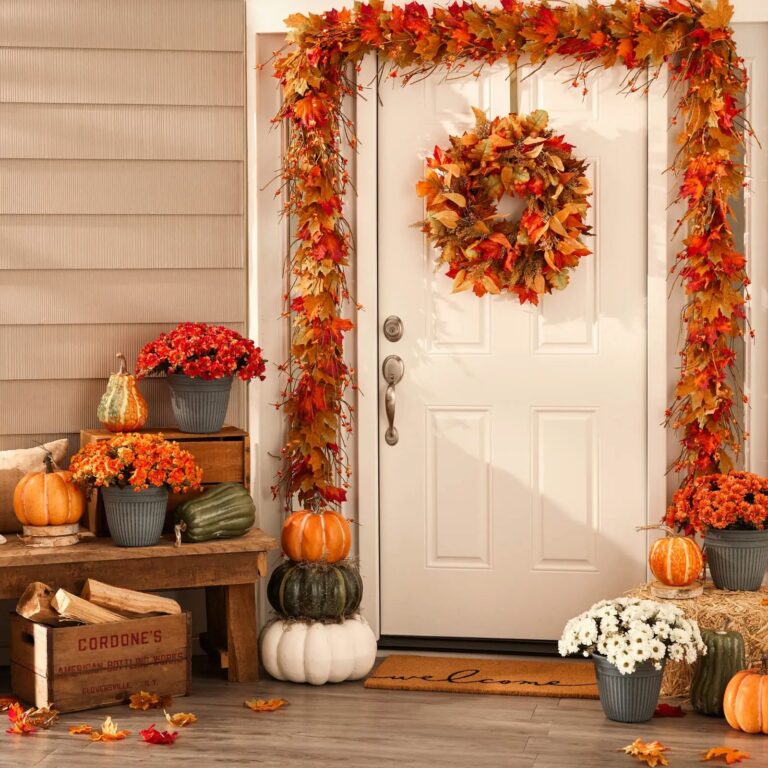
The mantel garland and the door's wreath are the two loudest seasonal statements a house makes, and the styled version of the pairing matches them: same greenery family, same berry or bloom accents, the front door wreath carrying the palette outside while the mantel run carries it inside. The builds here share leaf grades and dye lots across the two forms, so a wreath-and-garland pair ordered in one checkout reads as one decision rather than two — and the same logic runs down the staircase garland when the house has a rail to dress: door, rail, mantel, three placements, one palette, one order.

Mantel width to garland length: the working table
The year on one strand: the mantel's restyle calendar
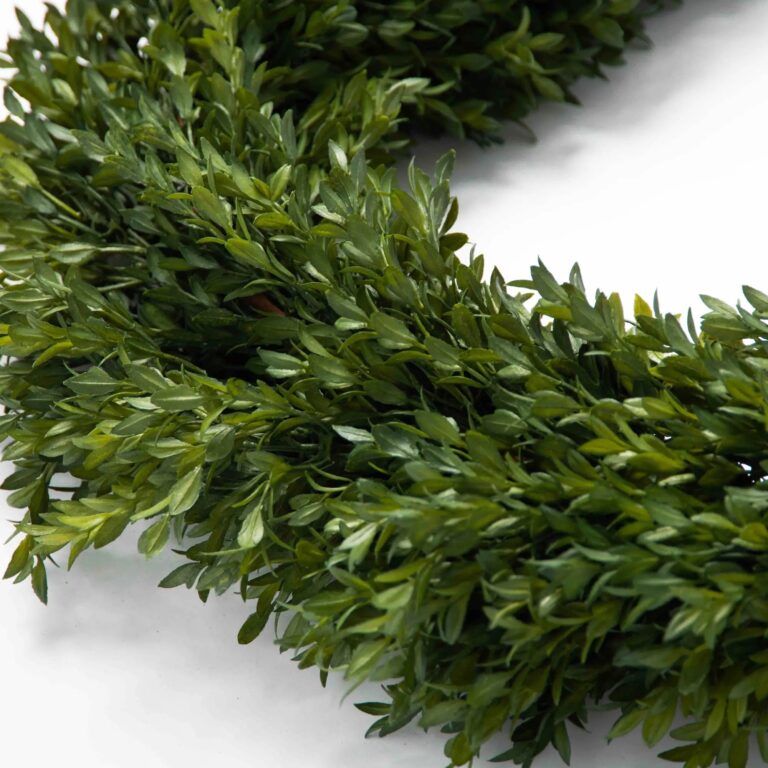
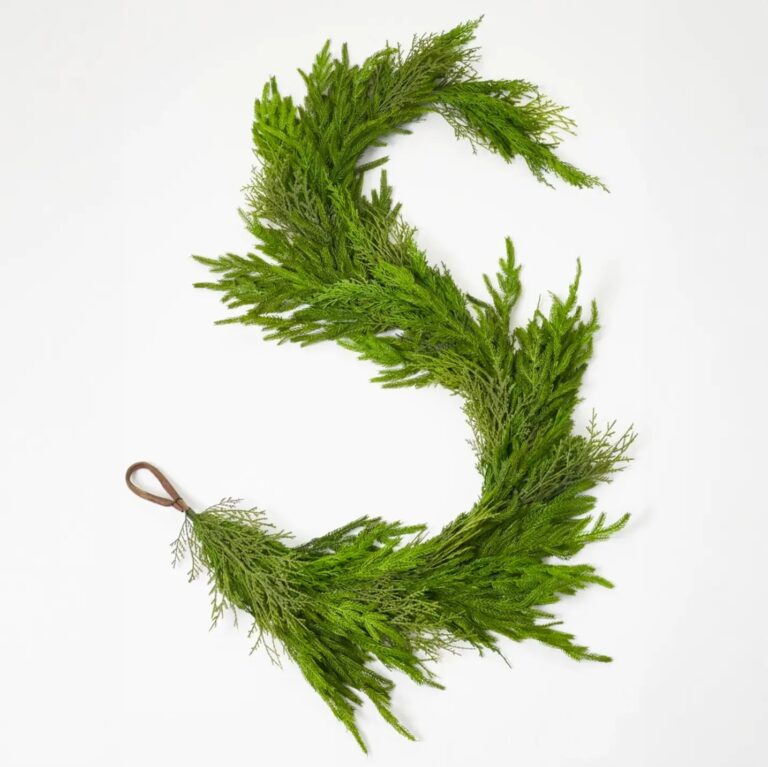
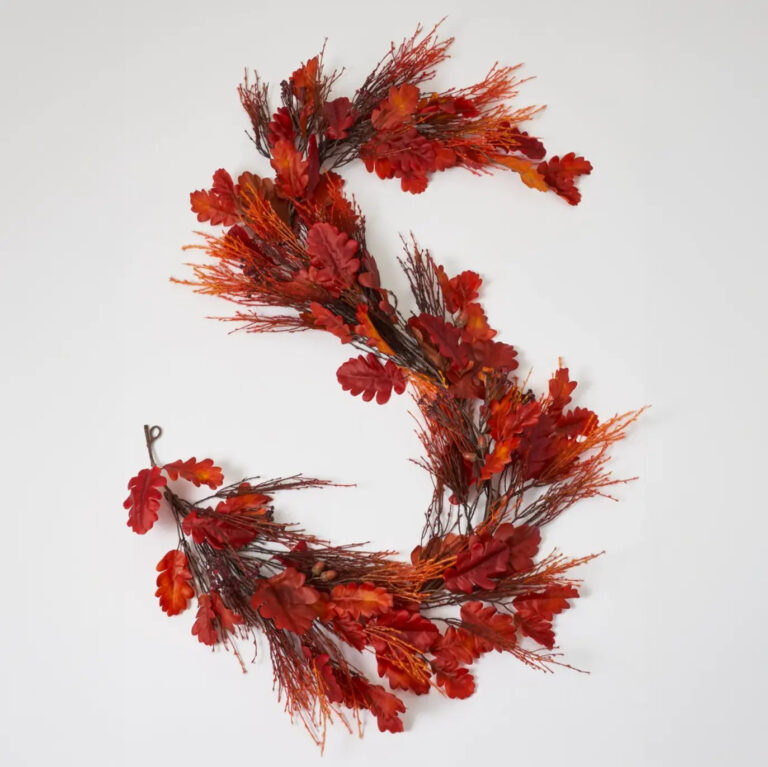
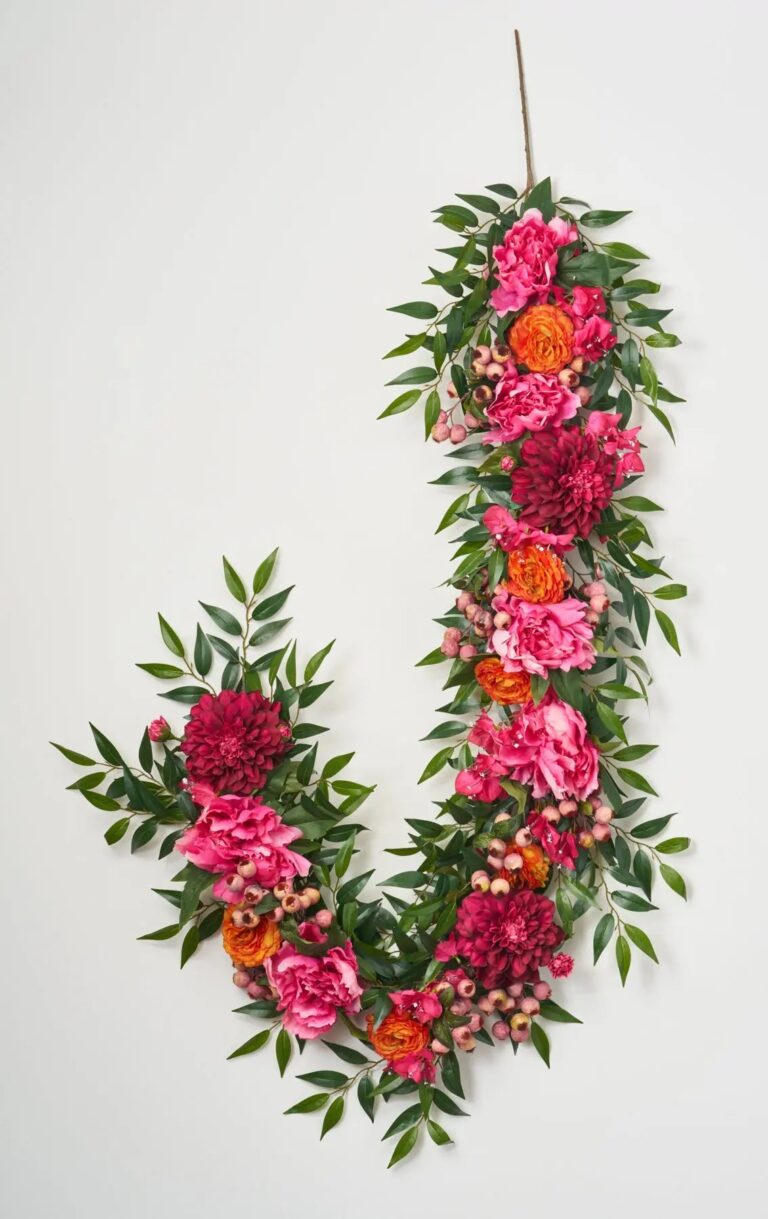
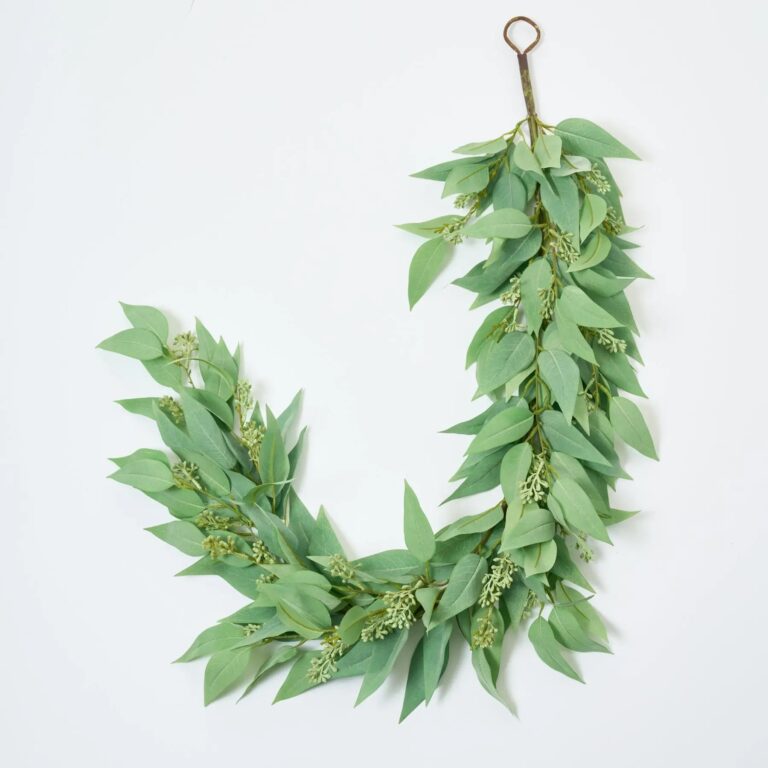
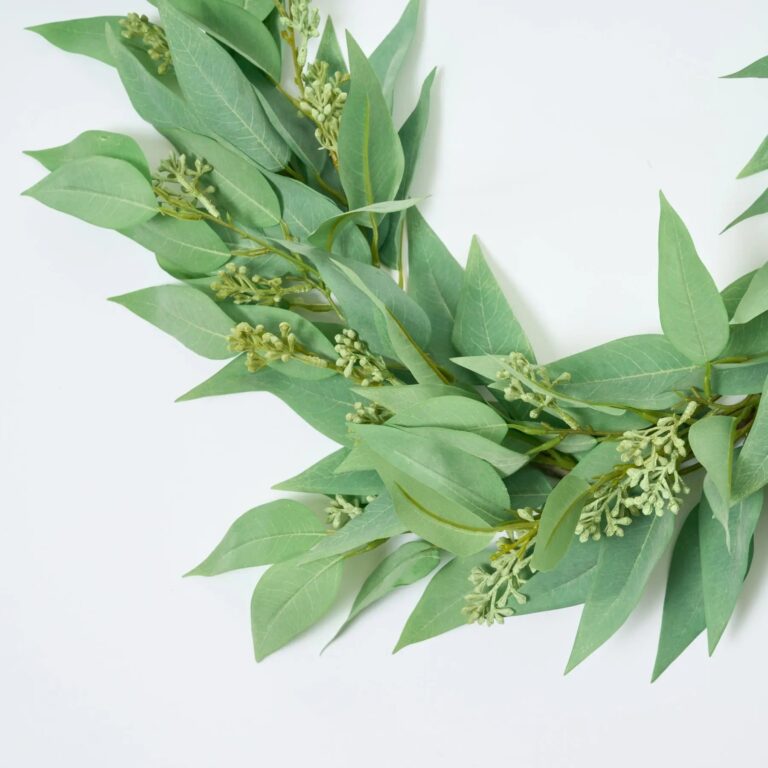
The mantel is where the garland line's layered economics show clearest, because one base strand carries twelve months. December: pine or cedar with lights, stockings, candles — the origin scene. January through February: strip to plain greenery or box it; the eucalyptus base reads winter-clean on its own. March through May: the spring layer — blossom or tulip accents clipped onto the same base. September through November: the fall layer — maple, cotton, wheat, with the harvest restyle in November. Households that buy the base once and re-clip the seasons spend a fraction of the re-buy-every-year line, and the base — a seeded eucalyptus or plain pine run at the $25-60 band — is the strand that boxes for five seasons while the accent layers rotate.
What the market charges, and the November window
The bands as of October 2026, USD, per 9 feet: plain greenery $25-60; decorated builds (cones, berries, ribbon) $50-130; pre-lit $70-180, with warm-white LEDs at stated counts (typically 100-200 per 9 feet, battery on mantels where the outlet sits behind the hearth). The fresh comparison is the one this placement invented: fresh pine and cedar mantel garland from the specialty farms runs $65-100 per 25 feet (checked October 2026) and browns by early January over a working hearth — the artificial run at one-and-a-half fresh seasons returns every year and never needles into the firebox. The November window: mantel and fireplace searches peak at 18,100 monthly lookups in November (against 2,900 apiece at baseline), and the pre-lit 9-foot builds — the single most-bought mantel configuration — clear in the first decorating weekend.
Teardown and the off-season shelf
January teardown on a mantel is the easiest in the line: lift the strand off the shelf — most mantel installs carry their own weight with at most a light floral-wire anchor at each end — fluff flat, coil loose, box cool. The candle glass and stocking holders come off the shelf in the same pass, and the shelf gets its one clean of the season. The base strand that runs the restyle calendar never fully boxes: it just sheds December's layers and keeps the shelf through winter, which is the quiet argument for buying the base strand one grade up from the seasonal minimum.
How to Choose a Mantel Garland
- Measure the shelf, not the fireplace.
Width plus 1-2 feet of drape per side: 5-foot mantel → 7-9 feet, 6-footer → 9. Brickwork runs wider than the shelf; the garland drapes from the shelf.
- Answer the hearth question honestly.
Fire in use: 12 inches of clearance from the firebox, drape ends hung over the shelf's outer edge, and a strand-rotation habit through the season. Decorative fireplace: anything goes.
- Plan the shelf's residents into the buy.
Stocking holders and candles sit on the shelf — order is holders first, strand second. Candles in glass, sized to clear the greenery; mirrors and art behind the strand, never wired through it.
- Buy the base strand for the year, not December.
A plain greenery or eucalyptus base at $25-60 carries every seasonal restyle with clipped accent layers; the pre-lit decision is really a lights-per-foot decision (10-15 warm-white LEDs per foot is the comfortable glow standard).
- Buy the first week of November.
The 18,100-lookup November peak clears the pre-lit 9-foot builds — the most-bought mantel configuration — with the first decorating weekend. Verify stated length and piece count: one garland per photo unless the title says a set.
Frequently Asked Questions
How long should a mantel garland be?
Mantel width plus 1 to 2 feet of drape per side. A standard 5-foot mantel takes 7-9 feet, a 6-footer takes 9, a 7-footer takes 12 with floor-length drops on a tall fireplace. Drops of 6-12 inches below the shelf line are the classic look; shallower favors shelves that carry candles or a mirror, deeper suits the garland-as-statement room. Measure the shelf itself — the firebox and brick run wider, and the garland hangs from the shelf, not the masonry.
Is a fireplace garland the same thing as a mantel garland?
Yes — the two phrases describe one object and run the same search volume (about 2,900 monthly lookups each, both peaking at 18,100 in November). "Fireplace garland" says where, "mantel garland" says what; the buying arithmetic (shelf width plus drape) and the safety rules (clearance, candles in glass) are identical. Both spellings — mantel and mantle — appear in searches and both get the same answer: they are the same shelf.
Is it safe to put a garland over a working fireplace?
Yes, with the placement's three rules. Clearance: drape ends at least 12 inches from the firebox opening, hung over the shelf's outer edge so a drafting fire cannot pull loose ends inward. Candles: flame only in glass — hurricanes, lanterns, saucers — with several inches of airspace between flame and greenery, or battery tealights inside the strand. And heat honesty: a garland over a hearth lit every evening ages faster than one over a decorative fireplace; rotating the strand's position a few inches through the season spreads the wear. Silk and PE are combustible materials and are treated that way throughout the line.
How do I hang stockings and a garland on the same mantel?
Order of operations: stocking holders first, garland second. The weighted hook holders sit on the shelf and the strand runs around or over their stems, breaking its line where the hooks stand — fighting the hooks with the garland on top is the December 15th re-do nobody wants. Heavy stockings pull drape straight by January, so let the holders' stems take that load, not the strand. The single-strand alternative for wide mantels: garland centered, holders spaced outside the garland's ends, stockings hanging from clear shelf.
Pre-lit or unlit for a mantel?
The mantel is the placement where pre-lit earns its price most cleanly: outlets sit behind the hearth (made for light strings, not garland geometry), and the glow standard is known — 10-15 warm-white LEDs per foot of garland, so a 9-foot piece carries 100-135 at the comfortable level, with counts stated per listing. Battery pre-lit suits the shelf-end packs' hiding spots. The honest caveat the whole line carries: the light string is the component most likely to fail across years, so unlit-plus-your-own-strings remains the swap-a-string-not-a-garland answer, and households on their third season of the same strand usually run it that way.
How much does a mantel garland cost?
Market bands as of October 2026, USD, per 9 feet: plain greenery $25-60, decorated builds $50-130, pre-lit $70-180. The fresh comparison this placement invented: specialty-farm pine and cedar runs $65-100 per 25 feet and browns by early January over a working hearth; the artificial strand at one-and-a-half fresh seasons' cost returns every December — and the base-strand restyle strategy (one $25-60 run, clipped seasons on top) prices the whole year at less than two seasonal re-buys.
How do I make a mantel garland look fuller?
Fluff first — shipping flattens every branch against the spine, and bending them out in alternating directions takes a few minutes and adds more visible volume than any purchase. Then layer: a full base run along the shelf edge with a shorter accent strand laid six inches back reads as depth rather than bulk, which is the stylist's version of fullness. Picks — berry clusters, bloom heads on toothpick stems — pushed into the base every 18 inches add focal volume where the eye lands. What does not work: doubling the same strand front-to-back, which reads as a wall rather than a garland.
Can I use one garland for my mantel and stairs?
Not the same strand — the arithmetic differs. The mantel wants width plus 1-2 feet per side (7-9 feet on a standard 5-foot shelf); the stair rail wants its run × 1.5 (15 feet on a standard 10-foot rail) — a strand bought for one is the wrong length for the other. What does carry across the two is everything else: same greenery family, same accents, same dye lot when ordered together, and the pair reads as one palette down the room. The stair side of that pairing — the spiral arithmetic and the two-piece overlap — is laid out in full on the staircase garlands page.