

Christmas Swags & Teardrops
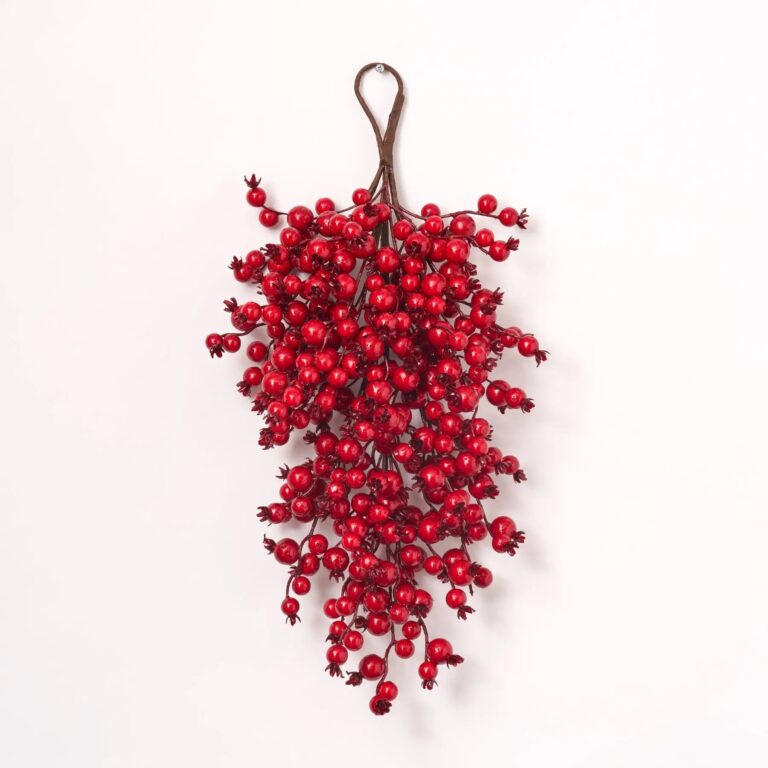

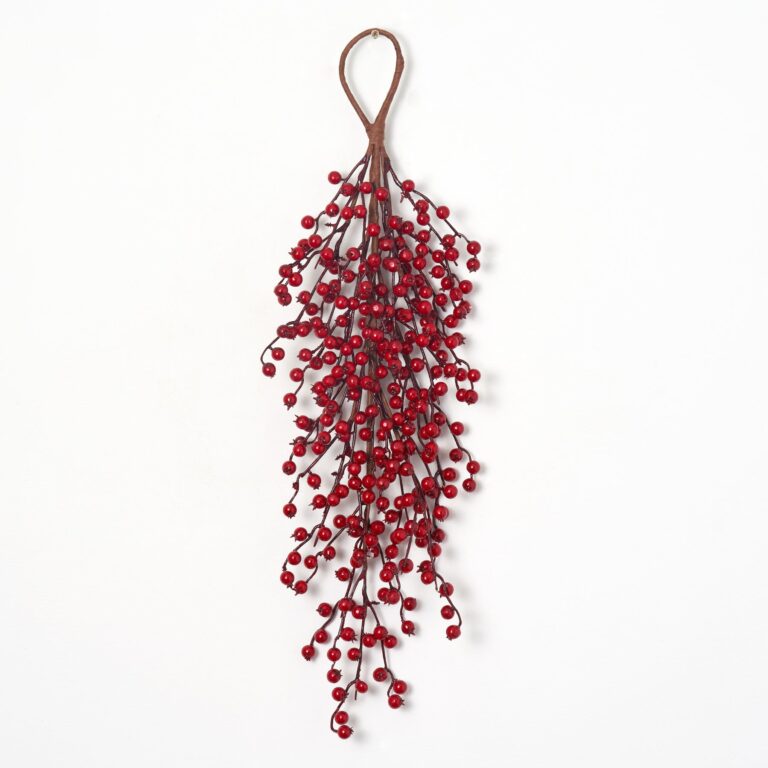
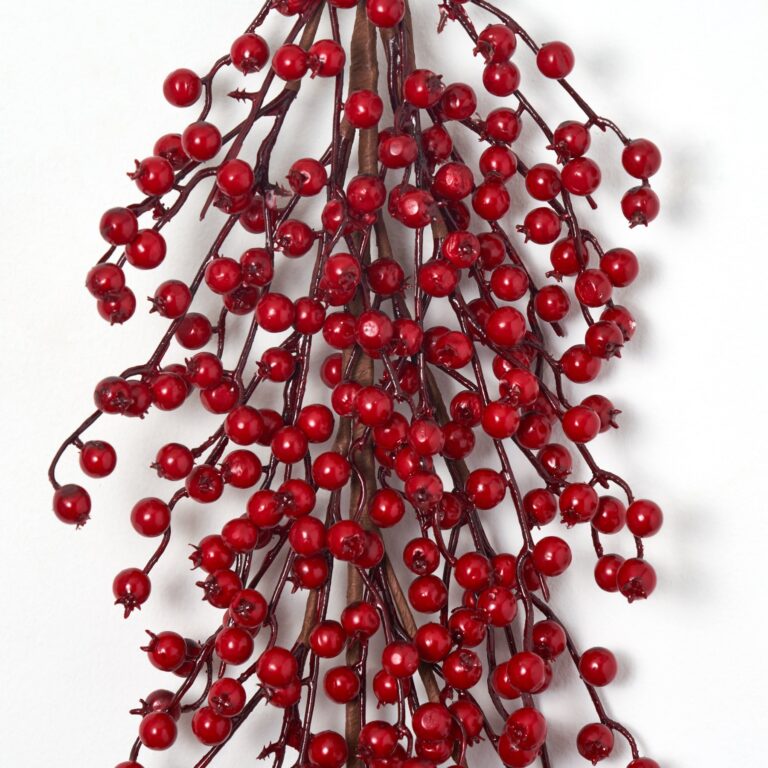
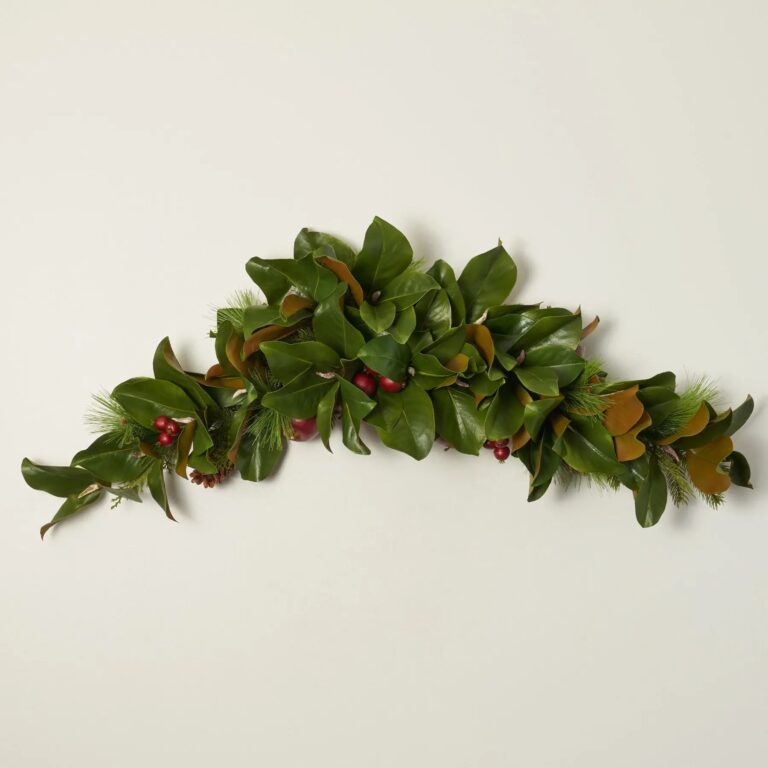





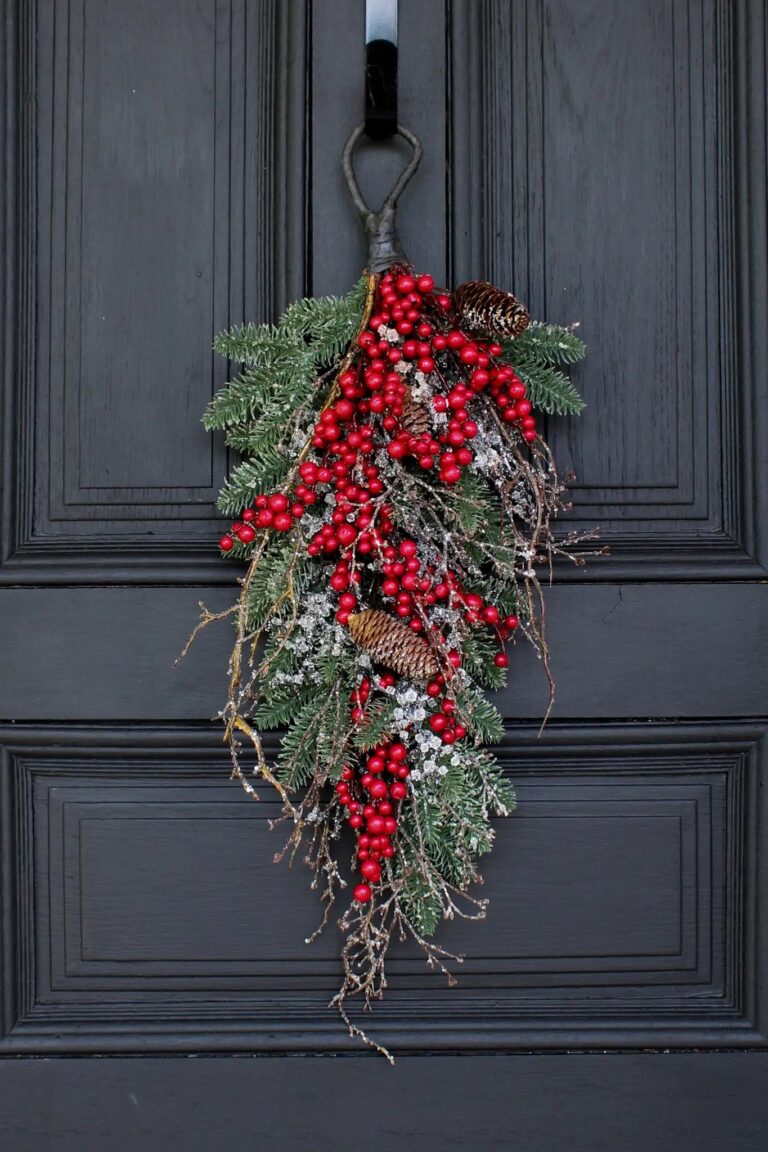
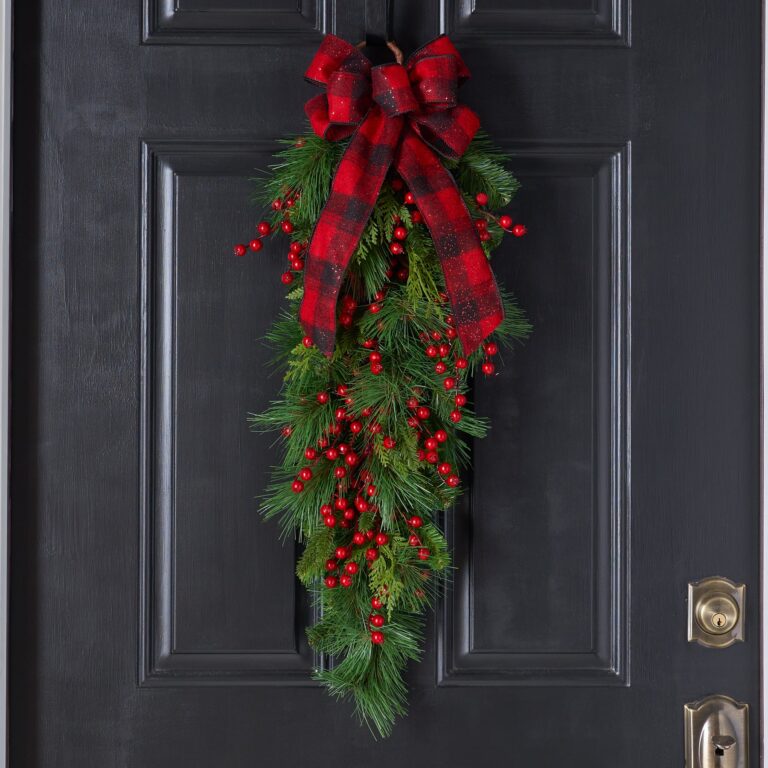


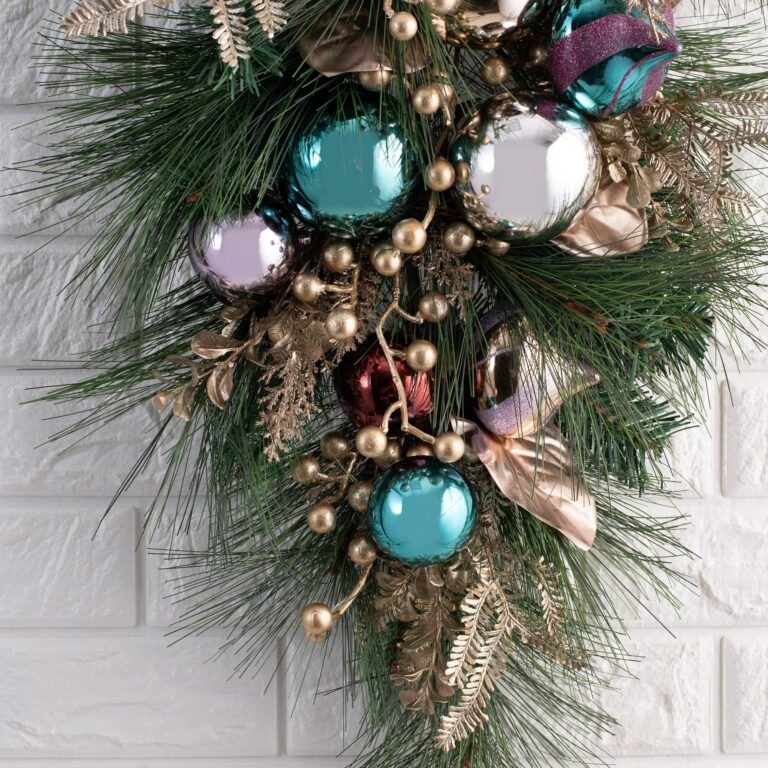




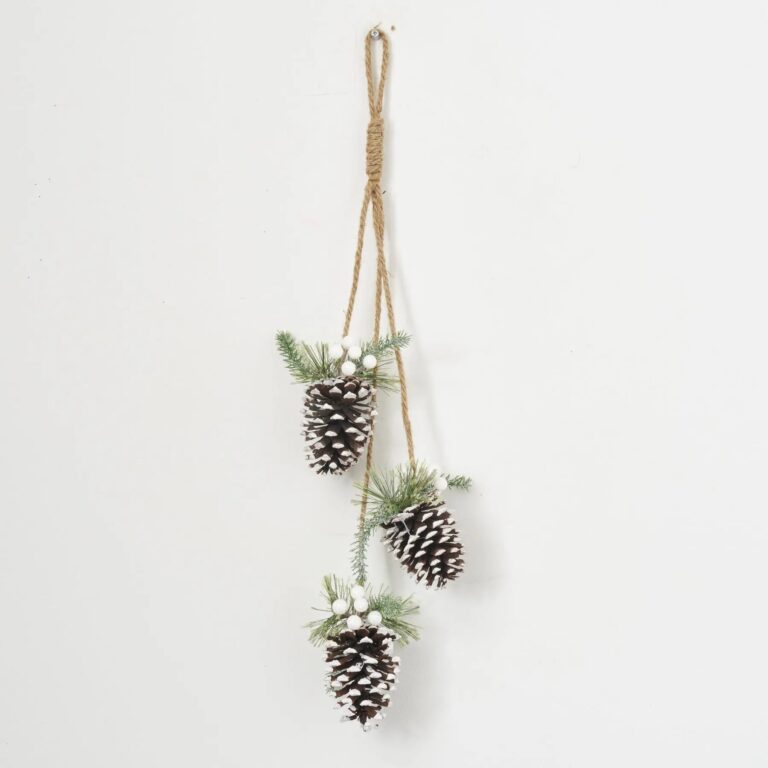


The swag is the decorator's answer to wreath fatigue — the same evergreen vocabulary, hung in a falling spray instead of a ring, dressing the vertical surfaces a circle leaves bare. Above doors, on gateposts, down porch columns, at the midpoint of a mantel: the swag goes where wreaths cannot.
Quick answer: Christmas swags are the vertical piece of holiday greenery — teardrop or fan clusters, not rings, on a 24-to-48-inch drop where a wreath reads too round: above door frames, on lamp and mailbox posts, flanking double gates. Install in pairs. As of October 2026, plain teardrops run $25–50 and pre-lit builds $70–150 (USD) — silk holds every needle and stores flat for next December.
Christmas Swags, Explained
Swag versus wreath versus garland
The three Christmas greenery shapes are answers to three different geometry problems. A wreath is a ring — it frames something (a knocker, a peephole, a door's center) and reads best with 50–70% of the door panel behind it. A garland is a continuous length — mantels, railings, door frames, anything that runs. A swag is a single vertical cluster, 24–48 inches of drop, built wide at the top and tapering — it fills a flat column of space: the space beside a door handle, the face of a lamp post, the midpoint of a mantel between the candlesticks, each panel of a double gate where two full wreaths would over-decorate. DIY tutorials flood the search results for swags because a bundle of evergreen tips wired at one end literally is a swag — the manufactured version simply adds density, decoration, and a shape that survives shipping and seasons.
Build grade across this collection: greenery and filler at the same material grade as the decorated face — the back and lower taper are not cheaper material, which is where low-grade swags get caught at handshake distance. Glue lines are specified invisible at half a meter; pinecones and berry clusters are pull-tested before boxing; and the listing photo shows exactly the one swag that ships.
The full-door program
The layered entry that photographs like a magazine cover runs three registers: a wreath on the door face, a swag above the frame or on the wall flanking it, and lanterns or urns at the floor line. Swag scale follows the door — 24 to 36 inches for standard doors, 36 to 48 for tall and double doors — with the bottom tail ending above eye level so the doorway stays open and welcoming.
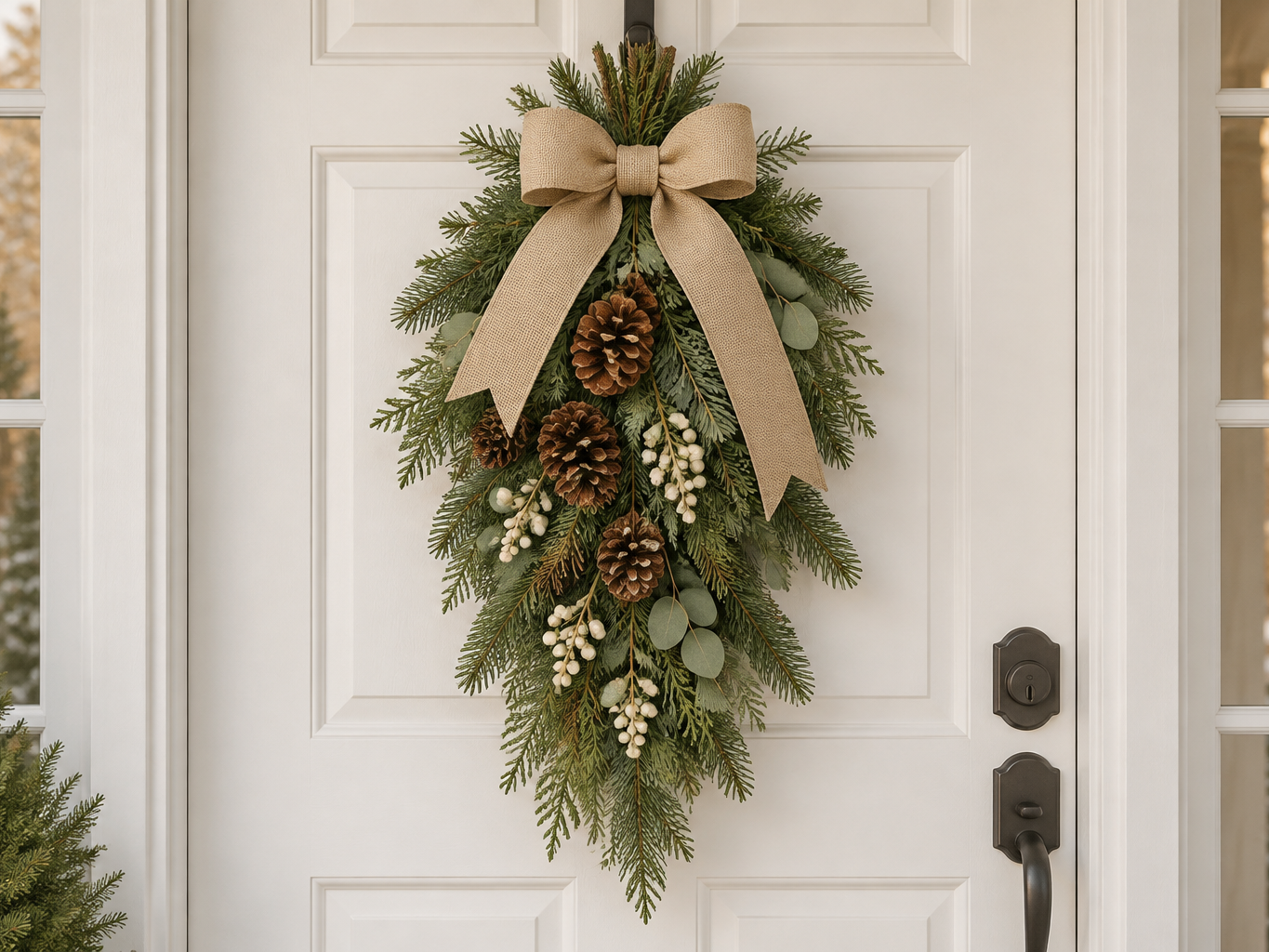
Swag Sizes and Placement
Where Swags Outperform Everything Else
Four placements where the teardrop is the correct tool. Door centers with vertical hardware: where a knocker or handle sits below the midpoint, a swag hangs above it without the ring's empty middle. Lamp posts and mailbox posts: wrap the post top or hang the swag face-out — the drop follows the post's line. Double doors and gates: two matching swags, one per panel, read more architectural than two rings. Mantel centers and stair newels: the swag's tail drape is the traditional finish at both spots, often layered over a garland run. Outside those four, the shape loses: doors with a centered feature want a wreath, and runs of any length want garland.
Pre-Lit and Outdoor Notes
Pre-lit swags carry 30–70 warm-white LEDs depending on drop — enough glow for a single point; check the stated count per listing rather than assuming. On exposure: covered porches and entries take any style all season; fully exposed posts and gates face the same honest boundary as every artificial botanical — driving rain and weeks of sun age any piece, slower on dense builds. Zip-tie swags to posts (fast January removal), hang storm-exposed pieces during named weather, and box everything dry. Pre-lit pieces have one extra caution — the battery pack or connection point is the weather-sensitive end; tuck it under the binding.
Why Silk Swags Win December
- No needle drop, ever. Fresh swags shed through the season and dry into fire hazards by January; silk versions hold every needle, indoors or on the porch, year over year.
- They store flat. The tapering shape compresses into a shallow box — December's decor closet takes a fraction of what wreath storage demands, and because the shape is a bundle rather than a ring, swags pack smaller than wreaths.
- Outdoor grades hold color. The porch-facing pieces in the outdoor program take full weather; door and wall swags under cover hold indefinitely.
- Refresh economics apply. A swag base plus seasonal picks — poinsettia clusters, berries, pinecones — re-decorates each year at pick prices.
How to Choose — Five Decisions in Order
- Confirm the shape is right. Vertical column of space = swag; framed feature = wreath; running length = garland.
- Match drop to the spot. 24–28 accents, 32–36 door centers and posts, 40–48 statements — measure from the hanging point down to the obstacle below and leave two inches of clearance.
- Plan pairs for double doors and gates. Two matching swags at level heights beat two rings; match with a tape.
- Decide pre-lit. 30–70 LEDs stated per listing; single points rarely need more.
- Plan hardware and exposure. Zip-ties on posts, hooks on doors; storm routine on exposed spots.
Frequently Asked Questions
What is the difference between a Christmas swag and a wreath?
A wreath is a ring and a swag is a teardrop or fan cluster — wide at the top, tapering down a 24-to-48-inch drop. Functionally: the ring frames a feature (door center, knocker, peephole) while the swag fills a vertical column of space (beside a door handle, down a lamp post, over a mantel midpoint). Swags also stack better in pairs on double doors and gates, where two rings can over-decorate. Many households run both — a wreath on the door, a swag at the lamp post.
Where should I hang a Christmas swag?
The four spots where swags outperform every other greenery: door centers with vertical hardware below (the taper clears the knocker or handle); lamp posts and mailbox posts (zip-tied at the top, face out); double doors and gates (two matching swags at exactly level heights); and mantel centers or stair newels, where the tail drape is the traditional finish — often layered over a garland run. Windows, interior doors, and wall columns take the smaller 24–28-inch drops as accents.
How long should a door swag be?
Standard door centers carry a 32–36 inch drop — tall enough to read from the curb, short enough to clear the hardware below. Tall doors (8-foot-plus panels) and gate pillars carry 40–48 inches. Windows and interior spots take 24–28, ending above eye level — a swag that hangs into the doorway's sightline reads clutter rather than frame. The quick check before ordering: measure from your hanging point down to the obstacle below (knocker, handle, house numbers) and leave two inches of clearance; every listing states the measured drop so the check takes one tape.
How do you hang a Christmas swag?
By its loop or frame: over-the-door hooks at the top rail, a nail or removable hook for wall placements, and zip ties for gateposts and lamp posts. Flat-back construction means a single anchor point carries the piece — hang, adjust the spray's fall, done. Exposed brick and masonry want a removable hook rated for the swag's weight rather than masonry nails.
Can Christmas swags stay outside in winter weather?
Under cover — porch entries, overhung doorways — swags run the full season without complaint, and silk carries no water clock: covered placements hold for years. On fully exposed posts and gates, the honest boundary is the same as for all artificial greenery: driving rain, snow load, and weeks of sun age any piece, with dense builds holding up visibly longer than airy ones. The practical pattern: zip-tie for fast removal, bring pieces in during named storms, box dry in January — and on pre-lit pieces, tuck the battery pack or connection point under the binding, as it is the weather-sensitive end.
How do I store Christmas swags after the season?
Box them dry, flat or lightly coiled, in a cool spot — hot attics are the enemy of both tips and light strings. A two-minute fluff in December (bend tips outward, shake the taper loose, straighten the bow) restores the silhouette. Stored this way, swags return for many seasons — and because the shape is a bundle rather than a ring, they pack smaller than wreaths, a quiet advantage if your decoration shelf is already full.
How much do Christmas swags cost?
Market bands as of October 2026 (USD): plain evergreen teardrops run $25–50; pre-decorated builds (pinecones, berries, bows) run $45–110; pre-lit versions run $70–150, with the 40–48-inch statement drops at the top. The fresh comparison holds from the rest of the greenery category — fresh swag from specialty farms is a single-season product at a similar price point to an artificial piece that returns annually, so the second Christmas is where the artificial math pulls ahead.